


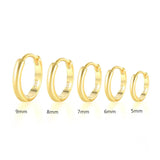
Ear Piercing Chart: All 15 Placements at a Glance
The table lists each placement from the bottom of the ear to the top and into the inner folds. Pain figures are typical consumer reports on a 1 to 10 scale, not measurements, and healing times are common ranges from piercing studio and consumer health guides. Those guides disagree with each other, especially on lobes, so treat every number as a rough guide. Your piercer's advice always overrides a chart. For cleaning, our guide to saline solution for ear piercing explains what to look for on the bottle.

| Piercing (ear map) | Where it sits | Typical pain reports (1 to 10) | Typical healing range |
|---|---|---|---|
| Standard lobe | Soft fleshy bottom of the ear | 1 to 3 | Roughly 6 weeks to a few months |
| Upper lobe | Just above the standard lobe, still on soft tissue | 2 to 4 | Roughly 6 weeks to a few months |
| Transverse lobe | Sideways through the lobe, one bar entering each side | 3 to 5 | A few months, varies widely |
| Helix | Upper outer rim of the ear | 4 to 6 | About 6 to 12 months |
| Forward helix | Front of the upper rim, near where the ear meets the face | 4 to 6 | About 6 to 12 months |
| Flat | Flat plate of cartilage between the rim and the inner folds | 4 to 6 | About 6 to 12 months |
| Industrial | Two points in the upper ear joined by one bar | 6 to 8 | About 6 to 12 months or more |
| Orbital | Two nearby holes in the same area joined by one ring | 5 to 7 | Similar to the cartilage site used |
| Tragus | Small flap of cartilage in front of the ear canal | 4 to 6 | About 6 to 12 months |
| Anti-tragus | Small ridge opposite the tragus, above the lobe | 5 to 7 | About 6 to 12 months |
| Inner conch | Bowl of the ear, closest to the canal | 4 to 6 | About 6 to 12 months |
| Outer conch | Edge of the bowl, toward the rim | 4 to 6 | About 6 to 12 months |
| Daith | Innermost fold of cartilage, above the tragus | 4 to 6 | About 6 to 12 months |
| Rook | Ridge of cartilage in the upper inner fold, above the daith | 5 to 7 | About 6 to 12 months |
| Snug | Inner ridge of cartilage across from the outer rim | 6 to 8 | Often the slowest, commonly 9 months to a year or more |
General information only, not medical advice. Ask a professional piercer or doctor about pain, healing and your own anatomy.
How Do the Ear Zones Work on a Piercing Map?
The ear is easiest to plan in three zones: the lobe, the outer rim and the inner cartilage. The lobe is soft tissue with a good blood supply, so it tends to heal fastest and can hold several piercings; our earlobe piercing chart covers lobe spacing in detail. The outer rim (helix, forward helix, flat, industrial) has room for a row of small piercings, which is why it is popular for stacks. The inner cartilage (tragus, anti-tragus, conch, daith, rook, snug) sits in tighter folds, so each placement depends heavily on your own ear shape. For a longer walk through each type, see types of ear piercings.

Which Jewelry Suits Each Ear Piercing Placement?
Each placement favors a different shape: lobes take almost anything, while cartilage spots usually suit flat-back studs, small huggies and curved bars. The table below matches each spot to jewelry styles and to pieces that are in stock today. A new piercing is normally fitted with the studio's own jewelry, and our earrings are for healed piercings only.
| Placement | Jewelry styles that suit it | What to look at (once healed) |
|---|---|---|
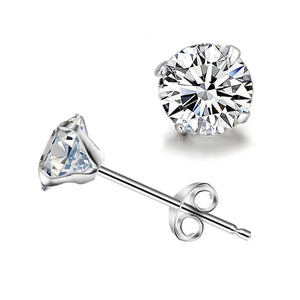
| Standard lobe and upper lobe | Studs, huggies, small to medium hoops, drops | Everyday pieces such as the CZ Stud Earrings ($22.99, 925 sterling silver, rhodium plated) or the Gold Huggie Earrings ($34.99, 925 sterling silver with 18K gold plating). See types of stud earrings. |
| Transverse lobe | Straight barbell | Needs a bar fitted by a piercer, so we do not have a ready match. Wait until fully healed before changing the bar. |
| Helix and forward helix | Flat-back studs, small huggies | Once healed, a snug huggie works: the Thin Silver Huggie Earrings ($26.99, polished 925 sterling silver) come in 6mm, 8mm and 10mm inner diameters. Read huggie earrings for cartilage and helix piercing jewelry. |
| Flat, tragus, anti-tragus | Flat-back studs, tiny hoops | Small flat-back styles suit these tight spots best; see flat back earrings and flat back cartilage earrings. |
| Conch (inner and outer) | Flat-back studs, hoops once healed | Larger hoops sit better here once the piercing has settled. Check hoop earring sizes before you buy. |
| Daith and rook | Small hoops, curved bars | The fold shape matters more than the style, so follow your piercer on size. Ideas in daith piercing jewelry. |
| Snug and industrial | Curved barbell, long straight barbell | Usually fitted with specialist bars. Treat the piercer as your jewelry source until it is fully healed. |
| No piercing yet | Ear cuffs | The Ear Cuff Earrings ($27.99, 925 sterling silver, 18K gold plated on the gold colorway; low stock) clip on with no hole. Compare in ear cuff vs cartilage piercing. |
If you are comparing sizes and styles, huggie earrings for cartilage and the earring gauge size chart explain post thickness and hoop diameter. You can also browse our huggie earrings and hypoallergenic earrings collections.
How Do You Choose Which Piercing to Get?
Start with the zone you want, then let a professional piercer confirm what your ear shape can hold, because not every ear has the same fold depth or cartilage size. Three questions help narrow it down:
- How patient are you? A lobe settles in weeks to months, a cartilage piercing can need a year or more.
- How do you sleep and live? Spots you lie on or catch with headphones, glasses or hair can be harder to look after while healing.
- What look do you want? Browse second ear piercing ideas or the curated ear guide, or see ear stacking formulas for how many piercings suit different looks.
Not ready for a piercing? Ear cuffs give a similar look with no piercing, and ear cuff vs cartilage piercing compares the two. Sleeping position matters too: can you sleep with earrings in covers what is sensible.
What Are the Basics of Looking After a New Ear Piercing?
Follow the aftercare instructions your piercer gives you, since they know the jewelry and the placement. In general, piercers advise keeping hands clean, not twisting or removing the jewelry while it heals, and leaving a new piercing alone as much as possible. Swelling, redness or tenderness in the first days is common. If you notice signs of infection, such as spreading redness, heat, pus or increasing pain, see your piercer or a doctor promptly; this is general information, not medical advice. For more on what infection can look like, see earring infection signs and treatment, and for heavy bleeding see earring hole bleeding. Step by step care is in our ear piercing aftercare guide.
What Earrings Can You Wear Once a Piercing Has Healed?
Once a piercing is fully healed and your piercer has said it is fine, you can usually change to everyday earrings in a size and style that fits the spot. Small flat-back studs and snug huggies tend to suit cartilage, while lobes take almost any style. For sensitive ears, see best stud earrings for sensitive ears. Our line is mixed: most pieces are 925 sterling silver with plating, a few are 316L stainless steel, so check the product page for the base metal. Plating is a thin layer over the base metal and wears gradually. For earrings to wear while a lobe heals, see best earrings for new ear piercings.
Frequently Asked Questions
What is an ear piercing chart or ear piercing map?
An ear piercing chart (also called an ear map or piercing diagram) labels every common piercing position on a drawing of the ear. It helps you compare placements by location, typical pain reports and healing range before you book. Pain and healing vary by person, so use it as a planning tool and confirm with a professional piercer.
What is the most painful ear piercing?
Snug and industrial piercings are the two most often reported as the most painful, because they go through thick cartilage (an industrial has two piercings, one at each end of the bar). Lobe piercings are usually reported as the least painful. Pain is subjective and reports vary a lot between people. If a lobe has already torn or stretched, see earlobe repair.
Which ear piercings take the longest to heal?
Cartilage piercings take longer than lobes, and the snug is commonly reported as the slowest, often 9 months to a year or more. Most other cartilage spots are commonly reported at about 6 to 12 months. Sources disagree and healing varies with aftercare, so follow your piercer's advice rather than a calendar.
Which jewelry is best for each ear piercing placement?
Studs and huggies suit lobes, flat-back studs suit most cartilage spots, and curved or long barbells suit snug, rook and industrial piercings. Wait until a piercing is fully healed before switching to everyday earrings, and ask your piercer about post length. The jewelry-by-placement table above matches each spot to styles.
What is the 3/2 piercing rule?
The 3/2 rule (also called 2/3) is a styling idea, not a safety or spacing rule: three earrings in one ear and two in the other for a deliberately uneven, curated look. It says nothing about how far apart piercings must be, so ask your piercer about spacing for your ear.
How many ear piercings can you get at once?
There is no universal limit. Many piercers will do a few lobe piercings in one visit, but often prefer to space out cartilage piercings so the ear is not sore in several places while healing. Your piercer will judge what is sensible for your ear.
Should cartilage be pierced with a gun or a needle?
Professional piercers generally recommend a sterile single-use needle for cartilage rather than a piercing gun, because a needle makes a cleaner channel. Choose a studio you trust and ask how they sterilize equipment.
Do I need different jewelry for a new piercing than a healed one?
Often yes. Piercers usually fit fresh piercings with their own longer or flat-back posts so there is room for swelling, then people switch to everyday earrings once fully healed. AJLuxe earrings are for healed piercings, and we do not offer piercing services or fresh-piercing jewelry.
Related reading: how ear climber earrings work and whether you should get your ears pierced.
All third-party trademarks, brand names and product names are the property of their respective owners. AJLuxe is not affiliated with, endorsed by, sponsored by, or otherwise connected to any third-party brand referenced in this article. Brand names are used solely for accurate comparative reference, and material descriptions reflect each brand's own published product specifications at the time of writing.
You Might Also Like
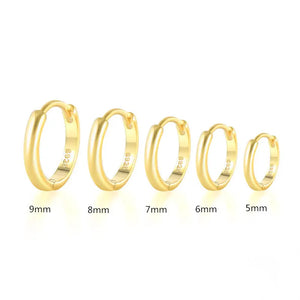
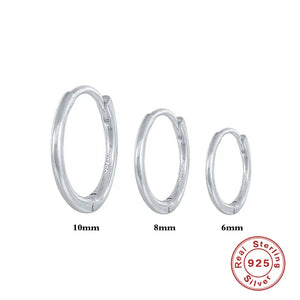
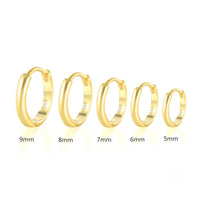
The piece they're describing → Gold Huggie Earrings for Women — 925 Sterling Silver, 18K Gold Plated, Minimalist
Personalize Yours


