


- Label: sterile, wound wash, 0.9% sodium chloride, nothing else added.
- Not the same thing: contact lens solution, nasal spray and eye drops are look-alikes to avoid.
- Homemade: the sources we read advise against it. Salt water is easy to over-concentrate.
- How often: sources range from once a day to three times a day. Over-cleaning can slow healing.
- See a doctor for spreading redness, heat, pus, fever or a stuck earring back.
Saline is the most searched piece of piercing aftercare, and also the most confusing, because bottles look alike and advice online contradicts itself. This guide covers what sterile saline is, what to look for on a label, how to use it, whether homemade salt water is advised, and what not to put on a piercing instead. It draws on a piercers' association aftercare page, a public health service page, a consumer health site, a piercing studio's blog and a pediatric clinic page, and it says where they disagree. For the full routine around saline, including healing times and what to avoid, see our ear piercing aftercare guide, which this page does not repeat.
What Is Saline Solution for Ear Piercings?
Saline for piercings is sterile salt water at a strength of 0.9% sodium chloride. In a bottle or spray can it is usually labeled as a sterile saline wound wash. People also search for it as an "ear piercing cleaning solution", and that is the same product when the label matches the description below. It is not a disinfectant and it is not a treatment: it is a gentle rinse that helps remove crust and loose debris from around a healing hole without the sting or drying of stronger products.
What Should the Label Say?
The label should say sterile saline, sold as a wound wash, with 0.9% sodium chloride as the only active ingredient. The piercers' association page adds that some labels list purified water too, and that you should avoid versions with added moisturizers or antibacterials. A piercing studio's blog gives similar advice: skip fragrance, oils and extra additives.
| On the label | What the sources say |
|---|---|
| Sterile saline wound wash, 0.9% sodium chloride | What the piercers' association page recommends. |
| Purified water listed alongside the salt | Acceptable per the same page. |
| Added moisturizers, antibacterials, fragrance or oils | Avoid, per the piercers' association page and the studio blog. |
| Contact lens saline, nasal spray, eye drops | Named as look-alikes to avoid by the piercers' association page. |
| Benzalkonium chloride (BZK) on the ingredient list | Products containing it, including some "pierced ear care" solutions, are on the avoid list of the same page. |
We did not read a source that compares spray cans with other bottle formats, so choose by the label, not the container. Also check the printed expiry date on whatever you buy. We did not find a source that gives a shelf life for an opened can, so follow the instructions on your own product.
How Do You Use Saline on an Ear Piercing?
Wash your hands, spray the saline on the front and back of the piercing, let it sit for a moment, then pat the area dry with clean gauze or another clean disposable material. A piercing studio's blog describes exactly that routine, and the piercers' association page agrees on the gauze and on leaving the jewelry alone while you clean.
- Wash your hands with soap and water first.
- Spray the front and back of the lobe. A body jewelry retailer's guide suggests spraying from a couple of centimeters away, which is a convenience tip rather than a medical standard.
- Wait briefly so the saline can soften crust. If a crust does not come away easily, leave it and try later, and do not pick.
- Dry gently with clean gauze or a clean paper towel. The piercers' association page says to avoid cloth towels, and the public health service page says a cotton bud or pad is better than cotton wool, which can leave fibers behind.
Whether to turn the earring is one place the sources split. The public health service page says to gently turn jewelry while cleaning, while the piercers' association page says not to move or rotate it. Ask your piercer which they want, since they can see your ear. Our aftercare guide covers the same disagreement in more detail.
Is Homemade Saline Safe to Use?
The piercers' association page no longer suggests mixing your own and says homemade sea salt solutions commonly come out far too salty and strong, and it gives no recipe. A consumer health site lists homemade saline among the things to avoid, and the piercing studio's blog says homemade salt water can easily be too concentrated. The public health service page is the outlier in tone: it tells you to use warm, salty water to soften crusting, though it gives no ratio.
That is a real disagreement, and we are not going to write a recipe, because none of the sources we read gave a ratio we could verify. If you cannot get sterile saline, the piercers' association page offers a plain alternative: rinse well during regular showering and ask a local piercer about regional advice. Concentration is the risk, not the idea of salt water itself, since too much salt irritates instead of cleaning.
What Should You Not Use Instead of Saline?
Skip contact lens solution, alcohol, hydrogen peroxide, iodine, antibacterial soap, tea tree oil and fragranced products on a healing piercing. Here is who says what:
- Alcohol, peroxide, iodine, antibacterial soap: on the avoid list of the piercers' association page. A consumer health site and a pediatric clinic page also warn against alcohol and peroxide.
- Contact lens solution, nasal spray, eye drops: look-alikes to avoid, per the piercers' association page.
- Ointments: the piercers' association page says they limit air circulation. A consumer health site, by contrast, suggests an antibiotic ointment for a few days, and allows petroleum jelly only from a squeeze tube. Ask your piercer or doctor before using any.
- Cosmetics, lotions and sprays on or around the piercing: avoid, per the piercers' association page.
- Soap, if you use it: the same page says a gentle soap free of dyes and perfumes, rinsed away completely. A pediatric clinic page recommends liquid soap and water twice a day and does not mention saline at all.
A pediatric clinic page for an already infected, healed lobe describes alcohol and an ointment as part of its steps. That is a treatment plan from a clinic for an infection, not routine aftercare, so do not copy it for a normal healing piercing. If you suspect infection, read our guide to earring infection signs and treatment and see a doctor.
How Often and for How Long Should You Use Saline?
The sources range from once to three times a day, and the piercers' association page warns that over-cleaning can delay healing and irritate the piercing. Specifically:
- The public health service page says to clean twice a day.
- A consumer health site says two to three times a day.
- A piercing studio's blog describes one spray on the front and back per cleaning, and cautions against cleaning very frequently or touching the piercing to check it.
- The piercers' association page does not give a frequency or an end date.
Because none of them gives a single schedule, the safest approach is to ask your piercer how often and for how long. As a guide to how long the piercing needs care, lobes are commonly described as healing in about 6 to 8 weeks and cartilage takes months, as covered in our aftercare page and the guide to types of ear piercings. A piercing studio's blog suggests judging progress by whether the piercing is gradually improving or clearly getting worse, rather than by small daily changes.
What Is Normal and What Is Not?
The public health service page says that for the first few weeks a piercing may be tender and itchy with slight redness, and may produce a pale fluid that forms a crust. It lists a swollen, painful, hot or very red area, blood or pus, or feeling hot, cold, shivery or unwell as signs of infection. Saline does not treat an infection. If those signs appear, the page advises an urgent appointment with a doctor, and says to leave the jewelry in unless a doctor tells you to remove it. A lump that is firm and growing is a separate question, covered in our guide to bumps and keloids on ear piercings.
When to See a Doctor or a Licensed Piercer
See a doctor for spreading redness, heat, increasing pain, pus, fever or chills, or an earring back that has sunk into swollen skin. See a licensed piercer for questions about the jewelry itself: post length, a tight back, or which cleaning routine they want you to follow. If you are unsure which applies, start with a doctor. A good piercer is also worth finding before you pierce: see our guide to finding a safe, reputable piercer. Saline is for general care and does not replace medical advice.
An Honest Note on Our Jewelry
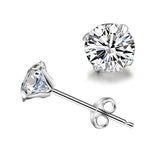
AJLuxe does not sell saline, aftercare products or starter piercing jewelry, and we would rather say so than pretend otherwise. Our earrings are fashion jewelry for healed ears, in 925 sterling silver with 18K gold plating or rhodium plating, so let your piercer choose starter jewelry and see our guide to earrings for new ear piercings and hypoallergenic ear piercing jewelry. Once your piercing is healed and your piercer agrees, browse our stud earrings. For a simple everyday pair, our CZ stud earrings list a 925 sterling silver post. The CZ stone is simulated, not a diamond.
More in this guide
Related reading: ear piercing aftercare, how to clean pierced ears, earring infection signs, and why an earring hole bleeds.
Frequently Asked Questions
Do you really need saline spray for piercings?
Not strictly. The piercers' association page recommends sterile saline wound wash, and others accept a gentle, rinsed soap and water routine. If saline is not available, that page says to focus on rinsing well in the shower. Your piercer's instructions decide.
Which saline is best for an ear piercing?
One labeled as sterile saline wound wash with only 0.9% sodium chloride (and perhaps purified water) in it, with no moisturizers, antibacterials, fragrance or other additives.
Can I use contact lens solution on a piercing?
No. The piercers' association page lists contact lens saline, nasal spray and eye drops as look-alikes to avoid. They are made for other purposes and may contain other ingredients.
Can I make saline solution at home?
The sources we read advise against it, because homemade mixes are easy to make too strong. The public health service page mentions warm salty water for softening crust but gives no ratio, and we do not provide a recipe.
How often should I use saline on an ear piercing?
Sources say anywhere from once a day to two or three times a day, and warn against over-cleaning. Ask your piercer how often and for how long.
Does saline solution expire?
Products carry a printed expiry date, so check yours. We did not find a source giving a shelf life for an opened product, so follow the instructions on the label.
Can saline cure an infected piercing?
No. Saline is a gentle rinse, not a treatment. For heat, spreading redness, pus or fever, the public health service advises seeing a doctor, and leaving the jewelry in unless the doctor says otherwise.
Sources
A piercers' association aftercare page (saline, ingredients, what to avoid), a national public health service page on infected piercings (cleaning, normal healing, signs of infection), a consumer health information site on ear piercing (saline, bleeding and doctor guidance), a piercing studio's aftercare blog post (spray routine, homemade warning), a body jewelry retailer's guide to bleeding piercings (the spray distance tip) and a pediatric clinic aftercare page (soap routine), all read 2026-10-09. Where they disagreed we say so. This is general information and not medical advice.
Written by AJLuxe Team. Last updated: October 2026
All third-party trademarks, brand names and product names are the property of their respective owners. AJLuxe is not affiliated with, endorsed by, sponsored by, or otherwise connected to any third-party brand referenced in this article. Brand names are used solely for accurate comparative reference, and material descriptions reflect each brand's own published product specifications at the time of writing.
You Might Also Like
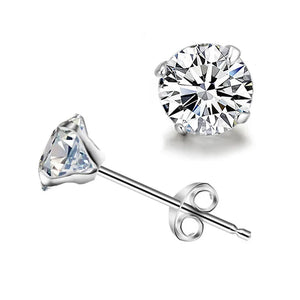
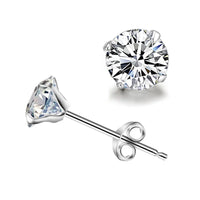
The piece they're describing → CZ Stud Earrings for Women — 925 Sterling Silver, Cubic Zirconia, Hypoallergenic
Personalize Yours


