


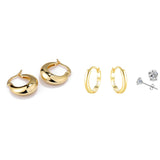
Most ear stack ideas online are photo boards with no explanation. This guide gives you the formula behind them, set out by how many piercings you have: 2, 3, 4 or 5. Each one tells you what goes where, so you can copy the look with the earrings and piercings you already own.

The ear stack formula in three rules
Every stack below follows the same three rules, and they are what separates a curated ear from a crowded one.
- Size cascades down to up. The largest, boldest piece sits in the first lobe. Each piercing above it gets a smaller, simpler piece.
- One dominant metal. Most of the stack is one tone (gold or silver), with at most one or two accent pieces in the other.
- Visible space. Leave a little bare skin between pieces. If two earrings touch, size one down or move it to a different piercing.
Ear stack ideas for 2, 3, 4 and 5 piercings
Find the row that matches your piercings, then use the formula as a shopping list, working from the lobe up. These are styling layouts, not rules about what is allowed.
| Piercings | Formula (lobe to top) | Why it works |
|---|---|---|
| 2 piercings | Huggie in the first lobe, small stud in the second lobe | The easiest stack: a bolder piece and a quiet one, with no cartilage involved |
| 3 piercings | Hoop or huggie in the first lobe, smaller huggie in the second lobe, tiny stud in the third lobe or helix | Weight stays at the bottom and each step up is smaller |
| 4 piercings | Huggie, stud and small stud in the lobes, plus a tiny helix stud | Adds height while the top stays the quietest part of the ear |
| 5 piercings | Four pieces as above, plus a micro stud on the forward helix or a conch piece, or a no-piercing cuff | The upper limit before the size cascade gets hard to read |
2-piercing stack: huggie plus stud
The simplest ear stack is a huggie in the first lobe piercing and a small stud in the second. The huggie is the anchor, and the stud sits just above it with a clear gap. This is also the best place to start if you are new to stacking.
3-piercing stack: three ear piercing ideas
Three piercings can be arranged several ways, and the formula changes slightly with each one:
- Three lobes: hoop in the first lobe, smaller huggie in the second, tiny stud in the third. This is the easiest to wear and heal.
- Two lobes plus a helix: huggie and stud in the lobes, with a tiny helix stud as the smallest piece in the stack.
- Lobe, helix and tragus: a huggie in the lobe, then a small stud in each of the other two. The pieces sit apart, so keep both small so the lobe stays the anchor.
Looking for a ready-made version of the three-lobe layout? Our Earring Stack Set is three pairs (a hoop, a huggie and a CZ stud) in 925 sterling silver with 18K gold plating, sized to cascade from the first lobe up. Our breakdown of what is in the set covers sizing and value.
4-piercing stack: add a helix
With four piercings, editing matters more than adding. Keep the anchor in the first lobe, reduce the diameter with each piece going up, and let a plain stud create a pause between busier pieces. A tiny helix stud is a good fourth piece because it finishes the line without competing with the lobe.
5-piercing stack: the upper limit
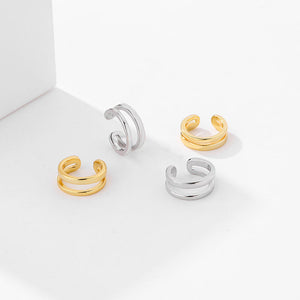
Five pieces per ear is where most stacks stop looking curated and start looking busy. If you go there, make the fifth piece a micro stud on the forward helix, a small piece in the conch, or an ear cuff (see our ear cuff guide). Check the spacing in a mirror before adding anything else.

What goes where: placement overview
Each placement suits a different size and style of earring. Lobes are soft tissue and can carry a bolder piece. Cartilage is thin and curved, so it needs something small and low-profile.
- First lobe: the anchor. Huggies, small hoops and statement studs all work here.
- Second and third lobe: the transition. Small huggies and dainty studs bridge the anchor and the upper ear.
- Helix (upper outer rim): small studs, small flat-back pieces, or a small hoop once healed. It draws the eye up the ear.
- Forward helix (front rim near the face): micro studs only. This is usually the smallest piece in the stack.
- Tragus (flap in front of the ear canal): flat-back studs or a small hoop, which sit apart from the lobe-to-helix line.
- Conch (inner bowl): a small stud or hoop, or a no-piercing cuff, as a bolder accent that does not compete with the lobe.
Planning a second or third hole? Our earlobe piercing chart covers placement and spacing, and our second ear piercing ideas cover where to go next. If you prefer a longer walk-through of the curated ear concept, see our curated ear guide.
Mixing metals and sizes on purpose
The reliable way to mix metals is to let one tone cover roughly three quarters of the stack and use the other as one or two accents. Four gold pieces with one silver stud at the top reads as a choice. Alternating gold and silver in a steady pattern from lobe to helix also works. A stack where every piece is a different metal tends to look accidental. The same idea works on your fingers, and our dainty rings guide covers thin ring stacks.
For sizes, match the diameter to the placement, not to the other earrings. A 15mm hoop suits a first lobe, while the helix rarely needs anything beyond a small hoop or stud. Size down as you go up. Our guide to mixing gold and silver has more on tone and ratio.
Shop This Guide
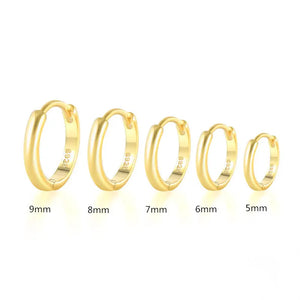
Our huggie earrings are 925 sterling silver with 18K gold plating, and a huggie is the anchor piece in most of the stacks above.
Shop the Minimalist Huggie EarringsHealing and safety notes before you add pieces
Do not add or swap jewelry in a piercing that is still healing. Healing time varies: lobes often settle in about six to eight weeks, while cartilage (helix, forward helix, tragus, conch) commonly takes many months and sometimes a year or more. Keep the jewelry your piercer fitted until they confirm the piercing is healed, and ask a professional piercer if you are unsure about post length or fit.
- Fit first: a post that is too long catches on hats, headphones and pillows. Cartilage pieces should sit close to the ear.
- Material: our earrings are 925 sterling silver with 18K gold plating. Plating is a thin layer that wears over time, and metal sensitivities differ from person to person, so stop wearing any piece that irritates you. See our guide to the best materials for earrings.
- Sleep: avoid sleeping on a cuff or a fresh cartilage piercing, since steady pressure can cause soreness.
- Upkeep: more pieces mean more places for buildup, so clean them regularly. Our how to clean earrings guide has the steps.
AJLuxe sells earrings, not piercing services. If you want a new piercing, book with a professional piercer.
Frequently Asked Questions
How do you stack earrings?
Put your biggest piece at the lobe and make every piece smaller as you move up the ear. Keep one dominant metal, leave a little bare skin between pieces, and aim for two to five earrings per ear. Start with an anchor (a huggie or small hoop) and add one piece at a time.
What is a good earring stack for 3 piercings?
A reliable three-piercing stack is a hoop or huggie in the first lobe, a smaller huggie or stud in the second lobe, and a tiny stud in the third lobe, or on the helix if you have one. Weight sits at the bottom and the top stays quiet.
What are some 3 ear piercing ideas?
Three common layouts are three lobe piercings, two lobes plus one helix, and lobe plus helix plus tragus. Three lobes is the easiest to wear and heal, two lobes plus a helix adds height, and lobe plus helix plus tragus spreads the stack across the ear.
How many earrings should be in one ear stack?
Two to five pieces per ear reads as curated for most people. Two or three is the easiest to keep balanced. Past five, it gets hard to keep the size cascade and spacing clear, so the stack starts to look busy.
Can you mix gold and silver earrings in a stack?
Yes, if it looks deliberate. Let one metal tone make up most of the stack and use the other as one or two accent pieces, or alternate the two tones in a consistent pattern from lobe to top.
Do you need multiple piercings to try ear stacking?
No. Two piercings are enough for a real stack, for example a huggie in the first lobe and a small stud in the second. A no-piercing ear cuff can add a cartilage-level accent without a new hole.
What should go on the helix in an ear stack?
Keep the helix piece the smallest and simplest in the stack, usually a tiny flat-back stud or a small hoop once the piercing is fully healed. Cartilage heals slowly, so keep the jewelry your piercer fitted until they confirm it is healed.
How long do piercings take to heal before I can add more earrings?
Healing varies from person to person. Lobes often take around six to eight weeks to settle, while cartilage such as the helix, tragus and conch commonly takes many months, sometimes a year or more. Ask a professional piercer to check a piercing before you swap or add pieces.
Should ear stacks match on both ears?
No. Many people build a fuller stack on one ear and keep the other simple. If you want a balanced look, match the proportions and metal tone on both ears rather than every piece.
Can ear cuffs be part of an ear stack?
Yes. A cuff holds by tension rather than a hole, so it is an easy way to add height at the top of a stack or to try a placement before committing to a piercing.
Written by the AJLuxe Team. Last updated: October 2026.
All third-party trademarks, brand names and product names are the property of their respective owners. AJLuxe is not affiliated with, endorsed by, sponsored by, or otherwise connected to any third-party brand referenced in this article. Brand names are used solely for accurate comparative reference, and material descriptions reflect each brand's own published product specifications at the time of writing.
You Might Also Like

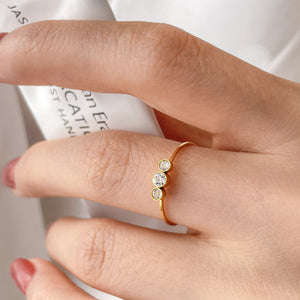
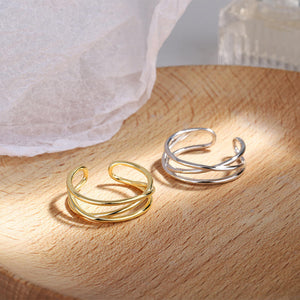
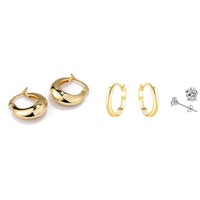
The piece they're describing → Earring Stack Set for Women — 3-Piece Ear Stack, Hoop, Huggie & CZ Stud, 18K Gold Plated
Personalize Yours


