


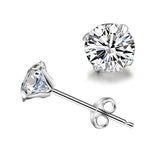

Gauge shows up in two very different earring conversations, and mixing them up is the most common sizing mistake. One is post thickness — how wide the wire itself is, which determines whether a stud fits a given piercing hole. The other is the "how do I know my earring gauge" question people ask after a piercing has stretched or when a post feels loose or tight in a hole that's used to a different jewelry brand. This guide covers both: the actual gauge-to-millimeter chart, how to measure what you already have, and which gauge is standard for which piercing type.
Earring Gauge Size Chart
| Gauge | Millimeters | Inches | Typical Use |
|---|---|---|---|
| 24g | 0.5mm | 0.02" | Some infant/first-piercing starter posts |
| 22g | 0.6mm | 0.025" | Lightweight fashion studs |
| 20g | 0.8mm | 0.032" | Most standard stud earrings and mall piercings |
| 18g | 1.0mm | 0.04" | Standard professional-piercer lobe and cartilage jewelry |
| 16g | 1.2mm | 0.05" | Cartilage, helix, some initial-piercing jewelry |
| 14g | 1.6mm | 0.064" | Navel, some initial cartilage and industrial piercings |
| 12g and thicker | 2.0mm+ | 0.08"+ | Stretched lobes, body-jewelry plugs |
Remember the counterintuitive part: the number goes down as the post gets thicker. A 16g post is thicker and sturdier than a 20g post, not smaller.
How to Measure the Gauge of an Earring You Already Own
The most reliable home method is a caliper (digital or dial) measuring the post's width in millimeters, then matching that number to the chart above — a ruler alone isn't precise enough to tell 0.8mm from 1.0mm by eye. If you don't have calipers, a jeweler or piercing studio can measure it in under a minute, and it's worth doing before buying replacement earrings for an existing piercing rather than guessing from memory.
Standard Gauge by Piercing Type
- Standard earlobe (mall or jewelry-counter pierced) — usually 20g.
- Standard earlobe (professional piercing studio) — usually 18g, thicker than mall-piercing guns typically use.
- Cartilage (helix, tragus, conch) — usually 16g at a professional studio, sometimes 18g.
- Second or third lobe hole — often pierced at 20g even when the first hole is 18g, since a smaller, lighter stud usually looks more intentional in a second placement.
- Navel and some surface piercings — usually 14g.
A post that's too thin for a given piercing can migrate or irritate the channel over time from excess movement; one that's genuinely too thick simply won't go in without deliberate stretching, which is a separate, gradual process — never force a thicker post into a hole sized for a thinner one. The American Academy of Dermatology is a useful reference for piercing aftercare and metal-sensitivity guidance more broadly if irritation shows up after a jewelry switch — gauge fit and metal choice are the two variables worth checking first, not just one or the other.
Why This Matters More Than It Seems For a Simple Stud
Buying a stud in the wrong gauge for your actual piercing is the single most common reason a "cute" earring ends up sitting in a drawer unworn — either it's loose enough to spin and catch on things, or it doesn't comfortably fit at all. Checking gauge before buying, especially for a second hole or a cartilage piercing where gauge varies more than standard lobes, avoids that entirely.

Common Gauge Mistakes When Buying Online
The most frequent mistake is assuming "standard" means the same thing across every retailer — it doesn't. A listing that just says "fits standard piercings" without a gauge number is telling you nothing verifiable, and you're relying on the seller's definition of standard matching yours. A second common mistake is buying a gauge based on what a piece looked like on someone else's ear in a photo, rather than checking your own piercing — ear anatomy and how snug a piercing has healed both affect how a given gauge actually sits, so two people with "the same" piercing can have a noticeably different comfortable fit.
A third mistake, more specific to cartilage and second-hole shoppers: assuming every stud in a collection runs the same gauge just because they're sold as a matching "set." Some multi-piece stud sets deliberately vary post thickness across the pieces (a slightly thicker post for a lobe stud, thinner for an accent piece), so check each piece's specification individually rather than assuming uniformity across a set.
What AJLuxe's Stud Earrings Run
AJLuxe's stud and huggie earrings — including the CZ stud earrings, dainty gold studs, and birthstone studs — are built at standard 20g, the fit for a typical earlobe piercing whether it was done at a mall counter or a studio. They're not sized for stretched lobes, cartilage placements thicker than 20g, or body-jewelry gauges — if you know your piercing runs 18g or 16g, measure your current jewelry first to confirm fit before ordering.
A Note on Deliberately Stretching a Piercing
Moving to a thicker gauge on purpose — stretching — is a gradual process, not a one-step jewelry swap. The general guideline piercers use is waiting until a piercing has been fully healed at its current gauge for at least a month before stretching, then moving up in small, single-size increments (for example 20g to 18g, not 20g straight to 14g) with healing time between each step. Stretching too quickly, or forcing a jump of multiple gauge sizes at once, risks tearing, thinning, or permanently damaging the tissue — the deliberate, incremental pace exists because the tissue needs to genuinely adapt at each size before taking on more.
If you've stretched a lobe in the past and want to size back down, be aware that tissue doesn't always fully return to its original diameter, especially after a significant stretch — a piercing professional can advise on realistic downsizing expectations for your specific situation rather than assuming a full return to the original gauge is guaranteed.
Earring Gauge: Common Questions
- How do I know my earring gauge size?
- Measure the post's diameter with a caliper (digital calipers are the most accurate home method) and match the millimeter reading to a gauge chart, or have a piercing studio or jeweler measure it for you in person.
- Is a 16 or 20 gauge earring bigger?
- 16 gauge is the thicker, larger-diameter post — gauge numbers work in reverse, so a smaller number means a thicker wire. This trips up a lot of first-time buyers since it's the opposite of how most other measurements work.
- What size are 1 gauge earrings?
- 1 gauge measures about 7.35mm, which is well into stretched-lobe/body-jewelry plug territory — far thicker than any standard stud or fashion earring post, which typically runs 18g–22g.
- What size gauge is a normal earring?
- Most standard fashion stud earrings run 20 gauge (0.8mm); earrings pierced or sold through a professional piercing studio more often run 18 gauge (1.0mm), which is slightly thicker.
- Can I wear a thinner-gauge earring in a thicker-gauge piercing?
- You can, but it tends to sit loosely, shift or spin more than intended, and in some cases irritate the channel from extra movement — it's not dangerous the way forcing a too-thick post is, but it's not a great long-term fit either.
- Do all cartilage piercings use the same gauge?
- No — most professional studios pierce cartilage at 16g, but some placements or studios use 18g, and initial jewelry gauge can differ from what you switch to once healed. Confirm with your specific piercer rather than assuming.
- Why does my earring feel loose even though it's the same style I always buy?
- Different brands and retailers don't always use identical gauges for what's marketed as the same style — a "standard" stud from one seller can run a hair thinner than another's. If a normally snug piercing suddenly feels loose with a new pair, gauge mismatch is the most likely explanation before assuming the piercing itself has stretched.
- Is gauge the same as earring diameter or thickness of the decorative part?
- No — gauge refers only to the post (the wire that goes through the piercing), not the visible stud, charm, or hoop diameter. Two earrings can share the same gauge post while looking completely different in size on the front.
Final Thoughts
Gauge is the one earring measurement that's easy to get backwards — remember that a lower number means a thicker post — and it's worth checking before buying for anything other than a first, standard lobe piercing. Measure what you currently wear with calipers if you're unsure, and match new pieces to that number rather than assuming every stud on the market is built the same. AJLuxe's stud and huggie earrings run standard 20 gauge, sized for typical earlobe piercings; if your piercing runs thicker, confirm fit before ordering.
Last updated: September 2026. Written by the AJLuxe team — specialists in personalized sterling silver jewelry.
All third-party trademarks, brand names and product names are the property of their respective owners. AJLuxe is not affiliated with, endorsed by, sponsored by, or otherwise connected to any third-party brand referenced in this article. Brand names are used solely for accurate comparative reference, and material descriptions reflect each brand's own published product specifications at the time of writing.
You Might Also Like
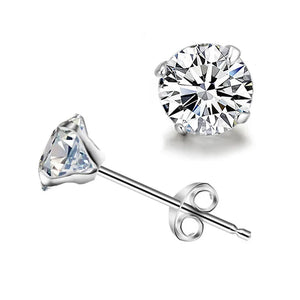
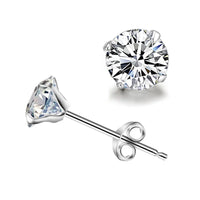
The piece they're describing → CZ Stud Earrings for Women — 925 Sterling Silver, Cubic Zirconia, Hypoallergenic
Personalize Yours


