Shipping notice: orders placed through Fri, Oct 16 at 12 PM ET ship Monday, Oct 19.
Chain Necklaces: The Single Most Versatile Piece You Can Own A chain necklace is one of those rare jewelry items where the simplest version is often the best version. Strip away the pendant, the char…
A chain necklace is one of those rare jewelry items where the simplest version is often the best version. Strip away the pendant, the charm, the focal stone, and what you're left with is a piece that works harder than almost anything else in your jewelry collection. A clean chain necklace at the right length complements virtually any neckline, pairs with virtually any outfit, and works across the broadest possible range of occasions — from rolling out of bed on a casual morning to attending a dinner that requires dressing up. It is jewelry that gets out of the way while still doing exactly what it needs to do.
The paradox of the chain necklace is that its simplicity requires more precision in execution than more complex pieces. When there is no decorative element to focus the eye, the chain itself becomes the entire aesthetic statement. Chain type, thickness, length, and material finish are the variables that determine whether a chain necklace reads as cheap or considered, as effortless or overdone. Understanding those variables is the foundation of building a jewelry collection that works consistently.
Cable chain: Round or oval interlocked links, each one passing through the next in an alternating pattern. This is the most classic and recognizable chain structure in jewelry. Cable chains are clean, readable, and versatile enough to work with pendants of almost any weight. They are the benchmark against which other chain types are measured, and for good reason — a well-made cable chain at 1.5–2mm diameter is one of the most functional jewelry pieces you can own.
Box chain: Square interlocked links that create a smooth, structured appearance with flat sides visible along the length of the chain. Box chains are more contemporary than cable chains — the square geometry gives them a slightly engineered quality that works well with modern, minimal jewelry aesthetics. They lie very flat against the skin and are excellent pendant chains because the square links distribute pendant weight evenly without the chain twisting.
Rope chain: Twisted and interlocked links that create a textured, coiled appearance along the length of the chain. Rope chains are the most visually substantial chain type at the same millimeter thickness as other types — they look heavier than they are. A 2mm rope chain has more visual presence than a 2mm cable chain. Rope chains work beautifully worn alone as statement pieces, and they hold their visual presence even when wearing a pendant because the texture keeps the chain interesting independent of what's hanging from it.
Figaro chain: Alternating long oval links and short round links in a distinct pattern — typically one long link followed by two or three shorter ones. Figaro chains have Italian heritage and a distinctive rhythm that catches the eye differently than uniform chains. They work best when worn alone rather than as pendant chains, because the alternating pattern has enough visual complexity that adding a pendant to it creates competition rather than complement.
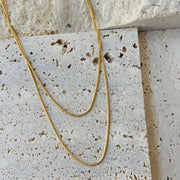
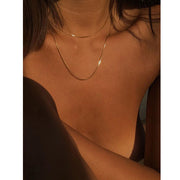
Snake chain: Smooth, scaled links with a rounded exterior that gives the chain a sleek, minimal profile. Snake chains lie completely flat against the skin and have an almost fluid quality to their movement. They are the most minimal chain type — no visible link structure, no texture, just a clean line of metal. Snake chains are best worn alone, as their very minimalism makes them less effective as pendant chains where the pendant needs to hang cleanly away from the chain.
Curb chain: Interlocked, flattened oval links that sit flat in both the horizontal and vertical orientation. When thin (1–2mm), curb chains read as classic and subtle. When thick (3mm+), they become statement pieces with significant visual weight. The curb chain is among the most versatile across thickness levels — a thin curb is appropriate for delicate layering, while a thick curb is a statement necklace worn alone. Curb chains work with pendants when kept at medium thickness.
Wheat chain: Woven diagonal links that create a distinctive herringbone-like texture with a soft, flowing quality to the drape. Wheat chains have more visual interest than cable chains but more elegance than rope chains. They drape beautifully against the skin due to their link construction and are excellent pendant chains because they don't twist even under the weight of a heavier pendant. Wheat chains are less widely seen than cable or box chains, which makes them a good choice for someone who wants a more distinctive chain type without the boldness of a rope or curb.
Chain thickness is measured in millimeters of diameter and is the primary variable that determines how much visual presence a chain necklace has. This variable interacts with chain type — a 2mm rope chain has more visual weight than a 2mm cable chain because of the rope's textured density — but thickness is the starting point for any chain evaluation.
At 1mm, a chain is delicate and barely-there. It catches the light subtly and reads as the most minimal jewelry possible — presence without statement. At 1.5–2mm, you reach the sweet spot for everyday chain necklaces: visible, clean, intentional without being loud. This is the most flattering thickness for most people across most occasions. At 2.5–3mm, a chain becomes bold and dominant — it reads from across a room and becomes the focal point of the jewelry look. At 3mm and above, a chain is making a genuine statement and should be treated like a statement piece rather than a background element.
Not every chain type works equally well in both contexts. Snake and figaro chains have their own inherent visual character that competes with rather than complements most pendants — they are best worn alone, where their distinct chain structure can be fully appreciated. Cable, box, and wheat chains are the optimal pendant chains because their link structures are subtle enough to support without overshadowing whatever hangs from them; the chain retreats and the pendant advances.
Rope chains occupy an interesting middle position: they have enough visual texture to look deliberate worn alone, but their twisted structure also provides enough visual complexity to frame a simple pendant well. A rope chain with a single small stone pendant is a particularly effective combination — the texture of the chain and the focal point of the pendant each occupy different visual roles without competing.
For chain necklaces, material determines longevity more than for any other jewelry type, because chains flex constantly with every movement of your body and experience more metal stress than static earrings or bracelets. The most honest assessment of available materials: 925 sterling silver is the right material for the vast majority of everyday chain necklaces. It is real silver — 92.5% pure — which means it maintains its structural integrity over years of wear. It tarnishes with air exposure, but regular polishing with a silver cloth maintains its appearance indefinitely. Sterling silver chains with 18K gold plating offer the warmth of gold tones over a real silver base, which means the underlying structure is durable even as the plating wears over time.
Gold-filled chains have a substantially thicker layer of gold bonded to a base metal core — the gold layer in a gold-filled piece is typically 100 times thicker than in standard gold-plated jewelry. With reasonable care, gold-filled chains last years without the gold layer wearing through. They are a significant step up from gold-plated base metal chains. Solid gold chains are lifetime investment pieces — a 14K or 18K solid gold chain worn carefully will outlast its owner — but the cost reflects that longevity. For most people building a chain necklace collection in their twenties and thirties, 925 sterling silver and 925 sterling with 18K gold plating provide the best combination of real metal quality and accessible price.
Chain length determines exactly where on the body the necklace sits, and different lengths suit different necklines and different styling intentions. At 14 inches, a chain sits at the base of the throat in a collar-like position — this is a very short length that reads as deliberately close to the neck. At 16 inches, the chain falls just below the collarbone for most people — the most common first-layer length and the most universally flattering. At 18 inches, the chain sits at the breastbone for average heights — this is the single most versatile length and the right answer for "what length should I start with" for almost everyone. At 20 inches, the chain hangs below the breastbone, making it ideal for pendant chains that need to sit further down the chest, and for the second or third layer in a layered stack. At 22–24 inches, the chain enters pendant territory, where a longer length is a deliberate choice to position a pendant at a specific point on the chest.
| Chain Type | Visual Weight | Best Pendant Style | Alone or With Pendant | Typical Use |
|---|---|---|---|---|
| Cable | Light to medium | Any weight, any size | Both | Universal everyday |
| Box | Light to medium | Geometric, modern pendants | Both; especially pendants | Modern minimal |
| Rope | Medium to heavy | Simple single-stone | Both; excellent alone | Everyday statement |
| Figaro | Medium | Not recommended | Best alone | Distinctive everyday |
| Snake | Light to medium | Not recommended | Best alone | Minimal statement |
| Curb | Light (thin) to heavy (thick) | Works at medium thickness | Both; thick versions alone | Classic to statement by thickness |
| Wheat | Medium | Excellent for heavier pendants | Both; especially pendants | Elegant everyday |
Chain necklaces are the most effective layering pieces in a necklace collection because their visual character is defined by texture and thickness rather than by prominent pendants that can compete with each other. The ideal layered chain stack takes advantage of this by combining chains with different textures: a delicate cable chain at 16 inches, a medium rope chain at 18 inches, and a pendant-bearing box chain at 20 inches is a near-perfect layering combination. The cable provides a minimal first layer, the rope provides textured middle presence, and the box chain pendant creates a focal point at the bottom of the stack.
The most common layering mistake with chain necklaces is combining identical chain types at different lengths. Two cable chains at 16 and 18 inches, worn together, do not create the visual interest of a layered look — they create the visual appearance of two chains that happened to be put on at the same time. The contrast in chain texture between layers is what produces the "I designed this" quality that distinguishes an intentional layered necklace look from an accidental one. Invest the same attention in chain type variety as you do in length spacing, and the resulting stack will reward it.
A chain necklace collection built with attention to chain type variety, thickness progression, and length range gives you the flexibility to match any outfit, any neckline, and any occasion. Start with an 18-inch cable chain in 925 sterling silver — and build from there.
A chain necklace is worn for the chain itself — its links, layering or construction — rather than a hanging charm or stone. See types of necklace chains for how the different link styles compare.
2 of these 3 styles are in stock now. We hold our own inventory rather than dropshipping, so anything listed as available is on our shelves and ready to ship.
Yes — the layered choker and double-chain snake necklace are both designed with layering in mind. See best layered necklaces for pairing ideas.
Orders placed before 12pm EST ship the same day; everything else ships the next business day. Delivery inside the USA takes 3–5 days from dispatch, and shipping is free with no minimum order.
Cable chain is the most widely worn chain type globally. Its interlocked round or oval links are the most classic chain structure, and its versatility — works with pendants of any size, suits any neckline, appropriate for every occasion — makes it the universal starting point for chain necklace collections.
Yes, and many chain types look better without pendants. Snake, figaro, and rope chains are particularly strong worn alone. Even a simple cable or box chain at the right thickness and length looks deliberate and polished without a pendant. Bare chain is a legitimate styling choice, not a placeholder for something missing.
For everyday versatility, 1.5–2mm is the ideal thickness range. This range is visible enough to be clearly intentional but not so dominant that it restricts what you can wear with it. Go thinner (1mm) for maximum delicacy. Go thicker (2.5–3mm+) when you want the chain to be a statement on its own.
Gold-filled has a substantially thicker layer of gold bonded to a base metal core — typically 100 times more gold than in plated pieces. Gold-filled chains last years with care before showing wear. Gold-plated chains have a thin decorative layer that wears off faster, especially at friction points like clasps and where the chain contacts clothing. Gold-filled is a meaningfully higher quality product.
Hang each chain on a separate hook rather than storing them together in a box. Individual hook storage prevents contact between chains and eliminates tangling entirely. If hook storage isn't practical, individual zip-lock pouches or individual slots in a compartmented jewelry box also work. The key is preventing chains from contacting each other during storage.
Occasional water exposure won't damage a 925 sterling silver chain immediately, but regular exposure — showering, swimming, exercising — accelerates tarnishing and can weaken clasps over time. Remove chain necklaces before swimming in chlorinated pools or the ocean, as both chlorine and salt water are aggressive on silver alloys. Pat dry immediately if a chain gets wet unexpectedly.
Measure the length from the base of your neck to where you want the chain to sit. 16 inches falls just below the collarbone for most people — this is the most versatile everyday length. 18 inches reaches the breastbone and is the best single-piece length for wearing alone. If unsure, start with 18 inches.
925 sterling silver chain necklaces do tarnish with exposure to air and humidity over time. This is normal and reversible. A silver polishing cloth used monthly maintains brightness. For silver with 18K gold plating, the plating prevents tarnishing initially, but the underlying silver may show through at wear points over years. Store in an airtight pouch or jewelry box when not wearing to slow tarnish.
These three styles are worn for the chain construction itself — a snake-chain double necklace, a multi-strand layered choker, and a heart choker built on a tennis-chain link. See types of necklace chains for how the link styles compare.
The layered choker and double-chain snake necklace are both designed to stack with other pieces rather than stand alone. See best layered necklaces for pairing ideas.
2 of 3 in stock — 112 reviews sit at a 4.57 average across the collection.
Anything unworn can be returned within 30 days, and shipping is free in the USA both ways with no minimum order.
The guides shoppers open most before choosing this piece.