


- Most people stop at 2–4 lobe piercings per ear; there's no hard cap, but each one needs enough room that jewelry doesn't overlap.
- Spacing between lobe piercings isn't a fixed number of millimeters — a piercer sets it based on your specific lobe size and shape, not a universal chart measurement.
- Every lobe position — first, second, third, or a "constellation" cluster — heals in roughly the same window, about 6–8 weeks, per piercer-industry guidance from the Association of Professional Piercers.
- The Association of Professional Piercers advises against piercing guns for any ear placement, lobes included, because of tissue trauma and embedding risk — ask for a single-use needle.
- Lobe piercings are consistently rated among the least painful ear placements; cartilage spots (helix, tragus, daith) hurt more and heal far slower.
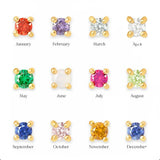
- For a second or third lobe piercing, AJLuxe's birthstone stud earrings ($27.99–$36.99) are sized right for the smaller, higher placements.
Search "earlobe piercing chart" and most of what comes up is a full-ear diagram — lobe plus every cartilage spot from helix to daith. That's useful if you're mapping out an entire curated ear, but it buries the much narrower question a lot of people actually have: where exactly does a second or third lobe piercing go, and how many can I fit? This guide stays inside the lobe on purpose. It covers placement, spacing, gauge, and healing time for lobe piercings specifically — not cartilage — because the lobe is soft, well-supplied tissue that behaves very differently from cartilage, and it's also the one part of the ear AJLuxe's stud, hoop, and huggie catalogue is actually built for.
Related reading: how to style a second lobe hole.
What Is an Earlobe Piercing Chart?
An earlobe piercing chart is a placement reference that shows where a first, second, third, or additional lobe piercing sits relative to each other on the lobe — not a medical standard, just a naming and positioning convention piercers and stylists use to talk about multiple lobe holes. Because the entire lobe is the same type of tissue (soft, fleshy, well vascularized), every position on the chart shares the same general healing profile and jewelry-safety rules — which is different from a full ear piercing chart that has to account for cartilage's slower healing and higher pain level.
| Position | Where it sits | Typical gauge | Best earring types | Minimum healing |
|---|---|---|---|---|
| 1st lobe (standard) | Center of the fleshy lobe | 18–20ga | Any — studs, small hoops, huggies | ~6–8 weeks |
| 2nd lobe (mid-lobe) | Upper portion of the lobe, above the 1st | 18–20ga | Small hoops, dainty or mini studs | ~6–8 weeks |
| 3rd lobe (upper lobe) | Near where the lobe meets cartilage | 18–22ga | Micro studs, tiny huggies | ~6–8 weeks |
| 4th+ / "constellation" | Scattered cluster across the lobe | 20–22ga | Micro studs only | ~6–8 weeks each |
This chart intentionally stops at the lobe. If you're mapping cartilage placements too — helix, tragus, conch, daith — those heal on a much longer timeline (often 6–12 months) and carry higher infection risk since cartilage has less blood flow; our full types of ear piercings guide covers all 15 placements with pain and healing comparisons side by side, or see our full ear piercing chart for a zone-by-zone placement map that covers lobe and cartilage together.

How Many Piercings Can You Get in One Earlobe?
Most people land on two to four lobe piercings per ear, but there's no universal cap — the real limit is whether your lobe has enough room for jewelry to sit without touching, which depends on your individual lobe size. Piercers who do "constellation" work (small clusters of five or more micro-gauge studs scattered across the lobe) treat spacing as a case-by-case design decision, not a fixed formula. If you're not sure how many will fit comfortably, that's a question for the piercer doing the work, not a chart — they're looking at your actual anatomy.
How Far Apart Should Lobe Piercings Be?
There's no single "correct" number of millimeters between lobe piercings — professional piercers set spacing based on your lobe's individual size and shape rather than a universal measurement, which is why you won't find a standardized spacing chart from any credible piercing source. Piercing studios that specialize in multi-lobe work describe spacing and symmetry as something "measured with precision" for each client individually, not read off a generic diagram. As a practical rule of thumb: leave enough room that two pieces of jewelry don't physically touch or overlap once healed, and let the piercer mark the spot with you looking in a mirror before they pierce — that's the one step that actually prevents regret.
What Order Should You Get Lobe Piercings In?
Getting a second or third lobe piercing on the same visit as your first is common practice at most studios, but many piercers prefer spacing multiple new holes on the same lobe across separate visits so they can judge placement against how the previous piercing has settled. There's no rule against doing two on one ear in a single session if you and your piercer are confident about spacing going in — it comes down to your piercer's judgment of your specific lobe. Getting a matching piercing on both ears at the same appointment is standard either way and doesn't carry the same spacing risk.
Needle or Gun for a New Lobe Piercing?
A single-use sterile needle, placed by a trained piercer, is the safer choice for a lobe piercing — including a second, third, or constellation placement — and the Association of Professional Piercers advises against piercing guns for any ear placement, lobes included. Per the APP, the blunt force a gun uses can leave tissue compressed and irritated in a way that prolongs healing, and gun jewelry has in documented cases become embedded in a lobe, sometimes requiring surgical removal. Needle piercing creates less trauma and swelling, and results are more consistent when the jewelry is sized to allow for normal post-piercing swelling — which matters even more once you're adding a second or third piercing close to existing ones.
Healing Time by Lobe Position
Every lobe position — first, second, third, or a constellation cluster — heals on roughly the same timeline, about 6–8 weeks minimum, because it's the same type of soft, well-supplied tissue regardless of where on the lobe it sits. Some piercers and brands recommend a more conservative window before swapping jewelry — the demi-fine brand Astrid & Miyu, for instance, tells customers to wait at least 2–3 months before changing lobe jewelry — so treat 6–8 weeks as a floor, not a finish line, and let any lingering tenderness or redness be the real signal rather than the calendar. This is a meaningfully shorter and more predictable timeline than cartilage, which the Association of Professional Piercers puts at six months or longer.
Gauge Sizes for Multiple Lobe Piercings
Most initial lobe piercings use 18–20 gauge jewelry, and that standard generally holds across first, second, and third lobe placements — one specialist piercing studio explicitly cites single-use, sterile 18-gauge needles for its lobe work. As lobe stacks get more elaborate, some piercers size down to 20–22 gauge for the smallest, highest placements (a third lobe or a constellation cluster) purely for a more delicate look, not because the tissue requires it. Your piercer will confirm the right gauge for your specific placement and jewelry choice at the appointment — it isn't something to guess from a general chart.
Once It's Healed: Styling Multiple Lobe Piercings
This chart covers where lobe piercings go and how they heal — not which earrings to put in them once they have. For the styling side (which earring shape suits which lobe position, how to size jewelry as you move up the lobe, and how to mix metals without it looking accidental), our ear stacking guide and curated ear guide go placement by placement in depth, including cartilage spots if your stack extends past the lobe.
For a healed second or third lobe piercing specifically, scale matters most — a piece sized for a first lobe (a bold hoop or statement stud) will overwhelm a smaller, higher placement. AJLuxe's birthstone stud earrings ($27.99–$36.99) are a mini-CZ stud on 925 sterling silver with 18K gold plating — proportioned for exactly that second or third position, and available by birth month if you want a personal touch on the newest piercing in the stack. Once you know your placement, see our guide to the best earrings for new ear piercings for what's actually safe to wear while healing.
Frequently Asked Questions
What's the 3:2 piercing rule?
The 3:2 (or 2:3) rule is a styling guideline, not a physical placement rule — it means wearing more earrings on one ear than the other (three on one side, two on the other, for example) to create an intentional, asymmetric curated-ear look. It has nothing to do with how far apart your piercings need to be physically; our curated ear guide breaks the styling rule down in full.
How many lobe piercings can you get?
Most people get two to four lobe piercings per ear, though there's no universal maximum — some go further with a "constellation" cluster of small micro-gauge studs. The real limit is whether your individual lobe has enough room for jewelry to sit without overlapping, which is a call your piercer makes by looking at your actual lobe.
How far apart should lobe piercings be?
There's no fixed millimeter measurement — spacing is set individually based on your lobe's size and shape, not a universal chart. A reasonable rule of thumb is to leave enough room that two pieces of jewelry won't touch once healed, and to have your piercer mark the spot for your approval before piercing.
What is the most painful piercing on your ear?
It's generally not a lobe placement — cartilage spots like the rook, forward helix, and daith are consistently rated more painful and take far longer to heal than any lobe piercing. Lobe piercings, first through fourth, are among the least painful ear placements you can get. See our types of ear piercings guide for a full pain and healing comparison across all placements.
Can I use a piercing gun for a second or third lobe piercing?
It's not recommended. The Association of Professional Piercers advises against piercing guns for any ear placement, including lobes, because the blunt force can compress and irritate tissue and has, in documented cases, embedded jewelry in a lobe. A single-use sterile needle from a trained piercer is the safer standard for any new lobe piercing.
What gauge are lobe piercings?
Most initial lobe piercings — first, second, or third — use 18–20 gauge jewelry. Some piercers size down to 20–22 gauge for the smallest, highest lobe placements purely for a more delicate look, but your piercer will confirm the right gauge for your specific piercing.
How long do lobe piercings take to heal?
Every lobe position heals on roughly the same timeline, about 6–8 weeks minimum, since it's all the same soft tissue type. Some sources recommend waiting closer to 2–3 months before changing jewelry, so treat 6–8 weeks as a minimum rather than a guarantee — lingering tenderness or redness is a better signal than the calendar.
Can you get two lobe piercings on the same ear on the same day?
Yes, many studios will do it, though some piercers prefer spacing multiple new holes on the same lobe across separate visits so they can judge placement against how the first one settles. Whether to do both in one session comes down to your piercer's confidence in the spacing for your specific lobe.
What's the prettiest lobe piercing placement?
There isn't a single "correct" answer — it comes down to personal style and how you want to build your stack. A single centered lobe piercing reads classic and minimal, while a second or third lobe piercing opens up a graduated, layered look. Our curated ear guide has ready-to-use stacking blueprints if you want a starting point.
Do lobe piercings close up faster than cartilage piercings?
Yes — lobe piercings can start to close within hours to days if left empty for an extended period on a newer piercing, though a fully healed lobe of long standing is generally more forgiving. Cartilage piercings, by contrast, take far longer to heal in the first place (often 6–12 months) and can be more prone to complications if jewelry is removed and reinserted incorrectly.
For piercing safety standards and aftercare, the Association of Professional Piercers is the industry's leading resource.
All third-party trademarks, brand names and product names are the property of their respective owners. AJLuxe is not affiliated with, endorsed by, sponsored by, or otherwise connected to any third-party brand referenced in this article. Brand names are used solely for accurate comparative reference, and material descriptions reflect each brand's own published product specifications at the time of writing.
You Might Also Like
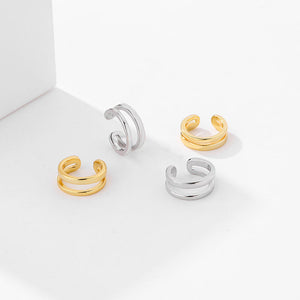
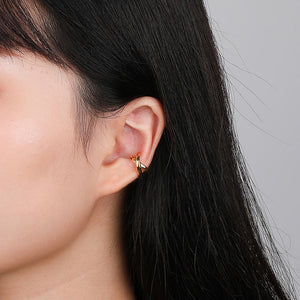
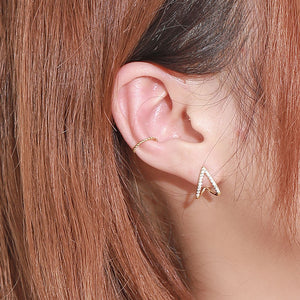
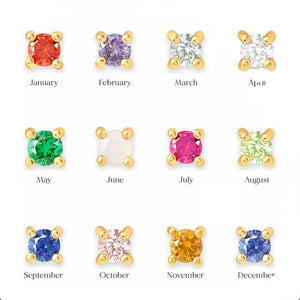
The piece they're describing → Birthstone Stud Earrings for Women — 925 Sterling Silver, 18K Gold Plated, Mini CZ
Personalize Yours


