


Written by the AJLuxe team — specialists in hypoallergenic sterling silver jewelry. | Last updated: June 2026
Most people have fallen asleep with earrings in at least once. Some do it every night. The question isn't whether it's possible — it's whether it's actually safe for your ears and your jewelry.
The honest answer: it depends on two things. The style of earring you're wearing, and the metal it's made from. Get both right, and sleeping with earrings in is no big deal. Get either one wrong, and you're looking at a sore lobe, a bent post, or a lost earring back somewhere in your sheets.
This guide covers which earring styles work for overnight wear, which ones you need to take off, what metals are safe for your skin overnight, and a few simple habits that protect your ears while you sleep.
Is It Safe to Sleep With Earrings In?
For most people, yes — with the right earrings. Small, low-profile styles in hypoallergenic metals are safe for overnight wear on a regular basis. The risks come in when earrings are large, dangle, or have sharp or loose backs that can press into your skin while you're lying down.
The metal matters too. Nickel is the most common cause of contact dermatitis from jewelry, according to the American Academy of Dermatology. During sleep, earrings sit against your skin for 7–8 hours with no movement to ventilate the area. That extended contact is exactly the kind of exposure that triggers a reaction in nickel-sensitive people. The solution is simple: choose earrings made from metals that don't contain nickel.
Piercing age is another factor. A fresh piercing needs earrings in at all times — taking them out before it heals can cause the hole to close within hours. An older, fully healed piercing is more forgiving, but that still doesn't mean any earring style works overnight.
Earring Styles Safe to Sleep In
Small Huggie Earrings
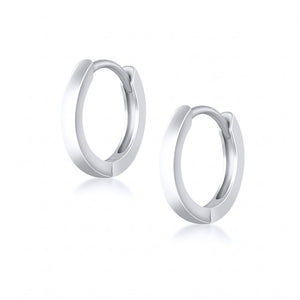
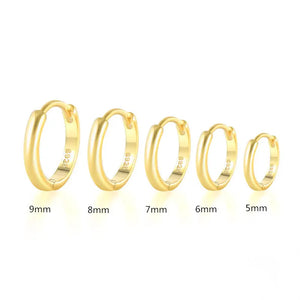
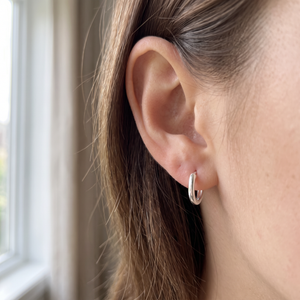
Huggie earrings are the best choice for sleeping. They hinge shut around the earlobe and sit close to the ear with no dangling parts. There's no loose back to fall off and get lost in your bed, and the low profile means they won't press into your ear when you turn over. As long as the hinge is secure and the metal is hypoallergenic, huggies are comfortable to wear overnight. This is essentially what a dedicated "sleeper" earring is built for — see our sleeper earrings guide for the exact sizing that qualifies.
Small Flat Studs
Small stud earrings with butterfly (push) backs work fine for sleeping, with one condition: the post should be short, and the back should be snug. A loose butterfly back can press into your neck or fall off while you sleep. If the stud is small and sits flush against the lobe, it won't cause any discomfort overnight.
Ear Cuffs
Ear cuffs that wrap around the outer ear have no post and no back — nothing to press into your skin. They're one of the most comfortable overnight options, especially if you're a side sleeper. Make sure the cuff fits securely so it doesn't slip off, but don't squeeze it so tight that it creates pressure.
What to Avoid Overnight
These styles should come off before bed:
- Large hoop earrings (over 1 inch): They snag on pillowcases, can stretch the piercing hole, and may bend under pressure.
- Dangle and drop earrings: The movement that makes them beautiful during the day becomes a hazard at night — they tangle, catch, and can pull on your lobe.
- Chandelier earrings: Same issue, amplified. Multiple hanging elements mean multiple catch points.
- Earrings with sharp or protruding backs: Screw backs that protrude more than 2–3mm can dig into your neck when you lie down.
- Clip-on earrings: The spring tension that keeps clip-ons in place is uncomfortable for extended wear and can restrict circulation to the lobe.
Comparison Table: Which Earring Styles Are Safe for Sleeping?
| Style | Sleep-Safe? | Why |
|---|---|---|
| Small huggie earrings | Yes | Low profile, hinged closure, nothing to catch or lose |
| Small stud (butterfly back) | Yes, if snug | Minimal profile; loose back can dig in or fall off |
| Ear cuff (no post) | Yes | No back, no post, no pressure points |
| Large hoop (over 1 inch) | No | Snags on fabric, can stretch or bend the piercing |
| Chandelier / dangle earrings | No | Multiple hanging elements tangle and pull on lobes |
When You Should Keep Earrings In While Sleeping
There are situations where taking your earrings out at night is actually the wrong move.
Fresh Piercings (First 6–8 Weeks)
If you've had your ears pierced recently, your piercer told you to leave the starter earrings in — and that includes while you sleep. A new piercing is an open wound. The hole can start to close within hours if you remove the earring, and re-inserting it through a partially closed piercing is painful and risks introducing bacteria. Keep your starter studs in, clean them morning and night, and wait until the piercing has fully healed before swapping to other styles.
Piercings That Close Quickly
Some people's piercing holes close faster than others, even after months of healing. If you've noticed your holes start to close overnight, keep small studs or huggies in rather than dealing with the discomfort of re-piercing through a tightened hole every morning.
Cartilage Piercings
Cartilage piercings take significantly longer to heal than lobe piercings — typically 6–12 months or more. For the duration of the healing period, the starter jewelry stays in at all times. Cartilage is less forgiving than lobe tissue; a cartilage piercing that closes is much harder to reopen.
Tips for Sleeping With Earrings In Safely
Even with the right earring style, a few habits make overnight wear more comfortable and safer for your ears.
- Switch to a silk or satin pillowcase. Cotton pillowcases have a texture that catches on earrings and increases friction against your lobe. Silk and satin reduce the drag, which means less pressure on your earrings and less chance of a clasp snagging.
- Check your backs before bed. Spend five seconds making sure butterfly backs are firmly seated. A back that's worked loose during the day will almost certainly fall off while you sleep.
- Remove anything that feels uncomfortable. If you feel pressure, pinching, or unusual sensation in your ear when you lie down, take the earring out. Don't assume it'll get more comfortable — it won't.
- Clean your earrings and lobes weekly. A quick wipe with a sterile saline solution or mild soap keeps bacteria from building up on the posts and backs. This matters more for overnight wear because your ears aren't getting the natural ventilation they'd get during the day.
- Don't wear the same pair 24/7 indefinitely. Even hypoallergenic earrings can cause irritation if they're never removed. Give your ears a rest one or two nights per week to let the skin breathe.
The Metal Matters: What to Wear Overnight
The metal your earrings are made from is as important as the style — maybe more so for overnight wear. During sleep, your earrings are in contact with your skin for hours without interruption. Any irritating metal will have maximum opportunity to cause a reaction.
Metals Safe for Overnight Wear
- 925 sterling silver: 92.5% pure silver, hypoallergenic for most people, and one of the most widely available options. It's safe for overnight wear as long as the piece isn't plated over a nickel-containing base.
- 18K gold plated over 925 sterling silver: The key phrase is "over sterling silver." When gold plating sits on a 925 sterling silver base, the base metal is nickel-free. AJLuxe earrings use 18K gold plating over 925 sterling silver specifically for this reason — the base won't trigger a nickel allergy even with extended wear.
- Solid 14K or 18K gold: The most durable and skin-friendly option long-term, but a higher price point.
- Implant-grade titanium or niobium: Preferred by piercers for fresh and healing piercings due to zero nickel content and exceptional biocompatibility.
Metals to Avoid Overnight
- Nickel alloys: Costume jewelry, fashion jewelry, and anything labeled "silver-tone" or "gold-tone" without a metal specification often contains nickel. Nickel is the primary cause of allergic contact dermatitis from jewelry.
- Brass: Often used as a base metal in fashion jewelry. Brass can contain zinc and lead compounds and is not safe for extended skin contact.
- Unknown or unlisted metals: If the product listing doesn't state the metal composition, skip it for overnight wear.
Shop AJLuxe Earrings Safe for Overnight Wear
All AJLuxe earrings are made from 18K gold plated 925 sterling silver — nickel-free at the base, hypoallergenic, and designed for sensitive ears. Our huggie and stud styles are low-profile, which makes them the right choice for overnight wear.
Browse our sensitive ear earrings collection for styles specifically curated for sensitive lobes, or explore our hypoallergenic earrings collection to see all earrings safe for extended wear. Prices range from $20–$80.
New from AJLuxe: we now offer true flat back stud earrings in nickel-free 925 sterling silver — the sleep-safe, sensitive-ear design this guide recommends. Join the waitlist »
Frequently Asked Questions
Can you sleep with earrings in every night?
Yes, for small huggies or small studs made from hypoallergenic metals like 925 sterling silver. Avoid sleeping with large hoops, dangles, or chandelier earrings, as these can catch on pillowcases or bend your ear overnight.
Is it bad to sleep with earrings in?
It depends on the style and metal. Small, low-profile earrings in hypoallergenic metals are generally fine. Large hoops or earrings with sharp backs can cause irritation, skin reactions, or injury during sleep.
Should you sleep with new earrings in?
Yes — for the first 6 to 8 weeks after a new piercing, keep your starter earrings in at all times, including sleep. Removing them too early can cause the hole to close or become irritated.
Can sleeping with earrings in cause infection?
It can if you wear earrings made from nickel-containing alloys, or if you have a fresh piercing and don't clean it regularly. Stick to hypoallergenic metals and clean your lobes weekly to reduce risk.
What earrings are safe to sleep in?
Small huggie earrings, small flat studs with snug butterfly backs, and ear cuffs are the safest options. They sit close to the ear with no dangling parts to catch on bedding.
Can you sleep with hoop earrings in?
Small hoops under 12mm can be okay if the wire is smooth and the clasp is secure. Large hoops (over 1 inch) should be removed before bed — they can snag on pillowcases and stretch your piercing hole.
What metals are safe to wear overnight?
925 sterling silver, solid 14K or 18K gold, implant-grade titanium, and niobium are all safe for overnight wear. Avoid mystery alloys, brass, and anything that contains nickel.
Can sleeping with earrings in cause keloids?
Sleeping with poorly fitting earrings that apply pressure to a piercing can cause irritation bumps. Keloids are a genetic predisposition, but repeated irritation can trigger them. Choose low-profile earrings and a silk pillowcase to minimize friction.
Do earring holes close overnight?
For piercings under 6 months old, yes — they can start to close within hours. Older, well-healed piercings are much more stable and can go overnight without earrings without closing.
How do I keep my ears from getting irritated while sleeping with earrings?
Use a silk or satin pillowcase, choose hypoallergenic metals, make sure backs are snug but not too tight, and clean your earrings and lobes once a week. Remove earrings if you feel any pressure or pain.
Related Reading
All third-party trademarks, brand names and product names are the property of their respective owners. AJLuxe is not affiliated with, endorsed by, sponsored by, or otherwise connected to any third-party brand referenced in this article. Brand names are used solely for accurate comparative reference, and material descriptions reflect each brand's own published product specifications at the time of writing.
You Might Also Like


The piece they're describing → Gold Hoop Earrings for Women — 925 Sterling Silver, 18K Gold Plated, Hypoallergenic
Personalize Yours


