


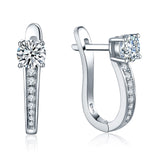
Your butterfly backs are why your ears hurt. That little winged clip digs into the back of your earlobe every time you rest your head on a pillow, snags on your hair every time you reach behind your neck, and creates a pressure point that irritates freshly pierced cartilage just by existing. Flat back earrings — the style every professional piercer recommends by default — swap that raised clutch for a flat disc that sits flush against your skin and disappears.
This guide covers everything: what flat back earrings actually are, the three closure types and how to pick between them, the gauge and post-length numbers you need before you buy, which materials work for sensitive ears and fresh piercings, and exactly how to put them in. By the end, you'll know which type suits your specific situation — no guesswork, no buying the wrong size.
 hoop earring sizes guide.webp?v=1781851190" alt="Flat back stud earrings collection arranged on white marble surface showing different styles" style="width:100%;border-radius:8px;margin:16px 0;">
What Are Flat Back Earrings?
A flat back earring is any earring where the closure sitting against your skin is a flat disc rather than a raised clutch. The disc — usually 3–5mm across — distributes pressure evenly across a larger surface area instead of concentrating it at one raised point. That difference in pressure distribution is why they're significantly more comfortable, especially overnight and for cartilage placements. For a close-to-ear look that uses a hinge clasp instead of a flat back, see our huggie earrings guide.
You'll also hear them called "labret studs." The term is borrowed from lip jewelry (a labret is a lip piercing), but professional piercers adopted the design for ear placements long ago because it's simply the most tissue-friendly closure available. The front of the earring can be any decorative top — a gemstone, a small disc, a flat shape — it's always the back that defines the style.
The post passes through your piercing from front to back, and the flat disc attaches at the back. How exactly it attaches is where the three closure types differ — and picking the right one matters for how easy it is to change, how safe it is for new piercings, and how long it lasts.
The 3 Types of Flat Back Closures
There's no single "flat back" closure. Three different mechanisms all produce the same flat disc result, but they work differently, suit different situations, and carry different price tags.
| Closure Type | How It Works | Ease of Changing Tops | Fresh or Healed | Durability | Typical Price |
|---|---|---|---|---|---|
| Threadless (push-fit) | Bent pin on decorative front tension-locks into a smooth post | Excellent — tops swap in seconds | Both (healed preferred) | Very good — tension holds firmly | $$–$$$ |
| Internally threaded | Threads inside the post; decorative front screws in from outside | Good — requires small turn to change | Both (APP standard for fresh) | Excellent — screw won't loosen unexpectedly | $$–$$$ |
| Push-pin / push-back | Flat disc back; pin on post clicks into hole on disc | Very easy — push and done | Healed piercings | Good — can loosen over time | $–$$ |
Threadless (push-fit) is the style you'll see in the best piercing studios. The decorative top has a small bent pin that slots into the hollow post. Squeeze the pin slightly to tighten the tension, release, and it locks. Pull it out with a small straight tug. Tops from different threadless brands are often interchangeable — one post, a dozen tops. This is the style the Association of Professional Piercers (APP) recommends most frequently.
Internally threaded means the threads are cut inside the post wall, not on the outside of a separate threaded stem. The decorative front screws into the post from the outside. Because there are no external threads on the stem passing through your piercing, the post surface is completely smooth — no sharp threading to catch healing tissue. APP considers this the gold standard for fresh piercings.
Push-pin / push-back is the most common version in mainstream jewelry (including many online retailers). The post has a flat disc back with a small hole; the post's back pin clicks in. It's simple, and for healed piercings it works well. For new piercings, the click mechanism can apply uneven pressure, so wait until you're fully healed before switching to this type.
Flat Back Earring Sizes: Gauge and Post Length Guide
Two numbers define whether a flat back earring fits your piercing: gauge (the thickness of the post) and post length (how long the post needs to be to pass through your ear comfortably). Get both right and it fits perfectly. Get either wrong and you'll have problems — a post that's too thick won't go through, too thin and it'll move around and irritate.
Gauge Sizes
| Gauge | Diameter | Typical Use | Notes |
|---|---|---|---|
| 20g | 0.8mm | Second or third lobe piercings, dainty styles | Very slender — confirm your piercing accepts this before buying |
| 18g | 1.0mm | Standard lobe piercings | The most common size — works for the majority of lobe piercings |
| 16g | 1.2mm | Cartilage: helix, tragus, forward helix, conch | APP standard for cartilage placements |
| 14g | 1.6mm | Larger cartilage piercings, industrial | Less common — only if your piercer specified 14g |
If you're not sure what gauge your piercing is, 18g fits the overwhelming majority of standard ear lobe piercings done at piercing studios. Cartilage placements are almost always 16g. When in doubt, ask the studio that pierced you — they keep records.
Post Lengths
| Post Length | Best For | Notes |
|---|---|---|
| 6mm | Standard earlobes (healed piercings) | Snug fit, minimal movement — most common for everyday wear |
| 8mm | Thicker earlobes, fresh piercings (swelling room) | Standard initial piercing length; trim down to 6mm once healed |
| 10mm+ | Industrial piercings, some cartilage placements | Only for specific anatomy — confirm with your piercer |
Fresh piercings need an 8mm post to accommodate swelling in the first weeks. Once healed (typically 6–12 months for lobes, up to 18 months for cartilage), switch to 6mm. A post that's too long after healing allows extra movement, which slows healing and causes irritation bumps. Your piercer can switch you to a shorter post at a check-up appointment.
Best Materials for Flat Back Earrings
"Hypoallergenic" is an unregulated marketing term. It means nothing specific without knowing the actual metal composition. What matters is whether the specific alloy contains nickel — the most common trigger of contact dermatitis in ears, affecting roughly 17% of women. Here's how the real options rank.
| Material | Nickel-Free | Safe for Fresh Piercings | Durability | Price | Notes |
|---|---|---|---|---|---|
| Implant-grade titanium (ASTM F136) | Yes | Yes — gold standard | Excellent | $$$ | Lightest weight; can be anodized for color; zero nickel; APP #1 recommendation |
| Implant-grade steel (ASTM F138) | Yes (trace only) | Yes | Excellent | $$ | Very low nickel; good for healed piercings; heavier than titanium |
| 925 sterling silver | Yes (when properly sourced) | Healed only | Good | $$ | AJLuxe flat-back studs are 925 sterling; nickel-free; can tarnish if not cared for |
| 14k / 18k solid gold | Yes | Yes (14k+) | Excellent | $$$$ | Best long-term option; expensive; 10k gold can contain more nickel — stay 14k+ |
| Gold-plated over sterling silver | Yes (if base is 925) | Healed only | Good (plate can wear) | $$ | Fine for healed piercings; plate wears off over time exposing silver base |
| "Surgical steel" (unspecified) | Unclear | Not recommended | Good | $ | No consistent standard; may contain 8–10% nickel; always ask for the ASTM spec |
The takeaway: for fresh piercings, implant-grade titanium (ASTM F136) is the safest choice. For healed piercings, 925 sterling silver and gold-plated-over-sterling are both excellent everyday options. Avoid anything labeled just "surgical steel" without the ASTM F138 specification — it's a loose term that can include significant nickel content.

Who Needs Flat Back Earrings?
Four groups benefit most from switching. If any of these describe you, flat backs aren't just better — they're the standard recommendation.
Side and stomach sleepers. A butterfly back presses into the skin behind your ear every time your head hits the pillow. Over eight hours that creates a sore, irritated pressure point. A flat disc eliminates the protrusion entirely — you won't feel it at all. See our full guide on sleeping with earrings in for the complete picture.
Anyone with cartilage piercings. Helix, tragus, forward helix, conch, daith — cartilage heals slowly and punishes pressure. A butterfly clutch sitting against cartilage creates a constant irritation point that can delay healing by months and cause irritation bumps. Every professional piercer uses flat backs for cartilage placements. See our flat back cartilage earrings guide for placement-specific advice.
People with sensitive ears. Less metal touching skin means less nickel exposure. The flat disc is a few millimeters of metal against your lobe. A butterfly back has wings, a spring, and more surface area — all of that pressed against your skin. For anyone with nickel sensitivity, reducing contact matters. Our flat back earrings for sensitive ears guide goes deeper on the nickel connection.
Fresh piercings. Professional piercers always use internally-threaded or threadless flat backs for initial piercings. The smooth post won't catch healing tissue, the flat back won't create a pressure point, and the longer post (8mm) gives room for the swelling that happens in the first few weeks. Switching to a butterfly-back earring while a piercing is still healing is one of the most common reasons piercings get infected.
Flat Back vs Butterfly Back: A Quick Comparison
| Category | Flat Back Earring | Butterfly Back Earring |
|---|---|---|
| Sleeping comfort | No pressure — flat disc disappears against skin | Raised clutch digs into lobe during sleep |
| Cartilage piercings | APP-recommended for all cartilage placements | Not recommended — creates healing complications |
| Sensitive ears | Less metal surface contact = less nickel exposure | More surface area in contact with skin |
| Fresh piercings | Standard recommendation — smooth post, no pressure | Not recommended while healing |
| Hair and clothing snag | None — profile is completely flat | Catches on hair, scarves, clothing regularly |
The butterfly back earring isn't bad jewelry — it's simply optimized for display over comfort. It holds a decorative front in place perfectly well and costs less to manufacture. But every category where comfort matters, the flat back wins decisively.
How to Put In Flat Back Earrings
The steps differ slightly by closure type. Both are straightforward once you've done it once.
Threadless (Push-Fit) Flat Backs
- Hold the post from behind your ear with one hand — the post should protrude through the front of your piercing.
- Take the decorative top in your other hand. The top has a small bent pin that pokes down from the bottom.
- Line up the pin with the hollow opening at the top of the post.
- Press the top down firmly and smoothly until you feel it click or seat firmly. The bent pin creates tension that locks it in place.
- To remove: grip the flat disc at the back with one hand and the decorative top with the other. Pull apart with a smooth straight tug — no twisting needed.
Push-Pin / Push-Back Flat Backs
- Push the post through your piercing from front to back as you would any stud earring.
- Hold the decorative front stable with one hand.
- With your other hand, pick up the flat disc back and align the hole with the post end protruding from behind your ear.
- Press the disc back onto the pin until you feel it click into place.
- To remove: squeeze the disc and the post front gently toward each other to release the pin, then slide the disc off the back.
For either type, clean hands and good lighting make the process much easier, especially the first few times. Once you've done it a few times, it takes under 30 seconds.
Explore More in the Flat Back Series
This guide is the pillar for a full cluster of flat back earring content. Once you know the basics, these articles go deeper on specific use cases:
- Flat Back Earrings for Sensitive Ears — the nickel science, what "nickel-free" actually means, and which materials to trust
- Flat Back Cartilage Earrings — helix, tragus, forward helix, and conch — placement-by-placement advice
- Best Flat Back Earrings — our top picks by style, gauge, and budget
- Best Earrings to Sleep In — why flat backs rank #1 for overnight wear
- Can You Sleep with Earrings In? — the safety facts, by earring type
- Shop the Sensitive Ear Earrings Collection — all styles designed for low-irritation wear
Frequently Asked Questions
- What are flat back earrings?
- Flat back earrings are studs where the closure at the back of your ear is a flat disc rather than a raised butterfly clutch or hook. The flat disc sits flush against the skin — no protrusion pressing into your lobe or cartilage. They're also called labret studs, a term borrowed from lip jewelry that professional piercers now use for all ear placements.
- Are flat back earrings the same as labret studs?
- Yes. "Labret stud" and "flat back earring" describe the same design — a post with a decorative front and a flat disc back. The term originated with lip piercings (a labret is a lower-lip placement) but has been adopted across all ear jewelry because the flat back design works so well for ear piercings too.
- What's the difference between threadless and internally threaded flat backs?
- Threadless flat backs use a bent pin on the decorative top that tension-locks into a smooth hollow post — tops swap in seconds with a straight tug. Internally threaded flat backs have threads cut inside the post wall; the decorative front screws in from outside. Both are APP-approved. Threadless tops are easier to swap; internally threaded is considered marginally more secure and is the APP's preference for fresh piercings.
- What gauge flat back earrings do I need?
- Most standard lobe piercings take 18g (1.0mm). Cartilage piercings — helix, tragus, forward helix, conch — are typically 16g (1.2mm). Second and third lobe piercings can sometimes be 20g (0.8mm). If you're unsure, check with the studio that pierced you — they'll have it on file.
- What post length do I need for flat back earrings?
- 6mm is standard for healed lobe piercings. 8mm is the usual initial piercing length because it accommodates swelling. Once a lobe piercing is healed (typically 6–12 months), a shorter 6mm post reduces movement and irritation. Cartilage piercings often stay at 8mm longer due to slower healing.
- Are flat back earrings better for sleeping?
- Yes. The flat disc creates no pressure point against your skin, so side and stomach sleepers can wear them without the soreness and irritation that butterfly backs cause overnight. This is the most common reason people switch to flat backs. See our dedicated guide on best earrings to sleep in.
- Are flat back earrings good for cartilage piercings?
- They're the standard recommendation for cartilage piercings. The Association of Professional Piercers recommends flat backs (internally threaded or threadless) for all cartilage placements — helix, tragus, forward helix, conch, daith, and rook. Butterfly backs against cartilage create healing complications and increase irritation bump risk.
- What material is best for flat back earrings?
- For fresh piercings: implant-grade titanium (ASTM F136) — zero nickel, lightest weight, gold standard. For healed piercings: 925 sterling silver or gold-plated-over-sterling are both excellent everyday options. Avoid unspecified "surgical steel" — it has no consistent standard and can contain significant nickel.
- Can I use flat back earrings for a fresh piercing?
- Yes — they're the recommended style for new piercings. Internally threaded and threadless flat backs are what professional piercing studios use for initial piercings because the smooth post won't catch healing tissue, the flat disc won't create a pressure point, and the longer post accommodates swelling. Avoid push-pin closures for fresh piercings.
- How do I put in flat back earrings?
- For threadless: push the post through from back to front, then press the decorative top down onto the post until it seats firmly (you'll feel the tension lock). For push-pin: push the post through from front to back, then press the flat disc back onto the post pin until it clicks. Clean hands and good light make both much easier.
- Why do flat back earrings fall out?
- Threadless tops can work loose if the bent pin tension isn't set correctly — gently bend the pin slightly more before inserting to increase tension. Push-pin backs can loosen if the pin is worn or the disc's hole is stretched. If you're losing flat backs regularly, switch to internally threaded, which have a screw mechanism that stays put.
- Can you shower with flat back earrings?
- Yes, for healed piercings in titanium, implant-grade steel, or sterling silver. Avoid prolonged water exposure with gold-plated styles as it can speed up plating wear. For fresh piercings, rinsing with water in the shower is fine — gentle soap and sterile saline are the recommended cleaning methods.
The Bottom Line on Flat Back Earrings
Flat back earrings solve a specific problem: the butterfly clutch hurts in contexts where it really shouldn't have to. For side sleepers, cartilage piercings, sensitive ears, and fresh piercings, the flat disc closure is simply the better engineering choice — less pressure, less metal surface contact, no snagging. Every professional piercer uses them by default. Our hypoallergenic earrings for sleeping guide covers the material side for side sleepers who don't need a dedicated flat-back format.
The most important decision is material. Match the metal to your situation: implant-grade titanium for new piercings, 925 sterling silver or gold-plated-over-sterling for healed everyday wear. Get the gauge right (18g for most lobes, 16g for cartilage) and the post length right (6mm for healed lobes, 8mm for fresh piercings), and you're set.
Ready to try them? Our flat back stud earrings are 925 sterling silver, 18g, with a push-pin flat disc back — $32, nickel-free, and designed for all-day wear. Or browse the full sensitive ear earrings collection for more low-irritation styles.
Written by the AJLuxe team — specialists in personalized sterling silver jewelry. Last updated: June 2026. For more on earring care and comfort, see our guides on best earrings to sleep in and flat back earrings for sensitive ears.
All third-party trademarks, brand names and product names are the property of their respective owners. AJLuxe is not affiliated with, endorsed by, sponsored by, or otherwise connected to any third-party brand referenced in this article. Brand names are used solely for accurate comparative reference, and material descriptions reflect each brand's own published product specifications at the time of writing.
You Might Also Like
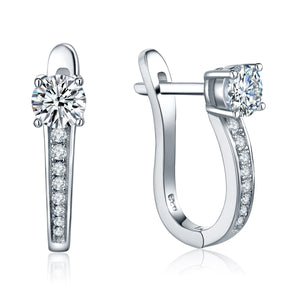
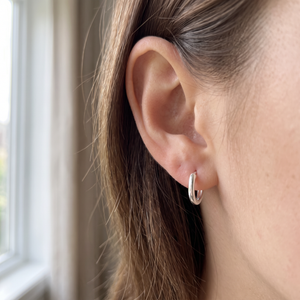
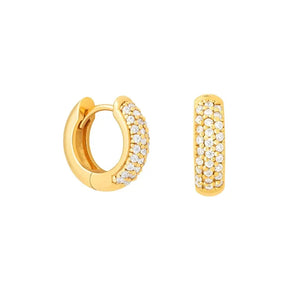
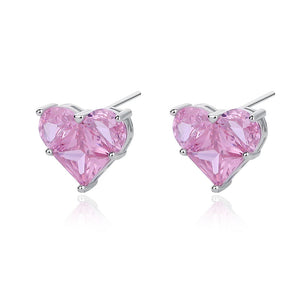
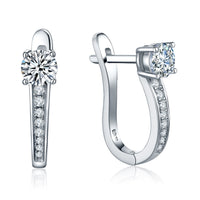
The piece they're describing → Moissanite Hoop Earrings for Women — 925 Sterling Silver, CZ, Hypoallergenic
Personalize Yours


