



- Pure gold does not rust, oxidize or corrode in everyday conditions, which is why ancient gold still looks bright.
- Karat gold (10K, 14K, 18K) is an alloy, and the copper or silver in it can darken over time.
- Gold plated jewelry is the usual "rusting gold": the thin gold wears, and the base metal underneath shows or reacts.
- Red or orange spots usually mean iron or steel is present somewhere, in the base, the clasp or a contaminant.
- If spots keep returning after cleaning, or the gold layer is gone, replace the piece rather than keep scrubbing it.
People search "does gold rust" because something on their jewelry turned red, brown or dark, and they want to know whether the gold is fake. Usually it is not a verdict on the gold at all. This page explains what is chemically possible, what you are probably seeing, and what to do about it. If you are checking whether a piece is solid, start with our guides on gold plated vs solid gold and how to tell if jewelry is real gold.
Does pure gold rust or oxidize?
Pure gold does not rust, because rust is specifically the reddish-brown iron oxide that forms when iron or steel meets oxygen and moisture. Gold contains no iron, and it is one of the least reactive metals, so it does not form an oxide layer or corrode in air, water, sweat, perfume or most household chemicals.
That is the whole reason gold is used for coins, dental work and jewelry that survives for centuries. Chemistry references describe gold as a noble metal that resists oxidation and attack by most single acids. Very strong, specialist mixtures can dissolve it, but nothing you meet while wearing a necklace comes close.
The same goes for the related searches "can gold oxidize", "does gold oxidise" and "can gold corrode". In normal wear, the answer is no. So when jewelry sold as gold changes, the useful question is not "why is the gold rusting" but "what else is in or under this piece".
Then why does gold jewelry change color?
Gold jewelry changes because very little jewelry is pure gold: it is an alloy, a plated layer over another metal, or a bonded layer, and the metals around the gold are the ones that react. Here is how each type behaves.
| Type | What it is | Can it look "rusty"? |
|---|---|---|
| 24K gold | About 99.9 percent gold | No. Soft, but does not tarnish or corrode. |
| Karat gold (9K, 10K, 14K, 18K) | Gold mixed with copper, silver, zinc or others | Rarely. Lower karat has more alloy, so it can darken or stain skin slightly. |
| Gold filled | A thick karat gold layer bonded over a base metal | Unlikely, unless the layer is worn through. |
| Gold vermeil | Gold layer over sterling silver | The silver beneath can darken once the gold wears. |
| Gold plated | A very thin gold layer over a base metal | Yes, as the gold wears and the base shows or reacts. |
Karat gold alloys
Karat gold can tarnish slightly because the non-gold part of the alloy, often copper or silver, is reactive. The lower the karat, the larger the share of those metals: 18K is 75 percent gold, 14K is 58.3 percent and 10K is 41.7 percent. Our guide to why gold is soft and what karat really means explains the mix, and what 14K means on jewelry covers the stamps. In practice a dull film or a faint dark patch on a lower-karat piece wipes off, and the metal underneath is intact. Rust-colored flaking on solid gold is not normal and usually points to something else, such as a steel spring or a plated piece.
Gold plated over base metals
This is the real "rusting gold". Plating is a microscopically thin layer of gold on top of another metal, and friction, sweat, lotion and water wear it away gradually. Once the base is exposed, brass or copper can turn dark or green, and iron or steel can rust. Our pages on whether gold plated jewelry tarnishes and how long gold plated jewelry lasts cover the timeline, and brass vs gold plated explains what is underneath cheaper pieces.
Gold filled and vermeil
Gold filled and vermeil resist this problem better than thin plating, but they are not immune. Gold filled carries a much thicker gold layer, and our page on whether gold filled tarnishes explains why it rarely does. Vermeil is gold over sterling silver, and because silver tarnishes, wear-through can show dark patches, as covered in does gold vermeil tarnish.
Stainless steel bases
Stainless steel does not rust the way plain iron does, because its chromium forms a thin protective layer, but it is not stain proof. Grade 316L, which also contains molybdenum, resists corrosion better than many common grades, so it is often chosen for jewelry. It can still develop brown spots or stains from chlorine, salt water, harsh cleaners or iron particles that land on it, for example from steel wool. See does stainless steel jewelry tarnish and gold plated vs stainless steel for the full picture.
What do red, orange or brown spots on gold mean?
Red, orange or brown spots most often mean iron or steel is present somewhere on or in the piece, or that a copper-bearing base is oxidizing. Because only iron makes true rust, a rust-colored mark is a clue about construction, not about the gold.
- Steel or iron base under plating: the gold has worn through at an edge, clasp or link and the base is rusting.
- A steel part in a solid piece: a clasp spring, pin or jump ring can rust even when the main chain is gold.
- Surface contamination: tiny iron particles from tools, water pipes or another rusty item can sit on any metal and look like rust. These often wipe off.
- Copper oxidizing: in a low-karat alloy or a copper or brass base, this looks more brown, dark or green than orange.
Quick test: what you see, likely cause, what to do
Use this table to match the symptom to the cause before you buy a cleaner or give up on the piece.
| What you see | Likely cause | What to do |
|---|---|---|
| Orange or red spots that smear on a cloth | Iron or steel rust, or iron dust on the surface | Wipe gently. If they return, the base or a steel part is rusting: replace the piece. |
| Brown or black film that wipes off | Surface tarnish from sweat, lotion or sulfur in the air | Clean gently and store dry. See the care section. |
| Gold layer thinning, silver or grey metal showing | Plating wear | Normal over time. Replate if the item is worth it, or replace it. |
| Green tint on the metal or skin | Copper in a base or alloy reacting | See why plated jewelry turns skin green. |
| Flaking or peeling gold | Plating failing, often over a poorly prepared base | Stop wearing it against skin and replace it. |
| Dark mark on skin, metal looks fine | Fine metal particles plus cosmetics or sweat; usually harmless | Remove cosmetics before wearing. General information only: ask a doctor if skin is irritated. |
How do you care for gold jewelry to prevent discoloration?
The best prevention is to keep jewelry dry, clean and separate, since moisture, chemicals and friction are what wear plating and drive reactions in the base metal. These habits help every type above.
- Take jewelry off for swimming, showers, workouts and cleaning. Chlorine and salt water are hard on plating and on stainless steel.
- Put on perfume, lotion and hair spray first, then jewelry.
- Wipe with a soft dry cloth after wearing, and store each piece in a dry pouch. See how to store jewelry.
- Clean plated pieces with warm water, a drop of mild soap and a soft cloth, as in how to clean gold plated jewelry. Avoid abrasive pastes and rough brushes, which remove plating.
- Do not soak pieces for long periods, because water can reach the base through worn spots.
More habits are in how to make gold plated jewelry last longer.
When should you clean, replate or replace?
Clean it if the mark wipes off, and replace it if the gold layer is gone or rust-colored spots keep coming back. Use this checklist.
- Does the mark come off with a soft cloth and mild soap? Keep wearing it.
- Does it return within days of cleaning? The base metal is reacting: replace it.
- Is the base metal visible over a large area? Replate only if it is sentimental or valuable, because plating costs can exceed the price of an inexpensive piece.
- Is it flaking or rough against your skin? Stop wearing it.
- Is the clasp or a small part the only rusty piece? Swap that part if you can.
Never rely on a home chemical to "restore" a rusted plated piece. People try vinegar, baking soda pastes and commercial dips, but these can strip thin plating or attack the base metal further, and the rust usually returns because the base is the problem.
An honest note on our range
We do not sell solid gold. Our gold-tone pieces are 18K gold plated, over either 925 sterling silver or 316L stainless steel depending on the item, so plating wear is a real part of owning them, and we say so on the product pages. For example, the Heart Initial Necklace ($34.99) is 316L stainless steel with 18K gold plating, the Gold Huggie Earrings ($34.99) are 18K gold plated over 925 sterling silver, and the Small Gold Huggie Hoops ($23.99) are 18K gold plated over 925 sterling silver. Plating wears gradually with wear, water and chemicals, and care slows that down. For a look at where plated pieces fit, see is 18K gold plated jewelry worth it. US orders ship free.
More in this guide
Related reading: does gold plated jewelry tarnish, gold plated vs solid gold, how to clean gold plated jewelry, how to make gold plated jewelry last longer and does gold plated jewelry turn skin green.
Frequently Asked Questions
Does gold rust?
No, pure gold does not rust, because rust is iron oxide and gold contains no iron. If your gold-colored jewelry shows rust, it contains iron or steel in the base, clasp or a part, or it is plated rather than solid.
Can gold oxidize or corrode?
Gold does not oxidize or corrode in normal conditions. Karat gold alloys can dull or darken because of the copper or silver mixed in, but the gold itself is unaffected.
Why is my gold necklace turning brown or black?
The most common reasons are surface tarnish from sweat, lotion or sulfur, or a gold layer that has worn thin and exposed the base metal. If the mark wipes off, it is surface tarnish. If it keeps returning, the base is reacting.
Does white gold rust?
White gold does not rust. It is gold alloyed with white metals and usually rhodium plated, so a yellow tint comes from the plating wearing off, not rust. See why white gold turns yellow.
If gold turns green, is it fake?
Not necessarily. Green usually comes from copper in an alloy or base metal reacting with skin, sweat or moisture. It tells you copper is present, not whether the piece contains gold. Plated and low-karat pieces are the usual cause.
Will 9K gold tarnish?
9K gold can tarnish slightly, because only 37.5 percent of it is gold and the rest is alloy metals. It is more likely to dull than higher karats, and a gentle clean usually restores it.
Does stainless steel jewelry rust?
Quality stainless steel resists rust far better than plain steel, and 316L resists it well, but it can still stain from chlorine, salt or iron particles. Rinse and dry it after exposure.
Can I fix rusty gold plated jewelry?
You can wipe off surface marks, but rust coming from the base metal comes back. Replating is possible but often costs more than a low-priced piece is worth, so replacing it is usually more practical.
Written by AJLuxe Team. Last updated: October 2026
All third-party trademarks, brand names and product names are the property of their respective owners. AJLuxe is not affiliated with, endorsed by, sponsored by, or otherwise connected to any third-party brand referenced in this article. Brand names are used solely for accurate comparative reference, and material descriptions reflect each brand's own published product specifications at the time of writing.
You Might Also Like
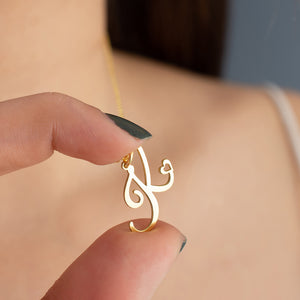
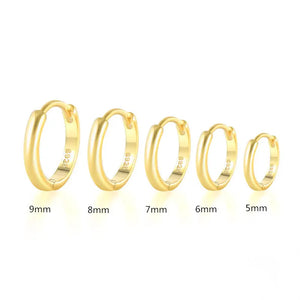
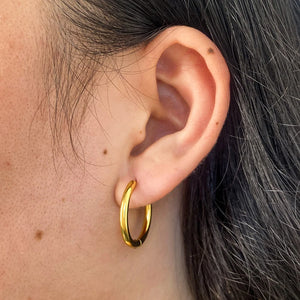
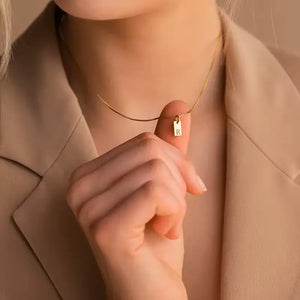
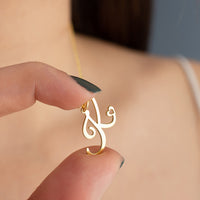
The piece they're describing → Heart Initial Necklace for Women — 18K Gold Plated, Personalized Letter + Heart Pendant
Personalize Yours


