


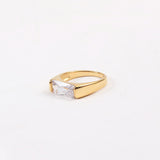
Yes — gold vermeil does tarnish, but not in the way most people expect. The gold layer itself doesn't turn green or brown. What happens is a two-stage process: first, the gold alloy slowly oxidizes (18K gold is 75% gold + 25% copper, silver, zinc — those alloy metals react with air and moisture), dulling the shine. Then, when the gold layer eventually wears through, the sterling silver underneath forms silver sulfide — the classic grey-brown tarnish. Neither stage is permanent. Both can be cleaned, prevented, and reversed.
You just bought a gold vermeil piece, or you're considering one, and you want to know the honest answer before spending your money. Does it tarnish? When? What can you do about it?
Most articles on this topic give you a vague "it depends on care" answer and move on. This guide gives you the actual chemistry, honest timelines by wear pattern, specific causes to avoid, and a cleaning method that won't accidentally strip your gold layer.
The Short Answer: Yes, But Here's What That Means
Gold vermeil can tarnish over time, but the nature of the tarnish depends on which stage of wear the piece is in. There are two distinct mechanisms competitors almost never separate:
| Stage | What's happening | Looks like | Reversible? |
|---|---|---|---|
| Stage 1: Gold oxidation | Alloy metals in the gold layer (copper, zinc) react with oxygen + moisture | Slight dullness, loss of high shine | Yes — soft cloth polishing |
| Stage 2: Silver tarnish | Sterling silver base forms silver sulfide when exposed (after gold wears through) | Grey-brown darkening at friction points | Yes — gentle silver cleaning |
The key insight: pure gold doesn't tarnish. But 18K gold is only 75% gold — the remaining 25% includes copper, silver, and zinc, which do oxidize. And the FTC minimum for vermeil (2.5 microns) is thin enough that high-friction areas will eventually expose the silver base beneath.
Honest Tarnish Timeline by Wear Pattern
How fast tarnish appears depends more on how you wear it than on the piece itself. Here's what to realistically expect — for the complete wear-by-wear breakdown, see our companion guide on how long gold vermeil actually lasts:
| Wear Pattern | Time Until Stage 1 Dullness | Time Until Stage 2 Tarnish |
|---|---|---|
| Daily wear, no care (gym, shower, perfume) | 1–3 months | 6–12 months |
| Daily wear, proper care (remove before water/chemicals) | 6–18 months | 2–4 years |
| 2–3× per week, proper care | 1–2 years | 4–7 years |
| Occasional wear + proper storage | 2–5 years | 8–15+ years |
Higher karat gold tarnishes more slowly: 18K (75% gold) contains fewer reactive alloy metals than 10K (41.7% gold). AJLuxe uses 18K gold plating over sterling silver — a high karat, at the slower-tarnishing end of the range, though our pieces are gold plated rather than certified vermeil.
The 5 Fastest Ways to Accelerate Tarnish
These five exposures do more damage than all other factors combined:
- Chlorine: Found in swimming pools and many household cleaners. Chlorine reacts aggressively with both gold alloys and sterling silver, stripping the gold layer faster than almost anything else. Even brief pool exposure can cause visible damage.
- Perfume and hairspray: Alcohol and chemical compounds in fragrance react with gold alloys. Always apply perfume before putting on jewelry — never spray it on or near a piece you're wearing.
- Sweat and salt: Daily gym wear without removing jewelry creates a constant acid environment. Skin pH combined with salt accelerates both gold oxidation and silver sulfide formation.
- Soap and shampoo residue: Surfactants in soap don't immediately damage the gold, but they build up in chain links and clasps, creating a moisture trap that accelerates oxidation from the inside out.
- Humid storage: Leaving jewelry in a bathroom or unsealed box exposes it to constant moisture and airborne sulfur compounds (from products, food, even rubber). A single anti-tarnish pouch eliminates this risk completely.
What NOT to Do When Cleaning Tarnished Vermeil
This section is where most people make the mistake that turns a fixable piece into a ruined one. These common cleaning methods will strip the gold layer:
- Silver polishing cloths: They contain micro-abrasives designed to polish silver — they will physically remove the gold plating. Never use one on vermeil.
- Baking soda + aluminum foil method: The electrochemical reaction reverses silver tarnish by moving sulfide ions to the aluminum. It also damages the gold layer.
- Vinegar or lemon juice soaks: Acidic solutions corrode the alloy metals in the gold layer and can weaken the bond between gold and silver base.
- Ultrasonic cleaners: The vibration loosens the gold plating, especially at edges and clasps. Not safe for any plated jewelry.
- Toothpaste: Abrasive. Scratches the surface and removes polish finish.
How to Clean Tarnished Gold Vermeil (The Right Way)
The safe cleaning method for gold vermeil is also the simplest:
- Mix a small drop of mild dish soap (fragrance-free) into a cup of lukewarm water.
- Dip a soft cloth — microfiber or lint-free cotton — into the soapy water.
- Gently wipe the piece, paying attention to clasps and chain links where residue accumulates.
- Rinse by wiping with a separate cloth dampened with clean water (no soaking).
- Dry immediately and thoroughly with a soft dry cloth.
- Let the piece air-dry completely for 30 minutes before storing.
For Stage 2 tarnish (the silver tarnish showing through at worn areas): the mild soap method won't reverse silver sulfide discoloration. At this point, you have two options: professional replating ($40–$80, restores the gold layer completely) or accepting the aged patina and continuing to wear it — many people find the look appealing.
How to Prevent Gold Vermeil from Tarnishing

Prevention extends the life of your finish by years. These five habits make the biggest difference:
- Last on, first off: Put jewelry on after applying makeup, perfume, and hair products. Remove it before washing hands, showering, working out, or swimming.
- Store in anti-tarnish pouches: These contain activated carbon or silver paper that absorbs airborne sulfur compounds and moisture. Cost: under $1 per pouch. Effectiveness: significant.
- Wipe before storing: A quick 10-second wipe with a dry soft cloth removes skin oils, sweat, and any residue before it has time to react with the gold layer overnight.
- Keep pieces separate: Metal-on-metal contact causes micro-abrasion. Each piece in its own small pouch or compartment prevents scratching and also limits moisture transfer.
- Avoid rubber and latex: Rubber bands, latex gloves, and some packaging materials emit sulfur compounds that directly cause silver tarnish. Don't store vermeil in contact with rubber.
Is Tarnish a Dealbreaker for Gold Vermeil?
Only if you expect it to behave like solid gold. Gold vermeil is a precious-metal-base piece with a genuine gold surface — not a synthetic material pretending to be something it's not. With the right care, most people get years of wear before any visible change in appearance.
The honest comparison: solid 14K gold doesn't tarnish because it has no base metal exposure. Gold vermeil eventually does, because even 2.5 microns of gold is finite. But the sterling silver underneath tarnishes gently (silver, not green), cleans easily, and can be replated to restore original condition — which solid gold never needs. Different products, different expectations, different value propositions.
Keep Reading
Related reading: Gold Jewelry That Doesn't Tarnish: The Tested 2026 Buyer's Guide.
Related reading: Does Swarovski Jewelry Tarnish? The Real Answer (2026).
Related reading: Does Gorjana Jewelry Tarnish? The Real Answer (2026).
Related reading: Does James Avery Jewelry Tarnish? The Real Answer (2026).
Related reading: Does eNewton Tarnish? The Honest Answer (2026).
Related reading: Does Alex and Ani Tarnish? The Honest Answer (2026).
Related reading: Does 14K Gold Plated Jewelry Tarnish? The Honest Answer (2026).
Related reading: How to Keep Jewelry From Tarnishing: 9 Things That Work (2026).
What Actually Qualifies as "Gold Vermeil" (vs. Gold-Plated or Solid Gold)?
Gold vermeil is a legally defined term in the U.S.: per the FTC's Jewelry Guides, a piece can only be called "vermeil" if it has at least 2.5 microns of 10K-or-higher gold electroplated over a genuine 925 sterling silver base — thinner gold, or gold over brass/copper instead of sterling silver, is gold-plated, not vermeil, no matter what the listing says.
That distinction is the one most shoppers searching "gold vermeil jewelry" are actually trying to sort out: is this the upgraded, longer-lasting option, or just a nicer-sounding name for the same flash-plated piece? Here's how the three tiers actually compare:
| Type | Base metal | Gold layer | Typical price range |
|---|---|---|---|
| Solid gold | None — gold throughout | N/A | $$$$ |
| Gold vermeil | 925 sterling silver (legally required) | 2.5+ microns, 10K+ gold (legal minimum) | $$ |
| Standard gold-plated | Often brass or copper (no minimum required) | No legal minimum — commonly ~0.5 microns | $ |
Two things follow from that table that are worth knowing before you buy: a thicker gold layer over a nobler base means vermeil genuinely outlasts cheap plating, and "vermeil" only means something if the seller can actually name a base metal and a micron thickness — if a listing just says "gold" with no material spec, ask before assuming it meets the standard.
Where AJLuxe fits: our pieces are 18K gold plating over 925 sterling silver, priced $24.99–$79.99. That's the same sterling-silver base and premium 18K gold that define certified vermeil, though we describe our finish as gold plated rather than claiming the certified "vermeil" designation — the honest label matters more to us than the more marketable word.
One more thing worth being direct about: no plated finish, vermeil included, is truly "non-tarnish" — only solid gold and a handful of specialty coatings get close to that. If zero maintenance is the goal rather than a longer-lasting, more affordable alternative to solid gold, vermeil isn't the right search term to be shopping under.
Frequently Asked Questions
Does gold vermeil tarnish?
Yes, through two stages: the gold alloy oxidizes slowly (causing dullness), and when the gold layer eventually wears through, the sterling silver base forms silver sulfide tarnish. Both are reversible — the first with gentle polishing, the second with professional replating.
How long before gold vermeil starts to tarnish?
With daily wear and no care: dullness within 1–3 months, visible tarnish within 6–12 months. With proper care (removing before water and chemicals): 1–3 years before significant change. Occasional-wear with good storage: 5–10+ years.
Does gold vermeil turn green?
No. Green discoloration comes from copper in a brass base. Gold vermeil uses 925 sterling silver — which doesn't produce the copper-oxide reaction. If a piece is turning skin green, the base metal may not be genuine sterling silver.
Can you restore tarnished gold vermeil?
Yes. Mild dullness: soft cloth with a drop of dish soap, dry immediately. Silver tarnish through worn areas: professional replating ($40–$80) fully restores the finish. Never use silver polishing cloths, baking soda, vinegar, or ultrasonic cleaners on vermeil.
Does 18K tarnish slower than 14K gold vermeil?
Yes. 18K gold is 75% pure gold with 25% alloy metals. 14K is 58.3% gold with 41.7% alloy. The alloy metals are what oxidize — less alloy means slower tarnishing. AJLuxe uses 18K, putting it at the slower end of the tarnish spectrum.
Can I clean vermeil with a silver polishing cloth?
Never. Silver polishing cloths contain abrasives designed to remove silver tarnish — they'll physically strip the gold plating from your piece. Use a soft microfiber cloth with mild dish soap instead.
How do you prevent gold vermeil from tarnishing?
Five habits: remove before water/sweat/perfume; store in anti-tarnish pouches; wipe dry before storing; keep pieces separate; avoid bathroom humidity. Done consistently, these extend finish life from months to years.
The Honest Bottom Line on Gold Vermeil Tarnish
Gold vermeil will eventually show its age — that's not a defect, it's physics. But "eventually" ranges from three months (daily wear, no care, bad luck) to ten years (occasional wear, careful storage, consistent habits). The gap between those two outcomes is almost entirely within your control.
What doesn't happen with genuine vermeil: green skin, permanent staining, or a piece that's beyond restoration. The 925 sterling silver base is forgiving, cleanable, and replateable. A vermeil piece that's lost its gold shine isn't lost — it's just due for a refresh.
If you're looking for 18K gold plated over 925 sterling silver — the combination that gives you the longest tarnish resistance at this price point — browse the AJLuxe gold vermeil collection. Every piece uses the same sterling silver base that defines certified vermeil.
Related reading: see our full gold vermeil earrings buying guide.
All third-party trademarks, brand names and product names are the property of their respective owners. AJLuxe is not affiliated with, endorsed by, sponsored by, or otherwise connected to any third-party brand referenced in this article. Brand names are used solely for accurate comparative reference, and material descriptions reflect each brand's own published product specifications at the time of writing.
You Might Also Like
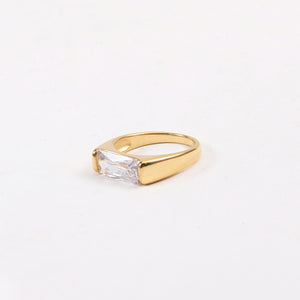

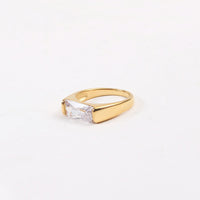
The piece they're describing → 18K Gold Plated Statement Ring — Tarnish-Resistant CZ
Personalize Yours


