


- Genuine stainless steel jewelry does not tarnish because of a self-healing chromium oxide layer on its surface.
- It can still dull or spot under chlorine, saltwater, harsh chemicals or from cheap alloys with too little chromium.
- 316L (often called surgical-grade) resists corrosion better than 304, and both beat unmarked or plated "stainless" pieces.
- Most dulling is surface buildup (soap, lotion, sweat film), not tarnish, and wipes off with mild soap and a soft cloth.
- Stainless steel is not nickel-free and is not guaranteed for every skin type, so sensitive wearers should still check the grade and watch how their skin responds.
Why Stainless Steel Resists Tarnish
Stainless steel resists tarnish because its chromium forms a thin, transparent oxide layer that repairs itself within seconds of a scratch. Tarnish is a chemical reaction: a film of corrosion that forms when a metal's surface reacts with oxygen, moisture or sulfur compounds in the air. Sterling silver tarnishes because its copper alloy reacts with airborne sulfur, and brass and copper darken for the same underlying reason.
Stainless steel is an iron-based alloy with a minimum of 10.5% chromium (jewelry-grade steel usually runs about 16 to 18%). That chromium layer is a barrier between the reactive iron underneath and the outside world. Unlike a coating, it is part of the metal, so it does not wear off the way a plated finish can.

304 vs 316L vs Low-Grade "Stainless" Jewelry
316L is the best grade for jewelry, 304 is a solid everyday grade, and unmarked low-grade "stainless" is where most tarnish complaints come from. The grade on the listing matters more than most shoppers realize:
- 316L (surgical-grade): added molybdenum improves resistance in wet, salty or chemically harsh conditions. This is the grade to look for in daily-wear rings, earrings and bracelets.
- 304: the most common general-purpose grade. It is tarnish and rust resistant in normal conditions but a little more vulnerable than 316L in long exposure to chlorinated or salty water.
- Low-grade or unspecified "stainless steel": some mass-market jewelry uses too little chromium or is a plated base metal in a steel look. These pieces can pit, spot or turn dull gray far sooner, because the protective layer never forms properly.
This is the detail most "does it tarnish" pages skip: genuine 316L essentially does not tarnish under normal wear, but a cheap unmarked piece can, and both are sold under the same marketing language.
Stainless Steel vs Other Tarnish-Resistant Materials
Stainless steel and titanium are the most tarnish-resistant everyday metals, gold plating sits in the middle and depends on how it is applied, and sterling silver tarnishes most. The table compares them side by side.
| Material | Tarnish resistance | Water and shower | Look |
|---|---|---|---|
| 316L stainless steel | Excellent: chromium oxide self-heals | Fine for showers; rinse after chlorine or saltwater | Cool silver-gray tone, industrial finish |
| Titanium | Excellent: forms its own oxide layer | Fine | Matte gray, very lightweight |
| 18K gold plating (PVD process) | Good: a vacuum-bonded layer generally outlasts basic electroplating, but any plating can wear with friction | Light water exposure; avoid chemicals | Warm gold tone |
| Sterling silver (925) | Poor: the copper in the alloy reacts with sulfur in air | Remove before swimming | Bright white metal, needs occasional polishing |
| Basic gold electroplating | Weaker: a thin layer can wear through to the base metal | Not recommended | Gold tone that can fade |
| Solid 14K or 18K gold | Excellent: gold itself does not tarnish (the alloy metals can dull slightly) | Fine | Rich gold tone, highest cost |
When Stainless Steel Can Still Dull or Discolor
Real stainless steel can dull under a short list of conditions: chlorine, saltwater, harsh chemicals, a poor-quality alloy, or simple surface buildup.
- Chlorine. Repeated, prolonged pool exposure can attack the chromium oxide layer faster than it rebuilds, especially on 304. This is chemical pitting rather than sulfur tarnish, but it can look like a dull, spotty surface.
- Saltwater and constant humidity. Chloride ions can gradually break down the layer on steel that is not 316L, leading to fine pitting over months or years of heavy exposure.
- Harsh chemicals. Bleach, chlorine-based cleaners and some acidic or alcohol-heavy products can strip the layer with repeated direct contact. Spraying perfume or hairspray straight onto a piece leaves a hazy film.
- Mislabeled alloys. A plated base metal or a low-chromium steel sold as "stainless" is the biggest cause of "my stainless steel tarnished" complaints. The material was not proper stainless steel to begin with.
- Surface buildup. Most of what people read as tarnish on genuine steel is soap residue, lotion or body oil. It dulls the shine but wipes away completely, so it is not a reaction with the metal.
How to Clean and Care for Stainless Steel Jewelry
Warm water, a few drops of mild dish soap and a soft cloth restore the shine on genuine stainless steel in a couple of minutes.
- Wash with a soft cloth or soft-bristle brush, rinse thoroughly and dry immediately with a lint-free cloth to avoid water spots.
- For light buildup, a microfiber polishing cloth alone often does the job.
- Avoid bleach, chlorine-based cleaners, steel wool and abrasive scouring pads, which can scratch through the protective layer faster than it rebuilds.
- Rinse with fresh water and pat dry after swimming in a pool or the ocean, and put jewelry on after perfume, lotion and hairspray.
- Store pieces dry and separate rather than tangled in a humid bathroom drawer.
Where AJLuxe Fits: Stainless Steel and Gold-Plated Pieces
AJLuxe's main catalog is 925 sterling silver with 18K gold plating, and we also carry a small number of stainless steel designs, including a men's cross necklace in 316L surgical-grade steel. Stainless steel does not tarnish, while sterling silver can, which is the real reason many shoppers ask this question before buying.
Some of our gold-plated pieces use PVD (physical vapor deposition), a vacuum process that bonds the gold layer to the metal underneath rather than dipping or electroplating it. The plating method is named on each product listing. Any plated finish can eventually wear with friction, so we describe plated pieces as tarnish-resistant, not tarnish-proof.

Keep Reading
- Is Stainless Steel Jewelry Hypoallergenic? The Honest Answer
- Sterling Silver vs Stainless Steel: Which Should You Buy?
- Does Gold-Filled Jewelry Tarnish?
- Does Gold Vermeil Tarnish?
- Does Gold-Plated Jewelry Tarnish?
- What Jewelry Does Not Tarnish? The Full List
- Surgical Steel vs Sterling Silver
- Titanium vs Stainless Steel Earrings
Shop This Guide
Want stainless steel, or a warm gold tone with a tarnish-resistant finish? Shop the 316L men's cross necklace in stainless steel, or the 18K gold-plated snake chain necklace made with the PVD process. For the full pros and cons, see Is Stainless Steel Jewelry Good Quality? Honest 2026 Review.
Shop the 316L Men's Cross Necklace Shop the 18K Gold-Plated Snake Chain NecklaceFor pieces that hold up to water, browse AJLuxe's waterproof jewelry collection.
If you are comparing a plain steel piece to a gold-tone steel piece, see our stainless steel jewelry plating explained guide for how the gold finish on steel is applied and how it wears differently from bare metal.
Comparing stainless steel with other metals for everyday wear? See our guide to durable jewelry materials.
Considering stainless steel? See our guide to a stainless steel necklace for men.
Frequently Asked Questions
Does stainless steel jewelry tarnish?
No, not under normal conditions. Genuine stainless steel forms a self-healing chromium oxide layer that blocks the oxidation reactions responsible for tarnish. It can still dull from chlorine, harsh chemicals or a low-quality alloy, but properly made 304 or 316L stainless steel does not tarnish the way silver or brass does.
What are the downsides of stainless steel jewelry?
It is harder to resize than gold or silver, some people find the cool industrial tone less dressy than gold, and lower-grade or mislabeled steel can pit or discolor under heavy chlorine or saltwater exposure. It also cannot be soldered or repaired as easily as precious metals if a piece breaks.
Can you shower with stainless steel jewelry on?
Yes. Genuine stainless steel is water-resistant and fine for regular showering. Avoid long exposure to very hot water combined with harsh soaps or bleach-based cleaners, which can gradually dull the surface finish over years of daily use.
Which is better: sterling silver or stainless steel?
For tarnish resistance and low-maintenance daily wear, stainless steel wins, because it does not need regular polishing the way sterling silver does. Sterling silver wins on traditional luxury feel and resizability. If you want jewelry you rarely have to think about, stainless steel is the more practical choice.
Can you wear stainless steel jewelry 24/7?
Yes, that is one of its main advantages. Genuine 316L stainless steel is made for continuous wear, including sleeping, light exercise and showering, without the tarnishing that affects sterling silver or basic gold plating worn nonstop. Rinse and dry it after pools and the ocean.
Does stainless steel turn skin green?
Generally no. Green skin is caused by copper-based alloys, like the copper in sterling silver or brass, reacting with skin oils and moisture. Stainless steel's chromium-based surface layer does not produce that reaction. Stainless steel does contain some nickel, so it is not nickel-free and not guaranteed for every sensitive wearer.
Does stainless steel jewelry tarnish when wet?
Not from ordinary water, including sweat, rain or showering. Prolonged exposure to chlorinated or salt water without rinsing can, over a long period, wear down the protective layer on lower grades, but brief or occasional wetness is not a concern.
How long does stainless steel jewelry last?
With reasonable care, genuine 316L stainless steel jewelry can last for many years without tarnishing, since the chromium oxide layer keeps renewing itself. Scratches and dents from impact are usually the limiting factor long before discoloration would be.
Does gold-tone stainless steel jewelry tarnish?
The steel underneath resists tarnish, but the gold-colored surface is a coating, usually applied by PVD. PVD coatings are generally more durable than basic electroplating, though the gold layer can still show wear on high-friction areas such as ring bands after long daily use.
Does stainless steel jewelry scratch easily?
No, stainless steel is one of the more scratch-resistant jewelry materials, harder than gold, silver or basic gold plating. It is not scratch-proof, but it handles keys and countertops better than softer metals.
What is the difference between 304 and 316L stainless steel jewelry?
316L contains added molybdenum, which improves resistance to corrosion and pitting in wet or chlorinated conditions compared with 304. Both are tarnish-resistant for everyday wear, but 316L is the better choice for jewelry worn in water often.
Final Thoughts
Genuine stainless steel jewelry does not tarnish under normal conditions, and the exceptions are narrow and mostly avoidable: chlorine, harsh chemicals, heavy saltwater exposure and cheap alloys mislabeled as stainless account for nearly every real complaint. Check for a stated grade (316L or 304), clean it with mild soap and rinse after the pool or ocean.
All third-party trademarks, brand names and product names are the property of their respective owners. AJLuxe is not affiliated with, endorsed by, sponsored by, or otherwise connected to any third-party brand referenced in this article. Brand names are used solely for accurate comparative reference, and material descriptions reflect each brand's own published product specifications at the time of writing.
You Might Also Like

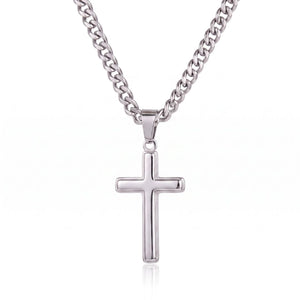

The piece they're describing → Men's Cross Necklace on Cuban Link Chain
Personalize Yours


