



TL;DR: Yes, gold plated jewelry can tarnish over time — but the speed depends almost entirely on the base metal underneath the gold layer, not the gold itself. 18K gold over 925 sterling silver tarnishes significantly slower than gold over brass, looks beautiful even if the gold wears, and can be professionally restored — and unlike some base metals, that silver core itself will never actually rust, only tarnish. With basic care, a quality gold plated necklace lasts 1–3 years of daily wear. This guide covers the chemistry, the timeline, and exactly how to prevent it.
Wondering about white-metal jewelry specifically? Read our honest breakdown: Is White Gold Real Gold?, covering alloy composition, rhodium plating, and how to tell it apart from white-gold-plated or silver-tone pieces.
Does Gold Plated Jewelry Tarnish? The Short Answer
Yes — but with an important nuance that most articles skip.
Gold itself does not tarnish. Pure gold is one of the most chemically stable metals in the world. It doesn't react with air, moisture, or most chemicals. The tarnishing that happens with gold plated jewelry isn't the gold tarnishing — it's the base metal underneath becoming exposed and oxidizing as the thin gold layer naturally wears over time.
This distinction matters because it means the quality of the base metal is what actually determines how your gold plated jewelry behaves long-term. A piece with a 925 sterling silver base behaves very differently from one with a brass base — even if both are labeled "18K gold plated."
The typical lifespan with proper care: 1 to 3 years of daily wear before any noticeable change in appearance. Many people wear the same gold plated necklace for 4–5 years with no issues. The range is wide because the variables are wide — and this guide covers all of them.
If you have sensitive skin, the base metal matters even more — read our guide on best metals for sensitive skin.
Why Gold Plated Jewelry Tarnishes: The Chemistry
Gold plated jewelry has two components: a thin gold layer on the surface (measured in microns — typically 0.5 to 2.5 microns thick for quality pieces), and a base metal underneath that gives the piece its structure.
Over time, with daily wear, that gold layer gradually thins due to friction, chemical exposure, and normal contact. As it thins, the base metal below starts to become exposed in high-contact areas — clasps, the back of pendants, and anywhere the chain rubs against skin. For those with sensitive skin, the base metal under the gold plating matters as much as the gold layer — our jewelry for sensitive skin guide explains exactly what to look for.
When the base metal is exposed, it reacts with environmental factors through a process called oxidation:
- Copper and brass react with oxygen and moisture to form copper oxide — that distinctive greenish discoloration, sometimes called verdigris. This is what causes the "skin turning green" effect.
- Sterling silver reacts with sulfur compounds in the air (from pollution, rubber, certain foods) to form silver sulfide — a gray or black tarnish. This is slower than copper oxidation and far less visible because silver underneath gold still looks like a metallic, precious finish.
- Stainless steel does not oxidize — it's the most tarnish-resistant base metal, but it's harder to work with for fine, delicate jewelry designs.
The critical takeaway: the tarnishing you see on gold plated jewelry is actually the base metal reacting, not the gold. Which is why choosing the right base metal is far more important than most buyers realize.
Sterling Silver vs Brass: Why the Base Metal Changes Everything
This is the most important section in this guide — and the one most other articles skip over.
When you're comparing two gold plated necklaces that look identical, priced similarly, both labeled "18K gold plated," the single biggest quality difference is almost certainly the base metal.
| 925 Sterling Silver Base | Brass Base | |
|---|---|---|
| Tarnish speed when exposed | Slow — silver oxidizes gradually, stays attractive | Fast — brass/copper oxidizes quickly, turns greenish |
| Appearance when gold wears | Beautiful silver tone — still looks like fine jewelry | Dull, greenish — noticeably cheapened appearance |
| Hypoallergenic | Yes — nickel-free, safe for sensitive skin | Often contains nickel — common cause of reactions |
| Long-term wearability | Excellent — the piece stays beautiful for years | Degrades faster — requires replacement sooner |
| Polishable / restorable | Yes — sterling silver polishes easily | Harder to restore once oxidation begins |
| Re-plating worthiness | Yes — the sterling silver base is worth replating | Less worthwhile — the base itself is lower quality |

The practical reality: when the gold layer eventually thins on a sterling silver base necklace, you're left with a beautiful silver-colored piece that still looks intentional and attractive. When the same happens on a brass base, the greenish discoloration is immediately visible and unflattering.
This is why the AJLuxe Heart Initial Necklace uses a 925 sterling silver base — not brass. The 18K gold plating gives it the warm gold finish. The sterling silver underneath ensures that even with years of wear, the piece stays beautiful. And for those with sensitive skin, the combination is nickel-free and hypoallergenic — a difference that matters to the roughly 10–17% of people with nickel sensitivity who would react to a brass-base alternative.
Wondering whether 18K gold plating is worth the price? Read our breakdown: is 18K gold plated jewelry worth it.
How Long Will Your Gold Plated Necklace Last?
The honest answer with the variables laid out:
For the full breakdown by plating thickness, base metal, and care habits, see our guide on how long gold plated jewelry lasts.
With minimal care (no specific precautions): 6 months to 1 year before noticeable finish changes in high-wear areas.
With basic care (removing before water/chemicals, storing separately): 1–2 years of consistent daily wear before any visible change.
With proper care (following all the guidelines below): 2–3 years or more. Some people wear the same quality gold plated necklace for 5+ years.
What affects the timeline most:
Plating thickness: Quality jewelry uses 1–2.5 microns of gold. Budget "flash plated" pieces use under 0.5 microns and wear within months. Premium vermeil (gold plated over sterling silver, 2.5+ microns) can last 5+ years. When a brand doesn't publish micron thickness, it's usually because the number isn't impressive. For more detail, see our guide to whether gold vermeil tarnishes.
Base metal: As explained above — sterling silver base lasts significantly longer and stays attractive as it ages. Brass degrades faster.
Your lifestyle: Necklaces tarnish slower than rings because they have less friction against surfaces. But sweat from the gym, chlorine from pools, and salt from the ocean all accelerate the process. Someone who swims daily with their necklace on will see changes in months. Someone who removes it for water and exercise can go years.
Storage: Storing your necklace in contact with other jewelry creates micro-scratches that thin the gold layer. Stored separately in a soft pouch or original box, the finish is protected between wears.
How to Keep Your Gold Plated Jewelry From Tarnishing
These are the rules that actually make a difference — not overcomplicated, just consistent:
Put it on last. Perfume, lotion, dry shampoo, and hairspray should all go on before your necklace. The chemicals in these products are among the fastest ways to degrade gold plating. A few seconds of order makes a real difference over months of wear.
Take it off before water. Swimming pools (chlorine), the ocean (salt), hot tubs, and even long showers accelerate tarnishing. The occasional splash isn't catastrophic, but regular water exposure cuts the lifespan meaningfully. Make it a habit — off before water, back on after.

Take it off before the gym. Sweat contains salts and acids that react with gold plating. If you wear your necklace during workouts regularly, expect to see finish changes within a year. If you remove it, you extend that to 2–3+ years.
Wipe it after wearing. A quick wipe with a soft, dry cloth after each wear removes the oils, salt, and residue from your skin. It takes 10 seconds and is one of the most effective maintenance habits for gold plated jewelry.
Store it separately. The original gift box or a small velvet pouch is ideal. Keeping it separate from other pieces prevents the micro-scratches that gradually thin the finish. Never throw it loose into a jewelry box with other necklaces, bracelets, or rings.

Use anti-tarnish strips for long storage. If you're storing the piece for a month or more, small anti-tarnish strips in the box absorb sulfur compounds from the air that cause oxidation. Available at any jewelry supply store for a few dollars. Packing for a move specifically? Our guide on how to pack jewelry for moving covers what a sealed moving truck does to plated pieces.
What If It Tarnishes? Cleaning and Re-Plating
For light tarnish or dullness: Gentle cleaning with a soft cloth usually restores the shine. For more noticeable tarnish, mix a small amount of mild dish soap in lukewarm water, dip a soft toothbrush, and gently clean the pendant. Rinse thoroughly and pat completely dry before storing. Never use ultrasonic cleaners, silver polish, or abrasive cloths on gold plated pieces — these remove the gold layer.
For significant tarnish or gold wear: This is where having a sterling silver base pays off again. A local jeweler can professionally re-plate the piece — restoring the 18K gold finish to like-new condition. Cost: typically $50–$150 depending on the jeweler and piece size. Turnaround: 2–7 days. This adds another 1–3 years to the piece's life and is only worthwhile when the base metal is quality — which is exactly why a sterling silver base matters.
If the base metal is brass, re-plating is possible but less worthwhile — you're investing $50–$150 into a piece whose base metal will continue to degrade regardless.
Which Gold Plating Tarnishes Least? Quality Tiers Explained
Not all gold-plated jewelry tarnishes at the same rate. The combination of base metal and plating thickness creates meaningfully different longevity outcomes:
| Plating Quality | Base Metal | Typical Lifespan | Tarnish Behavior |
|---|---|---|---|
| Flash Plated (≤0.5μm) | Brass or zinc alloy | Weeks to months | Rapid darkening + possible green discoloration from base metal |
| Standard Plated (1–2μm) | Brass or stainless steel | 6–18 months | Gradual fading; brass base may cause slight skin reaction as plating thins |
| Quality Plated (1–2.5μm on 925 silver) | 925 sterling silver | 1–3 years daily wear | Even fading; silver underneath stays wearable, hypoallergenic, and re-platable |
| Gold Vermeil (2.5μm+ on 925 silver) | 925 sterling silver | 3–5+ years with care | Slowest tarnish of any gold-plated option; best non-solid-gold longevity |
The best choice for minimizing tarnish: gold vermeil or quality 18K plating on a 925 sterling silver base. The 18K gold layer maintains its appearance longer, and if the gold does wear through, the 925 silver underneath is attractive and safe — not a discolored, skin-staining brass.
A note on labeling: gold electroplate (stamped GEP or HGE — Heavy Gold Electroplate) follows the same tarnishing pattern as other gold-plated finishes. The base metal oxidizes once the thin gold layer wears through. The key difference is deposit thickness: HGE typically uses 2.5–7 microns, which extends wear resistance compared to standard flash plating. Thicker electroplating = slower tarnish, but the same principles apply — base metal quality and care habits determine longevity.
Curious what electroplating actually does at the ion level? See our full breakdown: How Gold Plating Actually Works.
For a full breakdown of what "18K gold plated 925 sterling silver" actually means and how the karat number affects color (not durability), see: 18K vs 14K Gold: What's the Difference?
For the metals that essentially never tarnish at all — and what to realistically expect from each — see: What Jewelry Does Not Tarnish? Metal-by-Metal Guide
Gold Plated vs. Gold Vermeil vs. Gold Filled: What's the Difference?
When shopping for gold jewelry, you'll encounter three terms that look identical but behave very differently when it comes to tarnish:
| Type | Gold Thickness | Base Metal | Tarnish Timeline | Price Range |
|---|---|---|---|---|
| Gold Plated (flash) | <0.5 microns | Brass or zinc alloy | Weeks to months | $10–$40 |
| Gold Plated (quality, 925 silver base) | 1–2.5 microns | 925 sterling silver | 1–3 years daily wear | $30–$120 |
| Gold Vermeil | 2.5+ microns (FTC minimum) | 925 sterling silver only | 3–5+ years with care | $60–$300 |
| Gold Filled | 5% of total weight (20× thicker than plating) | Brass core | 10–30 years | $60–$400 |
| Solid Gold (10K–18K) | 100% gold alloy | N/A | Lifetime — does not tarnish | $300–$3,000+ |
Key distinction: Gold filled has a brass core, which means the underlying metal can show green discoloration if the gold layer ever wears through. Quality gold plated or vermeil over 925 sterling silver actually ages more gracefully — the silver underneath stays wearable and hypoallergenic.
For a full side-by-side, see our gold filled vs. gold plated comparison guide.
The type of chain you choose also affects how quickly tarnish appears. See our guide to types of gold chains for durability ratings on every style.
Choosing between warm and cool-toned gold plating? Our yellow gold vs rose gold guide covers skin-tone suitability, alloy differences, and durability for both tones.
Related reading: Gold Jewelry That Doesn't Tarnish: The Tested 2026 Buyer's Guide.
Related reading: Does 925 Silver Tarnish? Yes — Here's How Fast, Why, and How to Stop It (2026).
Related reading: Does Rhodium Plated Jewelry Tarnish? What Really Happens Over Time.
Related reading: Does Rose Gold Tarnish? The Truth About Plated vs. Solid Rose Gold (2026).
Related reading: Does 14K Gold Plated Jewelry Tarnish? The Honest Answer (2026).
Related reading: How to Keep Jewelry From Tarnishing: 9 Things That Work (2026).
Tarnish is usually a chemistry problem before it's a metal problem: see the everyday chemicals that actually touch your jewelry.
Seeing red or brown spots? Read does gold rust.
Frequently Asked Questions
Does gold plated jewelry tarnish? Yes, but it's technically the base metal underneath tarnishing as the gold layer gradually thins with wear — not the gold itself. Gold is one of the most chemically stable metals and doesn't tarnish on its own. With a 925 sterling silver base and proper care, a quality gold plated necklace lasts 1–3 years of daily wear before any noticeable change.
Does 18K gold plated tarnish faster than 14K? No — the karat of the plating layer affects color (18K is warmer and richer), not tarnish speed. Tarnish resistance comes from plating thickness (measured in microns) and base metal quality. 18K over 925 sterling silver with thick plating is the most tarnish-resistant combination for gold plated jewelry.
Is sterling silver base better than brass for tarnish resistance? Yes, significantly. When the gold layer thins on a sterling silver base, the silver underneath oxidizes slowly and stays attractive — still appearing as a metallic, precious finish. Brass oxidizes faster and turns greenish, which is far less appealing. Sterling silver also stays hypoallergenic throughout, while brass often contains nickel.
How long does gold plated jewelry last before tarnishing? With basic care — removing before swimming and chemicals, wiping after wearing, storing separately — 1 to 3 years of daily wear is realistic. Without any particular care, 6 months to a year. With meticulous care and thick plating (2.5+ microns), some pieces last 5 years or more.
Can you clean tarnished gold plated jewelry at home? For light tarnish or dullness: a soft dry cloth or a gentle wipe with mild dish soap diluted in lukewarm water, followed by thorough drying. Never use silver polish, ultrasonic cleaners, or abrasive cloths — these remove the gold layer. For significant tarnish or worn gold, professional re-plating is the best option.
Does gold plated jewelry turn skin green? Only when the base metal is brass or copper. The greenish color is copper oxide from the brass reacting with skin oils as the gold layer wears. Gold plated jewelry with a 925 sterling silver base does not turn skin green — silver oxidizes to a gray or black tarnish, which is far less visible and takes much longer to appear.
Can you shower with gold plated jewelry? It's best avoided for long-term preservation. Occasional exposure to water isn't immediately damaging, but regular showering accelerates the thinning of the gold layer — especially with hot water and soap. Making a habit of removing your necklace before showering meaningfully extends its lifespan.
Is re-plating gold jewelry worth it? Yes, when the base metal is 925 sterling silver. A jeweler can restore the 18K gold finish for $50–$150, adding 1–3 years of new life to the piece. On a brass-base piece, re-plating is less worthwhile because the base metal itself continues to degrade. This is another reason the base metal matters so much when buying gold plated jewelry.
Does salicylic acid affect gold plated jewelry? Yes — salicylic acid, found in many acne cleansers, toners, and exfoliants, is acidic enough to accelerate wear on gold plating with regular contact. The acid breaks down the gold layer at the molecular level, similar to chlorine or sweat. If you use salicylic acid skincare on your neck or hands, remove necklaces and rings before applying and let the product fully absorb before putting jewelry back on.
What kind of gold plating does not tarnish? No gold plating is completely permanent, but 18K gold plated over 925 sterling silver is the most tarnish-resistant combination available. The 18K gold layer (75% pure gold) is more chemically stable than 10K or 14K plating, and the sterling silver base tarnishes far more slowly and attractively than brass or copper when the gold eventually wears. Look for plating thickness of 2.5 microns or more — that's the FTC standard for vermeil and the minimum for meaningful longevity.
The base metal matters here. Pieces stamped 925 sterling silver tarnish much more slowly than brass-based gold plating — the copper content is lower and the metal is denser, so the oxidation that causes tarnish takes longer to reach the surface.
Final Thoughts: Does Gold Plated Jewelry Tarnish?
- Gold itself doesn't tarnish — it's the base metal beneath the gold layer that oxidizes when exposed through wear
- 925 sterling silver base is significantly better than brass: slower to show wear, more attractive when it does, hypoallergenic, and worth re-plating
- Realistic lifespan: 1–3 years of daily wear with basic care; 2–5+ years with proper storage and chemical avoidance
- The three biggest enemies of gold plating: perfume/lotion contact, water exposure (especially chlorine and salt), and storing with other jewelry
- Re-plating at $50–$150 extends quality sterling silver pieces by 1–3 more years — making them a sustainable long-term choice
For everything you need to know about personalized initial necklaces in one place, read our complete guide to personalized initial necklaces.
Browse AJLuxe's 925 sterling silver jewelry.
Tarnish and green skin are related but different reactions. For the full breakdown on why some gold plated pieces turn skin green and others don't, see: does gold plated jewelry turn your skin green.
Want to know which metals skip tarnish entirely? See our full metal-by-metal tarnish resistance guide — platinum, titanium, solid gold and more ranked.
Related: Our gold stamp markings — GP, GF, HGE, and more.
Related: Our full maintenance guide for making gold plated jewelry last longer.
For a step-by-step cleaning method covering all metal types and gemstones, see our complete jewelry cleaning guide.
To remove tarnish safely without stripping the plating, read our guide on how to clean silver jewelry.
Explore more: Complete Gold Jewelry Guide
Related reading: Is Yellow Gold Real Gold? Karat Purity Explained
Related reading: see how to find a trustworthy gold store near you.
All third-party trademarks, brand names and product names are the property of their respective owners. AJLuxe is not affiliated with, endorsed by, sponsored by, or otherwise connected to any third-party brand referenced in this article. Brand names are used solely for accurate comparative reference, and material descriptions reflect each brand's own published product specifications at the time of writing.
You Might Also Like
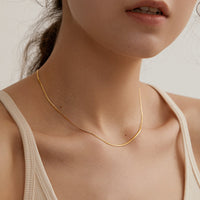
The piece they're describing → Layered Choker Necklace for Women — 18K Gold Plated
Personalize Yours


