


Green skin from jewelry is one of the most common reasons people hesitate to buy gold plated pieces. It's a legitimate concern — and it's also widely misunderstood.
The gold layer itself never turns skin green. Gold is chemically inert; it doesn't react with skin at all. What turns skin green is the base metal underneath — when the gold plating wears thin enough for the base metal to contact your skin. Which means the question isn't really "does gold plated jewelry turn skin green?" — it's "what metal is under the gold?"
This guide explains exactly why green happens, which base metals cause it, why sterling silver doesn't, and how to tell which base your jewelry uses before you buy.
Why Jewelry Turns Skin Green — The Chemistry
Green skin discoloration is caused by a chemical reaction between metal and your skin's natural acids and moisture. It's called oxidation — the same process that turns copper pennies brown and creates the green patina on copper statues.
Copper is the main culprit. Your sweat contains water, salt, fatty acids, and lactic acid — all mildly acidic. When these contact copper (or copper-alloy metals like brass and bronze), a reaction occurs that produces copper chloride and copper carbonate. These compounds leave a greenish residue on your skin.
The reaction is harmless — it's not toxic and it washes off easily — but it's alarming to see, and it signals that the metal touching your skin isn't what you thought it was.
Why gold plated jewelry specifically turns green: The gold layer is a barrier between the base metal and your skin. While it's intact, no reaction occurs. But as the plating wears down in high-friction zones — ring undersides, bracelet inner surfaces, areas that touch skin constantly — the base metal eventually makes direct contact. If that base metal is copper, brass, or bronze, green follows.
Base Metal Matters Most — The Full Breakdown
| Base Metal | Will It Turn Green? | Why | Who Uses It |
|---|---|---|---|
| Copper | 🟢 Yes — most likely | Copper reacts directly with skin acids to produce green copper salts | Very cheap fashion jewelry; rarely labeled |
| Brass (copper + zinc) | 🟢 Yes — common | High copper content reacts with sweat, especially in rings and bracelets | Most fast-fashion gold jewelry, many "gold tone" pieces |
| Bronze (copper + tin) | 🟢 Yes — moderate | Copper content causes reaction, slightly slower than pure brass | Some artisan jewelry |
| Zinc alloy (Zamak) | 🟡 Sometimes | Zinc itself doesn't green skin, but Zamak often contains trace copper; may discolor skin black-grey | Mid-price fashion and costume jewelry |
| 925 Sterling Silver | ❌ No | 925 silver is 92.5% pure silver + 7.5% copper — the copper content is too low and structurally bonded to react with skin | Quality gold plated jewelry (vermeil, 18K on sterling) |
| Surgical steel / Stainless steel | ❌ No | Inert alloy; no copper content to react | Some jewelry, watch cases |
| Solid gold (10K–24K) | ❌ No (if 14K+) | High gold content; 10K has more alloy metals and can occasionally mark skin; 14K+ does not | Fine jewelry |
The key insight: When you buy gold plated jewelry on a 925 sterling silver base, the only metal that will ever contact your skin — even if all the plating wears off — is sterling silver. Sterling silver doesn't turn skin green. Which is why base metal disclosure matters far more than the gold layer itself.
Why 925 Sterling Silver Doesn't Turn Skin Green
This is the part most jewelry guides get wrong or skip entirely.
Sterling silver contains 7.5% copper by weight (the standard 92.5%/7.5% ratio for 925 silver). On paper that sounds like it should cause the same copper reaction as brass. It doesn't — and here's why:
In brass, the copper exists as free atoms in a relatively loose zinc matrix. These copper atoms are available to react with skin acids and moisture. In sterling silver, the copper atoms are tightly integrated into a crystalline silver lattice. The silver-copper bond in 925 sterling is chemically stable — the copper atoms are not freely available to react with your skin's chemistry in the same way.
Additionally, sterling silver is 92.5% silver by weight — silver is one of the most skin-safe metals known to medicine, used in wound care and antimicrobial applications precisely because it's inert at the skin level.
The practical result: even bare 925 sterling silver (no gold plating at all) does not turn skin green. It can tarnish over time — a grey-black oxidation on the metal surface — but it won't discolor your skin green the way brass or copper does. For more on this distinction, see our article on whether gold plated jewelry tarnishes.
How to Check What Base Metal Your Jewelry Has
The quickest way to find out whether a gold plated piece will turn your skin green is to check the metal stamps. Here's what to look for:
Stamps That Mean No Green Risk
- 925 — 925 sterling silver base. Safe.
- SS — Sterling silver. Safe.
- Sterling — Sterling silver (US marking standard). Safe.
- Vermeil — By definition, gold over 925 sterling silver. Safe.
- 18K GF — Gold-filled (thick gold layer, safe for skin).
- GP + 925 — Gold plated on sterling silver. Safe.
Stamps That Mean Green Is Likely
- GP alone (no metal number) — Gold plated, base unknown. Suspect brass unless stated otherwise.
- GF alone — Gold-filled, usually over brass. Green is unlikely but possible in prolonged wear after severe wear.
- No stamp at all — Almost certainly cheap brass or zinc base. Green is probable.
- Stainless steel / SS (on affordable mass-market pieces) — Usually safe but check the listing for confirmation.
The Magnet Test
Run a strong magnet over the piece. Sterling silver is not magnetic. Brass and zinc are typically not magnetic either. However, some cheap base metals and plating adhesion layers contain iron or nickel — if the piece attracts a magnet, the base metal is almost certainly a cheap alloy you don't want on your skin.
The Acid Test (Before Purchase — for Secondhand Pieces)
A drop of nitric acid on a hidden spot on the metal turns green on copper and brass, stays colourless on silver. This is used by jewelers to test purity. Not practical for everyday buyers, but worth knowing if you're assessing vintage or secondhand pieces.

Why Some People's Skin Turns Green and Others Don't
If you've worn the same brass ring as a friend with no reaction while they turned green, this isn't random — it's body chemistry.
These factors increase your likelihood of skin discoloration from metal:
- Skin acidity: Naturally more acidic skin (lower pH) accelerates the copper oxidation reaction. Some people's sweat runs pH 4.0–4.5; others run pH 5.5–6.0. The lower your skin pH, the faster and more intensely you'll green from copper-base jewelry.
- Sweat volume: More sweat = more acid contact = faster reaction. People who sweat heavily while wearing jewelry (especially rings during exercise) green faster.
- Medications and supplements: Some medications — particularly certain antibiotics and prenatal vitamins — alter skin pH and can make even previously-safe pieces suddenly cause discoloration.
- Skincare products: AHAs, BHAs, vitamin C serums, and retinol all increase skin surface acidity. Wearing copper-base jewelry after applying acidic skincare accelerates the reaction significantly.
- Climate: High humidity increases the moisture component of the equation. People in humid climates turn green from copper-base jewelry faster than those in dry climates.
This is why some buyers report that a ring "never used to" turn their skin green and suddenly does — the ring hasn't changed, but body chemistry can shift with age, medication, or skincare habits. The only permanent solution is to use a non-copper base metal.

Already Have Green Skin — What to Do
If you've already been hit with the green ring, here's the fix:
- Wash the area with mild soap and water. The green copper salt compounds wash off easily — it's not a stain or a reaction with your skin cells. It's surface residue.
- Dry completely. Don't let moisture sit; it continues the reaction.
- If the ring left persistent discoloration: Rubbing alcohol on a cotton pad removes the copper residue faster than soap and water.
- Check the ring. Look at the inner band — you'll likely see the gold worn through to the base metal at the highest-contact zone. This is your tell that the base is copper or brass.
The green discoloration is harmless — copper salts are not toxic at these exposure levels. It's unsightly and annoying, but it won't hurt you. The fix is switching to jewelry with a sterling silver or surgical steel base, not avoiding jewelry altogether.
Related reading: Does Sterling Silver Turn Green? The Real Reason (2026).
Related reading: Does Brass Turn Your Skin Green? Yes — Here's Why (2026).
Shop the AJLuxe Circle Heart Necklace
925 sterling silver, an open heart linked to a small pave-set ring — 18K gold plated or left unplated, CZ pave, nickel-free.
Shop the Circle Heart Necklace →Shop AJLuxe's Layered Choker Necklace
A single flat snake-link (herringbone) chain, 18K gold plated, worn at choker length — not a multi-strand build, despite the name.
Shop the Layered Choker Necklace →Shop AJLuxe Birthstone Clover Necklace
925 sterling silver, 18K gold plated, four-leaf clover set with a CZ stone color-matched to your birth month — nickel-free, all 12 months.
Shop the Birthstone Clover Necklace →Shop the AJLuxe Gold Serpentine Anklet
18K gold plated, flat herringbone/snake chain, lobster clasp with a 1–1.5 inch extender — $32.99.
Shop the Gold Serpentine Anklet →Shop AJLuxe Thin Rope Chain Hoop Earrings
18K gold plated, twisted-rope texture, a small hinged huggie hoop that sits close to the lobe -- nickel-free.
Shop the Rope Chain Hoop Earrings →Shop AJLuxe 18K Gold Huggie Hoop Earrings
A 2.5mm 18K gold plated band in three sizes -- 15mm, 17mm, or 21mm -- with a hinged snap closure, sold as a pair.
Shop the Gold Huggie Hoop Earrings →Shop AJLuxe White Enamel Gold Hoop Earrings
A white fired-enamel inlay set in an 18K gold plated huggie hoop, over a 925 sterling silver base -- hinged snap closure, sold as a pair.
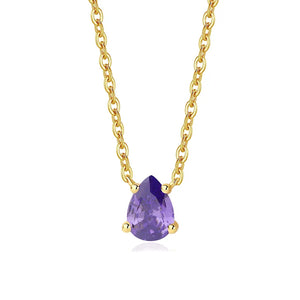
Shop the White Enamel Hoop Earrings →Shop AJLuxe Alexandrite Teardrop Pendant Necklace
925 sterling silver, 18K gold plated, set with a lab-created alexandrite teardrop that genuinely shifts from green in daylight to red-violet under incandescent light — nickel-free, June birthstone.
Shop the Alexandrite Necklace →Frequently Asked Questions
Does all gold plated jewelry turn skin green?
No — only gold plated jewelry on a copper, brass, or bronze base. Gold plated jewelry on a 925 sterling silver base does not turn skin green, even if the plating wears off. The gold layer itself never causes green discoloration — gold is chemically inert. The green comes from the base metal under the plating.
Why does gold jewelry turn my skin green?
What you're experiencing is the base metal under the gold reacting with your skin's natural acids and moisture. This only happens when the gold plating has worn thin enough for the base metal to contact your skin. The base metal is almost certainly copper or brass. Pure gold and quality gold plated jewelry on sterling silver do not cause this reaction.
How do I stop gold jewelry from turning my skin green?
The only reliable solution is to switch to jewelry with a sterling silver or stainless steel base instead of brass or copper. Applying clear nail polish to the inner band of a ring can temporarily slow the reaction by creating a barrier, but it wears off quickly. Keeping pieces very dry also slows the reaction, but doesn't stop it if the base is copper.
Is it safe to wear jewelry that turns skin green?
Yes — the green discoloration is a copper salt deposit (copper chloride or carbonate), which is not toxic at skin contact levels. It washes off with soap and water. However, some people are allergic to nickel, which is found in some jewelry alloys and can cause an itchy, irritated rash. If you get a rash rather than green discoloration, nickel allergy is the more likely cause.
Will gold plated sterling silver ever turn my skin green?
No. Even if the gold plating wears completely away, the underlying 925 sterling silver does not turn skin green. Sterling silver contains 7.5% copper, but the copper is tightly bonded in a silver crystalline lattice and not available to react with skin chemistry the way free copper in brass does. This is why choosing 18K gold on 925 sterling silver (like AJLuxe pieces) is the reliable solution for skin-safe gold-look jewelry.
Does a higher karat gold plating reduce green skin risk?
Yes — but only because thicker, higher-karat plating takes longer to wear through to the base metal. It doesn't change what happens when it does wear through. A 14K gold plated brass ring will eventually turn your skin green; an 18K gold plated brass ring takes longer to reach that point but has the same outcome. The base metal is the permanent factor; the plating is only a temporary barrier.
Can I test gold plated jewelry for green risk before buying?
Yes — check for a metal stamp: "925" or "Sterling" on the piece means sterling silver base (safe). "GP" alone or no stamp means unknown base, likely brass or copper. Many reputable jewelry brands list the base metal in their product descriptions. If the listing doesn't specify the base metal, that itself is a red flag — quality jewelry brands disclose it because it's a selling point.
Does vermeil jewelry turn skin green?
No — true vermeil is defined as gold plating (minimum 10K, typically 18K or 22K) over 925 sterling silver. Like all sterling silver-base jewelry, it does not turn skin green. If you've had a piece labeled "vermeil" that caused green discoloration, it was likely mislabeled — true vermeil requires sterling silver as the base, and the US FTC has specific requirements for the term.
Why does my ring turn my finger green but not other rings?
Rings turn skin green fastest because the inner band surface contacts skin at high pressure constantly — during gripping, carrying objects, and all daily hand use. This wear zone wears through plating 5–8× faster than low-friction pieces like earrings or necklaces. Different pieces in your collection likely have different base metals — the ones that turn green have copper or brass bases; the ones that don't have sterling silver or stainless steel bases. See our guide on how to make gold plated jewelry last longer for more on wear zones.
Does sweat make gold jewelry turn green faster?
Yes — sweat is mildly acidic (pH 4.5–5.5) and contains salt and organic acids that accelerate the oxidation reaction on copper and brass. The more acidic your sweat and the more you sweat, the faster the greening. Intense exercise while wearing copper-base jewelry dramatically speeds up the reaction. Wiping jewelry dry after wear slows the process but doesn't stop it if the base metal is copper or brass.
If you have a nickel allergy or sensitive skin, our hypoallergenic jewelry guide covers the full metal safety ranking and what to look for before you buy.
Checking for the 925 stamp is the fastest way to verify your jewelry has a sterling silver base. See: what does 925 mean on jewelry.
Final Thoughts
Green skin from jewelry isn't a problem with gold plating as a category — it's a problem with brass and copper-base metals. The solution isn't to avoid gold plated jewelry; it's to buy gold plated jewelry made on the right base.
When you buy 18K gold on 925 sterling silver, you're buying jewelry where even complete plating failure results in sterling silver contacting your skin — a metal that is hypoallergenic and chemically inert at the skin surface. No green. No reaction. Just the need to replate if you want the gold look back.
Always check the base metal before purchasing. "925" or "Sterling" on the stamp is all the assurance you need.
Browse AJLuxe 18K gold plated necklaces, gold hoop earrings, and stackable rings — all on 925 sterling silver, hypoallergenic, no green skin, and designed to last.
Written by the AJLuxe team, specialists in 18K gold plated sterling silver jewelry. Last updated: May 2026.
All third-party trademarks, brand names and product names are the property of their respective owners. AJLuxe is not affiliated with, endorsed by, sponsored by, or otherwise connected to any third-party brand referenced in this article. Brand names are used solely for accurate comparative reference, and material descriptions reflect each brand's own published product specifications at the time of writing.
You Might Also Like
The piece they're describing → Heart Initial Necklace for Women — 18K Gold Plated, Personalized Letter + Heart Pendant
Personalize Yours


