


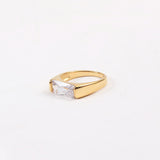
Solid gold is gold mixed with other durable metals all the way through the piece — it never wears through, holds resale value, and typically runs $300–$3,000+ depending on karat and weight. Gold plated jewelry is a base metal (brass, copper, or sterling silver) coated with a microscopically thin layer of real gold, usually 0.5–2.5 microns. It costs $20–$200, looks identical to solid gold when new, but the plating wears through in 6 months to 3 years depending on thickness and care.
TL;DR
- Solid gold = gold alloy all the way through. Lasts a lifetime, resells for scrap value, costs $300–$3,000+.
- Gold plated = a thin gold layer (0.5–2.5 microns) over a base metal. Looks the same at first, but the coating wears off in 6 months to 3 years.
- The magnet test, a jeweler's loupe on the hallmark, and simple weight-in-hand are the three fastest ways to tell them apart at home.
- Plated jewelry over a sterling silver base (not brass) resists tarnish and skin reactions far better than plating over cheap alloy.
- Neither option is "better" across the board — it depends on how long you want the piece to last and how much you want to spend upfront.
If you're standing in front of two nearly identical-looking rings — one labeled "solid gold" and one labeled "gold plated" — and wondering why one costs 10x the other, the answer comes down to exactly how much actual gold is in the piece and where it sits. Gold plated vs solid gold isn't just a price question. It affects how long the piece lasts, whether it can trigger a skin reaction, and whether you can resell it in ten years. This guide breaks down the real differences with actual numbers, not marketing language.
What's the Real Difference?
Solid gold jewelry is made from a gold alloy — pure 24K gold mixed with other metals like copper, silver, or zinc to increase hardness — all the way through the piece. Cut it in half and it's the same gold from the surface to the core. The karat stamp (10K, 14K, 18K) tells you the exact ratio: 18K is 18 parts gold out of 24 (75% gold), 14K is 58.3% gold, and 10K is 41.7% gold, the minimum purity legally allowed to be called "gold" in the US.
Gold plated jewelry is a completely different construction (for a bracelet example, see our gold bracelet for women guide). A base metal — usually brass, copper, or (in better pieces) 925 sterling silver — is electroplated with a thin layer of real gold. That gold layer is measured in microns, and most commercial gold plated jewelry sits at 0.5 to 1.5 microns thick. For comparison, a human hair is roughly 70 microns thick. The gold on a plated ring is a fraction of a fraction of that.
This is also different from two other terms shoppers often confuse it with:
- Gold filled — a much thicker, mechanically bonded layer of gold (usually 14K) that must legally be at least 1/20th of the item's total weight in the US. Far more durable than plating, though still not solid.
- Gold vermeil — sterling silver base plated with at least 2.5 microns of gold that's at least 10K purity, a standard regulated by the FTC. Vermeil sits between plated and filled in durability.

Durability Comparison: How Long Does Each Actually Last?
This is where the price difference starts to make sense. Solid gold doesn't wear out — the gold is the metal, not a coating on top of it. Barring physical damage (bending, deep scratches), a solid gold piece will look essentially the same in 30 years as it did on day one, and can be professionally re-polished indefinitely.
Gold plated jewelry has a countdown clock built in. Once the microscopic gold layer wears through from friction, sweat, lotion, or perfume, the base metal underneath is exposed — and that's when you see the telltale brassy or silver patches, sometimes with a greenish tint if the base metal oxidizes.
| Factor | Solid Gold | Gold Plated |
|---|---|---|
| Gold thickness | 100% gold throughout | 0.5–2.5 microns (surface only) |
| Typical lifespan (daily wear) | Lifetime (decades) | 6 months – 3 years |
| Price range | $300 – $3,000+ | $20 – $200 |
| Care needs | Minimal — occasional polish | Remove before water, lotion, perfume; store separately |
| Resale / scrap value | Yes — holds intrinsic value | No — essentially none |
| Best base metal (if plated) | n/a | 925 sterling silver > brass/copper |
The single biggest lever on gold plated longevity is what's underneath the plating. Plating over 925 sterling silver holds color noticeably longer and reacts less with skin than plating over brass or copper, because sterling silver is a more stable, hypoallergenic base to begin with. If a listing doesn't say what the base metal is, that's worth asking before you buy.
Price Comparison: Why the Gap Is So Large
Solid gold's price is driven almost entirely by the spot price of gold itself, plus labor. An 18K gold ring uses roughly 75% actual gold by weight — at current gold prices, even a small ring can carry $200–$500+ in raw material value alone before labor and design markup, which is why solid gold pieces routinely start around $300 and climb into the thousands for larger pieces.
Gold plated jewelry uses a tiny fraction of a gram of gold — sometimes less than 1% of the piece's total weight. The rest of the cost is base metal, stones, and manufacturing, which is why a gold plated statement ring with a full cubic zirconia center stone can retail for $20–$40 and still be profitable, while an equivalent solid gold ring would cost 10–20x more.
This is exactly the trade-off behind AJLuxe's own 18K Gold Plated CZ Statement Ring ($29.99) — it delivers the visual weight of a $500+ engagement-style ring in genuine 18K gold plating, so you get the warm gold look without solid-gold pricing.
How to Tell Them Apart
You usually can't tell gold plated from solid gold by looking at a photo — the surface color is identical when new. These are the three tests jewelers actually use:
- The magnet test. Gold itself is not magnetic. If a ring is pulled toward a strong magnet, it contains a base metal core, meaning it's plated, filled, or a gold-tone alloy — not solid gold. (Note: this only proves it's not solid; a non-magnetic result doesn't confirm solid gold, since brass and copper aren't magnetic either.)
- Check the hallmark. Solid gold is stamped with a purity mark like 10K, 14K, 18K, or 750/585/417 (the metric equivalents). Plated jewelry is often stamped "GP" (gold plated), "GEP" (gold electroplated), "HGE" (heavy gold electroplate), or has no karat stamp at all. Use a jeweler's loupe if the stamp is tiny.
- Weight in hand. Gold is a dense metal (19.3 g/cm³ pure, lower as alloy). A solid gold ring feels noticeably heavier than a same-size plated piece of brass or silver, which is roughly half the density.
According to the Gemological Institute of America (GIA), professional jewelers use acid testing on a touchstone as the most reliable method to confirm karat purity when a hallmark is missing or suspect — a magnet and loupe are reliable enough for a quick home check, but acid testing is the gold standard (literally) for anything you're paying solid-gold prices for.

Which Is Right for You?
Choose solid gold if: you want a piece you'll wear daily for decades or pass down, you have metal sensitivities that react to base metals even with a plating barrier, or resale/heirloom value matters to you.
Choose gold plated if: you want the gold look for special occasions or rotating trend pieces without a four-figure commitment, you're building a stacking or layering collection where variety matters more than any single piece lasting forever, or you're gifting something special-feeling on a modest budget.
A middle path a lot of AJLuxe customers land on: buy gold plated pieces built on a 925 sterling silver base with thicker 18K plating rather than the cheapest brass-based plating on the market. You still get an affordable price point, but the base metal is hypoallergenic and the color holds meaningfully longer — often 1–3 years with basic care — than the 0.5-micron flash plating found on ultra-cheap fast-fashion jewelry.
Want the full picture beyond just gold plated vs solid gold? See our guide on demi-fine vs fine jewelry, which covers where sterling-silver-based demi-fine pieces (including gold plated and vermeil) fit against traditional fine jewelry.
Final Thoughts
Gold plated vs solid gold isn't a "which one wins" question — it's a question of what job you need the piece to do. Solid gold is an investment piece that outlives you. Gold plated is a styling tool that lets you wear the gold look without gold-level spending, as long as you go in with realistic expectations about lifespan and pick a quality base metal underneath. If you want gold plated done right, look for pieces built on 925 sterling silver with a real electroplated (not flash-coated) 18K finish. For a closer look at what that plating layer is actually made of and how it is regulated, see our guide on is gold plated jewelry real gold.
Shop This Guide
Shop the 18K Gold Plated CZ Statement Ring →Related reading: Is 18K Gold Plated Jewelry Worth It? covers the full breakdown of micron thickness and replating costs. See also Gold Filled vs Gold Plated for how the "filled" category compares to both. Also see Solid Gold vs Gold Filled vs Gold Plated for the full three-way comparison.
Want to know how PVD coating compares to standard plating in hard numbers? For the deeper technical breakdown of coating durability, see our PVD vs gold plated comparison guide.
If plating thickness is the real question, we measured it: see how much real gold is in gold-plated jewelry.
Frequently Asked Questions
Is gold plated or solid gold better?
Neither is universally "better" — solid gold lasts a lifetime and holds resale value but costs significantly more; gold plated is far more affordable and looks identical when new, but the gold layer wears through within months to a few years depending on thickness and care.
Is 14K gold solid or plated?
"14K gold" by itself (without the word "plated" or "filled") means solid 14K gold — 58.3% pure gold alloyed with other metals all the way through the piece. "14K gold plated" is a different product: a base metal coated in a thin layer of 14K gold.
Is gold plated still real gold?
Yes, technically — the plating layer itself is real gold, just extremely thin (typically 0.5–2.5 microns). The piece as a whole is not "real gold jewelry" the way solid gold is, since the vast majority of the item's mass is base metal.
Why is 14K gold plated jewelry so cheap?
Because the actual gold used is a tiny fraction of the piece's total weight — sometimes under 1%. Almost all of the manufacturing cost goes to the base metal, stones, and labor rather than gold, which is why plated pieces can retail for $20–$50 instead of hundreds of dollars.
How long does gold plated jewelry last before it wears off?
Typically 6 months to 3 years, depending on plating thickness and how it's treated. Standard 0.5–1 micron plating over brass lasts closer to 6–18 months with regular wear; thicker plating (2.5 microns+) over a sterling silver base can last 2–3 years with proper care — removing it before water, lotion, and perfume, and storing it separately from other jewelry.
Is solid gold more durable than gold plated for everyday wear?
Yes, significantly. Solid gold can scratch or dent but never "wears through" to a different-colored metal underneath, since it's the same alloy throughout. Gold plated jewelry has a finite wear life because the gold is only a surface coating.
How can I tell if my jewelry is real solid gold or just gold plated?
Check the hallmark stamp first — look for a karat number (10K, 14K, 18K) versus letters like "GP" or "GEP." Then try the magnet test (gold isn't magnetic, but neither are the base metals used in plating, so this only rules things out) and compare the weight to a known solid gold piece of similar size. For certainty, a jeweler can do an acid test on the metal.
What markings or stamps indicate solid gold versus gold plated?
Solid gold is stamped with a karat number (10K, 14K, 18K, 22K, 24K) or the metric purity equivalent (417, 585, 750, 999). Gold plated pieces are often stamped "GP" (gold plated), "GEP" (gold electroplated), "HGE" (heavy gold electroplate), or "GF" (which actually means gold filled, a thicker and more durable category than plating).
Does gold plated jewelry cause skin allergies or irritation?
It can, if the base metal underneath contains nickel and the plating has worn through enough to expose it. Gold plating over 925 sterling silver (a naturally hypoallergenic, nickel-free metal) is much safer for sensitive skin than plating over generic "gold-tone alloy" or brass, which more commonly contains nickel.
Is solid gold hypoallergenic and safe for sensitive skin?
Higher karat solid gold (18K and above) is generally very well tolerated because it contains a higher percentage of pure gold and less of the alloy metals that can trigger reactions. Lower karat gold (10K) has more alloy metal mixed in and can occasionally cause irritation in people with significant metal sensitivities.
Can gold plated jewelry be resold or traded in like solid gold?
No. Because the gold content is a microscopically thin surface layer, gold plated jewelry has no meaningful scrap or resale value — jewelers who buy gold for melt value are paying for the base metal's gold percentage, and plated items round down to essentially zero.
Does solid gold retain its value better than gold plated jewelry over time?
Yes. Solid gold tracks the market price of gold and can be resold, melted down, or traded in for real value decades later. Gold plated jewelry is a fashion purchase — its value is in wearing it, not in what it could be resold for.
Written by the AJLuxe Team. AJLuxe designs hypoallergenic, tarnish-resistant jewelry using 925 sterling silver bases with genuine 18K gold plating — built to outlast typical fast-fashion costume jewelry.
Last updated: July 2026.
All third-party trademarks, brand names and product names are the property of their respective owners. AJLuxe is not affiliated with, endorsed by, sponsored by, or otherwise connected to any third-party brand referenced in this article. Brand names are used solely for accurate comparative reference, and material descriptions reflect each brand's own published product specifications at the time of writing.
You Might Also Like
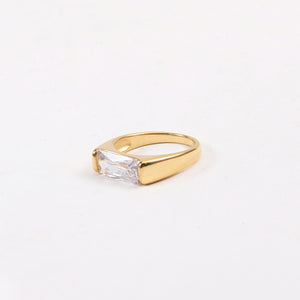
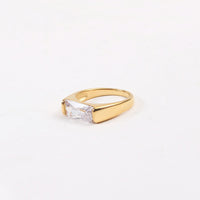
The piece they're describing → 18K Gold Plated Statement Ring — Tarnish-Resistant CZ
Personalize Yours


