


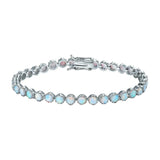
- A bezel is a metal collar around the stone's edge: full bezel circles it, partial bezel leaves two sides open.
- Strengths: secure grip, smooth low profile that rarely snags, and protection for the stone's edges.
- Weaknesses: hides part of the stone, lets in less light, and dirt can collect behind it.
- It suits everyday and active wear, softer or brittle gems, and pointed shapes whose tips are chip-prone.
- Bezels are common in pendants and bracelets too, and fine jewelers usually charge more for them than for prongs.
Most people meet the word bezel while comparing engagement ring styles, but the setting appears across all jewelry. This guide covers how a bezel works, which stones and shapes suit it, how it stacks up against the setting most people picture first (see our prong setting guide), and how to look after one. If you are still choosing between styles, the ring settings guide maps every major option, and the cluster ring guide covers the multi-stone look.
What a bezel setting is and how it works
A bezel is a thin strip of metal formed into a rim that the stone sits inside, with the metal pressed or burnished over the stone's edge (its girdle) to lock it in place. Instead of four or six small claws gripping the stone, one continuous wall does the holding, which is why bezel-set stones tend to feel like part of the jewelry rather than something perched on top of it.
The stone sits down in a seat cut into the rim, so its top (the crown) shows while its sides are wrapped. Because the grip is continuous, there are no tiny prongs to bend, snag or wear thin, which is the main reason bezels have a reputation for security. A jeweler still has to make the rim fit the stone precisely, so quality of workmanship matters more than the style name.
Full bezel vs half (partial) bezel
A full bezel surrounds the entire edge of the stone, while a partial or half bezel covers only some of it, usually leaving two opposite sides open. Both are bezel settings; they sit at different points on the protection versus sparkle scale.
| Feature | Full bezel | Partial (half) bezel |
|---|---|---|
| Edge coverage | All the way round | Part of the edge, two sides open |
| Protection for edges | Highest | Good, exposed sides are less shielded |
| Light entering the stone | Least | More, through the open sides |
| Stone looks | Outlined, can read slightly smaller | More of the stone visible |
| Cleaning | Dirt can pack in behind the rim | Sources disagree: open sides are easier to reach but can also trap grime |
Some designers use a partial bezel selectively, for example covering only the tips of a pointed stone and leaving the long sides open for light.
Pros and cons of a bezel setting
The main advantages are security, a low profile and edge protection, and the main costs are less visible stone and less light. Here is the honest balance.
Pros
- Secure: a continuous rim holds the stone all the way round, so there is no single prong that can bend and release it.
- Low profile: the smooth rim sits close to the band or chain and is less likely to catch on sweaters, hair or gloves than raised claws.
- Good for active lifestyles: people who work with their hands, type all day or train often tend to prefer a setting without raised points.
- Protects edges: the rim shields the stone's girdle, where chips usually start. The top of the stone is still exposed, so a hard knock can still damage it.
Cons
- Hides some of the stone: the rim covers a thin band around the edge, so a bezel-set stone can look a little smaller than the same stone in prongs.
- Less light: prongs let light enter from the sides and bottom, and a full bezel blocks much of that, so brilliance is usually softer.
- Harder to clean underneath: lotion, soap and skin oils can pack in behind the wall where a brush struggles to reach.
- Harder to alter: reshaping or retightening a bezel is specialist work, and replacing a stone means rebuilding the rim.
Which stones and shapes suit a bezel
Bezels suit stones that are soft, brittle or have vulnerable points, and shapes with smooth outlines are the easiest to fit. Hardness only tells you how well a stone resists scratches; toughness, or resistance to chipping, matters more when choosing a setting.
- Softer or brittle gems such as opal, emerald and moonstone are often recommended for bezels because the rim cushions their edges.
- Round and oval stones are the most natural fit, since a rim can follow a smooth curve cleanly.
- Pointed shapes such as marquise, pear and heart have tips that chip easily in prongs; a bezel or partial bezel protects them, although the setter must avoid pressure on the points. See our marquise ring guide for how that shape behaves.
- Square and princess cuts can be bezel set, but sharp corners need precise metalwork. Our princess cut ring guide explains why corners matter.
- Cubic zirconia can be bezel set like any other stone; how it compares in hardness and sparkle is covered in cubic zirconia vs diamond.
Bezel vs prong vs tension
A prong holds the stone with small metal claws, a bezel wraps it in a rim, and a tension setting holds it by the squeeze of the band itself. They trade light, security and maintenance differently.
| Factor | Bezel | Prong | Tension |
|---|---|---|---|
| How it holds | Metal rim around the edge | Four to six claws | Pressure from the band ends |
| Light | Lower | Highest | High, stone looks suspended |
| Snagging | Low | Higher | Low |
| Upkeep | Clean behind the rim | Check prongs for wear | Specialist repair, resizing often limited |
| Best for | Daily wear, delicate stones | Maximum sparkle | Modern look, hard stones |
Our solitaire ring guide and halo ring guide show how those layouts usually pair with prongs, and the cathedral setting guide explains a raised style that can also carry a bezel head.
Bezel in rings, pendants, bracelets and earrings
Bezel settings work in every kind of jewelry, and they often make more sense outside rings. In a ring, a bezel stone can sit flush with the band for a modern, low look. In a pendant, a flat smooth rim hangs cleanly against clothing and rarely catches knitwear. In a bracelet, a row of bezel-set stones gives a continuous line with no claws to snag a sleeve. In earrings, a rim keeps the stone close to the lobe, which helps with hair and scarves. Because pendants and earrings are knocked less than rings, even a partial bezel is often enough.
How to care for bezel-set jewelry
Clean bezel jewelry with a soft brush, mild soap and lukewarm water, concentrating on the gap where the stone meets the rim, then dry it fully. Use the same routine described in our guide to cleaning cubic zirconia jewelry.
- Brush gently behind the stone every few weeks; trapped soap and lotion are what dull a bezel stone.
- Check the rim for gaps or lifted metal now and then; a loose stone rattles slightly or looks tilted.
- Avoid hard knocks to the exposed crown, and remove rings for heavy work or the gym.
- For plated pieces, avoid chemicals and abrasive cloths, because plating wears gradually with friction.
- Ask a jeweler before using an ultrasonic cleaner on any stone you are unsure about.
Does a bezel setting cost more?
In fine jewelry a bezel usually costs more than a basic prong setting, because it uses more metal and needs a precisely fitted rim for each stone. Retailer estimates of the premium vary widely, from roughly 10 percent to 40 percent, so treat any single number with caution and ask for quotes on the same stone and metal in each setting. On lower-priced pieces, the stone, base metal and plating matter alongside the setting, so compare finished prices rather than assuming a bezel adds a fixed amount.
An honest note on our range
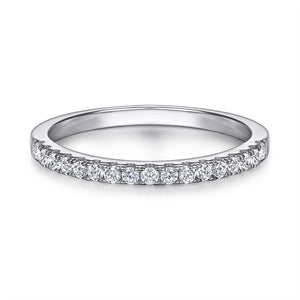
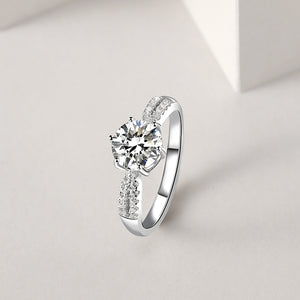
We do not sell a bezel engagement ring. Our rings are mostly prong-set: for example the CZ wedding ring (925 sterling silver, a brilliant-cut cubic zirconia in a prong setting, $47.99) and the sterling silver CZ solitaire ($47.99, prong-set, with pave shoulder accents), both on 925 sterling silver.
The closest thing we sell is the rainbow moonstone tennis bracelet ($44.99), which its page describes as bezel-set rainbow moonstone cabochons on a stainless steel band, 21 cm (8.27 in) long with a lobster clasp. Its page says we have not independently confirmed whether the stones are natural or lab-created, and that is worth knowing before you buy. For ring styles, browse our best CZ engagement rings roundup.
Checklist: is a bezel right for you?
- You catch jewelry on sweaters, hair or gloves: a bezel helps.
- You want maximum sparkle and a tall stone: choose prongs instead, or a half bezel.
- Your stone is soft, brittle or pointed: a bezel or partial bezel protects it.
- You dislike detailed cleaning: bezels need regular brushing behind the stone.
- You plan a slim stacking band: a flush bezel suits it, see the thin band ring guide.
More in this guide
Related reading: ring settings guide, prong setting guide, channel vs pave setting, cathedral setting guide and thin band ring.
Frequently Asked Questions
What is a bezel setting in simple terms?
It is a thin metal rim that wraps around the edge of a stone and holds it in place, like a picture frame. A full bezel goes all the way round and a partial bezel covers only some of the edge.
Is a bezel setting more secure than prongs?
Generally yes, because a continuous rim has no individual claws that can bend or wear. It still depends on the quality of the fit, and the exposed top of the stone can still be damaged by a hard impact.
Does a bezel make the stone look smaller?
Often slightly, because the rim covers a thin band around the edge and outlines the stone. A partial bezel or a thin rim reduces the effect.
What is the difference between a full and half bezel?
A full bezel circles the whole stone for maximum protection; a half bezel leaves two sides open, which lets in more light but exposes those edges.
Which stones look best in a bezel?
Softer or brittle stones such as opal, emerald and moonstone, and pointed shapes such as marquise and pear, are the classic choices because the rim protects vulnerable edges and tips.
Is a bezel setting good for everyday wear?
Yes, it is one of the most common choices for daily and active wear since the low smooth profile snags less than raised prongs.
Is a bezel setting more expensive?
In fine jewelry it usually costs more than prongs because of extra metal and precise fitting, though estimates of the gap vary. Ask for quotes in both settings on the same stone.
How do you clean a bezel-set stone?
Use a soft brush with mild soap and lukewarm water, work around the rim and behind the stone, rinse and dry fully. Check with a jeweler before using ultrasonic cleaners.
Written by AJLuxe Team. Last updated: October 2026
All third-party trademarks, brand names and product names are the property of their respective owners. AJLuxe is not affiliated with, endorsed by, sponsored by, or otherwise connected to any third-party brand referenced in this article. Brand names are used solely for accurate comparative reference, and material descriptions reflect each brand's own published product specifications at the time of writing.
You Might Also Like
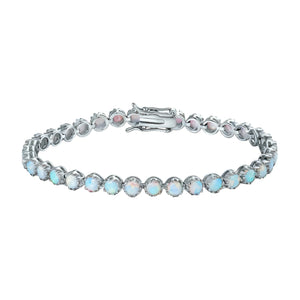
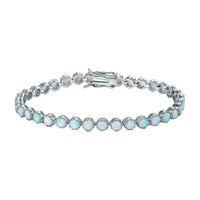
The piece they're describing → Rainbow Moonstone Tennis Bracelet for Women — Stainless Steel, Bezel Set, Gift Boxed with Message Card
Personalize Yours


