


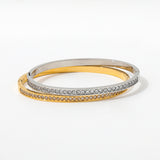
- Channel: stones held between two metal walls, flush and snag-resistant, clean and linear.
- Pave: small stones held by tiny beads or prongs, maximum sparkle, more upkeep.
- Full eternity-style bands of either type are usually hard or impossible to resize.
- Channel often suits wedding bands and everyday wear; pave suits bright, decorative looks.
- Cost depends mostly on stone count and size, not the setting name alone.
These two settings are often mixed up, because both put many small stones along a band. They are built differently and wear differently, and the choice affects snagging, resizing and care. If you want the wider picture, start with the ring settings guide, and for how a single stone is held see the prong setting guide.
What a channel setting is
A channel setting places stones in a groove cut between two parallel metal walls, with the walls pressed or rolled over the stones' edges to hold them. There are no prongs, so the stones sit flush with the metal and the surface stays smooth.
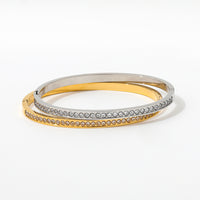
The stones touch or nearly touch each other along the channel, which is why the look is a clean, straight line of sparkle. It is common on band shoulders and wedding bands, and our CZ bangle uses it: its page describes a full channel of hand-set cubic zirconia across the top arc of a 316L stainless steel base.
What pave and micropave are
Pave (from a word meaning paved, like cobblestones) is a style where small stones are set close together across a surface, held by tiny metal beads or small prongs between them, so little metal shows. Micropave uses smaller stones still, and sources differ on the exact cutoff, with figures around 1.2 mm or less often quoted.
Because the holding metal is so small, pave looks like a continuous carpet of light. That same smallness makes the beads delicate, which is where the upkeep comes from. Our pave engagement ring guide covers pave in depth.
Channel vs pave at a glance
| Factor | Channel | Pave / micropave |
|---|---|---|
| How stones are held | Two metal walls on either side | Tiny beads or small prongs |
| Look | Smooth line, metal visible at sides | Surface covered in sparkle |
| Durability | Walls protect stone edges | Beads can wear, stones can loosen |
| Snagging | Very low, flush | Low to moderate, texture can catch |
| Light | Less light from the sides | More sparkle overall |
| Cleaning | Dirt packs into the groove | Dirt collects between stones |
| Resizing | Hard if stones go all round | Hard if stones go all round |
| Typical use | Wedding bands, side stones | Shoulders, bands, halos, pendants |
Durability and snagging
Channel settings are generally considered the more durable of the two, because the walls guard the stones' edges and nothing sticks up to catch on fabric. Pave stones sit in small beads that can wear down over years, and a lost stone is more likely than from a channel. Both are secure when well made, and both fail faster if the metal is thin or the setting was rushed. A pave ring with very fine micro beads is the most delicate of the group, so it suits careful, occasional wear better than heavy daily use.
Pave stones sit slightly above the surface, which gives a faint texture that can nick a sweater, while a channel is flush. If snagging bothers you, the flush channel is the safer pick, and a bezel is an alternative (see the bezel setting guide).
Resizing: why eternity-style rings are difficult
A ring with stones set all the way round the band can rarely be resized without risking the stones. To resize, a jeweler cuts the band and adds or removes metal, which alters the curve and can change the spacing in a channel or pave setting enough to loosen stones. Many retailers say full eternity bands cannot be resized, and some jewelers may attempt a small change, so treat blanket claims with caution and ask a jeweler about your specific ring.
Half or three-quarter versions leave a plain section of band where resizing work can happen, which is why they are easier. If you are unsure of your size, confirm it before buying, and if a band already fits loosely read how to fix a ring that is too big. Our ring size adjuster guide covers non-permanent options, though pave bands should not be repeatedly bent or adjusted, and the pave ring page says so itself.
Cleaning and care
Use a soft brush, mild soap and lukewarm water on either setting, brushing along the groove or between the stones, and dry fully. Our guide to cleaning cubic zirconia jewelry has the steps. Avoid scrubbing pave against rough surfaces, because individual stones can loosen. Our own micro-pave stacking ring page also advises against ultrasonic cleaners and harsh solutions for the same reason, and says plated pieces should be kept away from chemicals.
Cost direction
Cost is driven mainly by how many stones there are and how large they are, not by the setting name alone. Sources disagree about which costs more: some argue pave costs more for its fine work, while others say channel setting is slower per stone. Micropave is the most labor-intensive of the group because of the tiny stones. For a fair comparison, ask for quotes on the same stone count and metal in each setting.
Which suits a wedding band and which suits an engagement ring?
Channel is the more common choice for wedding bands because it is flush and sturdy, while pave is more common on engagement ring shoulders and decorative bands. A channel band slides under an engagement ring without catching and is easy to wear every day. A pave band is brighter and works as a statement or stacking piece. Pave on an engagement ring is often used on the shoulders or around the stone, as in a halo (see the halo ring guide), while a plain solitaire pairs well with either band. For stones set in a row across three positions, see three-stone mothers rings, and for plainer bands simple wedding bands for women.
An honest note on our range
We sell both styles, in cubic zirconia, and we state only what each page says. The CZ bangle bracelet ($39.99) is described as a channel of hand-set CZ stones on a 316L stainless steel base with 18K gold plating (gold version) or rhodium plating (silver version); the page calls it considered hypoallergenic for most wearers and not nickel free. The diamond CZ stacking ring ($34.99) is described as micro-pave CZ across the whole band on 18K gold plated sterling silver, held by very small prong tips, with an adjustable shank. The micro pave CZ ring ($45.99) is listed as 925 sterling silver with cubic zirconia, adjustable, but its page does not detail how the stones are set.
Our moissanite halo ring is listed as sterling silver, 18K white gold and CZ, and its page does not specify the stone setting, so check it before assuming; the guide to best CZ engagement rings compares all of these. We do not sell a full-circle eternity band. If you want one in diamonds, a jeweler can advise on resizing limits.
Checklist: channel or pave?
- You want the lowest snag risk: choose channel.
- You want the brightest surface: choose pave or micropave.
- You may need to resize later: avoid stones all the way round, or pick a half band.
- You wear the ring daily with an engagement ring: channel sits flush beside it.
- You will clean it carefully: both need a soft brush, pave needs gentler handling.
More in this guide
Related reading: ring settings guide, pave engagement ring guide, bezel setting guide, prong setting guide and simple wedding bands for women.
Frequently Asked Questions
What is the difference between channel and pave setting?
Channel holds stones between two metal walls for a flush line; pave covers an area with small stones held by tiny beads or prongs.
Which is more durable, channel or pave?
Channel is generally considered more durable because the walls protect the stones and there are no raised beads, though quality of workmanship matters most.
Can a channel set ring be resized?
Often only if the stones do not go all the way round. Full channel eternity bands are usually hard or impossible to resize; ask a jeweler about your specific ring.
What is micropave?
It is pave with very small stones, commonly described as around 1.2 mm or less, held by tiny beads so the metal is almost invisible.
Which is better for a wedding band?
Channel is the common pick for daily wear, while pave suits a brighter, more decorative band.
Does pave snag more than channel?
Slightly, because pave has a textured surface and channel is flush.
Do pave stones fall out?
They can loosen over time as beads wear, so check the ring periodically and avoid knocks or rough scrubbing.
Which costs more?
Sources disagree. Stone count and size usually matter more than the setting name, so compare quotes on the same stones.
Written by AJLuxe Team. Last updated: October 2026
All third-party trademarks, brand names and product names are the property of their respective owners. AJLuxe is not affiliated with, endorsed by, sponsored by, or otherwise connected to any third-party brand referenced in this article. Brand names are used solely for accurate comparative reference, and material descriptions reflect each brand's own published product specifications at the time of writing.
You Might Also Like
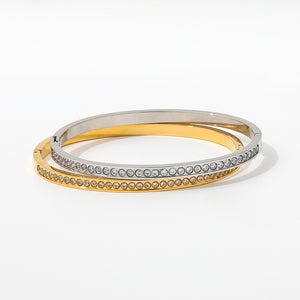
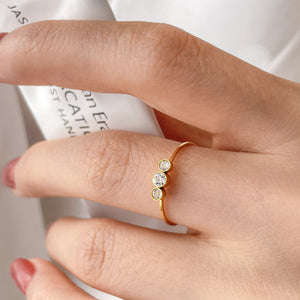
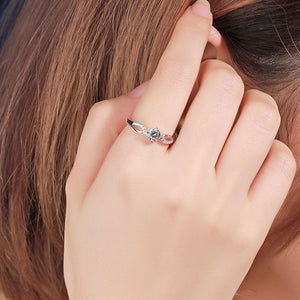
The piece they're describing → CZ Bangle Bracelet for Women, Gold or Silver Plated, CZ Stones
Personalize Yours


