


- Safest for sensitive skin: implant-grade titanium, niobium, platinum, solid 18K yellow gold
- Good for most people: 925 sterling silver, and 18K gold plating over a 925 sterling base
- Take care with: white gold (nickel or palladium?), 316L steel (contains nickel, tolerated by many), rhodium plating (only as good as what is under it)
- Avoid if you react easily: zinc alloy, brass, unnamed "alloy", "silver-tone" fashion metal
- Nickel is the usual culprit, and you can spot-test any piece at home for a few dollars
People search this topic with a very practical question: what is this necklace or earring actually made of, and will it make my skin itch? This page is the overview of jewelry metals. For specific jewelry types we keep separate guides, and we link to them rather than repeat them: earrings for sensitive ears, cartilage piercings, surgical steel and white gold.
What is hypoallergenic jewelry?
Hypoallergenic jewelry is jewelry made from metals that are less likely than average to cause an allergic reaction, mostly because they contain little or no nickel. The word describes an intention, not a result: in the US there is no single enforced test or certificate a seller must pass to use it, so a brass ring with a thin coating can carry the label.
Some regions, including Europe, do cap how much nickel items worn against skin may release. Where no such rule applies, you have to read the metal yourself. The label tells you little. The base metal tells you almost everything. For a plain-language version of this idea, see what makes jewelry hypoallergenic.
What is hypoallergenic jewelry made of?
It is made of a small group of metals that rarely trigger reactions: titanium, niobium, platinum, 18K yellow gold and 925 sterling silver. Cheaper options exist, but they depend on the exact alloy. The table ranks the common choices, safest first.
| Metal | For sensitive skin | What to know |
|---|---|---|
| Implant-grade titanium | Safest | No nickel in the alloy. Check the grade is stated, since "titanium" alone can mean a cheaper blend. See is titanium hypoallergenic. |
| Niobium | Safest | Very inert and common in piercing jewelry. Compared in niobium vs titanium. |
| Platinum | Safest | Naturally white and rarely a problem, though "platinum" jewelry is an alloy, so the stamp (such as 950) matters. See the platinum guide. |
| Solid 18K yellow gold | Very safe | 75% gold, the rest usually copper and silver. Gold allergy exists but is uncommon. |
| 925 sterling silver | Good for most | 92.5% silver, usually with copper. Quality varies by maker, so buy where the composition is stated. See is sterling silver hypoallergenic. |
| 18K gold plated over 925 sterling | Good for most | The gold layer is gentle. When plating wears, the sterling base touches skin. Not a promise for every wearer. See is gold plated hypoallergenic. |
| Rose gold | Depends | Solid rose gold is gold plus copper. Plated rose gold depends on the base. See is rose gold hypoallergenic. |
| White gold | Check the alloy | Nickel versions are a common ring allergy. Palladium versions avoid nickel. Details in our white gold guide. |
| 316L stainless steel | Many tolerate it | Contains nickel, tightly bound. Mild sensitivity is often fine, severe allergy may not be. See surgical steel. |
| Brass, copper, zinc alloy | Risky | Common in fashion jewelry, often with unlisted extras. See below. |
A fuller ranking sits in best metals for sensitive skin, and a side by side of everyday options in the jewelry metal comparison.
What actually causes jewelry reactions?
Most jewelry reactions come from nickel. Nickel allergy is a delayed contact reaction: it builds up after repeated exposure and, once you are sensitized, it usually stays. Typical signs are an itchy, red rash, dry patches or small bumps, often 12 to 48 hours after contact and often only where the metal touched, though it can take longer. Blistering or signs of infection (warmth, pus) need a doctor promptly. This is general information, so ask a doctor or dermatologist about patch testing if you are unsure what you react to.
Nickel hides in more places than people expect: white gold alloys, brass and fashion jewelry, 316L steel, "silver-tone" pieces, and everyday items like watch backs, belt buckles and jean rivets. A rash on a finger, ear or neck is not always the jewelry, but a rash that matches the shape of a clasp or band is a strong clue. If your rash looks like green staining instead, that is copper oxidizing, not an allergy: see why jewelry turns skin green.
Is zinc alloy hypoallergenic?
Not reliably. Zinc on its own is not a common skin allergen, but "zinc alloy" has no fixed recipe: it is a cheap, castable blend used in costume jewelry, and the other metals mixed in are rarely listed. Because you cannot know what is in the blend, we would not rely on it if you react easily. The same goes for jewelry sold only as "alloy". Two guides go deeper: is zinc alloy hypoallergenic and what is alloy jewelry.
The quick answers for the other metals people ask about:
- Brass: usually not recommended for sensitive skin, and the coating on top wears away. See brass vs gold plated.
- Iron: iron itself rarely causes allergy, but jewelry sold as "iron" is usually a steel or plated metal, and it rusts. Check what the alloy is.
- Alloy: only as safe as the metals in it. If a seller will not name them, treat it as unknown.
Is rhodium hypoallergenic?
Rhodium is generally well tolerated, and allergy to it is considered uncommon. The catch is that rhodium is used as a thin plating, so what matters is the metal underneath once the coating wears. Rhodium over 925 sterling silver is a different proposition from rhodium over a nickel alloy. We explain the process in what is rhodium plating.
Is gold plated jewelry safe for sensitive skin?
It can be, if the base metal is safe. Gold rarely causes allergy, so the question is what sits under it. When plating wears through, the base touches skin. Over 925 sterling silver that is a reasonable outcome for most people. Over brass or an unnamed alloy it is not. Plating is a thin layer and it wears gradually with use, sweat and lotion.
| Finish | Gold layer | Skin question to ask |
|---|---|---|
| Flash or standard plating | Thin | What is the base? It will show eventually. |
| Gold vermeil | Thicker, on a sterling base | Sterling base is a good sign. See is vermeil hypoallergenic. |
| Gold filled | Much thicker, bonded | Check the core metal. |
| Solid gold | All the way through | Yellow and rose are usually fine, check the alloy. |
How do you buy hypoallergenic jewelry?
Read the stamp and the listing, ask about the base metal, and test what you already own. Five checks cover most cases.
- Look for a real stamp. 925 (sterling silver), 750 or 18K (gold), 950 (platinum). A tag saying "hypoallergenic" is not a stamp. Our hallmarks guide decodes them, and how to tell if silver is real covers testing.
- Ask for the base under any plating. "Sterling silver" is a good answer. "Alloy" or no answer is not.
- Ask which white gold. Nickel or palladium? If the seller does not know, assume nickel.
- Check every part. Clasps, posts and earring backs are often a different metal from the front.
- Spot-test. A dimethylglyoxime kit costs a few dollars. Add the two solutions to a swab, rub the metal for about 30 seconds, and pink or red means nickel was detected there. No color means none was found at that spot, which is useful but not a guarantee for the whole piece.
Making the same checks for earrings? The post sits inside the piercing, so it matters most: see posts, backs and picks for sensitive ears, and for chains see hypoallergenic chains and clasps. For rings, hypoallergenic wedding rings covers the metals that matter on a band worn daily.
Common mistakes when shopping for sensitive skin
- Trusting the word "hypoallergenic" without asking for the metal.
- Assuming gold color means gold: plating over brass is common.
- Buying white gold without asking about the alloy.
- Judging only the front of a piece and ignoring clasp, post and back.
- Expecting plating to stay put. It wears gradually, and the base metal is what remains.
An honest note on our range
We do not sell titanium, niobium, platinum, solid gold or white gold. Our pieces are mostly 925 sterling silver, either left polished or finished in 18K gold plating, and some are 316L stainless steel with 18K gold plating. Plating wears gradually. We do not call any piece nickel free, and if you have a severe nickel allergy, a doctor's advice and a patch test come before any purchase. Where a sterling silver base suits you, these are the pieces our customers pick for sensitive skin. US orders ship free and returns are free for 30 days.
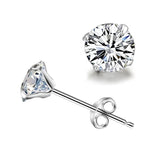
- CZ Stud Earrings, 925 sterling silver post, from $22.99. Rhodium plated over sterling silver.
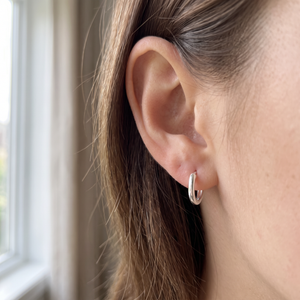
- Silver Huggie Earrings, $34.99. Polished 925 sterling silver with no plating.
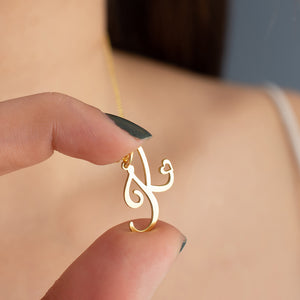
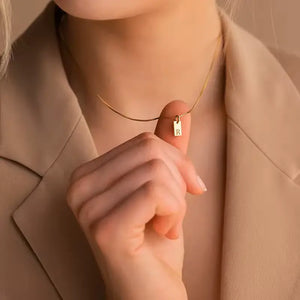
- Heart Initial Necklace, $34.99. An 18K gold plated 316L stainless steel base, so it contains nickel bound in the steel. A good fit for most people, but not our pick for severe nickel allergy.
More options sit in the hypoallergenic earrings collection and gold plated jewelry.
Frequently Asked Questions
What are the most hypoallergenic metals for jewelry?
Implant-grade titanium, niobium and platinum are the most hypoallergenic, followed by solid 18K yellow gold and 925 sterling silver. Gold plated jewelry is only as safe as its base metal, so a sterling silver base is the better choice.
Is zinc alloy jewelry safe to wear?
It is not a safe choice for sensitive skin. Zinc alloy is a cheap casting blend without a fixed recipe, and the other metals in it are rarely listed, so it can include nickel. People with no sensitivity may wear it without trouble.
Is sterling silver nickel free?
Standard sterling silver is 92.5% silver, usually alloyed with copper, and nickel is not part of the usual recipe. Quality varies, so buy from a seller that states the composition, and treat no metal as guaranteed for a severe allergy.
Is rhodium plating hypoallergenic?
Rhodium itself is rarely a problem, but it is only a thin layer. If the metal underneath contains nickel, the plating delays contact rather than preventing it, so check the base metal.
Is white gold hypoallergenic?
It depends on the alloy. White gold made with nickel can cause reactions once the plating wears thin, while palladium white gold avoids nickel. Our white gold guide explains how to tell.
What is the best jewelry for sensitive skin?
Titanium, niobium, platinum and solid 18K yellow gold are the safest, and 925 sterling silver is a good everyday option for most people. Choose pieces with a named base metal and a real stamp, and ask a doctor if you have a confirmed allergy.
Is 14K gold hypoallergenic?
14K yellow gold is generally fine for most people, but 14K is only 58.3% gold, so the other 41.7% matters. Yellow and rose alloys typically use copper and silver, while 14K white gold may use nickel, so confirm the alloy.
What does an allergic reaction to jewelry look like?
It usually appears as an itchy, red rash, dry patches or small bumps where the metal touched, often 12 to 48 hours after contact. See a doctor if you see blisters, warmth or pus.
All third-party trademarks, brand names and product names are the property of their respective owners. AJLuxe is not affiliated with, endorsed by, sponsored by, or otherwise connected to any third-party brand referenced in this article. Brand names are used solely for accurate comparative reference, and material descriptions reflect each brand's own published product specifications at the time of writing.
You Might Also Like
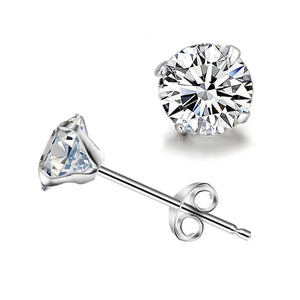
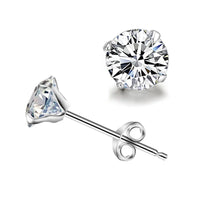
The piece they're describing → CZ Stud Earrings for Women — 925 Sterling Silver, Cubic Zirconia, Hypoallergenic
Personalize Yours


