


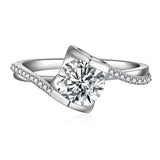
Is white gold hypoallergenic? Usually not. Most white gold is yellow gold alloyed with nickel, then coated in rhodium plating to look bright white. That nickel alloy is a common allergy trigger, and once the plating wears thin (often within 1 to 2 years) it can cause itching, redness or a rash. White gold made with a palladium alloy is genuinely nickel-free, and platinum or 925 sterling silver are the usual alternatives for sensitive skin.
White gold has a reputation problem. It's marketed as a clean, modern alternative to yellow gold, but for people with sensitive skin, it's often the exact opposite. If you've ever had a white gold ring or pair of earrings turn your skin red, itchy, or irritated after a year or two of wear, you're not imagining it, and it's not really the gold's fault. It's what's mixed into the gold, and what's coating it, that matters. If you are choosing earrings instead, our best hypoallergenic earrings guide shows which post metals to look for.
This guide breaks down exactly why standard white gold can trigger nickel allergies even when it's marketed as hypoallergenic, what happens once the rhodium plating wears down, and which white gold options (and affordable alternatives) are genuinely safe for sensitive skin.
What Is White Gold, Really?
Pure gold (24K) is yellow. White gold gets its silvery-white color by alloying pure gold with white metals, and then, in almost every case, finishing it with a layer of rhodium plating to make it look bright and reflective. There are two very different ways manufacturers create that white-metal alloy, and the difference determines whether your jewelry is safe for sensitive skin:
- Nickel-alloy white gold: Gold mixed with nickel, copper, and zinc. This is the industry-standard, lower-cost formulation used in the vast majority of commercial white gold jewelry.
- Palladium-alloy white gold: Gold mixed with palladium, silver, and copper, no nickel at all. This is the hypoallergenic version, but it costs significantly more to produce and is far less common.
Both versions typically get a thin rhodium plating on top, which is what gives white gold its bright, icy-white shine. Rhodium itself is inert and safe for virtually everyone. The problem isn't the rhodium, it's what's underneath it.
Why "Hypoallergenic" White Gold Can Still Trigger a Nickel Allergy
Nickel is the single most common metal allergen in jewelry, and it's the reason most white gold reactions happen. Nickel allergy is one of the most frequent causes of allergic contact dermatitis, and even small amounts of nickel released from jewelry can trigger a reaction in sensitized skin.
Here's the catch: a piece of nickel-alloy white gold can genuinely look and feel flawless when it's new, because the rhodium plating creates a barrier between your skin and the nickel alloy underneath. The jewelry isn't lying to you at the point of sale, it's the wear-and-tear timeline that causes the problem.
Nickel regulations in Europe set a strict limit of 0.5 micrograms of nickel release per square centimeter per week for items in prolonged skin contact (and an even tighter 0.2 µg/cm²/week for items inserted into piercings), a limit that unplated nickel-alloy white gold would fail immediately if it weren't sealed under rhodium.
What Happens When Rhodium Plating Wears Off
Rhodium plating is thin, typically somewhere between 0.5 and 1 micron thick, and it wears down with normal daily contact: skin oils, lotion, soap, friction from rings brushing against other surfaces. With regular daily wear, most rhodium plating visibly thins within 1 to 2 years, and people with more acidic skin chemistry or heavier wear (like an everyday engagement ring) can see it wear through in as little as 6 months.
Once that layer is gone, if the base metal is a nickel alloy, your skin is now in direct contact with nickel for the first time since you bought the piece. This is exactly why people report a white gold ring that felt perfectly fine for a year and then suddenly started causing redness, itching, or a rash along the band, the plating simply wore through and exposed the nickel underneath.
This is also why re-plating exists as a maintenance service at most jewelers, but it's a recurring cost and a recurring risk, not a permanent fix. If you have a known nickel allergy, relying on rhodium plating to stay ahead of a reaction is a losing long-term strategy.
Nickel White Gold vs. Palladium White Gold: What's Actually Different
The difference comes down entirely to the alloy mixed with the pure gold. Nickel-alloy white gold typically contains somewhere in the range of 15-20% nickel alongside copper and zinc, whether it's 14K or 18K. Palladium-alloy white gold swaps that nickel for palladium, usually somewhere around 20-35% depending on the karat, along with silver and copper, with no nickel in the mix at all.
Palladium white gold is naturally a softer, more matte white-gray tone before plating (rather than the yellowish tone nickel alloys often need heavier rhodium to mask), and because there's no nickel present, it doesn't carry the same allergy risk even after the rhodium plating eventually wears down. The tradeoff is cost: palladium is a rare precious metal in its own right, so palladium white gold costs meaningfully more to produce than the nickel version, which is exactly why most mass-market white gold jewelry defaults to nickel.
How to Identify Genuinely Hypoallergenic White Gold Before You Buy
Because "hypoallergenic" isn't a regulated term in jewelry, you can't take the label at face value. Here's how to actually verify what you're buying:
- Ask for the alloy composition directly. A reputable jeweler should be able to tell you whether their white gold uses a nickel or palladium alloy. If they can't answer, that's a red flag.
- Look for palladium-specific hallmarks. Palladium-alloyed white gold is sometimes marked separately (for example, alongside a karat stamp), ask specifically if the piece is "nickel-free" or "palladium white gold," not just "hypoallergenic."
- Request documentation for fine jewelry purchases. For a higher-value piece like an engagement ring, ask for a mill certificate or written alloy disclosure, legitimate jewelers selling palladium white gold are usually happy to provide this, since it's a selling point.
- Use an at-home nickel spot test for pieces you already own. Dimethylglyoxime (DMG) nickel test kits are inexpensive, non-destructive, and available online. A small amount of solution applied to a discreet, worn spot on the metal will turn pink or red if nickel is present and exposed.
- Ask about rhodium re-plating history. If you're buying secondhand or vintage white gold, ask when it was last re-plated, older, unplated wear spots are exactly where a nickel alloy would be exposed.

Platinum: The Naturally Hypoallergenic White Metal
If you want the white gold look with zero nickel risk and zero plating maintenance, platinum is the gold standard (literally). Platinum jewelry is typically 90-95% pure platinum alloyed with other platinum-group metals like iridium or ruthenium, never nickel. It's naturally white, so it doesn't need rhodium plating to look bright, which means there's no wear-through timeline to worry about at all.
The tradeoff is price: platinum is denser and rarer than gold, and it typically costs more than both nickel and palladium white gold. For an everyday piece like a stacking ring or pair of studs, that premium may not be worth it. For a piece you'll wear daily for decades, like an engagement ring, it's often the safest long-term choice for sensitive skin.
Platinum also holds up differently over time than plated white gold. Because it's not a plating layer sitting on top of a different base metal, platinum doesn't thin, flake, or reveal anything underneath as it ages, it develops a soft surface patina from tiny scratches, which most people either polish out or simply leave as a sign of a well-worn heirloom piece. There's no re-plating schedule to track and no risk of a sudden allergic reaction years into ownership.
The Affordable Alternative: 925 Sterling Silver
If palladium white gold or platinum are outside your budget, 925 sterling silver is the most honest affordable substitute for the white-metal look. Standard sterling silver is silver alloyed mostly with copper rather than nickel, which is why it is a common pick for sensitive skin. No alloy should be assumed nickel-free without checking, so if your allergy is severe, ask for the alloy details or patch test a piece first.
The other advantage is that sterling silver does not need rhodium plating to look white. It is naturally bright, so there is no plating layer that wears through to reveal a different metal underneath.
Our 925 sterling silver engagement ring is left in sterling silver's own polished white finish, with no plating layer to wear through, for a white-metal look at a fraction of the cost of white gold.

Can You Be Allergic to White Gold but Not Yellow Gold?
Yes. Yellow gold is usually alloyed with copper and silver, while standard white gold is typically alloyed with nickel, so people with a nickel allergy often tolerate yellow gold and react to white gold. Karat matters too: 18K yellow gold is 75% gold, which leaves little room for any allergenic alloy metal, and 24K is pure gold.
If you react to everything labeled gold, the cause may be a different alloy metal or the plating on a gold-plated piece. Our guide to whether gold plated jewelry is hypoallergenic covers that case.
What White Gold Is Nickel Free?
Palladium white gold is the nickel-free version, because its white metal comes from palladium and silver instead of nickel. Ask the seller for the alloy in writing, since a "hypoallergenic" label on its own is not regulated. We cover how to find these pieces in our nickel free white gold guide.
White Gold Type vs. Nickel Content vs. Hypoallergenic Rating
| Metal Type | Contains Nickel? | Requires Rhodium Plating? | Hypoallergenic Rating |
|---|---|---|---|
| Standard White Gold (Nickel Alloy) | Yes (~15-20%) | Yes, masks yellow tint from alloy | ⚠️ Only while plating is intact, high risk once worn through |
| Palladium White Gold | No | Often, for extra brightness, but not required for safety | ✅ Genuinely hypoallergenic, plated or not |
| Platinum | No | No, naturally white | ✅ Best long-term option, no wear-through risk |
| 925 Sterling Silver | Not a standard alloy ingredient (usually silver and copper) | No, naturally bright white | ✅ Commonly tolerated, affordable, nothing to wear through |
Signs Your White Gold Jewelry Is Causing a Reaction
Nickel contact dermatitis usually doesn't show up the day you put a piece on, it develops with repeated exposure. Watch for:
- Redness or a rash specifically in the shape of the jewelry (a ring band, a stud earring outline, a necklace clasp)
- Itching that gets worse the longer the piece stays on
- Small bumps, dryness, or scaling around the contact area
- Symptoms that improve within days of removing the piece and return when you put it back on
- A pattern of reactions that started well after you first started wearing the piece, often 6 months to 2 years in, right around when rhodium plating typically thins
If you notice this pattern, it's worth checking whether the piece is nickel-alloy white gold with worn plating before assuming you're allergic to gold in general, most people with a "gold allergy" are actually reacting to the nickel alloy, not the gold itself.
It's also worth ruling out other culprits before you write off white gold entirely. A green tint on the skin (as opposed to redness or itching) usually points to a copper reaction, not nickel, and is more common with lower-karat gold or costume jewelry than with genuine white gold. True nickel contact dermatitis tends to be red, itchy, and sometimes blistered rather than discolored, and it typically clears up within one to two weeks once the piece is removed and the skin heals.
How to Extend the Life of Rhodium-Plated White Gold
If you already own nickel-alloy white gold and want to delay plating wear (and the allergy risk that comes with it), a few habits help:
- Remove rings before applying lotion, sunscreen, or hand sanitizer, these break down plating faster
- Take jewelry off before swimming, showering, or exercising
- Store pieces separately so they don't scratch against each other
- Get high-contact pieces (like an everyday ring) professionally re-plated every 12-18 months, even before you notice visible wear
- If you've had a reaction once, consider switching that specific piece to palladium white gold, platinum, or 925 sterling silver rather than repeatedly re-plating over an exposed nickel alloy
Related reading: Sterling silver vs white gold.
Related reading: Is white gold real gold.
Related reading: Pearl jewelry guide.
Related reading: Nickel free white gold jewelry.
Related reading: Gold Earrings: What They Should Cost, What's Trending, and What to Buy in 2026.
Related reading: Is Zinc Alloy Hypoallergenic? What to Know Before You Buy.
Related reading: Moonstone Ring Jewelry: What to Know Before You Buy (2026).
Related reading: Best Charm Necklaces Under $30 (2026): What to Look For Before You Buy.
Related reading: 14 Karat Gold Rings for Women: What to Know Before You Buy (2026).
Related reading: Gold Stud Earrings Guide: What 'Gold' Actually Means and What to Buy.
White Gold or Yellow Gold: Which Should You Choose, and Can You Wear Them Together?
There's no wrong answer between white gold and yellow gold, the choice comes down to skin tone, the metal tones already in your jewelry box, and how you want a piece to read (cool and modern vs. warm and classic), and mixing the two in one look, like a white gold ring stacked next to a yellow gold band or a white gold bracelet worn alongside gold-plated pieces, is a current, widely-worn styling choice rather than a mismatch to avoid.
A few practical ways to decide:
- Skin undertone: Cooler (pink or blue) undertones tend to read brighter against white gold or silver-toned metals; warmer (golden or olive) undertones tend to glow more against yellow gold. Neither rule is absolute, it's a starting point, not a limit.
- What you already wear: If your everyday pieces, a watch, a wedding band, a bracelet stack, lean one direction, matching new pieces to that metal keeps everything cohesive without extra thought.
- Cost, apart from the allergy question: White gold and yellow gold start from the same gold price at a given karat, but white gold typically costs a bit more over time because of the rhodium plating and periodic re-plating discussed above, yellow gold has no equivalent maintenance layer.
- The mixed-metal trend: Wearing a white gold ring on one hand and a yellow gold ring on the other, or a two-tone bracelet stack, has moved from "rule-breaking" to standard styling over the past few years, jewelry no longer has to match head to toe.
If you're mixing metals on purpose, the easiest way to make it look intentional rather than accidental is to repeat each metal at least twice in a look, for example, white gold-tone studs paired with a white gold-tone ring, plus a separate yellow gold-tone necklace and bracelet, rather than using a single lonely piece of each. A two-tone piece (a ring or bracelet that combines both finishes in one design) is also an easy way to bridge the two without having to coordinate multiple separate pieces.
| White Gold | Yellow Gold | |
|---|---|---|
| Best for undertone | Cooler (pink/blue) undertones | Warmer (golden/olive) undertones |
| Ongoing maintenance | Rhodium re-plating every 1-2 years | None, color doesn't fade or plate |
| Style read | Modern, cool, minimalist | Classic, warm, traditional |
| Works mixed together? | Yes, repeat each metal 2x for an intentional look | Yes, same rule applies |
Since AJLuxe pieces are built on the same 925 sterling silver base either way, left in polished sterling silver for the white-metal look or finished in 18K gold plating for the yellow gold look, there's no cost penalty for wearing both. A silver-tone ring and a gold-look bracelet from the same $24.99-$79.99 range mix just as easily as fine jewelry does, without the allergy tradeoffs of a nickel-alloy white gold piece discussed above.
Related reading: 14K Gold Charms for a Charm Bracelet: What to Know Before You Buy (2026).
For the full composition and price breakdown, see white gold vs silver and white gold vs yellow gold.
Frequently Asked Questions
Is white gold jewelry truly hypoallergenic for people with sensitive skin?
Not automatically. Standard white gold is usually a nickel alloy coated in rhodium plating, and it only stays hypoallergenic while that plating is fully intact. Genuinely hypoallergenic white gold uses a palladium alloy instead of nickel.
Can I get a nickel allergy from wearing white gold jewelry?
Yes, if the white gold is a nickel alloy and the rhodium plating has worn thin enough to expose it. Nickel is the most common metal allergen in jewelry, and repeated skin contact with an exposed nickel alloy can trigger or worsen a reaction over time.
Does rhodium plating on white gold eventually wear off and expose nickel?
Yes. Rhodium plating is a thin surface coating, not a permanent barrier. With regular wear, it thins and eventually wears through, exposing whatever base alloy is underneath, which is a problem only if that alloy contains nickel.
How long does rhodium plating last before it wears off on white gold rings?
Typically 1 to 2 years with regular daily wear, though pieces worn constantly (like an engagement ring) or exposed to more acidic skin chemistry can wear through in as little as 6 months.
Is palladium white gold better than nickel white gold for sensitive skin?
Yes. Palladium white gold contains no nickel at all, so it doesn't carry the same allergy risk once any plating wears down. It costs more to produce than nickel white gold, which is why it's less common in mass-market jewelry.
Is platinum more hypoallergenic than palladium white gold for sensitive skin?
Both are nickel-free alloys and are tolerated by the vast majority of people with sensitive skin. Platinum has a slight edge because it's naturally white and doesn't need rhodium plating at all, removing any wear-through timeline entirely.
How can I tell if my white gold jewelry contains nickel or palladium?
Ask the jeweler directly for the alloy composition, request a mill certificate for fine jewelry purchases, or use an at-home dimethylglyoxime (DMG) nickel spot test kit on a discreet, worn area of a piece you already own.
Are there nickel-free white gold options that don't require rhodium plating?
Palladium white gold is sometimes left unplated since it's naturally a whiter tone than nickel alloys, though many pieces still get a light rhodium coat purely for extra shine, not for safety. Platinum never needs plating.
Why do jewelers still use nickel in white gold instead of palladium or platinum?
Cost. Nickel is significantly cheaper than palladium or platinum, which keeps mass-market white gold jewelry affordable. The tradeoff is the long-term allergy risk once the rhodium plating wears through.
Can re-plating white gold with rhodium prevent nickel allergy reactions?
Re-plating can delay a reaction by rebuilding the barrier over the nickel alloy, but it's a recurring maintenance cost, not a permanent fix. If you've already had a reaction, switching to a metal without a nickel alloy is a more reliable long-term solution.
What are the best hypoallergenic jewelry metals for people allergic to nickel in white gold?
Palladium white gold, platinum, and 925 sterling silver are the usual choices for a white-metal look without the nickel alloy found in standard white gold. Sterling silver is normally alloyed with copper rather than nickel, but no metal should be assumed nickel-free without checking the alloy.
Is 18k white gold safer than 14k white gold for people with nickel allergies?
Not meaningfully, if both use a nickel alloy, both 14K and 18K nickel white gold typically contain a similar percentage of nickel in the alloy mix. The karat number tells you gold purity, not what the remaining alloy is made of, so it's not a reliable safety indicator on its own.
Shop Genuinely Hypoallergenic White Gold-Look Jewelry
Our 925 sterling silver engagement ring is left in polished sterling silver, so there is no plating to wear through, and it suits most sensitive skin.
Shop the RingFor more on choosing safe metals for sensitive skin, see our guide to hypoallergenic gold necklaces. Noticing discoloration on a hypoallergenic piece? See does nickel-free jewelry tarnish to tell tarnish apart from an allergic reaction.
All third-party trademarks, brand names and product names are the property of their respective owners. AJLuxe is not affiliated with, endorsed by, sponsored by, or otherwise connected to any third-party brand referenced in this article. Brand names are used solely for accurate comparative reference, and material descriptions reflect each brand's own published product specifications at the time of writing.
You Might Also Like
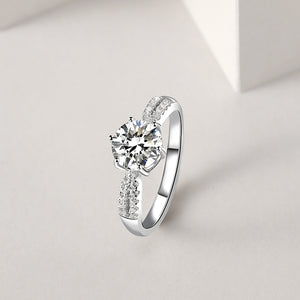

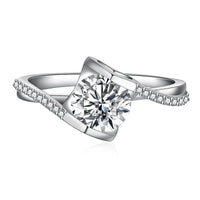
The piece they're describing → Round CZ Engagement Ring for Women — 925 Sterling Silver, Brilliant Cut Cubic Zirconia
Personalize Yours


