


Knowing how to tell if silver is real can save you from paying sterling prices for silver-plated costume jewelry. Whether you inherited a piece, found something at an estate sale, or simply want to verify what you bought online, the process is straightforward once you know where to look — and which tests actually work. This guide covers 10 methods ranked by accuracy, explains the chemistry behind each one, and corrects the most common mistake people make (over-relying on the magnet test).
Already know it's real? Browse AJLuxe sterling silver jewelry — all stamped 925, starting at $22.

How to Read Silver Hallmarks (The Most Reliable Method)
Before running a single test, flip the piece over and look for a stamped hallmark. This is the single most reliable indicator of silver purity — and it takes about 10 seconds. In the United States, the Jewelers of America and federal standards require that anything sold as "silver" must be at least 90% pure silver. Calling a base-metal piece "silver" without qualification is illegal. Many fakes avoid this by simply leaving the hallmark off entirely — which is itself a red flag.
| Hallmark | Purity % | What It Means | Commonly Found On |
|---|---|---|---|
| 925 / "Sterling" | 92.5% silver | Most common standard worldwide | Jewelry, flatware |
| 999 / "Fine Silver" | 99.9% silver | Coins, bullion — too soft for daily wear jewelry | Coins, bullion bars |
| 900 / "Coin Silver" | 90% silver | Old US coins, antique silverware | Antiques |
| 800 | 80% silver | European silver, older jewelry — still real silver | Antique European pieces |
| EP, EPNS, "Silver Plated" | 0% silver base | Electroplated — thin silver layer over base metal | Cheap flatware, costume jewelry |
| No hallmark | Unknown | Could be genuine (pre-regulation) or fake — test further | Old pieces, informal markets |
UK note: British silver must carry an official assay office hallmark — a lion passant for sterling. If a piece claims to be UK silver and lacks this mark, treat it with suspicion.
The 10 At-Home Silver Tests — Ranked by Accuracy
Once you've checked for hallmarks, these tests can confirm or rule out real silver. They're ordered from most to least reliable — accuracy ratings are based on practical use, not laboratory conditions.
| Test | Accuracy | Cost | Time | Catches Plating? |
|---|---|---|---|---|
| 1. Hallmark check | 95% | Free | 10 seconds | Yes (will say EP/EPNS) |
| 2. Acid test kit | 99% | $10–20 | 2 minutes | Yes — detects base metal immediately |
| 3. Ice test | 90% | Free | 30 seconds | Only on solid/thick pieces |
| 4. White cloth rub | 80% | Free | 30 seconds | Misleading on plated pieces |
| 5. Bleach test | 75% | Free | 1 minute | Risky — permanently damages silver |
| 6. Smell test | 60% | Free | Instant | Cannot detect thin plating |
| 7. Magnet test | 40% | Free | Instant | Very unreliable (see below) |
| 8. Tarnish pattern | 70% | Free | Days to weeks | Only useful over time |
| 9. Weight/density check | 85% | Needs scale | 5 minutes | Yes, if you know the piece dimensions |
| 10. Professional assay | 100% | $25–50 | 1 day | Definitive — use for high-value items |
Test 1 — Hallmarks: Look Here First
Use a jeweler's loupe or even a smartphone camera zoomed in to find the hallmark. Know where to look: on rings, check the inner band. On necklaces and bracelets, check the clasp or the jump ring near the clasp. On pendants, flip them over — the stamp is usually on the flat reverse side. On flatware, check the underside of the handle.
The stamp may be tiny — as small as 1–2mm — and can appear worn on older pieces. Good lighting and magnification are your friends. If you see "925," "Sterling," or "STER," the piece meets the international standard for real silver. If you see "EP," "EPNS," "Silver Plated," or "German Silver" — you have a plated or silver-free item.
Test 2 — The Ice Test (Most Surprising)

Silver holds a remarkable distinction: it has the highest thermal conductivity of any metal — higher than copper, gold, or aluminum. This property makes the ice test surprisingly effective.
How to do it: Set the silver piece on a flat surface at room temperature. Place a small ice cube directly on top. Watch closely for the first 10–15 seconds. Real solid silver conducts heat so efficiently that it draws warmth from the surrounding air and transfers it into the ice almost immediately — the ice will begin melting visibly faster than it would sitting on a wooden table or countertop.
Limitation: This test only works reliably on solid, substantial pieces — thick bangles, spoons, or chunky rings. Thin chain necklaces don't have enough thermal mass to show a meaningful difference. Silver-plated items with a thick copper core can also show moderate conductivity, since copper is the second-most conductive metal. Use this as a supporting test, not a standalone verdict.
Test 3 — The White Cloth Rub
Rub the piece firmly with a clean white cloth or white paper towel for about 20–30 seconds, focusing on one spot. Real silver tarnishes through a chemical reaction with sulfur compounds in the air — the result is silver sulfide (Ag₂S), which appears as a dark gray or black residue. If you see black marks on the cloth, that's a positive sign.
Important caveat: Silver-plated items with surface tarnish can also leave black marks if the thin plating layer has oxidized. This test is best used on pieces that look freshly polished — if the cloth comes away clean from a brand-new-looking piece, that's a mild red flag (though many silver-plated items are rhodium-dipped to resist tarnish, which can also return a clean cloth). Combine with the hallmark check for confidence.
Why the Magnet Test Is Overrated
Almost every "how to test silver" guide leads with the magnet test. Here's what they get wrong — and it's a significant gap.
Yes, real silver is diamagnetic: it is very slightly repelled by a strong magnet. So the logic goes: bring a magnet near your silver, and if it sticks, it's fake. The problem is the other half of the equation.
The catch: Most silver-plated alloys use copper, zinc, or nickel as the base metal. None of these are magnetic. So a magnet won't stick to copper, won't stick to zinc, and often won't stick to nickel alloys either. The only fakes the magnet test reliably catches are items with an iron or steel core — which is rare in modern jewelry production.
In practice: The magnet test catches roughly 20% of fakes (those with ferrous cores) and passes 80% of silver-plated items without issue. It's a useful elimination test — if it IS strongly magnetic, it is definitely not solid silver — but a negative result (no sticking) tells you almost nothing.
Correct interpretation: Magnetic = definitely fake. Not magnetic = could be real, could be plated. Run additional tests.
What "925 Sterling Silver" Actually Means
Sterling silver is not pure silver — and that's intentional. Pure silver (999 fine silver) is exceptionally soft. It bends, scratches, and deforms easily under the stress of everyday wear. Rings would lose their shape. Clasps would break. Chains would kink permanently.
The solution developed centuries ago: alloy silver with a small percentage of a harder metal, most commonly copper, to increase durability without losing the precious metal character. The result is 925 sterling silver — 92.5% pure silver and 7.5% alloy. The "925" stamp is simply that ratio expressed as parts per thousand.
"Sterling" and "925" are legally equivalent terms in the US and UK. A piece stamped "Sterling" meets the same standard as one stamped "925." According to GIA (Gemological Institute of America), sterling silver is the most widely used silver alloy in fine jewelry worldwide.
At AJLuxe, every piece in our sterling silver collection is stamped 925 — you can find the hallmark on every clasp, ring band, and pendant back. We use sterling because it gives you the real-silver properties — the weight, the luster, the tarnish pattern — with the durability needed for daily wear. For a deeper look at the difference between these terms, see our sterling silver vs 925 guide.
Sterling Silver vs. Silver-Plated vs. Silver-Filled
These three terms describe very different products at very different price and quality points. Understanding the distinction protects you from paying sterling prices for plated goods. It also helps when evaluating the long-term value of a piece — a point we also cover in our gold-plated jewelry guide.
| Property | Sterling Silver (925) | Silver-Plated | Silver-Filled |
|---|---|---|---|
| Silver content | 92.5% throughout | Thin surface layer only (microns thick) | 5–10% silver by weight (bonded layer) |
| Durability / lifespan | Decades with basic care | 1–3 years before base metal shows | 5–10 years; more durable than plated |
| Tarnishing | Tarnishes slowly; polishes back to bright | Tarnishes fast; base metal discolors skin | Tarnishes similarly to sterling |
| Price range | $20–200+ for jewelry | $3–30 | $15–80 |
| Replating possible? | N/A — solid throughout | Yes, but cost often exceeds value | Rarely needed |
| Best for | Everyday wear, heirloom pieces | Occasional wear, trend pieces | Budget-conscious buyers wanting longevity |
Signs You Have Fake Silver — Common Red Flags
Beyond the tests, these warning signs suggest a piece is not solid silver:
- Green or black skin discoloration — the copper in the base metal reacts with sweat and skin oils, leaving a green or grayish mark. Real 925 sterling can cause mild skin discoloration in people with very low skin pH, but consistent green staining almost always points to a high-copper base.
- Strong metallic odor — real silver has virtually no scent. A strong, sharp, penny-like smell suggests copper or zinc in the alloy base.
- "EP," "EPNS," or "Silver Plate" markings — these are disclosures, not purity stamps. Electroplated nickel silver (EPNS) has zero silver purity; it's nickel alloy with a silver surface wash.
- Extreme lightness — silver is a dense metal at 10.49 g/cm³. A piece that feels unusually light for its size may have a hollow or lightweight base-metal core.
- Bubbling, flaking, or peeling surface — the classic sign of plating failure. The silver layer separating from the base means the piece was never solid silver.
- Suspiciously low price — a "silver necklace" for $3–5 is almost certainly plated. Real silver has commodity value; even simple sterling pieces cost $15+ to manufacture honestly.
Related reading: 925 Silver vs 999 Silver: Which Is Better for Jewelry?
Related reading: How to tell if gold is real at home 2026 testing guide.
Related reading: Will a Magnet Stick to Sterling Silver? The Real Test (2026).
Related reading: 10 Types of Necklace Clasps, Ranked by Security (2026).
Frequently Asked Questions
How can I tell if silver is real without a test kit?
Start with the hallmark — flip the piece and look for a stamp reading 925, Sterling, or 800. If you find a matching hallmark, that alone is 95% reliable. Back it up with the white cloth rub (black marks = real silver tarnish) or the ice test on solid pieces (ice melts noticeably faster on real silver). These three free methods in combination give you a strong answer without any kit.
Does real silver tarnish?
Yes — real sterling silver tarnishes, and this is actually a good sign. Tarnish is silver sulfide (Ag₂S), formed when silver reacts with sulfur compounds in the air. The tarnish appears as a gradual darkening from bright silver to yellowish-brown to nearly black. It polishes off easily with a silver cloth. Silver that never tarnishes is often rhodium-plated sterling (still real silver underneath) or a silver-toned base metal that simply doesn't react the same way.
What does 925 mean on silver?
The 925 stamp means the piece is 92.5% pure silver and 7.5% other metals (usually copper). This is the international standard for sterling silver. The 7.5% alloy addition makes the silver hard enough for everyday jewelry use — pure silver (999) is too soft to hold its shape in rings or clasps. "925" and "Sterling" are legally equivalent terms.
Is sterling silver real silver?
Yes. Sterling silver is real silver — 92.5% pure silver by weight. It is the most common form of silver used in fine jewelry worldwide. The 7.5% alloy (typically copper) is added for durability, not to reduce value. Sterling silver carries real precious metal value and is recognized globally as a standard.
Can you test silver with vinegar?
Vinegar is sometimes recommended as a home test, but it is not reliable for silver. Real silver does not react noticeably with household white vinegar. The test logic is that base metals (copper, zinc) may show some reaction — but the reaction is usually too subtle to be conclusive, and the test can produce misleading results. An acid test kit (nitric acid-based) is far more accurate and costs only $10–20 if you want a chemical confirmation.
Will a magnet stick to real silver?
A magnet will not stick to real silver — silver is diamagnetic (very slightly repelled). However, this test is widely misunderstood. Most silver-plated base metals (copper, zinc, nickel) are also non-magnetic, so a magnet not sticking does not confirm silver. The only thing the magnet test reliably detects is iron or steel cores, which are rare in modern jewelry. If a piece is strongly magnetic, it's definitely not silver. If it's not magnetic, run additional tests.
How do I test silver with ice?
Place the silver piece on a flat surface at room temperature. Set a small ice cube on top and watch closely for 10–15 seconds. Real solid silver has the highest thermal conductivity of any metal — it draws heat from the surrounding environment into the ice rapidly, causing the ice to melt noticeably faster than it would on a wooden table or plastic surface. This works best on solid, substantial pieces like thick rings or silverware. Thin chain necklaces don't have enough mass to show a clear result.
What is the difference between sterling silver and pure silver?
Pure silver (fine silver, stamped 999) is 99.9% silver with virtually no alloy additions. It is extremely soft, highly lustrous, and used primarily for bullion coins and investment bars — rarely for wearable jewelry because it bends and scratches too easily. Sterling silver (925) is 92.5% silver alloyed with 7.5% other metals (usually copper), making it durable enough for rings, chains, clasps, and everyday jewelry while retaining the look and value of a precious metal.
Why does silver turn my skin green?
Green skin discoloration from jewelry is almost always caused by copper in the base metal reacting with sweat and skin oils to form copper salts (copper chloride, copper sulfate) — which leave a green or grayish mark on skin. Genuine 925 sterling silver contains 7.5% copper, which can occasionally cause mild discoloration in people with very acidic skin chemistry, but consistent green staining from a "silver" piece usually indicates a high-copper base metal with a thin silver-plated surface.
How much does it cost to test silver professionally?
A professional assay (purity test) at a jeweler, pawn shop, or precious metals dealer typically costs $25–50 per item. Some dealers offer free testing if you're looking to sell. The test is definitive — it uses XRF (X-ray fluorescence) or nitric acid assay to measure exact silver content. Worth the cost for high-value pieces such as inherited silverware, antique jewelry, or any item where you're uncertain of authenticity before purchase.
What does EP mean on silver?
"EP" stands for electroplated — a thin layer of silver has been deposited onto a base metal (usually copper or nickel alloy) through an electrochemical process. "EPNS" stands for electroplated nickel silver, where the base is a nickel-silver alloy (which contains no actual silver — "silver" here refers to its silver-colored appearance). EP and EPNS pieces are not solid silver and carry little precious metal value.
Is no hallmark a sign of fake silver?
Not necessarily — but it is a reason to test further. Very old silver pieces (pre-regulation era, before the late 19th century) were often made without standardized hallmarks and may still be genuine. Handmade or artisan silver from some countries also occasionally lacks stamps. However, modern jewelry with no hallmark is a red flag — in the US and UK, sellers are legally required to disclose silver content, and reputable manufacturers always stamp their pieces. If a piece has no hallmark, run at least two additional tests before assuming it's real.
Final Thoughts
Testing silver at home doesn't require expensive equipment or chemistry expertise. Start with the hallmark — a 925, Sterling, or 800 stamp is the most reliable indicator you can find in 10 seconds for free. Back it up with the ice test on solid pieces or a white cloth rub, and you'll have strong confidence in your answer without spending a dollar.
If a piece matters enough to warrant certainty — an inherited item, an estate sale purchase, or anything you're considering reselling — a $10 acid test kit or a $25 professional assay gives you a definitive answer.
When you're ready to buy silver you can trust, AJLuxe's sterling silver jewelry collection is stamped 925 on every piece. From minimalist pendants to layered chains, everything starts at $22 and ships free. You'll find the hallmark right where it should be — on the clasp, on the band, on the back of the pendant. No guessing required.
Written by the AJLuxe team — specialists in sterling silver jewelry. Last updated: June 2026.
Related: How to Tell Real vs Fake Pearls
All third-party trademarks, brand names and product names are the property of their respective owners. AJLuxe is not affiliated with, endorsed by, sponsored by, or otherwise connected to any third-party brand referenced in this article. Brand names are used solely for accurate comparative reference, and material descriptions reflect each brand's own published product specifications at the time of writing.
You Might Also Like
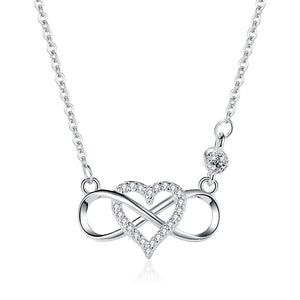
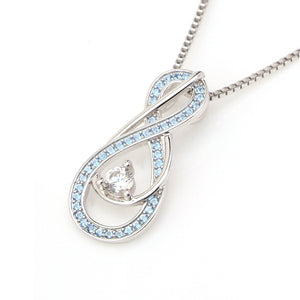
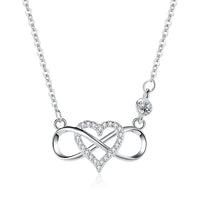
The piece they're describing → Micro Pave Heart Necklace for Women — 925 Sterling Silver, Infinity Design, CZ Stones
Personalize Yours


