


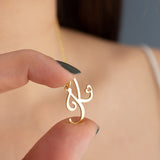
If your earrings turn your earlobes red, your ring leaves a green-grey mark, or a new necklace makes your neck itch within a day, the problem almost certainly is not gold or silver itself — it is nickel. Nickel is the most common cause of allergic contact dermatitis worldwide, and it hides inside the alloys of a huge share of affordable jewelry. The good news: once you know which metals are genuinely safe, shopping for sensitive skin becomes simple. This guide ranks every common jewelry metal from best to worst for reactive skin, explains the science of why nickel is the culprit, and gives you exact buying rules for earrings, rings, and everyday chains.
The Best Metals for Sensitive Skin, Ranked
Here is every common jewelry metal rated for how well it suits sensitive and allergy-prone skin, from the safest to the most likely to cause a reaction.
| Metal | Skin Safety | Nickel Content | Price Tier | Best For |
|---|---|---|---|---|
| Titanium | Excellent | None | $$ | New piercings, earrings, daily wear |
| Niobium | Excellent | None | $$ | Earrings for the most reactive skin |
| Platinum | Excellent | None (95% pure) | $$$$ | Fine rings, heirloom pieces |
| Solid 18k gold | Very good | Trace (75% gold) | $$$$ | Fine jewelry, sensitive ears |
| Solid 14k gold | Good | Low (58.5% gold) | $$$ | Everyday fine jewelry |
| .925 Sterling silver | Good | Usually none* | $$ | Everyday necklaces, rings, gifts |
| Gold-filled | Good | Trace surface | $$ | Affordable everyday wear |
| Surgical steel (316L) | Variable | Contains nickel | $ | Most people, but not the highly allergic |
| Gold-plated / vermeil | Fair (wears off) | Depends on base | $ | Occasional wear |
| Brass / bronze | Poor | Often present | $ | Avoid for sensitive skin |
| Nickel / unmarked costume | Avoid | High | $ | No one with sensitive skin |
*Sterling silver is an alloy of 92.5% silver and 7.5% other metals — usually copper. Reputable makers use copper, but some cheap “silver” can include nickel. Buy from sellers who specify nickel-free.

Why Nickel — Not Gold or Silver — Causes Reactions
When people say they are “allergic to cheap jewelry,” what they almost always have is a nickel allergy. According to the American Academy of Dermatology, nickel is the single most common cause of allergic contact dermatitis, and it affects a meaningful share of the population — more women than men, largely because of ear piercing exposure.
Here is the mechanism: nickel is rarely used as a pure jewelry metal. Instead, it is mixed into alloys to make them harder, whiter, and cheaper. When the metal touches skin, sweat and skin oils slowly dissolve a tiny amount of nickel ions, which penetrate the skin and trigger the immune system. Once you are sensitized, exposure causes the classic reaction: redness, itching, small blisters, and dry or scaly patches exactly where the metal sat. The reaction can appear within hours, or take a day or two.
This is why pure or near-pure metals are safe: titanium, niobium, and platinum are biologically inert — your body simply does not react to them, which is why titanium is used for surgical implants. Solid high-karat gold and genuine sterling silver are safe because they contain little to no nickel.
“Hypoallergenic” vs “Nickel-Free” — They Are Not the Same
This is the most important distinction in the entire category, and most shoppers miss it. The word “hypoallergenic” is not regulated for jewelry. It simply means “less likely to cause an allergic reaction” — a brand can use it freely without proving anything. A piece labeled hypoallergenic can still contain nickel below the level the seller considers problematic.
“Nickel-free” is the specific, meaningful claim. In the European Union, the Nickel Directive legally limits how much nickel jewelry may release onto skin, tested by a standardized method (EN 1811). When you want certainty, look for the words “nickel-free” or a stated metal composition — not just the marketing word hypoallergenic.
The Surgical Steel Myth
One of the most persistent myths is that “surgical stainless steel” is automatically safe for sensitive skin. It is not. The most common jewelry grade, 316L stainless steel, contains 10–14% nickel. It is called “surgical” because the nickel is bound tightly in the alloy and releases very slowly — which is fine for most people but not for those with a genuine nickel allergy. With sweat, friction, or a fresh piercing wound, enough nickel can leach out to trigger a reaction.
If your skin is mildly sensitive, 316L is usually tolerable. If you have a confirmed nickel allergy, skip steel entirely and go to titanium or niobium, which release zero nickel.
Best Metal by Jewelry Type
The right metal depends on how the piece touches your skin — earrings (especially through a piercing) are the highest-risk, while a pendant on a chain barely contacts skin at all.
| Jewelry Type | Risk Level | Best Metal Choice |
|---|---|---|
| Earrings (pierced) | Highest | Titanium, niobium, or solid 14k+ gold posts |
| New / healing piercing | Highest | Implant-grade titanium only |
| Rings (worn daily) | High | Platinum, solid gold, or .925 sterling silver |
| Necklaces / chains | Moderate | .925 sterling silver, gold-filled, solid gold |
| Bracelets / anklets | Moderate | Sterling silver, gold-filled, titanium |
| Pendants (no skin contact) | Low | Almost any metal — the chain matters most |
At AJLuxe, our pieces are crafted in .925 sterling silver and 18k gold plating over sterling — nickel-free and made for everyday, sensitive-skin wear. Browse the full hypoallergenic jewelry collection, or shop our sterling silver jewelry for everyday pieces that won't irritate your skin.
How to Test a Metal at Home
If you already own a piece and are not sure whether it will react, you have two practical options:
- The patch test: Tape the piece to the inside of your forearm for 24–48 hours (keep it dry). If redness, itching, or bumps appear, your skin is reacting to it.
- The nickel spot test (DMG test): Sold as an inexpensive kit, dimethylglyoxime solution turns pink when rubbed on metal that releases nickel. A pink result means the piece will likely irritate nickel-allergic skin. This is the same chemistry used in regulatory nickel testing.
If a reaction has already started, stop wearing the piece, wash the area with mild soap, and apply a cool compress. Persistent or severe reactions should be reviewed by a dermatologist, who can confirm a nickel allergy with a patch test. For more, the American Academy of Dermatology publishes guidance on managing nickel contact dermatitis.
How to Protect Sensitive Skin From Any Metal
If you own a piece you love but it occasionally irritates you, these tactics reduce exposure:
- Keep jewelry dry. Sweat and water accelerate nickel release. Remove rings before washing hands repeatedly, and take earrings out before workouts.
- Barrier coating. A clear jeweler's lacquer or even a thin layer of clear nail polish on the back of earring posts and ring bands creates a temporary barrier. Reapply as it wears.
- Limit wear time. Reactions are dose-dependent — the longer the contact, the higher the risk. Rotate pieces and give your skin breaks.
- Buy quality once. A single pair of solid gold or titanium earrings you wear daily beats a drawer of cheap pieces that each cause a flare-up.
The Bottom Line
For sensitive skin, the metal hierarchy is clear: titanium and niobium are the safest, platinum and solid 14k–18k gold are excellent for fine jewelry, and .925 sterling silver and gold-filled are the best affordable everyday choices. Avoid raw nickel, unmarked brass, and bargain costume jewelry, and treat “surgical steel” with caution if you have a confirmed allergy. Above all, shop on the verifiable claim — “nickel-free” or a stated alloy — rather than the unregulated word “hypoallergenic” (see our breakdown of what actually makes jewelry hypoallergenic). Choose the right metal once, and your jewelry should feel like nothing at all.
Shopping for earrings specifically? Our best hypoallergenic earrings guide has style-by-style picks in safe metals.
Frequently Asked Questions
What is the best metal for sensitive skin?
Titanium and niobium are the best metals for sensitive skin because they are biologically inert and contain no nickel — the same reason titanium is used for surgical implants. For fine jewelry, platinum and solid 14k–18k gold are excellent, and for affordable everyday wear, .925 sterling silver and gold-filled are reliably safe.
Is sterling silver good for sensitive skin?
Yes. Genuine .925 sterling silver is 92.5% silver alloyed with 7.5% copper, and reputable makers use nickel-free alloys, so it is a good everyday choice for sensitive skin. Buy from sellers who specifically state their silver is nickel-free, since a small number of low-quality “silver” pieces can include nickel.
Why does cheap jewelry irritate my skin?
Because it almost always contains nickel. Nickel is mixed into inexpensive alloys to harden and whiten them, and when sweat dissolves trace nickel ions, your immune system reacts — causing redness, itching, and small blisters. Nickel is the most common cause of allergic contact dermatitis.
Is surgical stainless steel safe for sensitive skin?
Not always. The common jewelry grade, 316L stainless steel, contains 10–14% nickel. The nickel is bound tightly and releases slowly, so it is fine for most people, but those with a genuine nickel allergy can still react — especially with sweat or a fresh piercing. If you are highly allergic, choose titanium or niobium instead.
Does “hypoallergenic” mean nickel-free?
No. “Hypoallergenic” is an unregulated marketing word meaning only “less likely to cause a reaction” — a hypoallergenic piece can still contain nickel. The meaningful, verifiable claim is “nickel-free” or a stated metal composition such as .925 sterling or solid 14k gold.
Can you be allergic to gold?
True gold allergies are rare. Most reactions blamed on gold are actually caused by the nickel or other base metals alloyed into low-karat or plated gold. Solid high-karat gold (14k, 18k) contains far less of these metals, which is why it rarely causes problems for sensitive skin.
Is gold-plated jewelry safe for sensitive skin?
It can be while the plating is intact, but gold plating wears off over time, exposing the base metal underneath — which is often brass or nickel-containing alloy. For longer-lasting safety, choose gold-filled (a thick bonded gold layer) or solid gold rather than thin plating.
What metal should I use for a new piercing?
Implant-grade titanium is the gold standard for new and healing piercings because it releases no nickel and is what surgeons use inside the body. Niobium and solid 14k+ gold are also acceptable. Avoid stainless steel and plated metals during healing.
How do I know if jewelry contains nickel?
Check the product description for a stated alloy or “nickel-free” label. To test a piece you already own, use an inexpensive DMG (dimethylglyoxime) nickel spot-test kit — it turns pink on metal that releases nickel — or do a 24–48 hour skin patch test on the inside of your forearm.
What does green skin from jewelry mean?
A green or grey mark is usually a reaction between copper in the alloy and the acids and moisture on your skin — it is harmless and washes off, and is not the same as an allergic reaction. An itchy, red, blistered rash, by contrast, signals a nickel allergy. Pieces in solid gold, platinum, or quality sterling silver rarely leave a green mark.
Written by the AJLuxe team — specialists in personalized sterling silver jewelry. Last updated: June 2026.
All third-party trademarks, brand names and product names are the property of their respective owners. AJLuxe is not affiliated with, endorsed by, sponsored by, or otherwise connected to any third-party brand referenced in this article. Brand names are used solely for accurate comparative reference, and material descriptions reflect each brand's own published product specifications at the time of writing.
You Might Also Like
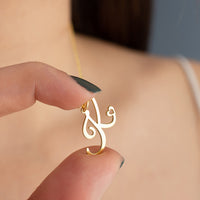
The piece they're describing → Heart Initial Necklace for Women — 18K Gold Plated, Personalized Letter + Heart Pendant
Personalize Yours


