


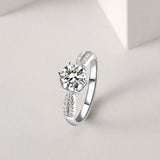
- Settings fall into two jobs: how the stone is held (prong, bezel, channel, pave, bar, tension, flush) and how the ring is styled around it (halo, three stone, cluster, cathedral, split shank).
- More light and sparkle usually means less metal covering the stone, which usually means more snag risk and more upkeep.
- For hands-on work or a very active life, look at bezel, half bezel or flush. For maximum sparkle, look at prong.
- The same setting looks different on a round, oval, princess or emerald shape, and corners and points need extra protection.
- Our stones are cubic zirconia, not diamond, and we only describe a ring's setting when its product page states it.
Choosing a ring is really two decisions: the stone and the setting that holds it. If you are still deciding on the look, our guides to the solitaire ring and the halo ring cover two of the most popular designs in detail, and this page maps all the options so you can see how they compare.
What is a ring setting?
A ring setting (also called a mounting) is the metal framework that grips a stone and attaches it to the band. Jewelers use two related words: the "head" is the part that holds the center stone, and the "setting" or "mounting" is often used for the whole ring without the stone.
What are the parts of a ring?
A ring has a few standard parts, and knowing them makes every listing easier to read. Names vary a little between jewelers, but these are the common ones.
| Part | What it is |
|---|---|
| Head | The top structure that holds the center stone |
| Prongs (claws) | Small metal arms that grip the stone, in prong-type heads |
| Girdle | The thin outer edge of the stone itself, where the prongs or rim grip it |
| Gallery | The area under the stone, seen from the side, often decorated with cut-outs or small stones |
| Bridge | The underside area where the head connects to the band (some sources use the word for the support piece under the stone) |
| Shoulders | The parts of the band that rise toward the head, often set with small accent stones |
| Shank / band | The part that goes around your finger |
Band shape matters as much as the head. A very thin band ring looks delicate but flexes and wears faster, while an open band ring trades a closed circle for a gap, which changes how it sits and how it is sized.
What are all the common ring setting types?
There are about a dozen common settings, and each one is a trade between sparkle, security and snag risk. This table compares them in general terms; real results depend on how well an individual ring is made. "Cost direction" is a typical tendency, not a price list, because metal, stone and labor all move the final price.
| Setting | Security | Sparkle | Upkeep | Snag risk | Best for | Cost direction |
|---|---|---|---|---|---|---|
| Prong (claw) | Good, needs checks | Highest | Regular prong checks | Higher | Classic look, office and dressy wear | Lower to mid |
| Bezel | Highest | Lower | Low | Low | Active and hands-on lives | Mid |
| Half bezel | High | Medium | Low | Low to medium | Security with more light | Mid |
| Channel | High if well made | Medium | Low, hard to repair | Low | Bands and wedding rings | Mid |
| Pave / micropave | Medium | High (glittery) | Check for missing stones | Medium | Shoulders and bands | Higher (labor) |
| Bar | Medium to high | Medium to high | Low to medium | Low to medium | Eternity-style rows | Mid |
| Tension | Depends on build | High | Hard to resize | Low | Modern, floating look | Higher (precision) |
| Flush (gypsy) | High | Lower | Low | Lowest | Work with hands, men's and stacking bands | Mid |
| Cluster | Varies by stone | High | Check small stones | Medium | Big look on a small budget | Lower |
| Halo / hidden halo | Medium to high | High | Check small stones | Medium | Making the center look larger | Higher |
| Three stone | Depends on each head | High | Three heads to check | Medium to higher | Symbolic gifts, anniversaries | Higher |
The first group in this table is about how the stone is held. Here is what each one means in plain terms.
- Prong (or claw): Small metal arms, usually four or six, grip the stone and leave most of it open to light. The prong setting guide goes deep on shapes, loose prongs and repairs.
- Bezel: A thin metal rim surrounds the whole edge of the stone. It is the most secure and smoothest option. See the bezel setting guide.
- Half bezel: The rim covers only part of the edge, often two sides, so more light gets in than with a full bezel.
- Channel: Stones sit side by side in a groove between two metal walls, with no metal between them. Compare it with pave in our channel vs pave setting guide.
- Pave and micropave: Many tiny stones sit close together, each held by small beads of metal, so the surface looks paved with sparkle. Micropave uses even smaller stones. Our pave engagement ring guide covers this style.
- Bar: Thin metal bars sit between stones, so the sides of each stone are partly exposed.
- Tension: The band is cut to grip the stone with pressure, so it looks suspended. It needs precise engineering and is generally used with hard stones. Ask the seller how it is built and whether it can be resized.
- Flush (gypsy or burnish): The stone sits in a hole drilled into the band and metal is pressed around its edge, so it is level with the surface.
The second group is about styling around the center stone.
- Cluster: Several small stones are grouped to look like one larger stone. See the cluster ring guide.
- Halo: A ring of small stones circles the center stone. A hidden halo places that ring below the center stone, so it shows from the side but not from above.
- Three stone: A center stone with a stone on each side, often read as past, present and future. Our three stone rings guide shows the idea in a family gift context.
- Cathedral: Arches rise from the band to support the head, which can lift the stone and give the ring a grander profile. See the cathedral setting guide.
- Split shank: The band divides into two strands as it approaches the head, adding detail and a wider look from the front.
How do I choose a ring setting for my lifestyle?
Choose the setting by what your hands do all day, because the stone is only as safe as the metal around it. Jewelry trade sources broadly agree on the same trade-offs: prongs show the most stone but can catch on fabric and hair, while bezel and flush styles are smoother and more protective.
| Your day | Settings worth a look | Think twice about |
|---|---|---|
| Hands-on work, gym, nursing, cooking, gardening | Bezel, half bezel, flush, low-profile channel | Tall prong heads, delicate pave |
| Desk work and everyday wear | Prong (4 or 6), halo, cathedral | Very thin, high heads if you wear gloves often |
| Dressy, occasional wear | Prong, hidden halo, three stone, tension | Nothing in particular, just keep it protected |
| Stacking with other rings | Low prong, bezel, flush, channel | High heads that rub neighbours |
If you are comparing engagement and wedding styles, see engagement rings vs wedding bands for how the two are designed to sit together.
Does the same setting look different on different stone shapes?
Yes, the shape of the stone changes how a setting looks and how it protects the stone. A four-prong head on a round stone looks classic, on an oval it looks longer and slimmer, and on a square or rectangular stone the prongs sit at the corners.
- Round: The most forgiving shape, with no corners to chip. Works with nearly every setting.
- Oval: Elongates the finger. Prongs usually sit at the ends and sides; a bezel on an oval looks sleek and modern.
- Princess (square): The corners are the weak points, so jewelers commonly protect them with prongs that cover each corner or with a bezel. Our princess cut ring guide goes further.
- Emerald (rectangular, step cut): Long clean facets show clarity, and the corners are vulnerable. Corner prongs or a bezel are common choices.
- Marquise and pear: The pointed ends need protection, often a V-shaped prong or a bezel. See our marquise ring guide.
Material matters too. Cubic zirconia is generally rated around 8 to 8.5 on the Mohs scale, while diamond is 10, so a CZ stone is more easily scratched and chipped at its edges and corners. That makes the protection a setting gives to corners and edges especially worth weighing. Our cubic zirconia vs diamond guide compares the two stones in more detail.
How are ring settings described on listings?
Listings usually name the setting in the title or the spec list, and the wording tells you what to expect. "Four prong solitaire" means one center stone held by four prongs. "Pave shoulders" means small stones set along the band near the head. "Halo" means a ring of small stones around the center. "Bezel set" means a metal rim holds the stone. If a listing only says "solitaire" or "engagement ring" without naming how the stone is held, ask or check the photos before assuming.
It also helps to separate the setting from the stone. "Solitaire" describes one stone on a plain band, not a type of prong. Our guide to the best CZ engagement rings shows how to read a listing like this, and affordable engagement rings covers what to expect at lower price points.
Quick chooser: which setting fits me?
Answer these in order and stop at the first yes.
- Do you work with your hands or wear gloves often? Look at bezel, half bezel or flush.
- Is the stone square, pointed or rectangular? Look at bezel or protective corner prongs, or V prongs for points.
- Do you want the stone to look as large and bright as possible? Look at prong, halo or cluster.
- Do you want a band with sparkle all the way round? Look at pave, channel or bar.
- Do you want a symbolic, three-part design? Look at three stone.
- Not sure? A four or six prong solitaire is the standard starting point, and you can add pave shoulders later.
What mistakes should I avoid when choosing a setting?
- Buying on sparkle alone. The brightest settings are often the ones that snag most and need the most checking.
- Ignoring corners and points. A square or pointed stone with unprotected corners is where chips start.
- Skipping the checklist. Before you buy, look at the photos from the side, count the prongs, and see whether the head sits high or low.
- Assuming small stones are as secure as large ones. Pave and halo stones are tiny and held by small beads, so check them from time to time.
- Not planning for a band. If a wedding band will sit beside the ring, check that the head does not leave a gap. Cleaning habits matter too, and our guide on how to clean cubic zirconia jewelry helps keep any setting clear of buildup.
Before you buy, check: setting named on the page, number of prongs or width of rim, how high the head sits, whether the band can be resized, the base metal and any plating, and how the stone is described (cubic zirconia, moissanite or diamond).
An honest note on our range
We do not sell diamond rings. Our stones are cubic zirconia, and one halo style is listed as moissanite in its title, so check that page for stone details. We also only describe a setting when the product page states it, and most of our listings state little about it, so we do not claim bezel, tension or channel settings. Here is what the pages say:
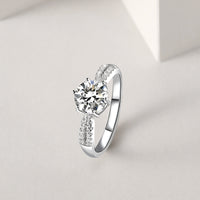
- The sterling silver CZ solitaire ($47.99) is described as a round CZ solitaire, prong set, with pave CZ accents along the shoulders, on an unplated 925 sterling silver band.
- The moissanite halo ring ($47.99) is a halo style by its title, on 925 sterling silver with an 18K gold finish. Plating wears gradually with use.
- The micro pave CZ ring ($45.99) is a micro pave style by its title, on 925 sterling silver with 18K gold plating.
The princess cut and round CZ rings on our site are described as a square CZ solitaire and a brilliant-cut round, but their pages do not say how the stone is held, so we do not state it.
More in this guide
Related reading: prong setting guide, bezel setting guide, cathedral setting guide, channel vs pave setting and cluster ring guide.
Frequently Asked Questions
What are the main types of ring settings?
The main types are prong (claw), bezel, half bezel, channel, pave, bar, tension and flush (gypsy), plus styled designs such as halo, hidden halo, three stone, cluster, cathedral, basket and split shank.
What is the most secure ring setting?
A full bezel is generally considered the most secure because metal wraps the entire edge of the stone. Flush and well-made channel settings are also secure. Any setting can loosen with wear, so periodic checks matter.
Which ring setting shows the most sparkle?
Prong settings usually show the most light because very little metal covers the stone. Halo and cluster settings add sparkle through extra small stones.
Which ring setting snags the least?
Flush and bezel settings are generally the smoothest and snag the least, because the stone sits low and is surrounded by metal. Prongs and tall heads snag the most.
What is the difference between channel and pave?
In a channel setting, stones sit in a groove between two metal walls, with no metal between them. In pave, stones are set in the surface and held by tiny beads of metal. See the channel vs pave setting guide for more.
Is a tension setting a good idea?
It can look striking, but the stone is held by pressure from the band, so quality of build is critical and resizing can be limited. Ask a jeweler about the stone and metal before choosing it.
Written by AJLuxe Team. Last updated: October 2026
All third-party trademarks, brand names and product names are the property of their respective owners. AJLuxe is not affiliated with, endorsed by, sponsored by, or otherwise connected to any third-party brand referenced in this article. Brand names are used solely for accurate comparative reference, and material descriptions reflect each brand's own published product specifications at the time of writing.
You Might Also Like
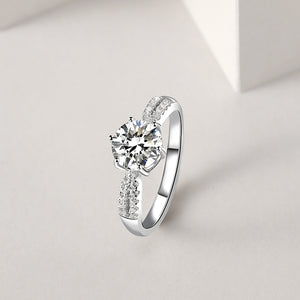
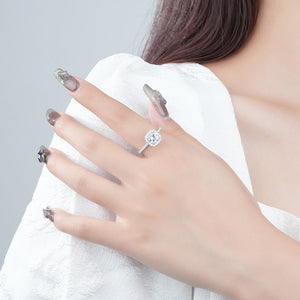
The piece they're describing → Sterling Silver Engagement Ring for Women — 925 Sterling Silver, CZ Solitaire, Hypoallergenic
Personalize Yours


