

The short answer
A solitaire ring is any ring with one center stone in a simple, low-metal setting -- the term describes the mounting style, not the gem. Because a solitaire setting uses less metal and no accent-stone labor than a halo or pave ring, the setting itself is one of the more affordable options; most of what you pay for goes to the center stone. Get your ring size confirmed before you buy, since a solitaire's whole look rides on how the stone sits.
"Solitaire" gets used loosely online, so it's worth being precise: a solitaire ring is defined by its setting -- one center stone, minimal surrounding metal, usually a four- or six-prong mount that lifts the stone so light reaches it from every angle. It says nothing about what the stone actually is. This guide covers what makes a setting a "solitaire," how it compares to halo, pave, and three-stone mounts, why solitaires vary so much in price, and what to check before you choose a center stone.

What Is a Solitaire Ring?
A solitaire ring is a ring with a single center stone set in a simple mount that uses the least metal possible to hold it securely -- typically a four-prong or six-prong setting with no side stones, no halo, and no pave detailing. The word comes from the French for "alone" or "solitary," describing the stone's isolation rather than its type, cut, or origin. A round brilliant diamond in a plain prong setting is a solitaire. So is a cushion-cut moissanite in the same mount, or a cubic zirconia solitaire like the one further down this page -- the setting name doesn't change with the stone.
Solitaire vs. Halo vs. Pave vs. Three-Stone
The fastest way to tell these apart is by how much metal and how many extra stones surround the center stone -- a solitaire uses the least of both, which is also why it tends to be the most affordable setting style to produce.
| Setting Style | How It's Built | Best For |
|---|---|---|
| Solitaire | One center stone, minimal metal, usually a 4- or 6-prong mount with no accent stones. | Letting the center stone be the entire focal point; the lowest-labor, most classic mounting style. |
| Halo | A center stone ringed by a circle of smaller pave stones set into the metal around it. | Making a smaller center stone read larger; more sparkle and more metal/labor than a solitaire. |
| Pave | Rows of small stones set flush into the band itself, on either side of the center stone. | Extra shimmer along the band; more surface area to catch on fabric and more prongs to eventually check. |
| Three-Stone | A center stone flanked by two smaller side stones, all set in a single row. | Symbolic "past, present, future" designs; needs two matched side stones, which adds cost and sourcing complexity. |
Why Do Solitaire Rings Cost What They Do?
A solitaire ring's price is driven almost entirely by the center stone, not the setting -- the mount itself is one of the cheaper styles to produce because it uses minimal metal and no accent-stone labor. According to The Knot's 2026 Real Weddings study of more than 10,000 US couples, the average engagement-ring spend was about $4,600, with 64% of couples spending under $6,000 and the average center stone weighing 1.7 carats. That average is a diamond-heavy number: a mined or lab-grown diamond is priced against GIA's 4Cs (cut, clarity, color, carat), and even a small jump in carat weight or clarity grade moves the price substantially. Swap the center stone for a cubic zirconia and the setting's own affordability stops being masked by the stone's cost -- which is why a CZ solitaire in genuine 925 sterling silver can sell for well under $100 while looking, from across a room, like the same setting style shown on a five-figure price tag.
Choosing a Center Stone: Diamond, Moissanite, or Cubic Zirconia
The honest answer is that all three can sit in an identical solitaire setting -- the difference is durability, cost, and what the seller is required to tell you. Diamond is the hardest natural material at 10 on the Mohs hardness scale. Moissanite sits at 9.25. Cubic zirconia (CZ) is rated 8 to 8.5 on the Mohs scale in GIA's own gem-imitation reference materials -- still hard enough for everyday wear, but the softest of the three, and it's classified by GIA as a diamond simulant rather than a diamond alternative because it doesn't share diamond's crystal structure or refractive properties. In the US, sellers are bound by the FTC's Jewelry Guides (16 CFR Part 23), which require a simulated stone to be clearly disclosed as such -- a CZ can never be advertised or priced as a genuine diamond. Any product description that calls its center stone "cubic zirconia" by name, the way the ring below does, is meeting that disclosure requirement rather than skipping it.
Getting the Ring Size Right Before You Buy
Confirm your ring size before ordering, not after -- a solitaire's entire look depends on the stone sitting centered and level on the finger, and an ill-fitting band is the fastest way to undercut that. Ring sizing itself follows internationally recognized standards (ISO 8653 defines ring sizes by internal circumference in millimeters), which is why a size conversion chart from one country's system to another's is measuring the same physical dimension rather than approximating it. If a piece you're considering ships in a single fixed size with no size selector at checkout -- as the ring below does -- measure an existing ring you already own that fits the intended finger, rather than guessing from a size chart alone.
Shop This Guide
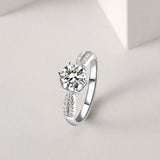
A round brilliant-cut cubic zirconia solitaire, prong-set with pave CZ shoulder accents, on a genuine 925 sterling silver band left in its own polished finish -- no plating layer, honestly disclosed as CZ rather than sold as a diamond. Hypoallergenic and nickel-free. Ships in one size, so confirm your fit before ordering.
Shop the Sterling Silver CZ Solitaire RingFrequently Asked Questions
What is a solitaire ring?
A solitaire ring is any ring with one center stone set in a simple, low-metal mount -- usually a four- or six-prong setting with no halo, pave, or side stones. "Solitaire" describes the setting style, not the type of stone; it can hold a diamond, moissanite, or a disclosed cubic zirconia.
What is the main difference between a diamond ring and a solitaire ring?
A "diamond ring" just means the ring features a diamond -- it could be set as a solitaire, halo, pave, or three-stone design. A "solitaire ring" specifies the setting (one stone, minimal metal) and says nothing about what the stone actually is.
Is a solitaire a real diamond?
Not necessarily. "Solitaire" is a setting name, not a stone grade or origin claim. A solitaire setting can hold a mined diamond, a lab-grown diamond, moissanite, or cubic zirconia -- under FTC rules (16 CFR Part 23), any non-diamond center stone must be disclosed as such.
Why is solitaire costly?
The solitaire setting itself is actually one of the more affordable mounting styles, since it uses minimal metal and no accent-stone labor compared to a halo or pave ring. Cost mostly comes from the center stone: a diamond is priced against GIA's 4Cs (cut, clarity, color, carat), which is why solitaire diamond rings can vary from a few hundred dollars to five figures depending on the stone alone.
What is the classiest engagement ring shape?
There's no single "classiest" shape -- it's a matter of taste -- but the round brilliant cut is the most consistently chosen shape for solitaire settings because its facet pattern is engineered for maximum light return, and a plain solitaire mount is widely considered the most timeless setting style since it keeps all the attention on the stone rather than surrounding detail.
Do halos make a center stone look bigger?
Yes. A halo setting surrounds the center stone with a ring of smaller pave stones, which increases the ring's overall visual footprint and can make a smaller center stone read as larger from a distance. A solitaire setting doesn't use this effect -- the center stone's actual size is what you see.
Is a 2-carat ring considered big?
Relative to typical purchases, yes. The Knot's 2026 Real Weddings study put the average US engagement-ring center stone at 1.7 carats, so a 2-carat stone sits above the national average, though "big" also depends heavily on the stone's cut and the setting style showing it off.
Are halos on rings out of style?
No single setting style goes fully out of style -- halo settings remain a popular choice for buyers who want more visual sparkle from a smaller center stone. Solitaire settings have stayed the most consistently chosen style over time precisely because they don't chase trends; the look doesn't depend on surrounding stones staying in fashion.
All third-party trademarks, brand names and product names are the property of their respective owners. AJLuxe is not affiliated with, endorsed by, sponsored by, or otherwise connected to any third-party brand referenced in this article. Brand names are used solely for accurate comparative reference, and material descriptions reflect each brand's own published product specifications at the time of writing.
You Might Also Like
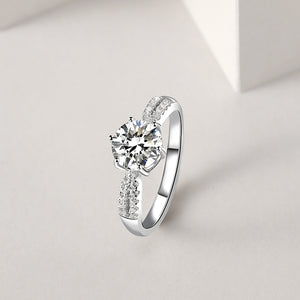
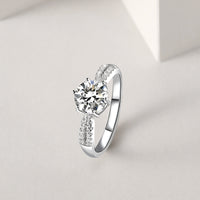
The piece they're describing → Sterling Silver Engagement Ring for Women — 925 Sterling Silver, CZ Solitaire, Hypoallergenic
Personalize Yours


