


The short answer
“Pavé” describes how stones are set -- many small stones held close together by tiny prongs or beads so the metal between them nearly disappears -- not a stone type or a cut grade. It reads denser and sparklier than a single solitaire stone, but it's “extremely difficult” to resize per retailer guidance, the crevices between stones collect dirt and are harder to clean, and the tiny prongs can loosen over years of wear -- true micro-pave designs (stones under about 1.2mm) are the most delicate version of this and can carry 100-200 stones across a full band. Cubic zirconia (8-8.5 on the Mohs hardness scale) is not diamond (10) or moissanite (9.25) -- always check what stone a “pave” piece actually uses before assuming.
Searching “pave engagement ring” usually means one of two things: you're comparing setting styles before you buy, or you already like the dense-sparkle look and want an honest read on cost, durability and upkeep before committing. This guide covers both, using real setting terminology and named hardness data instead of marketing copy.

What does “pave” actually mean on a ring?
Pavé (from the French for “paved”) describes a setting technique, not a stone or a cut -- many small stones are set edge-to-edge across a band, held by tiny shared prongs or beads instead of large individual claws, so the metal between stones nearly disappears and the surface reads as continuous sparkle rather than one stone with a plain band. Because it's a setting style, pavé pieces are made with all kinds of stones -- genuine diamonds, lab-grown diamonds, moissanite, or cubic zirconia -- so the word “pave” on its own tells you nothing about what the stones actually are. Always check the product's own material specs rather than assuming.
Pavé vs. halo vs. solitaire vs. channel-set: how they actually compare
The practical differences between pavé and the other common settings come down to sparkle density, how exposed the stones are to snagging or loosening, and how easy the ring is to resize and clean -- not just looks.
What are the real trade-offs of a pavé ring?
The biggest trade-off is maintenance, not looks: resizing a pavé ring is “extremely difficult” per retailer guidance, because the band itself is set with stones edge-to-edge rather than being a plain metal strip that can simply be cut and resized. The tight gaps between stones also trap dirt, lotion residue, and skin oils, which makes pavé pieces noticeably harder to clean than a solitaire with one exposed stone. And because each stone is held by a very small prong or bead rather than a full claw, prongs can wear down and stones can loosen over years of regular wear -- true micro-pavé designs, where stones run under about 1.2mm and prongs are measured in microns, are the most delicate version of this and are generally worth an annual professional prong check.
Does a pavé setting make the center stone look bigger?
Yes -- a ring of small stones around or beside a center stone creates a continuous plane of reflection that makes the whole piece read brighter and larger than the center stone's actual size alone would suggest. That's the main reason pavé and halo settings are popular on smaller center stones: the surrounding sparkle does real visual work, it isn't just decoration.
Is a pavé diamond a real diamond -- and how does CZ compare?
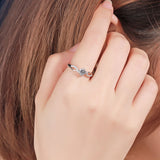
Not necessarily -- “pavé” only describes the setting, so a pavé piece can be set with a genuine diamond, a lab-grown diamond, moissanite, or cubic zirconia, and only the listing itself tells you which. On the Mohs hardness scale, diamond sits at 10, moissanite at about 9.25, and cubic zirconia at 8-8.5 -- all durable enough for everyday wear, but not identical, and CZ is a distinct, honestly less expensive stone rather than a lesser grade of diamond. The Micro Pave CZ Ring below is built in 925 sterling silver with a cubic zirconia center stone and pavé-accented shoulders -- not diamond, and not gold-plated, just an honestly priced CZ-in-silver take on the look.
| Setting | Sparkle Density | Durability / Prong-Snag Risk | Best For |
|---|---|---|---|
| Pavé | Dense -- many small stones set close together across part or all of the band | Small shared prongs/beads; harder to resize than a solitaire and gaps collect dirt | Buyers who want continuous sparkle on a slim, low-profile band |
| Micro-Pavé | Densest of the four -- a full-coverage band can carry 100-200 stones under ~1.2mm | Smallest prongs of any pavé style (measured in microns); most delicate, worth annual inspection | Very thin, dainty bands where sparkle-per-millimeter matters most |
| Halo | A ring of small stones circles one larger center stone, boosting its apparent size | Center stone sits inside a protective ring of metal and accent stones; sturdier day-to-day than full pavé | Making a smaller center stone look larger without full-band maintenance |
| Solitaire | Lowest -- sparkle comes from one stone only | Fewest total prongs (usually 4-6) holding one stone; easiest to resize, inspect, and clean | Lowest-maintenance, classic look |
| Channel-Set | Moderate -- accent stones sit flush between two metal walls, not raised prongs | No exposed prongs, so accent stones resist snagging better than pavé or halo | Active lifestyles or manual work where snag risk from raised prongs is a concern |
Shop This Guide
Want the pavé-accent sparkle without the maintenance of a fully paved band? The Micro Pave CZ Ring pairs one round cubic zirconia center stone with pavé-accented shoulders on a slim twisted 925 sterling silver band, adjustable for a comfortable fit -- honestly a solitaire-with-pavé-shoulders design in sterling silver, not a fully paved band and not gold-plated, at $45.99.
Shop the Micro Pave CZ RingFrequently Asked Questions
What is a pavé on an engagement ring?
It's a setting style, not a stone type -- small stones are set close together with tiny shared prongs or beads so the band reads as continuous sparkle rather than showing bare metal between stones. The word describes the arrangement; the stones themselves can be diamond, moissanite, or cubic zirconia.
Is pavé suitable for engagement rings?
Yes -- it's one of the most common engagement-ring styles. The main caveat is upkeep: pavé is harder to resize and clean than a solitaire, and it's a less rugged choice for very hands-on or active lifestyles because of the tiny prongs holding each stone.
Which is better, a solitaire or a pavé engagement ring?
It depends on your priorities. A solitaire is easier and cheaper to resize, easier to clean and inspect, and reads as the classic low-maintenance choice. A pavé ring delivers denser, more continuous sparkle from many small stones, at the cost of harder resizing and more regular upkeep.
Does a pavé setting make a diamond (or center stone) look bigger?
Yes -- the surrounding small stones create a continuous plane of reflection that makes the whole piece read brighter and larger than the center stone's actual size alone would suggest, which is why pavé and halo settings are popular choices for smaller center stones.
Is a pavé diamond a real diamond?
Only if the listing says so. “Pavé” describes the setting, not the stone -- pavé pieces are made with genuine diamonds, lab-grown diamonds, moissanite, or cubic zirconia depending on the piece, so always check the product's own material specs rather than assuming from the word “pavé” alone.
What are the pros and cons of pavé rings?
Pros: dense, continuous sparkle and a slim, low-profile look that works well on thin bands. Cons: resizing is considerably harder than a solitaire, the gaps between stones trap dirt and are harder to clean, and the small prongs can loosen over years of regular wear -- which is why an annual professional check is worth doing, especially on true micro-pavé pieces.
What is the difference between pavé and micro pavé?
Micro-pavé uses noticeably smaller stones -- typically under about 1.2mm -- set with finer prongs (measured in microns) than standard pavé, which packs more stones into the same space for even denser sparkle. The trade-off is that those finer prongs make micro-pavé more delicate than standard pavé.
What is a micro pavé diamond?
There's no separate “micro-pavé diamond” as its own stone category -- it just means a diamond (or CZ or moissanite) small enough, roughly under 1.2mm, to be set in a micro-pavé arrangement. A full-coverage micro-pavé band can carry as many as 100-200 of these tiny stones.
All third-party trademarks, brand names and product names are the property of their respective owners. AJLuxe is not affiliated with, endorsed by, sponsored by, or otherwise connected to any third-party brand referenced in this article. Brand names are used solely for accurate comparative reference, and material descriptions reflect each brand's own published product specifications at the time of writing.
You Might Also Like
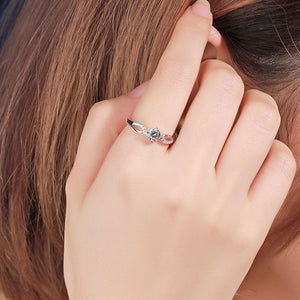
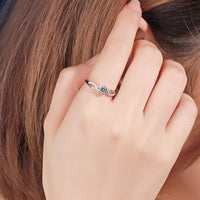
The piece they're describing → Micro Pave CZ Engagement Ring for Women — 925 Sterling Silver, Cubic Zirconia, Adjustable
Personalize Yours


