


Cubic zirconia vs diamond is a question almost every jewellery shopper asks at some point — the two stones can look nearly identical in a store window, but they're built from completely different materials. One is crystallised carbon forged over billions of years. The other is engineered in a lab in a matter of hours. Knowing the difference helps you spend smart, whether you want diamond-level sparkle for less or you're deciding what really matters for a piece you'll wear every day.
This guide breaks down cubic zirconia vs diamond on every point that matters — hardness, sparkle, price, durability, and real-world lifespan — then answers the question people actually want answered: will anyone notice, and is CZ worth it?
What Is Cubic Zirconia?
Cubic zirconia (CZ) is a lab-created gemstone made from zirconium dioxide. It was first produced for commercial use in the 1970s as an affordable, durable, diamond-like stone, and it quickly became the most popular diamond simulant in the world.
A simulant is a stone that imitates the look of a diamond without sharing its chemistry. That's the key distinction: CZ contains no carbon and isn't a "type" of diamond. It's its own material that happens to be clear, hard, and sparkly — which is exactly why it became the go-to diamond look-alike. According to the Gemological Institute of America (GIA), cubic zirconia and moissanite are the two most common diamond simulants on the market.
What Is a Diamond?
A diamond is pure crystallised carbon, formed under immense heat and pressure deep in the earth (natural diamonds) or grown in a lab that recreates those conditions (lab-grown diamonds). Either way, the result is the same material — the hardest known natural substance, scoring a perfect 10 on the Mohs hardness scale, according to GIA. On that same 1–10 scale, cubic zirconia sits at 8 to 8.5, a gap that explains most of the durability difference you'll read about below.
That hardness is why diamonds are the traditional choice for engagement rings: they resist scratches and keep their sparkle for generations. They also hold value in a way that simulants never will, which matters if you think of a ring as a keepsake or an investment.
Cubic Zirconia vs Diamond: Side-by-Side Comparison
Here's how the two stones stack up on the properties that actually affect how a piece looks, lasts, and costs:
| Property | Cubic Zirconia | Diamond |
|---|---|---|
| What it is | Zirconium dioxide (lab-made simulant) | Crystallised carbon (natural or lab-grown) |
| Hardness (Mohs) | 8–8.5 | 10 (hardest natural material) |
| Sparkle / fire | More rainbow flashes (higher dispersion) | White brilliance with subtle fire |
| Weight | ~1.7× heavier than a diamond the same size | Lighter for its size |
| Clarity | Flawless (mass-produced, no inclusions) | Usually has natural inclusions |
| Durability over time | Can scratch & dull after years of daily wear | Keeps sparkle for a lifetime |
| Price (1 carat look) | A few dollars to ~$20 per stone | Hundreds to thousands of dollars |
| Resale value | Essentially none | Holds value; can appreciate |
| Best for | Fashion jewellery, everyday sparkle, placeholders | Heirlooms, lifetime engagement rings |

Will People Actually Notice the Difference?
This is the question most shoppers actually care about, and the honest answer is: usually not — at least not right away. At arm's length, in normal lighting, a well-cut CZ under one carat is very hard for the average person to distinguish from a diamond. Most people simply aren't trained to spot the tells.
Closer up, it's a different story. A jeweller or an experienced eye can usually spot CZ within seconds because of its excessive rainbow "fire," its unnaturally flawless surface, and how heavy it feels for its size. So the real answer depends on who's looking and when:
- Casual observers, day to day: won't notice. This is why CZ works so well for everyday and fashion jewellery.
- Close inspection or photos with macro zoom: the rainbow flash gives it away to a trained or attentive eye.
- Over time: this is where CZ becomes obvious even to casual observers. As the surface picks up fine scratches and micro-abrasions from daily wear, the stone loses crispness and can look duller or slightly "glassy" compared to a diamond, which keeps its brilliance indefinitely.
In short: CZ passes the glance test almost every time. It's the years-later test — and the up-close test — where the difference becomes visible.
Real-World Durability: What Actually Happens After Years of Wear
Most comparison guides quote the Mohs numbers and stop there, but hardness scores don't tell you what actually happens on your finger after two years of typing, washing dishes, and pulling on gloves. Here's the practical version:
- Diamond (Mohs 10): Because nothing in daily life is harder than a diamond except another diamond, a diamond's facets stay sharp and its surface stays scratch-free indefinitely with normal wear. This is the main reason diamonds are considered a lifetime stone.
- Moissanite (Mohs 9.25): Close enough to diamond hardness that daily-wear scratching is rare. It resists household abrasion (keys, countertops, other jewellery) almost as well as a diamond does.
- Cubic zirconia (Mohs 8–8.5): Softer than both. It won't scratch from soft daily contact, but harder surfaces and other gemstones can leave micro-abrasions over months and years. Those micro-scratches scatter light instead of reflecting it cleanly, which is why a CZ ring worn daily for a few years often looks "tired" next to a brand-new one — even though nothing is technically broken.
The practical upshot: a CZ stone in a ring you wear constantly will likely need replacing or re-polishing within 2 to 5 years to keep its best sparkle. A CZ stone in occasional-wear earrings or a pendant can look great for a decade or more, since it isn't taking daily abrasive contact. Setting also matters — a protective bezel setting shields the stone's edges far better than an exposed prong setting.
The Honest Truth About Resale Value
Nearly every comparison guide mentions that diamonds "hold value" and CZ doesn't — but few explain what that actually means in practice, so here's the direct version.
A cubic zirconia stone has no meaningful resale market. Because it's inexpensive to produce and widely available, there's no buyer willing to pay a premium for a used one — a CZ ring's resale value is close to the scrap value of its metal setting alone. If you're buying CZ, treat it purely as a purchase for enjoyment, not as an asset.
Diamonds are more nuanced than "holds value" suggests, too. Retail diamond jewellery typically resells for well below its original purchase price — often 20% to 50% of retail — because the price you paid included the retailer's markup, setting cost, and margin, not just the stone. A diamond isn't a guaranteed investment. What it does hold, better than any simulant, is a floor: a genuine diamond has real material worth tied to global diamond markets, so it will always be worth something to a buyer, appraiser, or pawnbroker. CZ generally will not.
The practical takeaway: neither stone is really an "investment" for most shoppers. Buy the diamond for durability and a small residual value; buy the CZ for sparkle at a price where resale never mattered in the first place.
How to Tell Cubic Zirconia from a Diamond
When a CZ is new and well cut, it's surprisingly convincing — but a few simple tells give it away every time:
- The rainbow test. Hold the stone under a light and watch the flashes. CZ throws strong rainbow colours (high dispersion). A diamond shows mostly white light with only subtle coloured fire. Too much rainbow = likely CZ.
- The weight test. CZ is about 1.7 times denser than diamond, so a CZ will feel noticeably heavier than a diamond of the same size. Loose stones are easy to compare on a jeweller's scale.
- The fog test. Breathe on the stone. A diamond disperses heat instantly and clears in about a second; CZ holds the fog longer.
- The flawless tell. Diamonds almost always have tiny natural inclusions under a loupe. A perfectly flawless, "too clean" stone in inexpensive jewellery is usually CZ.
- The thermal tester. A jeweller's thermal diamond tester reads CZ as "not a diamond" because CZ conducts heat very differently. This is the fastest definitive check.
One important note: a basic diamond tester can be fooled by moissanite (which conducts heat like diamond), but not by CZ. So if a stone "passes" a thermal test, it's a diamond or moissanite — never cubic zirconia. If you want the deeper story on that stone, see our guide to moissanite vs diamond.
Cubic Zirconia vs Moissanite vs Lab Diamond
CZ isn't the only diamond alternative. If you're weighing the look of a diamond against the budget, here's how the three most common options compare:
| Stone | Hardness (Mohs) | Relative Price | Look | Best For |
|---|---|---|---|---|
| Cubic Zirconia | 8–8.5 | $ (lowest) | Bright, flawless, rainbow fire | Fashion & everyday sparkle |
| Moissanite | 9.25 | $$ | Intense brilliance & strong fire | Durable lifetime alternative |
| Lab Diamond | 10 | $$$ | Identical to natural diamond | Real diamond on a budget |
| Natural Diamond | 10 | $$$$ (highest) | White brilliance, subtle fire | Heirlooms & investment |
In short: CZ wins on price, moissanite wins on durability-for-value, and diamonds (lab or natural) win on prestige and longevity. There's no single "best" stone — only the best one for your budget and how you'll wear it. For a full head-to-head, read our moissanite vs cubic zirconia guide or lab diamond vs moissanite comparison.
Is Cubic Zirconia Worth It?
For the right purpose, absolutely. CZ gives you the sparkle and silhouette of a diamond for a fraction of the cost, which makes it a smart pick when you want one or more of these:
- Everyday sparkle without the worry — wear it daily, travel with it, and not panic if it's lost.
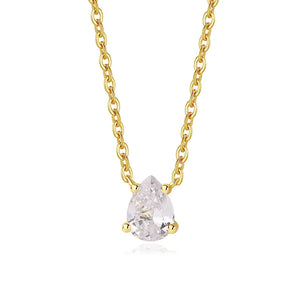
- A placeholder or travel piece — keep your fine jewellery safe at home and wear a CZ version out and about. Our Crystal Teardrop Pendant Necklace is a popular everyday CZ piece for exactly this reason.
- Trying a style first — test a ring style or stone shape before investing in a fine-jewellery version.
- Fashion-forward stacking and statement pieces — get the high-sparkle look across several pieces for the price of one diamond.
- A beautiful piece on a real budget — you get diamond-level sparkle without the diamond-level price tag.
What CZ won't do is hold value or last a lifetime of daily wear without showing some wear. So if you're buying an heirloom or a forever engagement ring, a diamond or moissanite is the better long-term call. For nearly everything else — including a gift that needs to sparkle the moment it's unwrapped — CZ is exceptional value. Our CZ diamond drop pendant necklace is a good example: 925 sterling silver setting, diamond-cut CZ stone, $34.99.

How to Choose Quality Cubic Zirconia
Not all CZ is equal. A great CZ piece looks expensive; a cheap one looks glassy. Here's what to look for:
- Grade. Top-tier CZ is often labelled AAAAA (5A) — cut with precise facets, bright white, and clear with no cloudiness or yellow tint.
- Cut. A well-cut CZ returns light evenly and sparkles from every angle. Poor cuts look dull in the centre.
- The setting metal. The stone is only half the piece. Choose a base like 925 sterling silver or a quality plated finish that won't tarnish or irritate skin — this is what makes a CZ piece feel like real jewellery.
- Secure setting. Look for tight prongs or a protective bezel; a loose stone won't last.
At AJLuxe, our CZ pieces — like the Crystal Teardrop Pendant Necklace or the Rose Gold CZ Pendant Necklace — are set in hypoallergenic 925 sterling silver, so you get diamond-look sparkle in a setting that's gentle on skin and built to last.
Caring for Cubic Zirconia So It Stays Sparkly
Because CZ dulls from surface build-up more than from the stone itself wearing out, simple care keeps it looking new:
- Clean it often. Soak in warm water with a drop of dish soap, gently brush with a soft toothbrush, rinse, and pat dry. This removes the lotion and oil film that kills sparkle.
- Take it off first. Remove CZ before showering, swimming, applying lotion or perfume, cleaning, and sleeping.
- Store it separately. Keep pieces in a soft pouch or lined box so harder stones don't scratch the CZ.
- Avoid harsh chemicals. Chlorine and abrasive cleaners can damage both the stone's surface and the metal setting.
The Bottom Line
Cubic zirconia and diamond look similar but solve different problems. Diamond is the hardest, longest-lasting, value-holding choice — perfect for heirlooms and forever rings. Cubic zirconia delivers nearly identical sparkle for a tiny fraction of the price, making it the smart pick for fashion jewellery, everyday wear, placeholders, and trying styles risk-free. Most people won't spot the difference at a glance — it's years of wear and up-close inspection that reveal it.
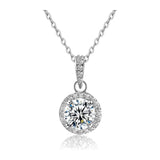
Choose based on how you'll wear a piece and what you want from it. If you want to see the sparkle for yourself, our Round Halo Pendant Necklace — a 1 carat round CZ in a pavé halo setting, 316L stainless steel with rhodium plating, $44.99 — is a great place to start. And remember, a quality setting is what turns affordable sparkle into jewellery you'll actually love wearing.
Written by the AJLuxe team — specialists in personalized sterling silver jewelry. Last updated: July 2026.
Related reading: Does Cubic Zirconia Get Cloudy? Causes & Fixes (2026).
Related reading: Moissanite vs Cubic Zirconia: Which Actually Holds Up to Daily Wear? (2026).
Shop the April Birthstone Infinity Necklace
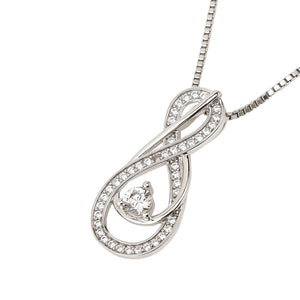
925 sterling silver, left unplated, set with a clear cubic zirconia in an infinity pendant — nickel-free, $59.99.
Shop the April Necklace →Are Cubic Zirconia Earrings Worth Buying?
Cubic zirconia earrings are one of the smartest ways to wear CZ (2026), because earrings sidestep almost every wear-and-tear problem that shows up in CZ rings and bracelets — they don't grip doorknobs, get lathered in dish soap, or take repeated knocks against hard surfaces the way a ring does. The same stone that might need replacing in a ring after 2 to 5 years of daily wear can stay bright in a stud or hoop for a decade or more, simply because ears see far less abrasive contact than hands.
The bigger factor for earrings isn't the stone at all — it's what's touching your piercing. Most "CZ earrings made my ears itch" complaints trace back to the post metal, not the zirconia. Nickel and low-grade alloys are the usual culprits behind irritation, redness, and that dull ache after a few hours of wear. A CZ stone set on a 925 sterling silver or nickel-free post is a completely different experience for sensitive ears than the same stone on a base-metal post — which is also why costume-jewelry CZ studs from a fast-fashion rack and a well-made pair can feel worlds apart even when the stone itself looks identical in a photo.
CZ also suits more earring styles than people expect:
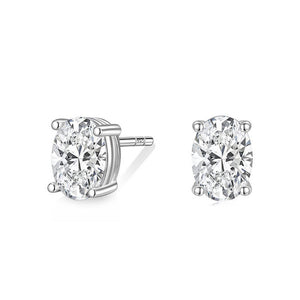
- Studs — the most popular CZ earring format by far. A single round or princess-cut CZ in a secure prong or bezel setting reads as a clean, everyday diamond-stud look without the insurance-worthy price tag.
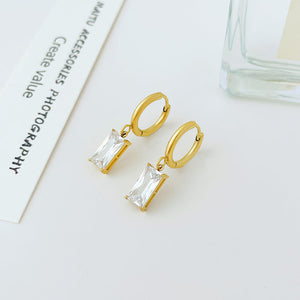
- Hoops — CZ pavé or CZ-accented huggie hoops add sparkle to a shape that's normally plain metal, and because hoops rarely brush against surfaces, the stones tend to hold their shine especially well.
- Drops and dangles — CZ teardrops or clusters catch more light with movement, making them a go-to for special-occasion or gift-worthy pieces rather than daily minimalism.
What to check before buying a pair, specifically for earrings:
- Post/hook material. Look for 925 sterling silver or another nickel-free base — this matters more for earrings than for any other CZ jewelry category, since the metal sits directly against pierced skin for hours at a time.
- Setting security. Stud backs take the most friction of any CZ setting (constant contact with hair, pillows, phone calls) — a tight bezel or well-secured prong keeps the stone from working loose over time.
- Closure type. Butterfly backs suit lightweight studs; lever-backs or screw-backs hold heavier drop styles more securely for all-day wear.
- Weight. Because CZ is denser than diamond, larger CZ drop earrings will feel heavier than their diamond equivalent — worth trying on before committing to a bigger stone size for daily wear.
AJLuxe's cubic zirconia earrings are set in hypoallergenic 925 sterling silver with 18K gold plating options, priced $24.99–$79.99, and arrive gift-ready — the same combination that's earned the brand 40K+ customers across its wider CZ line. Browse the full range in our earrings collection.
Frequently Asked Questions
Is cubic zirconia a real diamond?
No. Cubic zirconia (CZ) is not a diamond and contains no carbon. It's a lab-created stone made from zirconium dioxide that's engineered to look like a diamond. It's classed as a diamond simulant — a stone that imitates the look of a diamond without sharing its chemical or physical properties. Diamonds are crystallised carbon; CZ is a completely different material.
Will people notice I'm wearing cubic zirconia instead of a diamond?
Usually not at a glance. In everyday lighting and at normal conversation distance, most people can't tell a well-cut CZ from a diamond. Trained eyes and close inspection can spot it through its extra rainbow flash and flawless surface, and over years of wear the stone can start to look duller than a diamond next to it — but casual, day-to-day, nobody's likely to notice.
Can you tell the difference between cubic zirconia and a diamond?
To the naked eye it can be hard to tell them apart when the CZ is new and well cut, but there are reliable tells. CZ has more rainbow flashes (higher dispersion or "fire"), is noticeably heavier for its size, holds no surface warmth (it fogs more easily when you breathe on it), and often looks too flawless because it's mass-produced. A jeweller can confirm the difference instantly with a thermal diamond tester or a loupe.
Does cubic zirconia pass a diamond tester?
A traditional thermal diamond tester will correctly identify CZ as not a diamond, because CZ conducts heat very differently from diamond. CZ does NOT pass thermal testers. Moissanite is the simulant that can fool basic testers, which is why modern testers also measure electrical conductivity. So if someone tells you a stone "passed the diamond test," that points to moissanite or a real diamond, not CZ.
Is cubic zirconia worth buying?
Yes, for the right purpose. CZ gives you the sparkle and look of a diamond for a tiny fraction of the price, which makes it ideal for fashion jewellery, everyday sparkle, travel pieces, stacking rings, and trying a style before committing to a fine-jewellery version. It's not an investment stone and won't hold value, but as affordable, low-risk sparkle it's excellent value.
Does cubic zirconia get cloudy over time?
CZ can look cloudy over time, but usually it's surface build-up rather than the stone itself degrading. Lotions, soap film, skin oils, and hairspray coat the surface and dull the sparkle. A quick clean with warm water, a drop of dish soap, and a soft toothbrush restores most of the brilliance. Lower-grade CZ can also develop tiny surface scratches over years of wear, which scatter light and reduce shine.
Is cubic zirconia good for an engagement ring?
It depends on what you want from the ring. CZ is a popular choice for a placeholder ring, a travel ring, a proposal-then-upgrade plan, or simply a beautiful ring on a tight budget. For bridal-adjacent CZ picks specifically — bridesmaid gifts, day-of jewelry — see our wedding day diamond alternatives guide. It looks stunning and costs very little. The trade-off is durability and longevity: CZ is softer than diamond and moissanite, so a daily-wear engagement stone may show wear over the years. Many couples choose CZ now and upgrade later, or pick moissanite for a more durable diamond alternative.
How long does cubic zirconia last?
With everyday wear, a quality CZ stone typically looks its best for around 2 to 5 years before the surface starts to soften or dull, though occasional-wear pieces can look great far longer. Because CZ is softer than diamond, it picks up fine scratches over time. The setting matters too — a protective bezel or a well-made prong setting helps a CZ last longer. Good care (removing it before cleaning, swimming, and sleeping) extends its life significantly.
Cubic zirconia vs moissanite — which is better?
They serve different goals. Moissanite is far more durable (9.25 on the Mohs scale vs CZ's 8 to 8.5), is nearly as hard as diamond, and keeps its sparkle for a lifetime — but it costs more and throws strong rainbow fire that some people love and others find too flashy. CZ is much cheaper, looks closer to a colourless diamond's white sparkle, but doesn't last as long. Choose moissanite for a lifetime diamond alternative; choose CZ for affordable, swap-friendly fashion sparkle.
Is cubic zirconia the same as fake diamond?
People often call CZ a "fake diamond," but the accurate term is diamond simulant. It's a real gemstone in its own right — just not a diamond. The word "fake" implies deception, but CZ is openly sold as an affordable diamond look-alike. It's only misleading if someone passes it off as a genuine diamond. Reputable jewellers always disclose when a stone is cubic zirconia.
How can you tell if cubic zirconia is good quality?
Good-quality CZ (often labelled AAAAA or "5A") is cut with precise facets, looks bright white and clear with no yellow tint, and has clean, even sparkle with no visible flaws. Lower grades look glassy, slightly cloudy, or have a faint colour cast. Setting quality matters too: look for secure prongs or a bezel, and a base metal like 925 sterling silver that won't tarnish or irritate skin. A heavier, denser stone and a well-finished setting are signs of a quality piece.
Does cubic zirconia hold its resale value like a diamond?
No. CZ has essentially no resale market — a used CZ piece is worth close to the scrap value of its metal setting. Diamonds are more nuanced: retail diamond jewellery typically resells for a fraction of what you paid, since the price includes retailer markup, but a genuine diamond retains real material worth tied to global diamond markets, which CZ does not.
All third-party trademarks, brand names and product names are the property of their respective owners. AJLuxe is not affiliated with, endorsed by, sponsored by, or otherwise connected to any third-party brand referenced in this article. Brand names are used solely for accurate comparative reference, and material descriptions reflect each brand's own published product specifications at the time of writing.
You Might Also Like
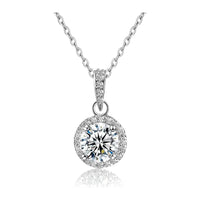
The piece they're describing → Round Halo Pendant Necklace — 1 Carat CZ, Gift Boxed with Message Card
Personalize Yours


