


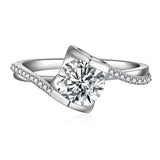
- An engagement ring marks a proposal; a wedding band marks the wedding ceremony — different pieces, different moments.
- Engagement rings usually center on one stone (a solitaire); wedding bands are simpler, low-profile bands built to sit flush against the engagement ring.
- Wearing both stacked on the same finger after the wedding is the norm, not the exception.
- One ring can technically do both jobs, but most couples still buy the pair separately so the band nests properly.
- Stacking order is a style choice, not a rule — many wear the wedding band closest to the hand with the engagement ring on top, though there's no single "correct" way.
- AJLuxe's engagement-style and wedding-band styles both fall in the $24.99-$79.99 range, in 925 sterling silver with 18K gold plating.
If you're newly engaged (or shopping for someone who is), the terms "engagement ring" and "wedding ring" get used almost interchangeably online — which is exactly why so many people end up confused about whether they need one ring or two. They're not the same thing, they're not given at the same time, and knowing the difference actually changes how you shop, size, and stack them. Here's what separates the two, and how to wear them once you own both.
What Is an Engagement Ring?
An engagement ring is the ring given at a proposal, before the wedding, as a symbol of a promise or intent to marry. It's the ring that starts the story — worn from the moment of the proposal onward, through the engagement period, and then straight through the wedding and beyond. Design-wise, engagement rings are usually built around a single, prominent center stone (a solitaire) or a cluster setting, set high enough that the stone is the visual focal point. Because it's meant to stand alone during the engagement, it's typically the more detailed, more "look-at-me" piece of the two.

What Is a Wedding Band?
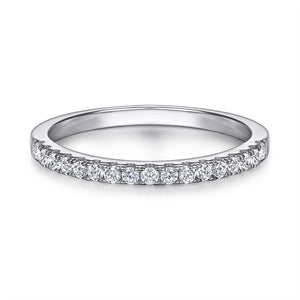
A wedding band is the ring exchanged during the wedding ceremony itself, and in most Western traditions it's the ring that actually marks the marriage — not the engagement ring. Wedding bands are usually simpler: a plain metal band, or one with a subtle texture or a thin line of stones, deliberately kept low-profile so it can sit flush against the engagement ring without the two designs competing. Both partners typically wear one, whereas only one partner usually wears an engagement ring.

Engagement Ring vs Wedding Band: Key Differences
Side by side, the two rings differ in when they're given, how they're designed, and who wears them.
| Aspect | Engagement Ring | Wedding Band |
|---|---|---|
| When it's given | At the proposal | During the wedding ceremony |
| Typical design | Single center stone (solitaire) or cluster, set high | Plain or low-profile band, built to sit flush against another ring |
| What it symbolizes | A promise or intent to marry | The marriage itself |
| Who wears one | Traditionally the partner who was proposed to | Both partners |
| Fit priority | Chosen around how the center stone sits | Chosen to nest flush against the engagement ring |
| AJLuxe price range | $24.99-$79.99, 925 sterling silver + 18K gold plating | $24.99-$79.99, 925 sterling silver + 18K gold plating |
Is an Engagement Ring the Same Thing as a Wedding Band?
No — an engagement ring and a wedding band are two different pieces of jewelry with two different jobs, even though people often use the words loosely in conversation. The engagement ring is the promise ring given before the wedding; the wedding band is the ring actually exchanged at the ceremony. Confusing the two is common because many people only ever picture the final look — both rings stacked together — without separating out when each one was actually given.
Can You Use Your Engagement Ring as Your Wedding Band?
Technically yes, one ring can serve as both if you choose to only wear a single ring for the rest of your life, but most couples still buy a separate wedding band rather than relying on one ring to do both jobs. The reason is practical as much as symbolic: a wedding band is designed with a flatter, simpler profile so it fits flush against an engagement ring's setting, and if you skip the band you lose the option to stack later. Some couples do simplify to one ring by choice — there's no rule requiring two — but it's the less common path.
How Do You Wear an Engagement Ring and Wedding Band Together?
Most people wear both rings stacked on the same finger, with the wedding band positioned closest to the hand and the engagement ring on top, closer to the fingertip. This traces back to the wedding ceremony itself, where the wedding band is often slid on first during the vows, landing nearer the heart, with the engagement ring going back on afterward. That said, plenty of people flip the order for comfort or to protect a raised setting, and there's no formal rule against it — it comes down to what sits comfortably and looks right to you day to day.
Which Should You Buy First — And Do You Need Both?
Buy the engagement ring first if a proposal is coming, and treat the wedding band as a second purchase closer to the ceremony — bands are simpler to size, match, and add later, so there's no need to buy both at once. If you're shopping for the proposal now, AJLuxe's Sterling Silver Engagement Ring ($47.99) is built around the classic single-stone CZ solitaire look in 925 sterling silver, hypoallergenic and gift-box-ready. When it's time to add the second ring, the CZ Wedding Ring ($47.99) is designed with the same low-profile band shape that sits flush against a solitaire, so the two wear as a matched stack rather than two mismatched rings. Either way, buying both from the same 925 sterling silver, 18K gold-plated line keeps the metal tone and finish consistent for the years you'll wear them together.
Frequently Asked Questions
Is an engagement ring the same thing as a wedding band?
No — an engagement ring is given at the proposal as a promise to marry, while a wedding band is exchanged during the wedding ceremony and marks the marriage itself. They're separate rings with separate purposes, even though they're often worn stacked together afterward. If it's specifically the engagement ring you're pricing out on a budget, see our affordable engagement rings guide.
Can I use my engagement ring as a wedding band?
You can, if you choose to wear only one ring going forward, but most people don't — a wedding band's flatter, simpler profile is specifically designed to sit flush against an engagement ring's setting rather than replace it. Buying a separate band keeps that stacking option open even if you don't use it right away.
Is it normal to have an engagement ring and a wedding band?
Yes — owning and wearing both is the norm in most Western weddings, not an exception. The engagement ring comes first at the proposal, and the wedding band is added at the ceremony, with both then worn stacked together.
Is your engagement ring your actual wedding ring?
Not traditionally — the wedding band is the ring exchanged during the ceremony and is what's considered the actual "wedding ring," while the engagement ring is the promise ring given beforehand. After the wedding, people commonly refer to the whole stacked set loosely as their "wedding rings," which is where the confusion usually starts.
What order do you wear an engagement ring and wedding band?
Most people wear the wedding band closest to the hand and the engagement ring on top, nearer the fingertip, though this is a style preference rather than a fixed rule. Some prefer the reverse order to protect a raised stone setting, and either way is fine.
Do an engagement ring and wedding band need to match?
No, but choosing pieces in the same metal tone and finish — for example, matching 925 sterling silver or matching 18K gold plating — makes the two rings look intentional as a stacked set rather than mismatched. They don't need to be from the same design line, though bands built with a flush-fit profile stack more comfortably against a solitaire engagement ring.
Related reading: Simple Wedding Bands for Women: A 2026 Style Guide.
Browse both together in our wedding jewelry collection, which includes wedding-band and engagement-ring styles side by side.
All third-party trademarks, brand names and product names are the property of their respective owners. AJLuxe is not affiliated with, endorsed by, sponsored by, or otherwise connected to any third-party brand referenced in this article. Brand names are used solely for accurate comparative reference, and material descriptions reflect each brand's own published product specifications at the time of writing.
You Might Also Like
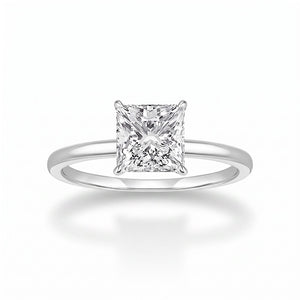
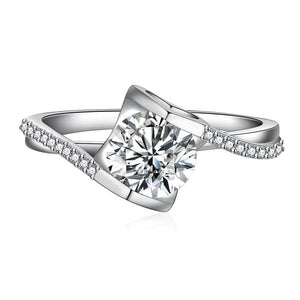
The piece they're describing → Round CZ Engagement Ring for Women — 925 Sterling Silver, Brilliant Cut Cubic Zirconia
Personalize Yours


