


The short answer
A CZ engagement ring gives you the exact look of a diamond solitaire or pave band for a tiny fraction of the price. The decisions that actually matter are CZ quality (aim for AAAAA-grade stones, which are the clearest and most colorless), the setting metal (insist on genuine 925 sterling silver, not brass or alloy, for a hypoallergenic base that holds the stone securely), and the mounting style (a classic round solitaire, a princess-cut square, or a micro-pave band). Just set your expectations honestly: cubic zirconia is a Mohs 8 to 8.5 stone that can scratch and gradually cloud with years of daily wear, so it shines as an everyday, travel, or backup ring — not a forever stone. Match a good stone to a good setting and you have a ring that looks like far more than it costs.
The best CZ engagement rings are the ones built honestly for how you'll actually wear them — and "best cz engagement rings" is a search that hides a lot of confusion. Some shoppers want a convincing stand-in while they save for a diamond, some want a fearless travel ring they won't panic about losing, and some simply prefer to spend $50 rather than $5,000 and put the difference toward a house or a honeymoon. All of those are good reasons, and cubic zirconia serves every one of them. This guide treats a CZ engagement ring as what it really is: a high-clarity simulated stone in a real metal setting, where the grade of the CZ, the quality of the metal, and the mounting style decide whether it reads as fine jewelry or as costume.
We'll give you a stone-by-stone comparison of CZ against moissanite and lab-grown diamond, an honest answer to the two questions most roundups dodge entirely — will anyone know it's CZ? and how long does a CZ ring actually last? — plus the best settings, a realistic budget, the underrated travel-and-backup use case, and specific AJLuxe picks so you can go straight from "I want one" to a ring on your finger.

What makes a good CZ engagement ring
Cubic zirconia is a lab-created crystal (zirconium dioxide) engineered to mimic a diamond's brilliance. A well-made CZ engagement ring is defined by two things working together: a high-grade stone and a real setting. The stone should be a top-tier CZ — often labeled AAAAA (five-A) — which is cut with precise facets, is essentially colorless, and has no visible cloudiness. The setting should be genuine 925 sterling silver, ideally rhodium- or 18K-gold-plated, so it holds the stone in secure prongs, resists bending, and stays comfortable on sensitive skin.
What separates a convincing CZ ring from a cheap one is almost never the stone size — it's the metal and the mounting. A large CZ dropped into a thin brass band screams costume; the same stone in a properly proportioned sterling silver solitaire or micro-pave setting reads as fine jewelry from across a room. That's why the base metal matters as much as the CZ grade: a sterling base is hypoallergenic, plates well, and keeps its shape, while a zinc-alloy or unmarked "silver-tone" band often contains nickel, tarnishes, and lets stones loosen. If you're weighing a CZ ring against other budget-friendly ways to mark a commitment, our guide to engagement ring alternatives maps out where simulated stones fit alongside other options.
CZ vs. moissanite vs. lab diamond: the honest comparison
This is the first thing most CZ roundups get wrong: they either oversell cubic zirconia as "just like a diamond forever" or bury the trade-offs. In reality, the three popular diamond alternatives sit at very different points on price and durability, and choosing well means matching the stone to how long you need it to last and how much you want to spend. Here is the head-to-head.
| Stone | Typical ring price | Hardness (Mohs) | How it ages | Best for |
|---|---|---|---|---|
| Cubic zirconia (CZ) | $30–$80 | 8–8.5 (softer) | Can scratch and cloud over a few years of daily wear | Everyday, travel, backup, proposal-now-upgrade-later |
| Moissanite | $400–$2,500 | 9.25 (very hard) | Keeps its sparkle for decades; more fire than diamond | A lasting daily ring at a mid price |
| Lab-grown diamond | $1,500–$6,000 | 10 (hardest) | Identical to natural diamond; effectively permanent | Heirloom look and durability below mined-diamond prices |
| Natural diamond | $3,000–$25,000+ | 10 (hardest) | Permanent; holds resale value | Traditional heirloom and investment pieces |
The practical takeaway: cubic zirconia wins decisively on price and loses on longevity. If the ring needs to last a lifetime with zero maintenance, that's a moissanite or diamond decision. If you want the look now — for a surprise proposal, for daily wear you won't stress over, or as a placeholder while you save — CZ delivers essentially the same first impression for one to two percent of a diamond's cost. Many couples proposing with CZ later upgrade the center stone and keep the same setting, which is a smart, low-pressure path to the ring you ultimately want.
Will people know it's cubic zirconia?
This is the competitor gap almost every "best CZ ring" post avoids, so here's the straight answer: in everyday life, no — a good CZ ring on a well-made sterling setting is convincing to virtually everyone who isn't a gemologist looking through a loupe. Cubic zirconia is actually more sparkly than diamond in a specific way: it has higher dispersion, meaning it throws more colored "fire." To a trained eye, that extra rainbow flash can read as slightly too showy under bright light, and CZ is denser than diamond (a CZ weighs more than a diamond of the same size). But across a dinner table, at a party, or in photos, those tells are invisible.
Three things make a CZ ring read as real rather than costume: a genuine metal setting (sterling silver, not silver-tone alloy), a proportionate stone size (a tasteful 1 to 2 carat look rather than an obviously oversized rock), and clean, well-maintained stones. Where CZ gives itself away is over time — a clouded, scratched stone in a tarnished band looks fake fast. Keep it clean and stored well and it holds the illusion for years. If discretion matters to you, choose a classic solitaire or micro-pave style in a modest size rather than a statement stone. If instead you want maximum sparkle and don't mind it reading as a fashion statement rather than bridal discretion, see our guide to the best cocktail rings.
How long does a CZ engagement ring last?
The second thing thin roundups gloss over is durability, so we'll be honest: a cubic zirconia stone is not a forever stone. At Mohs 8 to 8.5 it's harder than most gemstones but softer than moissanite (9.25) and diamond (10), which means everyday knocks, dust, and household chemicals gradually take a toll. Worn daily, a CZ typically stays bright and clear for around two to three years before you may notice edges softening, tiny surface scratches, or a slight cloudiness where the facets have dulled. Worn occasionally and cared for, the same stone can look great far longer.
The good news is that this is a manageable trade-off rather than a dealbreaker, precisely because CZ is inexpensive. Where a diamond needs professional repolishing, a clouded CZ is simply replaced — many settings let you swap the center stone for a few dollars, so the ring effectively "resets" to brand-new. To slow the aging: take the ring off before cleaning, gardening, showering, and applying lotion or perfume; wipe it after wear; store it separately so it doesn't scratch (or get scratched by) other jewelry; and clean it gently with mild soap and a soft brush. Treat CZ as a beautiful, refreshable ring and its shorter lifespan stops being a downside.

Best settings and cuts for a CZ engagement ring
Because the metal setting is what sells the illusion, the mounting style you choose matters as much as the stone (see our best shops for engagement rings guide for where to actually buy one). These are the four settings that look most like fine jewelry in cubic zirconia:
| Setting / cut | The look | Best for |
|---|---|---|
| Round solitaire | A single round brilliant CZ in a prong setting — the timeless classic | The most recognizable, foolproof engagement look |
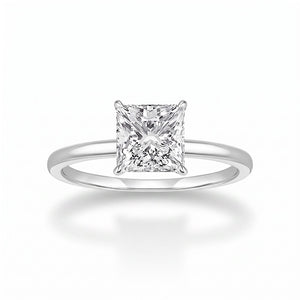
| Princess-cut solitaire | A square CZ with sharp corners and bold sparkle | A modern, geometric alternative to the round |
| Micro-pave band | Rows of tiny CZ stones lining the band for extra shimmer | Maximum sparkle and a luxe, encrusted look |
| Halo | A center CZ ringed by smaller stones, making it look larger | Big visual impact from a smaller, more affordable center |
Whatever cut you choose, prioritize a secure mount: four or six prongs that fully grip the stone, or a micro-pave setting where each small stone sits in its own bead. Prongs that are too shallow are the most common reason a CZ falls out, so check that the stone doesn't wiggle. An adjustable band is a practical bonus for a surprise proposal, since it takes the guesswork out of ring size. If you're still deciding between an engagement ring and a promise ring as your next step, our comparison of a promise ring vs. engagement ring lays out what each one signals.
How much should a CZ engagement ring cost?
A quality CZ engagement ring on a genuine 925 sterling silver base typically runs $40 to $80. Spending much more rarely buys a better CZ — past a point you're paying for the brand, not the stone — and spending much less usually means a base metal that will tarnish or a stone that clouds quickly. So the sweet spot is a mid-range sterling piece with a AAAAA-grade CZ.
The bigger budgeting question people ask is the classic one: how much should I spend on an engagement ring overall? The old "two to three months' salary" rule is a marketing invention, not a law. Our guide to how much to spend on an engagement ring traces where that rule came from. A more sensible modern approach is to spend what fits your finances and your relationship's priorities — and choosing CZ is a completely valid way to answer that question with $50 instead of two months' pay. If you make $100,000 a year, the "right" amount is whatever you can comfortably spend without debt, and for many couples that's intentionally small so the money goes toward a wedding, a down payment, or travel. A CZ ring lets the gesture stay meaningful while the budget stays sane. For couples marking commitment in stages, a promise ring is an even lower-cost first step before an engagement ring.
The travel and backup-ring use case most guides miss
For the etiquette side, including what to tell your partner and how airport security treats jewelry, see is it okay to wear a fake engagement ring.
Here's a second competitor gap worth its own section: even people who own a real diamond engagement ring should consider a CZ version, because a CZ ring is the ideal travel and backup ring. When you're on vacation, at the beach, hiking, traveling through unfamiliar places, doing yard work, or working with your hands, wearing a several-thousand-dollar diamond is a genuine risk — theft, loss down a drain, or damage. A near-identical CZ stand-in lets you keep the look without the anxiety, and if it's lost or stolen, you're out $50, not a life savings.
The same logic covers a few other real situations: a backup while your diamond is being resized or repaired, a "gym and errands" ring so your fine ring stays home, or a stage-of-life placeholder for a proposal now with an upgrade planned later. Because a good CZ ring is inexpensive and convincing, it quietly solves problems a single expensive ring can't. Many people who start with jewelry on a budget also explore other easygoing, low-stakes styles like midi rings and even toe rings for everyday wear, where affordability and durability matter more than heirloom value.
Best CZ engagement ring picks and how to shop AJLuxe
AJLuxe's engagement rings are built on genuine 925 sterling silver bases with high-grade cubic zirconia — the exact affordable-but-hypoallergenic combination that makes a diamond-look ring wearable every day without a fine-jewelry price. See our best gemstones for engagement rings guide for how CZ compares to sapphire, moissanite, and other alternatives on durability. To go from "I want the look" to a specific ring:
- Best classic (our top pick): the Round CZ Engagement Ring — a brilliant-cut round cubic zirconia solitaire on a 925 sterling silver band, the most timeless, foolproof engagement look in the collection at around $50.
- Best for maximum sparkle: the Micro Pave CZ Engagement Ring — a 925 sterling silver band lined with tiny CZ stones and adjustable for an easy fit, ideal for a surprise proposal.
- Best modern shape: the Princess Cut CZ Engagement Ring — a square CZ solitaire on sterling silver for a bold, geometric alternative to the round.
- Best white-gold look: the Adjustable Micro Pave Zircon Ring — 18K white-gold-plated sterling silver with AAA CZ, the most budget-friendly pick at around $40.
- Browse the full range: the complete rings collection for every cut, size, and finish.
One honest note: every AJLuxe engagement ring here uses cubic zirconia, not diamond or moissanite — that's the point of the collection, delivering the diamond look on a hypoallergenic sterling base at an everyday price. If you specifically want a stone that will last a lifetime with no clouding, that's a moissanite or lab-diamond purchase in a different price tier. For the CZ look at daily-wear prices, these are built for exactly that.
Shop This Guide
Our Round CZ Engagement Ring — a brilliant-cut cubic zirconia solitaire on a genuine 925 sterling silver band. The classic diamond-look engagement ring, hypoallergenic and built for real daily wear, for around $50 instead of thousands. If you're weighing moissanite instead of CZ, see our moissanite vs. diamond comparison for how the two stones actually differ.
Shop the Round CZ Engagement RingHow to choose: a quick decision path
- Decide how long it needs to last. A lifetime, no maintenance → moissanite or lab diamond. The look now, for everyday, travel, or a placeholder → cubic zirconia.
- Insist on a real setting. Genuine 925 sterling silver, ideally rhodium- or gold-plated — never unmarked "silver-tone" alloy, which tarnishes and can irritate skin.
- Pick the stone grade. Look for AAAAA (five-A) CZ, the clearest and most colorless, and a proportionate size (a 1 to 2 carat look reads as fine jewelry; oversized reads as costume).
- Choose a cut and setting. Round solitaire for the timeless classic, princess for modern, micro-pave or halo for maximum sparkle.
- Plan for care. Remove it for cleaning, showering, and lotion; wipe and store it separately; and remember a clouded CZ can simply be replaced.
Written by the AJLuxe Team. Last updated: July 2026. According to Jewelers of America, the security of a ring's setting and prongs is a core quality factor buyers should inspect before purchase — advice that applies directly to CZ engagement rings, where a well-anchored stone in a genuine sterling mount is what separates a convincing ring from a costume one.
Related reading: Engagement Ring vs. Wedding Band: What's the Real Difference? (2026).
What Actually Makes an Engagement Ring Affordable (Beyond Just Choosing CZ)
An engagement ring becomes affordable through three levers working together — the setting metal, the mounting's complexity, and where you buy it — and stone choice (covered above) is only one of them. Two rings with an identical-looking center stone can differ by hundreds of dollars once you account for these, so it's worth understanding each one before you shop.
- Setting metal: genuine 925 sterling silver costs a fraction of solid 14K or 18K gold or platinum, and when it's rhodium- or gold-plated it looks just as bright at the counter. Solid precious metal is priced by the gram at the metal's market rate, so it's often the single biggest cost driver in a ring — bigger than the stone itself once you're past a basic CZ or moissanite.
- Mounting complexity: a simple four- or six-prong solitaire uses less metal and less bench labor than a full pave band, a cathedral shank, or a split-shank halo. If budget is the priority, the plainest setting that still holds the stone securely will always cost less than an elaborate one, regardless of which stone sits in it.
- Where you buy: a traditional mall jeweler's price includes a retail showroom, sales staff, and often a bundled appraisal or extended warranty you may not need. Buying directly from a brand that sells online — cutting out that markup — is one of the most reliable ways to pay less for the same look.
- Stone size relative to setting: a modestly sized center stone in a well-proportioned setting almost always reads as more expensive than a large stone crammed into a thin, budget mounting. Sizing down slightly is a quiet way to keep the total price affordable without the ring looking cheap.
Put together, the most affordable path is a genuine sterling silver setting, a simple secure mount, and a direct-to-consumer purchase — which is exactly the combination behind AJLuxe's CZ engagement rings, and why they land at $24.99 to $79.99 rather than the hundreds a comparable solid-gold or mall-bought setting alone would cost before you even choose a stone.
If an elongated silhouette appeals to you, a marquise-cut CZ ring covers the shape's construction and how to size it correctly.
A square or princess-cut centerpiece is a classic Deco-inspired shape; see our Art Deco jewelry guide for how to spot the style.
Frequently Asked Questions
Is CZ good for an engagement ring?
Yes, cubic zirconia is a good engagement ring choice when you want the diamond look without the cost, especially for everyday, travel, or placeholder wear. A high-grade CZ on a genuine 925 sterling silver setting is convincing and hypoallergenic. The main trade-off is longevity: CZ is softer than diamond and can cloud after a few years of daily wear, so it suits a beautiful, replaceable ring rather than a permanent heirloom.
Will people be able to tell my ring is cubic zirconia?
In everyday life, almost no one can tell a good CZ ring from a diamond without a jeweler's loupe. Cubic zirconia actually throws more colored fire than diamond, which a trained eye may notice under bright light, and it is denser, so it weighs more than a diamond of the same size. Across a table or in photos those tells are invisible, especially with a proportionate stone in a real sterling silver setting.
How long does a CZ engagement ring last?
Worn daily, a cubic zirconia stone typically stays bright and clear for about two to three years before you may notice surface scratches or slight cloudiness, since CZ is a Mohs 8 to 8.5 stone. Worn occasionally and cared for, it lasts much longer. Because CZ is inexpensive, a clouded stone can often simply be replaced, effectively resetting the ring to like-new.
What is the highest quality of CZ?
The highest grade of cubic zirconia is usually labeled AAAAA, or five-A. These stones are the clearest and most colorless, are precisely faceted for maximum brilliance, and show no visible cloudiness. Lower grades such as AAA or A are less clear and may have a faint tint. For an engagement ring, look for AAAAA CZ set in genuine 925 sterling silver.
How much does a good CZ engagement ring cost?
A quality cubic zirconia engagement ring on a genuine 925 sterling silver base typically costs $40 to $80. Spending much more rarely buys a better stone, since you are mostly paying for the brand, while spending much less often means a base metal that tarnishes or a stone that clouds quickly. The sweet spot is a mid-range sterling piece with a AAAAA-grade CZ.
Is CZ or moissanite better for an engagement ring?
It depends on your priority. Cubic zirconia is far cheaper, usually $30 to $80, and gives the same first impression, but it is softer and can cloud over a few years. Moissanite costs more, roughly $400 to $2,500, but is nearly as hard as diamond, keeps its sparkle for decades, and even throws more fire. Choose CZ for the look now and moissanite for a lasting daily ring.
Can I wear a cubic zirconia engagement ring every day?
Yes, a CZ engagement ring is well suited to daily wear as long as it is built on a hypoallergenic base like 925 sterling silver. To keep it clear and bright, take it off before cleaning, showering, and applying lotion or perfume, wipe it after wear, and store it separately so it does not scratch other jewelry. With that care, a CZ ring stays convincing for years.
Is it okay to propose with a cubic zirconia ring?
Absolutely. Many couples propose with a cubic zirconia ring on purpose, whether to keep the budget sensible, to let the partner choose their final stone later, or because they simply prefer to spend the money elsewhere. The proposal is about the commitment, not the price of the stone, and a CZ ring can always be upgraded later while keeping the same setting.
Why should I get a CZ ring if I already own a diamond ring?
A cubic zirconia version of your engagement ring makes an ideal travel and backup ring. It lets you keep the look on vacation, at the beach, at the gym, or during yard work without risking a several-thousand-dollar diamond to theft, loss, or damage. It also fills in while your real ring is being resized or repaired, all for around $50. Our guide to the best sites for engagement rings covers where CZ options like this fit next to genuine-diamond retailers.
What metal is best for a CZ engagement ring?
Genuine 925 sterling silver is the best base for an affordable CZ engagement ring, ideally plated with rhodium or 18K gold for extra shine and tarnish resistance. Sterling silver is hypoallergenic, holds the stone securely, and keeps its shape. Avoid unmarked silver-tone, brass, or zinc-alloy bands, which often contain nickel, tarnish quickly, and can let stones loosen.
Does cubic zirconia lose its sparkle over time?
Cubic zirconia can lose sparkle over time as everyday wear, dust, oils, and household chemicals dull its surface and soften its facet edges. Regular gentle cleaning with mild soap and a soft brush restores much of the shine, and keeping the ring off during cleaning and showering slows the process. Once a stone clouds permanently, it can usually be replaced inexpensively.
How many carats should a CZ engagement ring be?
For the most convincing, fine-jewelry look, a cubic zirconia center stone in the 1 to 2 carat equivalent range works best, since it reads as elegant rather than obviously oversized. Because CZ is inexpensive, it is tempting to size up dramatically, but a very large stone is one of the clearest giveaways that a ring is not a diamond. A proportionate stone in a quality setting always looks more real.
All third-party trademarks, brand names and product names are the property of their respective owners. AJLuxe is not affiliated with, endorsed by, sponsored by, or otherwise connected to any third-party brand referenced in this article. Brand names are used solely for accurate comparative reference, and material descriptions reflect each brand's own published product specifications at the time of writing.
You Might Also Like
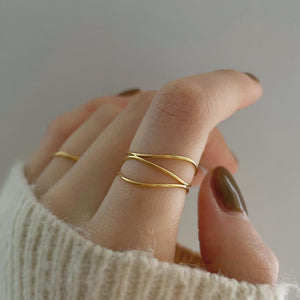
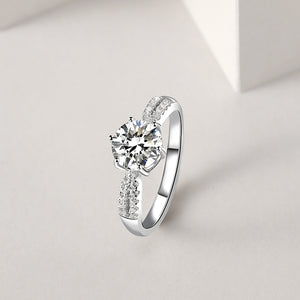

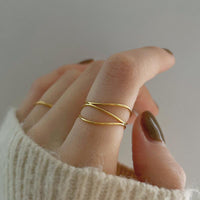
The piece they're describing → Triple Wire Wrap Ring for Women — 18K Gold Plated, 925 Sterling Silver, Engagement Style
Personalize Yours


