


The short answer
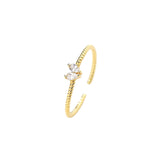
Marquise is a stone shape, not a stone type or a price tier -- you'll see it in everything from fine diamond engagement rings to affordable cubic zirconia stacking rings, and the honest thing to check before buying is which stone the listing actually says you're getting. AJLuxe's marquise ring uses a white cubic zirconia in 925 sterling silver, sold plainly as an affordable stacking piece rather than framed as a diamond ring.
A search for "marquise ring" turns up mostly diamond engagement rings, since the shape is a long-standing favorite for that category -- but marquise is a cut, not a stone type, and it shows up just as often in affordable cubic zirconia and sterling silver pieces. This guide covers the shape honestly across both ends of that range.

Where the marquise cut comes from
Marquise is an elongated, symmetrically pointed oval shape -- in the jewelry trade, the cut is commonly said to date back to 18th-century France, with the story going that King Louis XV commissioned a diamond cut to resemble the smile of the Marquise de Pompadour. That origin story is trade lore rather than a documented historical fact, but the shape itself is real and has stayed in continuous use since. What matters for buying one today is simpler: it's a distinctive, elongated silhouette that visually elongates the finger and makes a stone look larger than its actual carat weight.
Marquise vs. oval vs. round
The main practical differences between these three common cuts are visual proportion and how much of the stone's size is "visible" from above. The table below compares them directly.
CZ vs. diamond in a marquise cut
At accessible price points, a marquise-cut stone is almost always cubic zirconia (CZ), not diamond -- and that's worth stating plainly rather than glossing over. CZ measures about 8-8.5 on the Mohs hardness scale, the standard scale jewelers and gemologists use for scratch resistance, compared to a diamond's 10 (the hardest natural material). That's durable enough for regular wear as a fashion or stacking ring, but it isn't the same material or investment as a diamond, and any listing describing an affordable marquise ring should say "CZ" or "cubic zirconia" directly rather than using vaguer language like "crystal" or "diamond-cut" that can blur the distinction.
Getting the size right
Ring sizing follows the same international standard (ISO 8653) regardless of stone shape, measured by internal circumference in millimeters and converted to the numeric US sizing scale most retailers use. Because a marquise stone runs the length of the finger rather than sitting compactly like a round cut, a ring that's slightly loose is more likely to rotate and sit sideways on the finger -- so it's worth sizing carefully, or choosing an adjustable band if the exact size isn't known, which is what AJLuxe's version offers.
| Cut | Shape | Visual effect |
|---|---|---|
| Marquise | Elongated, pointed oval (both ends tapered) | Looks largest per carat; elongates the finger |
| Oval | Elongated, rounded at both ends | Similar elongating effect, softer outline |
| Round | Symmetrical circle | Maximum brilliance/sparkle, most classic, most common |
Shop This Guide
A 925 sterling silver ring set with a marquise-cut white cubic zirconia stone -- an honest, affordable everyday stacking ring in the marquise shape, not marketed as a diamond engagement ring.
Shop the Marquise-Cut CZ RingFrequently Asked Questions
What does a marquise ring mean?
Marquise refers to the stone's cut -- an elongated, pointed-oval shape -- not to a specific meaning or occasion. It's chosen mainly for how it looks (elongating and appearing larger per carat) rather than for symbolism, and it appears across engagement rings, stacking rings, and fashion jewelry alike.
Is a marquise cut more expensive than a round cut?
For a given carat weight in diamond, a marquise cut is often priced similarly to or slightly less than a round brilliant of the same weight, partly because the elongated shape uses the rough diamond material efficiently. In CZ and other simulants, price differences between cuts are minimal since the material cost is low across the board.
Is marquise or oval better?
Neither is objectively better -- it comes down to preference. Marquise has pointed tips at both ends and reads as more dramatic and elongating; oval is rounded at both ends and gives a softer, slightly more classic look while still elongating the finger.
Why isn't the marquise cut as popular as round or oval right now?
Round and oval cuts have dominated recent engagement ring trends partly because they maximize brilliance and are seen as more versatile for everyday wear, while marquise's pointed tips are more vulnerable to chipping if knocked and require a protective setting -- which has made it a less common default choice, though it remains a strong pick for anyone who wants a distinctive, elongating shape.
What is CZ and how does it compare to diamond?
Cubic zirconia (CZ) is a lab-created diamond simulant that measures about 8-8.5 on the Mohs hardness scale versus a diamond's 10. It's cut to closely mimic diamond's brilliance at a fraction of the cost, and it's the standard, honestly-disclosed stone choice in affordable fashion and stacking rings.
How should I care for a sterling silver marquise ring?
Keep it away from chlorinated water, perfume, and harsh cleaning chemicals, store it separately from other jewelry to prevent scratching, and wipe it periodically with a soft polishing cloth to keep the silver from tarnishing with regular wear.
All third-party trademarks, brand names and product names are the property of their respective owners. AJLuxe is not affiliated with, endorsed by, sponsored by, or otherwise connected to any third-party brand referenced in this article. Brand names are used solely for accurate comparative reference, and material descriptions reflect each brand's own published product specifications at the time of writing.
You Might Also Like
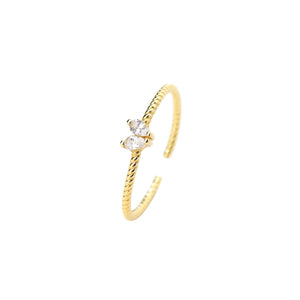
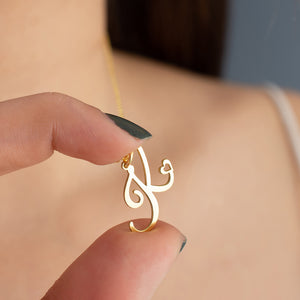
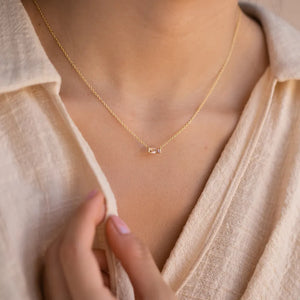
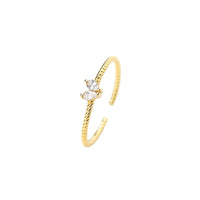
The piece they're describing → Marquise CZ Stacking Ring for Women — 925 Sterling Silver, 18K Gold Plated, Adjustable
Personalize Yours


