


- The scale is a ranking of scratch resistance, 1 to 10. It is relative, and the numbers are not equal steps.
- 7 is the usual line for rings. Everyday dust is mostly quartz (7), so softer stones get scuffed over time.
- Hardness is not toughness. A very hard stone can still chip or break from a knock.
- Metals sit low: pure gold is about 2.5, platinum about 3.5 to 4.5 depending on the source.
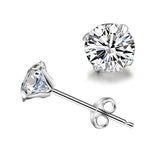
- Cubic zirconia is about 8 to 8.5, which is why AJLuxe's CZ studs resist everyday scratching well.
Search "Mohs scale" and most results are geology pages, which is fine for rocks and unhelpful if you are deciding what to buy. This page keeps the scale in its place: a way to guess how a stone or metal will wear on your hand, ear or neck. All the numbers below come from pages we read for this article, and where sources differ we give the range.
The 10 Mohs Reference Minerals
The scale is defined by ten reference minerals, from talc at 1 to diamond at 10. A national park service reference page lists them and explains that hardness is a relative resistance to scratching, found by scratching a mineral against a substance of known hardness.
| Mohs | Reference mineral | Common object at a similar level (same source) |
|---|---|---|
| 10 | Diamond | |
| 9 | Corundum (sapphire and ruby) | |
| 8 | Topaz | Masonry drill bit, about 8.5 |
| 7 | Quartz | |
| 6 | Orthoclase | Steel nail, about 6.5 |
| 5 | Apatite | Knife or glass plate, about 5.5 |
| 4 | Fluorite | |
| 3 | Calcite | Copper penny, about 3.5 |
| 2 | Gypsum | Fingernail, about 2.5 |
| 1 | Talc |
Those common objects are a handy field test: if a steel nail can scratch it, the material is below about 6.5. Remember the scale ranks, it does not measure equal steps, and the page does not claim the gaps are equal. Corundum at 9 is not "a bit harder" than topaz at 8 in any way you can read off the numbers.
Gemstone Hardness Chart for Jewelry
Most popular jewelry stones fall between 6 and 10, with a few important soft exceptions. The table combines values from two gem hardness references and our encyclopedia sources; where they give a range, we show it.
| Material | Mohs hardness | Wear note |
|---|---|---|
| Diamond | 10 | Hardest. Only another diamond marks it |
| Moissanite | about 9 to 9.5 | Sources vary. Just under diamond |
| Sapphire and ruby | 9 | Very scratch resistant |
| Topaz | 8 | Hard enough for most jewelry |
| Cubic zirconia | 8 to 8.5 | Hard, but facet edges can round over years |
| Emerald and other beryl | 7.5 to 8 | Hard, but can still be scratched |
| Quartz (amethyst, citrine) | 7 | Right on the ring line |
| Opal | 5.5 to 6.5 | Needs a protective setting |
| Turquoise | 5 to 6 | Soft, avoid knocks |
| Pearl | 2.5 to 4.5 | Organic and very soft |
| Amber | 2 to 2.5 | Very soft, protect it |
The cubic zirconia range comes from an online encyclopedia entry, which says it is slightly harder than most semi-precious natural stones and that facet edges can look duller and more rounded than a diamond's over time. The moissanite figure is 9.5 in that encyclopedia and about 9.25 on one of our own pages, so treat it as roughly 9 to 9.5. For the full CZ and moissanite comparison, see moissanite vs cubic zirconia and cubic zirconia vs diamond.
Metal Hardness: Where Gold, Platinum and Silver Sit
Jewelry metals are much softer than most gemstones, which is why metal gets scratches and dents long before a diamond does. An online encyclopedia gives pure gold a Mohs hardness of 2.5 and platinum 3.5, while a jeweler reference puts pure platinum at about 4 to 4.5 and notes that jewelry alloys are harder. That same reference gives pure gold a far lower reading on a different hardness test (about 25) than an 18K alloy (roughly 150 to 200), which is not Mohs but carries the same message: alloying hardens gold. Our guide to why gold is soft explains the mechanism. We did not fetch a sourced Mohs figure for sterling silver or stainless steel, so we do not quote one. Metals matter differently from stones in another way: wear on a plated piece depends on the thickness of the coating, not on the Mohs number of the metal under it. See durable jewelry materials ranked.
The Rule of 7 for Rings and Everyday Wear
Choose a stone at 7 or above for a ring or bracelet you wear daily. A gem hardness guide states that 7 and above ensures longevity, recommends diamonds, sapphires or rubies for rings and bracelets, and says stones below 7 are more prone to scratches and abrasion. It adds that softer stones can be used but need more care and suit earrings or pendants better. A trade reference table explains the logic: everyday dust is mostly quartz, which is 7, so a softer stone slowly meets something harder than itself. Hands take far more knocks than ears or necks, so the same gem can be fine in one setting and poor in another.
Hardness vs Toughness: Why Hard Stones Still Chip
Hardness is scratch resistance, toughness is how well a stone survives a knock, and they are not the same. The gem hardness guide notes that natural diamonds are all rated 10, but their toughness, meaning resistance to breaking, can vary depending on internal flaws and cutting. A very hard stone can still chip at a thin edge or break along a flaw. So Mohs tells you what will scratch a stone, and it does not tell you everything about how it handles a hit.
How to Use This When You Shop and Care for Jewelry
- Daily rings and bracelets: choose 7 or above, and expect all metals to scratch eventually.
- Earrings and pendants: softer stones such as opal, turquoise or pearl can work, with protective settings. Our pearl types guide covers the soft end.
- Storage: keep jewelry separate. A harder piece rubbing against a softer one marks it, so a loose pile in a drawer can scratch even a stone you thought was safe.
- Cleaning: use a soft cloth and mild soap, and see how to clean cubic zirconia jewelry and jewelry care tips.
What AJLuxe Sells, With the Numbers
AJLuxe's rings and studs use cubic zirconia, which sits at about 8 to 8.5, comfortably above the 7 line. The CZ Stud Earrings ($22.99 to $23.99) have a cubic zirconia stone on a 925 sterling silver post with rhodium plating. The stone resists scratching well, and the metal and plating are the parts to keep away from knocks and abrasion. Our birthstone infinity necklaces use simulated or lab-created stones, not natural gems, so do not read a natural gemstone's Mohs number onto them. Browse the stud earrings or the sterling silver jewelry collection. We do not claim any piece is scratch-proof, tarnish-free or waterproof.
More gold and metal guides
More gemstone and craft guides
Frequently Asked Questions
What is the 10 Mohs scale of hardness?
It ranks ten reference minerals by scratch resistance, from talc at 1 to diamond at 10. Each mineral scratches the ones below it and is scratched by the ones above.
What are the 10 hardest minerals?
On the Mohs scale the top of the ranking is diamond (10), corundum (9), topaz (8), quartz (7), orthoclase (6), apatite (5), fluorite (4), calcite (3), gypsum (2) and talc (1). The list is the ten reference minerals themselves, not a ranking of every mineral.
Is a 7 on the Mohs scale good?
Yes for jewelry: 7 is the common minimum for stones in rings and bracelets, because everyday dust is mostly quartz, which is 7. Below 7, stones are more prone to scratches and need more care.
What does Mohs level 6 mean?
Level 6 is represented by orthoclase, and a steel nail at about 6.5 can scratch it. Stones around 6, such as opal and turquoise, suit earrings and pendants better than daily rings.
What is the hardness of cubic zirconia?
About 8 to 8.5 on the Mohs scale, according to a reference encyclopedia. That is hard enough for everyday scratching, though facet edges can round over time compared with a diamond.
Is gold hard or soft?
Gold is soft: pure gold is about 2.5 on the Mohs scale, roughly a fingernail, which is why jewelry gold is alloyed.
Does a high Mohs number mean a stone cannot break?
No. Mohs measures scratch resistance, not toughness. A hard stone can still chip or break from a knock, particularly at thin edges or along internal flaws.
Is the Mohs scale linear?
No. It is a relative ranking, and the reference page describes hardness as relative resistance to scratching. The gap between 9 and 10 is not the same as the gap between 2 and 3.
Sources
Compared for this page, all read on 8 October 2026: a national park service reference page on the Mohs scale (reference minerals and common objects), two gem hardness references from a jewelry retailer and a goldsmithing trade site (gem values, the rule of 7, hardness vs toughness), an online encyclopedia (cubic zirconia, moissanite, gold, platinum) and a jeweler reference on platinum and 999 gold. Where values differ we show a range. Product details come from ajluxe.com product pages.
Written by AJLuxe Team. Last updated: October 2026
All third-party trademarks, brand names and product names are the property of their respective owners. AJLuxe is not affiliated with, endorsed by, sponsored by, or otherwise connected to any third-party brand referenced in this article. Brand names are used solely for accurate comparative reference, and material descriptions reflect each brand's own published product specifications at the time of writing.
You Might Also Like
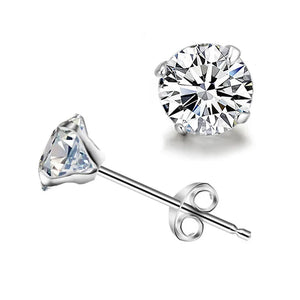
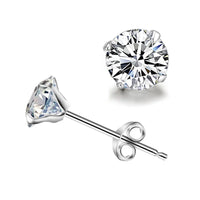
The piece they're describing → CZ Stud Earrings for Women — 925 Sterling Silver, Cubic Zirconia, Hypoallergenic
Personalize Yours


