


- What it is: a relief carving, often a classical profile, set as a brooch, pendant or ring.
- Materials: layered hardstone (onyx, sardonyx, banded agate), shell, and also coral, lava, glass and plastic.
- History: carved gems are ancient. Shell cameos boomed in the 1800s because shell was quicker and cheaper to carve than hardstone.
- Real vs fake: check the back (curved and matte for shell, flat for many imitations), temperature, and carving marks under a loupe.
- AJLuxe: we do not sell cameos. We link a genuine mother-of-pearl pendant below for the shell look.
Cameos are one of the oldest jewelry forms and one of the easiest to misjudge. A small carved profile can be a museum-grade antique or a mass-produced souvenir, and the two can look alike in a photo. This guide explains what a cameo is, how the carving works, what they are made from, how to date and spot a real one, and how to wear and care for one. Cameos also have a place in the story of remembrance jewelry, which we cover in the real history of mourning jewelry.
What Is a Cameo in Jewelry?
A cameo is a relief carving: the design rises from the surface rather than being cut into it. A museum collection record we read describes a cameo as a relief carving that often uses the natural layers and contrasting colors of the material. The figure is cut from the lighter upper layer and the darker layer shows behind it as the background. That is the opposite of an intaglio, where the design is cut downward into the stone.
What Is a Real Cameo Made Of?
Real cameos are made from layered natural materials, mainly hardstone and shell. An antiques dealer education page and an antiques trade article we read list the common choices:
| Material | Notes from the sources |
|---|---|
| Layered hardstone (onyx, sardonyx, banded agate) | Cut on a specialty lathe with steel drills, a process that could take months. Banded agate has curved multicolored bands, while onyx has parallel black and white bands |
| Shell | Carved by hand with a burin in days, so cheaper. Sardonyx shell has a white layer over reddish brown, carnelian shell runs reddish brown to peach. Tropical helmet shell has white and pink or white and brown layers that allow high relief |
| Single color stones (coral, malachite, amethyst) | Carved as one color cameos with no contrasting layer |
| Lava, glass, plastic | Lava cameos are described as almost certainly Victorian. Molded glass and plastic are imitations, and modern glass often shows mold lines on the back |
Assembled cameos, made from two pieces glued together instead of one naturally layered stone, are described by the antiques trade article as less prized than a single-piece carving.
A Short History of Cameo Jewelry
Cameos began as carved gems valued since antiquity, and shell cameos became the popular, affordable form in the nineteenth century. The dealer education page says cameos were prized in antiquity as engraved gems and became especially fashionable in the Georgian and Victorian periods. It notes that carving in a hardstone such as agate took months while shell could be carved by hand in days, and that by the middle of the nineteenth century shell carving dominated cameo production in Italy and France. Those shell pieces suited tourists who wanted a souvenir, and the page names Rome as a center of cameo cutting.
Subjects were mostly classical: ancient heads, mythological scenes and figures adapted from antique gems, as well as portraits from sculpture or paintings. The same page says cameos were considered "smart" jewelry because of their intellectual subjects. A museum record for an English shell brooch from about 1850 shows the Three Graces set in gold with garnets, with a glazed compartment on the back that may have held hair or a portrait, making the brooch a sentimental keepsake. That connects cameos to remembrance jewelry, and to the history of the locket.
The sources do not agree on exact origins, and the dealer page says it is not describing ancient cameo jewelry in detail, so we do not give a start date. If you want a dated claim, ask the seller for the evidence behind it.
How Can You Tell How Old a Cameo Is?
You can often narrow the age by looking at the face, the fastening and the material, though no single clue is conclusive. Clues from the antiques trade article we read:
- Face: round cheeks and aquiline or Roman noses suggest the nineteenth century, while prominent cheekbones and turned-up noses suggest the twentieth.
- Fastening: a C-clasp with a pin that extends past the brooch edge points to roughly the first three quarters of the nineteenth century.
- Hairstyle: the carved hairstyle can date a shell cameo, and the article links some styles to the 1910s and 1920s.
- Signatures: the dealer page says carvers began signing their work in the mid eighteenth century to separate it from antiques, but many unsigned shell cameos were sold, so no signature does not mean fake.
How Can You Tell If a Cameo Is Real?
Look at the back, feel the temperature, and examine the carving under a loupe. These are the checks the antiques trade article suggests:
- The back: shell cameos typically have a curved, spoon-like back with a matte finish. Faux cameos often have flat backs.
- Touch test: real shell or stone stays cool after about a minute in the hand, while plastic warms up.
- Loupe: a 10x loupe shows growth lines and tool marks on a hand carving, and uniform parallel striations with no undercutting on machine-made ultrasound-cut pieces. The article also says coral shows growth lines under a loupe while pink conch shell does not.
- Price versus claim: the same article warns that many machine-made copies are sold at hand-carved prices.
None of this replaces an appraisal. For a piece you plan to pay serious money for, have a qualified gemologist or antique jewelry appraiser examine it. Our locket necklace guide covers another keepsake style that often pairs with cameos.
What Is the Most Famous Cameo Jewelry?
We cannot name a single most famous piece, because we did not find a source that ranks them. Famous cameo work tends to be tied to named carvers and royal or museum collections, and many appear in public museum records. What the sources do show is the common subject: classical heads, mythological groups such as the Three Graces, and portraits.
How to Wear and Care for a Cameo
Wear a cameo as a focal point and keep the rest simple. This section is our own styling and care advice. A cameo brooch works on a lapel, scarf or collar, a pendant sits well on a plain chain, and a cameo ring is a statement on its own. Shell is soft and can be affected by moisture, heat and chemicals, so apply perfume and lotion first, wipe with a soft dry cloth, and store the piece flat in a pouch. One source notes that pink shells fade with light exposure, so avoid leaving one in a sunny window. See our general jewelry care tips.
Shell Jewelry at AJLuxe: What We Do and Do Not Sell
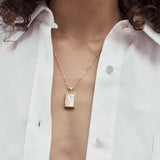
AJLuxe does not sell cameos, carved jewelry or antiques. What we do have is a genuine mother-of-pearl pendant: the Shell Pendant Necklace has a rectangular bezel set with a real white shell panel on an adjustable figaro-style chain, with a frame and chain in an 18K gold plated tone. It is a plain shell panel, not a carved cameo. The listing is candid that the base metal under the plating is not independently confirmed, so we make no hypoallergenic claim for it. Browse more in pendant necklaces and gold plated jewelry, and read our shell jewelry guide and gold plated vs solid gold explainer.
More gemstone and craft guides
Frequently Asked Questions
What is a cameo in jewelry?
A cameo is a relief carving, usually a profile or scene, where the design stands out from a background of a different color. It is typically carved from layered hardstone or shell and set as a brooch, pendant or ring.
What is a real cameo made of?
Real cameos are carved from natural layered materials, mainly hardstone such as onyx, sardonyx or banded agate, and shell. Some are carved from single color stones such as coral. Glass, plastic and lava are used for imitations or special types.
How can you tell if it is a real cameo?
Check that the back is curved and matte for shell, that the piece stays cool in your hand, and that a loupe shows hand tool marks or growth lines rather than uniform machine striations. For valuable pieces, get an independent appraisal.
Why was shell used for cameos?
Shell is quicker and cheaper to carve than hardstone. Sources say hardstone took months on a lathe, while shell could be hand carved in days, which made shell cameos popular in the nineteenth century.
How can you tell if a cameo is antique?
Face shape, fastening, carved hairstyle and material give clues, for example a C-clasp suggests the first part of the nineteenth century. No single clue is conclusive.
Is cameo jewelry valuable?
It can be, especially fine hand-carved hardstone or signed antique pieces, but many cameos are mass-produced copies sold cheaply. Material, carving quality and condition decide value, so ask for details.
What is the most famous cameo jewelry?
We did not find a source ranking cameos, so we do not name one. Classical heads and mythological groups are the most common subjects.
Does AJLuxe sell cameo jewelry?
No. We sell a genuine mother-of-pearl shell pendant that gives a similar soft shell look, but it is not a carved cameo.
Sources
An antiques dealer education page on cameos in Georgian and Victorian jewelry (history, materials, carving methods, subjects, signatures), an antiques trade publication article on dating cameos and telling real from imitation (face, clasp, back, touch and loupe tests), and a museum collection record for an English shell cameo brooch from about 1850 (shell versus hardstone carving, Three Graces, back compartment), all read 2026-10-08. Styling and care advice, and the decision not to name a most famous cameo, are our own.
Written by AJLuxe Team. Last updated: October 2026
All third-party trademarks, brand names and product names are the property of their respective owners. AJLuxe is not affiliated with, endorsed by, sponsored by, or otherwise connected to any third-party brand referenced in this article. Brand names are used solely for accurate comparative reference, and material descriptions reflect each brand's own published product specifications at the time of writing.
You Might Also Like
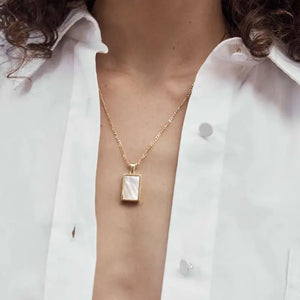

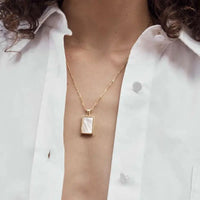
The piece they're describing → Shell Pendant Necklace for Women — Natural White Shell, Boho Beach Jewelry
Personalize Yours


