


- Hard is not the same as tough. Tungsten carbide resists scratches best but can shatter, while softer metals bend and mark instead.
- Corrosion and scratching are separate problems. Gold and platinum do not corrode but scratch. Sterling silver tarnishes. Stainless steel and titanium form a protective film.
- Plating is a countdown. Thickness determines how long gold plating lasts, and the US Federal Trade Commission sets minimums for terms such as gold electroplate and vermeil.
- Durable and skin-safe are different questions. Stainless steel such as 316L still contains nickel.
- Buy for how you live. A ring that hits hard surfaces all day needs a different material than an earring worn to dinner.
When people search for durable jewelry they usually want a piece that will still look good in a few years without being babied. The honest answer is that every material trades something away, so this guide breaks durability into its four parts, compares the common materials side by side using published hardness figures, and explains what actually wears out on plated jewelry. AJLuxe sells jewelry, so we say at the end where our own pieces fit and where they do not.
What does durable actually mean for jewelry?
Durable jewelry has to survive four different kinds of wear, and a material that is excellent at one can be poor at another. Separating them is the fastest way to choose well.
- Scratch resistance: how well the surface holds up against everyday contact. This is what the Mohs hardness scale measures.
- Toughness: whether the piece bends, dents or breaks when it takes a knock. A very hard material can still be brittle.
- Corrosion and tarnish resistance: whether air, sweat and water change the metal.
- Finish life: whether a coating such as gold plating or rhodium stays on the piece.
How do the common jewelry materials compare?
Titanium, stainless steel and tungsten carbide are the most wear-resistant common jewelry materials, solid gold and platinum are the most corrosion-proof, and sterling silver and plated pieces need the most care. The table below uses published figures where a source gives one and plain description where it does not.
| Material | Hardness (Mohs) | Main weak point | Tarnish and corrosion |
|---|---|---|---|
| Platinum | 3.5 | Moderate hardness, so it can mark | Does not corrode, even at high temperatures |
| Solid gold alloys | Pure gold is 2.5. Alloy metals are added to change hardness | Soft, so it scratches and dents. Lower karat holds more alloy | Gold does not react with oxygen |
| Sterling silver | Pure silver is 2.5. Copper in the alloy hardens it | Tarnishes | Reacts slowly with sulfur compounds in air |
| Stainless steel | Ordinary steel is 4 to 4.5 | 316L contains nickel. "Surgical steel" has no formal definition | Chromium of 10.5 percent or more forms a self-repairing film |
| Titanium | 6.0 | Fewer design options | Forms a protective oxide layer |
| Tungsten carbide | About 9.0 to 9.5 | Can shatter, and rings cannot be resized conventionally | Not a tarnish concern |
| Gold plating on a base metal | Depends on the base and the layer | The layer wears through with use | Base metal can migrate into thin gold |
Figures are from the reference pages on the Mohs scale, platinum, gold, sterling silver, stainless steel, titanium and tungsten carbide. For the tarnish side in more depth, see our guides to which jewelry does not tarnish, whether stainless steel tarnishes and titanium jewelry.
Why is the hardest material not always the most durable?
The hardest material resists scratches, but hardness alone does not make a piece last, because hard materials can be brittle. Tungsten carbide is the clearest example: it rates about 9.0 to 9.5 on the Mohs scale, yet it can be shattered by a hard impact, and rings made of it cannot be resized conventionally. Soft metals fail the other way round. A gold or platinum ring marks and dents but tends to bend and stay in one piece. The practical question is which failure you can live with: a scuffed surface you can polish, or a crack you cannot repair.
Stones follow the same rule. Cubic zirconia rates about 8 on the Mohs scale, and its facet edges gradually round and dull with wear, which is why a daily-wear CZ ring is a wearing item and not a forever item.
How long does plating last, and what do the standards say?
Plating lasts as long as the gold layer does, and the standards set only minimums, so the thickness a brand uses matters more than the word "plated". Under the US Federal Trade Commission Jewelry Guides, gold electroplate requires a minimum of 0.175 microns of gold of at least 10 karat, heavy gold electroplate requires 2.5 microns, and gold-filled requires the gold layer to be at least 1/20 of the article's weight. Vermeil means a sterling silver base with gold of at least 10 karat at a minimum of 2.5 microns. The reference page on gold plating notes that the thickness in microns determines how long the plating lasts with use, and that base metals such as silver or copper can slowly diffuse into thin gold and change its color or surface unless a barrier layer is used.
That is why a brand should say what the layer is called and how thick it is. Our guides to how long gold plated jewelry lasts and how to make it last longer cover the care side.
Can durable jewelry also be gentle on sensitive skin?
Yes, but durability and skin safety are separate properties, so check both. The American Academy of Dermatology suggests that people with nickel allergy choose jewelry that is nickel-free, hypoallergenic or made from metals such as surgical-grade stainless steel, 18, 22 or 24 karat yellow gold, pure sterling silver or platinum (AAD guidance). Two cautions follow. First, 316L is a chromium, nickel and molybdenum alloy, and some people with nickel sensitivity react to it, so it is hypoallergenic for most people and not nickel-free. Second, "surgical steel" is a marketing phrase, since no formal definition exists. Our guide to whether stainless steel is hypoallergenic goes through the grades.
What should you buy for durability on a budget?
For the lowest wear per dollar, buy pieces that have no coating to lose, and expect coated pieces to need care. A solid sterling silver piece with no plating cannot lose a gold layer, though it can tarnish and needs occasional polishing. A stainless steel or titanium piece resists corrosion well. A gold-plated piece gives the look of gold for far less, and the trade-off is that the layer thins with use.
AJLuxe sells jewelry, so here is where our own pieces land. The Elegant Sterling Silver Engagement Ring is 925 sterling silver left unplated, with a cubic zirconia solitaire and pavé shoulders. Its product page points out that there is no plating layer to wear through, and also asks you to remove it before washing dishes or swimming because sterling silver can react with chlorine and harsh chemicals. Most of our gold-plated pieces are 18K electroplate over a 925 sterling silver or 316L stainless steel base, and their product pages estimate a plating life of 1 to 3 years with care. AJLuxe does not publish a plating thickness in microns. Most of our pieces are not designed for water, and the product pages say to remove them before showering or swimming.
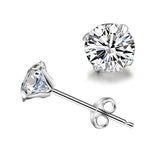
A low-maintenance starting point: the Sterling Silver CZ Stud Earrings have a solid 925 sterling silver post and a rhodium finish, with a cubic zirconia stone (not a diamond) in sizes from 3mm to 7mm.
Shop the CZ Stud Earrings, $22.99How do you make any jewelry last longer?
Put jewelry on last and take it off first, because lotion, perfume, chlorine, sweat and dishwater do most of the damage to finishes. Store pieces separately and dry so they do not scratch each other, and wipe them with a soft cloth after wear. For water specifically, see our waterproof jewelry guide, since "durable" and "waterproof" are not the same promise.
Frequently Asked Questions
What is the most durable material for jewelry?
It depends on what you mean by durable. Tungsten carbide is the hardest common choice but can shatter, titanium and stainless steel combine good wear with corrosion resistance, and solid gold and platinum do not corrode but are softer. The table above compares them.
What kind of jewelry lasts the longest?
Jewelry made of solid materials with no coating to wear off lasts longest: solid gold, platinum, titanium and stainless steel. Plated jewelry lasts as long as its gold layer does, and sterling silver lasts a very long time if you accept occasional polishing.
What is the strongest metal commonly used in jewelry?
Titanium has the highest tensile-strength-to-density ratio of any metallic element, per the titanium reference page, which is why it is light and strong. Tungsten carbide, a compound and not a pure metal, is harder but more brittle.
Does 14k or 18k gold last longer?
Generally 14K is the tougher everyday choice and 18K has the richer color. Alloy metals are added to gold to adjust hardness, and 14K gold is 58.4 percent gold against 75 percent for 18K, according to the karat reference page, so it contains more of the hardening metals.
What kind of jewelry will never tarnish?
Gold and platinum do not corrode, and titanium and stainless steel form protective films, so they hold up best. Sterling silver tarnishes by reacting with sulfur in the air. Plated jewelry resists tarnish only while the coating is intact. Our guide on what jewelry does not tarnish ranks the options.
What jewelry can be worn all the time?
Pieces without a wearing coating and with a corrosion-resistant metal suit constant wear best, such as solid gold, platinum, titanium and stainless steel. Even those benefit from being removed for heavy work. AJLuxe's plated pieces are not designed for continuous wear in water, and their product pages say to remove them before showering or swimming.
Final Thoughts
Choose durable jewelry by asking which kind of wear you expect: scratches, knocks, water or daily contact. If you want a low-maintenance sterling piece to start with, try the Sterling Silver CZ Stud Earrings, and read the product page for the exact materials before you buy.
All third-party trademarks, brand names and product names are the property of their respective owners. AJLuxe is not affiliated with, endorsed by, sponsored by, or otherwise connected to any third-party brand referenced in this article. Brand names are used solely for accurate comparative reference, and material descriptions reflect each brand's own published product specifications at the time of writing.
You Might Also Like
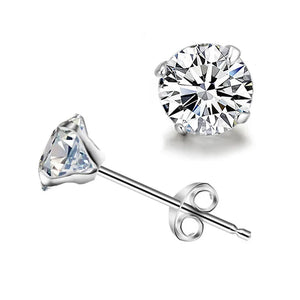
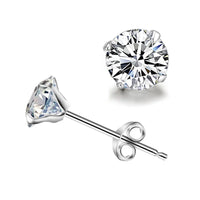
The piece they're describing → CZ Stud Earrings for Women — 925 Sterling Silver, Cubic Zirconia, Hypoallergenic
Personalize Yours


