


Types of Pearls: All 8 Varieties Explained

Most buying guides list four pearl types and call it done. But the full picture includes eight distinct varieties, and the lesser-known types — Keshi, Mabe, and Baroque — are increasingly prominent in contemporary jewelry. This guide covers all eight with the information that actually matters: origin, quality characteristics, price, and which type suits which use case.
Shop pearl jewelry: AJLuxe Pearl Jewelry Collection — curated freshwater pearl pieces in sterling silver settings.
Part of our Complete Pearl Jewelry Guide cluster.
The Master Table: All 8 Pearl Types at a Glance
| Pearl Type | Origin | Color Range | Size Range | Luster | Price Range | Availability |
|---|---|---|---|---|---|---|
| Freshwater | China, USA (mussels) | White, pink, lavender, peach | 4–16mm | Good to excellent | $30–$300 | Very widely available |
| Akoya | Japan, China (oysters) | White, cream, pink (subtle) | 2–11mm | Very high to exceptional | $200–$1,000+ | Widely available |
| South Sea | Australia, Philippines, Indonesia | White, silver, golden | 8–20mm | Exceptional (satiny) | $500–$10,000+ | Specialty retailers |
| Tahitian | French Polynesia (black-lipped oyster) | Black, grey, green, peacock | 8–18mm | High to exceptional | $300–$3,000+ | Specialty retailers |
| Keshi | Byproduct of pearl farms worldwide | Varies (white, grey, peacock) | 2–8mm (usually small) | Exceptional (all nacre) | $50–$500+ | Limited; specialty retailers |
| Mabe (Blister) | Japan, Indonesia, Australia | White, cream, peacock | 10–20mm face diameter | Good to high | $30–$300 | Moderate availability |
| Biwa | Originally Lake Biwa, Japan; now China | White, cream, pink | 3–8mm (elongated) | Good | $50–$300 | Specialty / artisan jewelers |
| Baroque | Freshwater or saltwater (shape category) | All pearl colors | All sizes | Varies widely | $20–$1,000+ (type-dependent) | Widely available |
The 4 Major Commercial Pearl Types
1. Freshwater Pearls
Freshwater pearls are the world's most produced and most affordable pearl type. Unlike saltwater pearls, most modern freshwater pearls are cultured without a bead nucleus — a tissue graft is inserted instead, and the entire pearl is nacre from core to surface. This makes them paradoxically more durable than nucleated Akoya pearls with thin nacre coatings.
Color range is the widest of any pearl type: white, cream, pink, lavender, and peach all occur naturally. Size ranges from 4mm up to 16mm for premium "Edison" round freshwater pearls. Shapes range from round and near-round to baroque, stick, and coin.
Best for: Everyday wear, first pearl purchase, gifts, layered jewelry. The honest value choice at virtually every budget under $300.
Common misconception: "Freshwater pearls are inferior." This was true in the 1990s. Modern Chinese freshwater pearl farming has advanced dramatically — premium freshwater pearls now rival Akoya in luster and roundness.
2. Akoya Pearls
Akoya pearls are the classic pearl of the 20th century — the white, round, high-luster pearl that most people picture when they think of a pearl necklace. They were the first commercially cultured pearls, developed by Mikimoto in Japan in the early 1900s.
Akoya pearls are bead-nucleated: a small mother-of-pearl bead is inserted into the oyster, and nacre is deposited around it. The nacre layer is typically 0.35–0.5mm thick — thinner than freshwater nacre, which is why nacre thickness matters when buying Akoya. Very cheap Akoya pearls have very thin nacre that dulls or peels within a few years.
Size range: 2–11mm (most common in 6–8mm for strands). Color: classic white or cream with pink, silver, or green overtones. Luster ceiling: exceptionally high — the mirror-like Akoya luster is what made pearl jewelry famous.
Best for: Classic strands, bridal jewelry, formal occasions, traditional pearl aesthetic.
Key caveat: Under $200, Akoya pearls represent poor value compared to freshwater — the nacre is too thin. Akoya justifies its premium at $400+.
3. South Sea Pearls
South Sea pearls are the largest and most valuable cultured pearls in the world. The Pinctada maxima oyster is the largest pearl-producing oyster — it can grow up to 30cm across — and produces pearls ranging from 8mm to 20mm. Each pearl requires 2–4 years of growth time, which combined with the difficulty of farming Pinctada maxima, drives the high prices.
South Sea pearls come in two major color varieties: white/silver from Australian farms, and golden from the Philippines (produced by the gold-lipped variety of Pinctada maxima). The luster is distinctively "satiny" — softer and more diffuse than Akoya's sharp mirror luster, but extraordinarily deep and glowing.
Best for: Statement pieces, heirloom jewelry, significant milestones (significant anniversaries, retirement gifts). A genuine investment — quality South Sea pearls hold value well.
4. Tahitian Pearls
Tahitian pearls are often called "black pearls," but they are rarely truly black. The most prized color is "peacock" — a dark green-grey with pink or purple iridescent overtones. They also come in charcoal, silver-grey, green, and aubergine. The dark coloration is entirely natural, produced by the black pigment in the Pinctada margaritifera mantle tissue. No dyeing is involved in authentic Tahitian pearls.
Size range: 8–18mm. Luster: high to exceptional. Tahitian pearls have a distinctive surface texture that differs from the smooth mirror of Akoya — they tend to show subtle surface features that are considered part of their organic character.
Best for: Dramatic, exotic, or contemporary jewelry. An alternative to the classic white pearl aesthetic for those who want something distinctive and striking.
Fake risk: Dyed freshwater pearls are sometimes sold as "black pearls" or mislabeled as Tahitian. Authentic Tahitian pearls should have a GIA certificate or come from a trusted source.
The 4 Specialty Pearl Types

5. Keshi Pearls
Keshi pearls are one of the most interesting pearl types — and least understood. They form when the mollusk rejects the implanted bead nucleus during the culturing process, but continues producing nacre around the remaining mantle tissue. The result is a small pearl made entirely of nacre, with no nucleus at all.
Because they're 100% nacre, keshi pearls often have extraordinary luster — sometimes the highest of any pearl type. They're irregular in shape (wrinkled, petal-like, or abstract), typically small (2–8mm), and occur as a byproduct across all saltwater pearl farms. Saltwater keshi (from Akoya, South Sea, or Tahitian farms) are particularly prized for their exceptional luster.
Best for: Artisan and contemporary jewelry where organic form is valued. Statement earrings and pendants. The "connoisseur's pearl" — exceptional quality in an unexpected form.
Note: The word "keshi" comes from the Japanese for "poppy seed" — referencing the tiny size of original keshi pearls from Akoya farms. Modern freshwater "keshi" can be larger.
6. Mabe Pearls (Blister Pearls)
Mabe pearls are half-spherical "blister" pearls formed when a flat hemisphere nucleus is attached to the inside of the oyster shell rather than implanted into the body tissue. The oyster deposits nacre over the dome, forming a flat-backed pearl that is then cut from the shell and backed with mother-of-pearl.
The result is a large-face-diameter pearl at a significantly lower price than a comparable round pearl — because only half the sphere is pearl. Mabe pearls are typically 10–20mm in face diameter and are particularly suited to settings where a flat back is an advantage: rings, pendants, and earrings where the pearl sits flush against a setting.
Best for: Rings, pendants, brooches, and cocktail earrings where large face size is desired at a reasonable price. Art Deco and vintage-inspired settings often use Mabe pearls.
7. Biwa Pearls
Biwa pearls take their name from Lake Biwa in Japan, which was the world's primary source of cultured freshwater pearls until the lake's ecosystem was severely damaged by pollution and industrial runoff in the 1970s–1980s. True Lake Biwa pearls are now extremely rare and collector's items.
Today, "Biwa pearl" or "Biwa-style pearl" typically refers to elongated, stick-shaped, or petal-shaped freshwater pearls produced in China using similar culturing techniques. The defining characteristic is the distinctive irregular elongated shape — rods, sticks, feathers, or abstract organic forms. They are all-nacre (freshwater cultured without a bead nucleus) and are primarily used in artisan, boho, and contemporary jewelry designs.
Best for: Artisan jewelry, bohemian and organic-aesthetic designs, mixed-material pieces. Often used as drop elements in earrings and pendants.
8. Baroque Pearls
Baroque is a shape classification, not a specific pearl type. Any pearl — freshwater, Akoya, South Sea, or Tahitian — with an irregular, non-spherical shape is classified as baroque. Sub-categories include semi-baroque (slightly off-round), drop (teardrop), button (flattened), and coin (flat disc) shapes.
Baroque pearls have had a significant fashion moment in the 2010s–2020s, driven by high-end brands embracing their organic, sculptural character. A baroque South Sea or Tahitian pearl pendant can be extraordinarily beautiful in ways that a perfectly round pearl isn't — each is unique.
Baroque pearls typically cost 20–40% less than round pearls of equivalent quality (same luster, surface, size, type) — which means they represent genuine value for buyers who don't require perfect roundness.
Best for: Statement pendants, artisan earrings, contemporary jewelry, buyers who want a unique piece rather than a uniform one.
Best Use in Jewelry — Quick Reference
| Pearl Type | Best Use in Jewelry | Durability | Fake Prevalence |
|---|---|---|---|
| Freshwater | Everyday necklaces, earrings, bracelets; starter pearl jewelry | Good (all-nacre, durable for a pearl) | Low (widely available genuinely) |
| Akoya | Classic strands, bridal sets, traditional formal jewelry | Moderate (thin nacre at low price points) | Medium (cheap Akoya with peeling nacre is common) |
| South Sea | Statement necklaces, pendants, milestone gifts | Very good (thick nacre layer) | Medium (fakes at very low prices claiming "South Sea") |
| Tahitian | Pendants, earrings, dramatic statement necklaces | Good (similar to Akoya) | High (dyed freshwater often mislabeled as Tahitian) |
| Keshi | Artisan pendants, statement earrings, mixed-material pieces | Excellent (all-nacre, highest durability) | Low (but hard to find genuine keshi) |
| Mabe | Rings, cocktail earrings, brooches, pendants | Moderate (composite construction) | Low |
| Biwa | Artisan earrings, boho pendants, organic-form jewelry | Good (all-nacre freshwater) | Low |
| Baroque | Statement pendants, artisan earrings, unique pieces | Varies by underlying pearl type | Low (shaped is harder to fake convincingly) |
Why Freshwater Pearls Are the Best Value for Everyday Jewelry
A decade ago, recommending freshwater pearls over Akoya felt like recommending a budget option. Today, it's simply the honest choice for most buyers. Here's why:
Modern freshwater pearl quality has fundamentally changed. Chinese freshwater pearl farming has advanced to the point where premium freshwater pearls (often labeled "Edison" or "AAAA" grade) are now genuinely round, genuinely lustrous, and in many cases indistinguishable from Akoya to the untrained eye — at 30–50% of the price.
- All-nacre durability: Because modern freshwater pearls have no bead nucleus, they are entirely nacre from core to surface. This makes them more resistant to chipping and peeling than thin-nacre Akoya pearls at the budget end of the market.
- Color variety: Natural pink, lavender, and peach freshwater pearls don't exist in Akoya — if you want color without dyeing, freshwater is your only cultured saltwater option.
- Size range: Freshwater pearls now go up to 16mm in round form — overlapping significantly with the lower end of South Sea sizing.
- Price accessibility: A beautiful freshwater pearl necklace for $80–$150 is genuinely beautiful — not a compromise. At that price, Akoya would be a poor quality compromise.
At AJLuxe, our pearl collection focuses on freshwater pearl pieces in 925 sterling silver settings — the honest sweet spot for jewelry that's wearable daily and looks genuinely luxurious. Pair pearl jewelry with our gemstone necklaces or crystal jewelry for a complete curated look.
Frequently Asked Questions
What are the main types of pearls?
The four main commercial types are Freshwater ($30–$300), Akoya ($200–$1,000+), South Sea ($500–$10,000+), and Tahitian ($300–$3,000+). Four specialty types are Keshi, Mabe, Biwa, and Baroque. Freshwater pearls are the best choice for everyday jewelry.
What is a Keshi pearl?
Keshi pearls form when a mollusk rejects the implanted nucleus but continues producing nacre — resulting in a small, all-nacre pearl with no bead core. Because they're entirely nacre, keshi pearls often have exceptional luster. They're irregular in shape and typically small (2–8mm). The name comes from Japanese for "poppy seed."
What are Baroque pearls?
Baroque pearls are any pearls with an irregular, non-spherical shape — a shape classification that applies across all pearl types. They cost 20–40% less than round pearls of equivalent quality and have become increasingly fashionable in contemporary jewelry for their organic, sculptural character.
What is the difference between freshwater and saltwater pearls?
Freshwater pearls (cultured in mussels) are usually all-nacre, come in wider color range, and cost $30–$300. Saltwater pearls (Akoya, South Sea, Tahitian, cultured in ocean oysters) are bead-nucleated, tend to be rounder, and reach higher luster ceilings — but cost significantly more. Modern premium freshwater pearls have dramatically closed the quality gap.
What are Mabe pearls?
Mabe (blister) pearls are half-spherical pearls formed on the inside of the oyster shell rather than in the body tissue. They have a flat back and a large face diameter, making them ideal for rings, pendants, and earrings. They're significantly less expensive than round pearls of similar face size.
Which type of pearl is best for everyday jewelry?
Freshwater pearls are the best choice for everyday jewelry — all-nacre construction makes them more durable than thin-nacre Akoya at budget prices, and the $30–$300 price range makes daily wear practical. Modern freshwater pearls in sterling silver settings offer excellent luster and longevity.
What are Biwa pearls?
True Biwa pearls originated in Japan's Lake Biwa. Today "Biwa-style" refers to elongated, stick-shaped freshwater pearls from China. They have a distinctive rod-like or petal shape often used in artisan and contemporary jewelry.
How expensive are South Sea pearls?
South Sea pearls range from $500 for a single pendant to $10,000+ for a matched strand. The high price reflects slow growth (2–4 years per pearl), large size (8–20mm), and the difficulty of farming Pinctada maxima oysters. Golden South Sea pearls from the Philippines are among the rarest and most expensive.
Are Tahitian pearls actually black?
Not truly black — Tahitian pearls are a very dark grey with color overtones ranging from green to purple. The most prized shade is "peacock" — dark green-grey with pink iridescence. The color is entirely natural, produced by the black-lipped Pinctada margaritifera oyster. No dyeing is involved in authentic Tahitian pearls.
What is nacre and why does it matter?
Nacre (mother-of-pearl) is the crystalline substance deposited in concentric layers to form a pearl. Thicker nacre = better luster = longer-lasting pearl. Freshwater pearls are entirely nacre; nucleated saltwater pearls have a bead core with a nacre coating. Nacre thickness is the most important durability factor in nucleated pearls.
How can I tell different pearl types apart?
Size and color are the quickest identifiers: Freshwater (4–16mm, pink/lavender/white), Akoya (2–11mm, white/cream, very round), South Sea (8–20mm, white/golden, largest), Tahitian (8–18mm, dark grey/black/peacock). Keshi are tiny and irregular. Mabe are flat-backed. Baroque are asymmetrical. Reputable sellers always label the type clearly.
Final Thoughts
Pearl variety is genuinely broad — far more so than most buyers realize. The "pearl necklace" in most people's mental image is an Akoya strand, but that's just one of eight distinct types, each with its own character, price point, and ideal use case.
For most buyers: freshwater pearls cover everyday wear beautifully. Akoya is the step up for traditional formality. South Sea and Tahitian are for statement and investment pieces. And if you want something truly unique and contemporary, Keshi and Baroque pearls offer exceptional beauty in unexpected forms.
Shop pearl jewelry: AJLuxe Pearl Jewelry Collection — curated freshwater pearl pieces in sterling silver settings. Also explore our gemstone necklaces and crystal jewelry.
Return to the Complete Pearl Jewelry Guide | Also see: Freshwater vs. Saltwater Pearls Compared | Pearl Necklace Buying Guide | Akoya vs Freshwater Pearls
All third-party trademarks, brand names and product names are the property of their respective owners. AJLuxe is not affiliated with, endorsed by, sponsored by, or otherwise connected to any third-party brand referenced in this article. Brand names are used solely for accurate comparative reference, and material descriptions reflect each brand's own published product specifications at the time of writing.
You Might Also Like

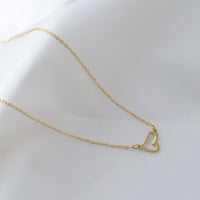
The piece they're describing → Dainty Heart Necklace for Women — 18K Gold Plated, Minimalist Gold Heart Pendant
Personalize Yours


