


- Clear polish works as a physical barrier, so it can reduce green or black marks from cheap base metals for days to weeks.
- It peels, yellows and wears away where jewelry rubs, so it needs redoing and it never fixes the cause.
- Skip it on plated pieces you want to keep, pearls, opals, turquoise and glued stone settings.
- It does not treat a skin reaction. If a metal irritates you, a coating over it is not a reliable answer (general information, ask a doctor).
- Better long term: wipe after wear, store dry, choose 316L stainless steel or sterling silver, or have a jeweler plate a ring with rhodium.
If a ring has left a green band on your finger, the quick internet fix is a coat of clear nail polish. It is cheap and it is already in the bathroom drawer, so it is worth knowing what it really does. This guide covers how the barrier works, which pieces it suits, the downsides, the method people use, and what to do instead. For the chemistry of the green mark itself, see why jewelry turns skin green and why a ring turns your finger green.
Does clear nail polish actually work on jewelry?
It can, in a limited way: clear polish dries into a thin film, and while that film is intact the metal cannot touch your skin or the moisture on it.
Green marks usually come from a copper-containing base metal reacting with sweat, lotion or soap. The reaction produces a green copper salt that rubs onto skin. Tarnish on silver is a surface reaction with sulfur compounds in air and on skin. In both cases the metal has to be in contact with something, so cutting that contact slows the process. Polish does not change the metal, it only hides it behind a layer.
The weak point is the layer itself. Nail polish is designed to sit on a nail, not to take daily friction against a finger, a wrist or a neck. Where the jewelry rubs, the film thins and eventually lifts. Reports from retailer guides, hands-on tests and jewelry forums broadly agree that it helps on cheap pieces and is short lived, so treat it as a stopgap, not a finish.
How does the barrier film work, and what does it protect against?
The film blocks direct contact and slows air and moisture reaching the metal, which is why it can limit both green skin marks and early tarnish on the coated surface only.
- Against green marks: useful on the inside of a ring band or the back of a pendant, where metal meets skin.
- Against tarnish: useful for pieces stored in a drawer, though tarnish can still creep in at uncoated edges and under any gap in the film.
- Not against wear: it does not strengthen thin plating or stop plating from rubbing off. See why plated jewelry sometimes turns skin green.
What is clear nail polish good for?
It is most reasonable on inexpensive costume jewelry that you are not trying to preserve, such as a fashion ring that is already turning fingers green.
- Costume rings: a coat on the inner band is the most common use.
- Short term wear: a one night outfit piece or a festival accessory.
- Rescuing a favorite cheap piece: a stopgap while you decide whether to replace it.
- Display pieces: items kept in a case that you rarely wear.
What are the real downsides?
The downsides are practical: the coat peels, can yellow, can irritate some skin, wears off with contact, and makes later cleaning, repair or resale harder.
- It peels and flakes. Thick or repeated coats are more likely to crack. Flakes can end up on skin or in a setting.
- It can yellow. Over time clear polish can discolor, which looks worse than the original metal.
- It can trap moisture. If the film lifts at an edge, water can sit under it and cause dull spots or uneven tarnish.
- It can bother skin. Nail polish is not made for long contact with skin on the finger, ear or neck. Some people react to polish ingredients. We do not call it skin safe.
- It does not fix a reaction. A rash can come from the metal, from soap trapped under a ring, or from other causes. A coating that wears through gives no dependable protection. General information only, ask a doctor if skin is red, itchy or blistered.
- It complicates cleaning and resale. A jeweler has to remove the coating before cleaning, polishing or resizing, and a previously coated piece can look neglected.
- Solvents can damage some materials. The removers used to take polish off can harm pearls, some porous stones, plastics and glued settings (see below).
When should you not use clear nail polish on jewelry?
Do not use it on plated pieces you want to keep, on pearls or porous stones, on glued stone settings, or on anything valuable or sentimental.
- Gold plated or rhodium plated pieces. Plating is a thin outer layer, and removing polish later means rubbing and solvent on that layer. Our gold plated care guide covers gentler habits.
- Pearls, opals, turquoise and other porous or soft gems. Polish and remover can dull or mark them. See how to care for pearl jewelry.
- Stones set with adhesive. Remover can weaken the glue.
- Solid sterling silver or fine jewelry. It is better cleaned and stored properly than coated.
What is the step by step method people use, and what to watch for?
People who try it coat only the part that touches skin, in one thin layer, on a clean dry piece, and let it cure fully. We describe this as a common method, not a proven or recommended fix.
- Test first. Pick a piece you do not mind losing. Use a spot that is hidden, such as the inside of a band.
- Clean and dry. Wipe off oils and lotion with a soft cloth and let the piece dry completely. Polish over residue lifts quickly.
- Coat the contact surface only. One thin coat on the inner band, post, clasp or pendant back. Avoid stones, hinges and moving parts.
- Do not add a thick layer. Thick coats crack. If one coat is not enough, wait until the first is dry.
- Let it cure. Leave it for several hours or overnight, until it is hard and not tacky.
- Check the edges. Look for gaps, bubbles or fingerprints. Fix or remove if the film is uneven.
- Keep it off the skin where you can. Do not coat surfaces that sit in a piercing or against a healing area.
How often to redo it: there is no fixed schedule. A coat on a ring band that rubs daily may need refreshing every week or two, while a pendant back may last longer. Redo when you see wear, peeling or the first green mark, and remove the old coat rather than layering over it.
How to remove it: use a nail polish remover on a cotton swab, only on the coated area, and wipe gently. Check the piece first for pearls, porous stones, glued settings or plastic parts, since remover can harm them. If the piece has any of these, take it to a jeweler rather than doing it yourself.
Is it worth it? A decision table by jewelry type
For most jewelry you want to keep, the answer is no; it only makes sense for cheap, non-porous costume pieces.
| Jewelry type | Worth trying? | Why |
|---|---|---|
| Cheap costume ring turning fingers green | Maybe | Stopgap on the inner band; expect to redo it |
| Gold plated ring or bracelet you want to keep | No | Removal stresses thin plating; gentle care works better |
| Sterling silver | No | Tarnish is easy to clean; coating adds a job |
| Pearls and porous or soft stones | No | Polish and remover can damage them |
| Stones set with glue | No | Remover can loosen adhesive |
| Earring posts and piercing jewelry | No | Not intended for contact with a piercing |
| Piece stored in a drawer for a season | Rarely | A sealed pouch is simpler and reversible |
What works better than clear nail polish?
Choosing the right metal and caring for it beats coating the wrong one, and several fixes cost about the same as a bottle of polish.
- Rhodium plating by a jeweler. Jewelers can rhodium plate some rings. Rhodium is a hard, tarnish resistant metal, but it is a plating layer that wears over time. See what rhodium plating is.
- Anti tarnish storage. Keep pieces dry in a sealed pouch or box away from humidity. See how to store jewelry and how to prevent tarnish.
- Choose a different base metal. 316L stainless steel is considered hypoallergenic for most wearers but is not nickel free; our stainless steel guide and sterling silver vs stainless steel explain the trade-offs. Sterling silver tarnishes but cleans up, see does sterling silver tarnish.
- Wipe after wear. A soft dry cloth removes sweat and lotion before they sit on the metal, which is the cheapest habit on this list. Nine more habits are in how to keep jewelry from tarnishing.
- Care for plating. Put jewelry on after lotion and perfume, and see how to clean gold plated jewelry.
- If your skin reacts, see best metals for sensitive skin, and ask a doctor, since a coating is not a fix.
Common mistakes to avoid
- Coating a piece you actually care about because "it is just a thin layer".
- Applying a thick coat to make it last, which makes it crack sooner.
- Painting over a green or tarnished surface without cleaning it first.
- Using remover on a pearl, opal or glued-stone piece.
- Treating polish as a cure for a rash instead of changing the metal.
An honest note on our range
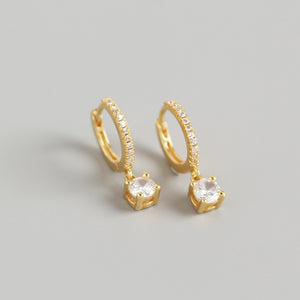
We do not sell clear coatings or anti tarnish products, and we do not recommend coating our jewelry. If the aim is fewer green marks, a different base metal is a more durable route. Our micro pave huggie hoop earrings ($28.99) are 18K gold plated over 316L stainless steel, and our drop huggie hoop earrings ($28.99) use the same base. Our silver minimalist huggie earrings ($34.99) are unplated 925 sterling silver. Plating wears gradually on any plated piece, and stainless steel is not nickel free.
More in this guide
Related reading: why does jewelry turn skin green, how to prevent jewelry tarnish, what is rhodium plating the complete guide 2026, best metals sensitive skin and does gold plated jewelry turn skin green.
Frequently Asked Questions
Does clear nail polish stop jewelry from tarnishing?
It can slow tarnish on the coated surface while the film is intact, but it does not stop it, and tarnish can start where the coat is thin or missing. Dry storage and wiping after wear are more dependable.
Does clear nail polish stop a ring turning your finger green?
It often reduces green marks on cheap copper-containing rings for a short time. It wears off with rubbing, so the mark usually returns and the coat needs redoing.
Is clear nail polish on jewelry safe for skin?
We do not claim it is skin safe. Nail polish is made for nails, and some people react to its ingredients. This is general information, so ask a doctor if you have irritation.
Can I put clear nail polish on gold plated jewelry?
We advise against it for pieces you want to keep. Taking polish off later involves rubbing and solvent on a thin plating layer. Gentler care is in our plated tarnish guide.
How long does clear nail polish last on a ring?
It depends on how much the ring rubs. On a daily worn band it may need refreshing within days or weeks; on a piece that is rarely worn it can last longer. Redo it when it peels or yellows.
How do you remove clear nail polish from jewelry?
People use nail polish remover on a cotton swab, only on the coated area. Check for pearls, porous stones, glued settings or plastic first, because remover can damage them. Ask a jeweler if unsure.
Can I use it on pearls or opals?
No. Polish and remover can damage pearls and other porous or soft gems. See how to care for pearl jewelry.
What can I use instead of nail polish to stop green skin?
Switch to a base metal that does not contain copper at the skin contact, such as sterling silver or 316L stainless steel, keep the piece dry, and wipe it after wear. Start with best metals for sensitive skin.
Written by AJLuxe Team. Last updated: October 2026
All third-party trademarks, brand names and product names are the property of their respective owners. AJLuxe is not affiliated with, endorsed by, sponsored by, or otherwise connected to any third-party brand referenced in this article. Brand names are used solely for accurate comparative reference, and material descriptions reflect each brand's own published product specifications at the time of writing.
You Might Also Like
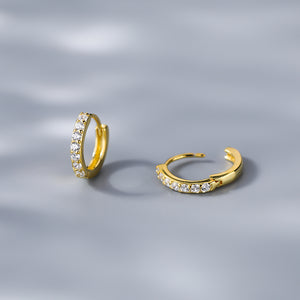
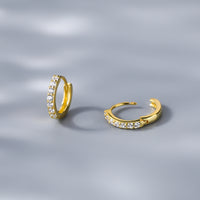
The piece they're describing → Micro Pave Huggie Hoop Earrings for Women — 316L Stainless Steel, 18K Gold Plated, CZ
Personalize Yours


