


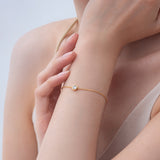
- A lobster clasp stays shut because a spring holds a lever against the hook, so accidental opening takes real pressure.
- Typical sizes run from about 9 mm for delicate chains to 15 mm and up for heavy pieces (suppliers measure differently, so verify).
- Sticking is usually dirt, a worn spring or a bent lever; breaking is usually metal fatigue at the tiny spring.
- If the lever no longer snaps back, replace the clasp rather than trusting it.
- Buy one sized to the chain, with a smooth lever and a flush gap when closed.
Open any jewelry box and most chains end in one. This page covers how a lobster clasp works, what size you need, how to use one, why it fails, and what to look for when buying. If you want a side-by-side of every bracelet closure, start with our types of bracelet clasps page; for necklaces, see types of necklace clasps.
Why the lobster clasp is the common secure choice
It is common because it combines three things that are hard to get together: a positive lock, a small profile and a low cost to make in many sizes. The hook is closed by a lever under spring tension, so a bump or tug does not open it the way a simple hook and eye can slip out. It also keeps the bracelet looking tidy, with no tongue, bar or magnet showing. The trade-off is that the lever is small, so it is harder to work with stiff fingers or one hand, and the spring is the part that eventually wears out.
How a lobster clasp works
A lobster clasp is a hollow body with a hook-shaped opening and an internal spring pushing a lever (the "trigger") against the tip of the hook. Pressing the trigger compresses the spring and exposes a gap; letting go closes it. The body has a small ring at one end where it joins the chain; the other end of the chain usually has a plain ring or a short extender chain for the clasp to hook into. Our engineering behind every jewelry clasp article goes deeper on the mechanics, and the jewelry parts glossary names each piece.
Two common variants: a standard lobster with a plain pull lever, and a swivel or push-in style that lets the body rotate, which reduces twisting of the chain. Most fine jewelry uses the standard form.
Lobster clasp sizes
Lobster clasps are sold by length in millimeters, usually from about 9 mm to 15 mm or more, and the right size depends on how heavy and wide the chain is. These are supplier guidelines, not an industry standard, so verify against your own chain before buying.
| Typical size | Suits | Notes |
|---|---|---|
| About 9 to 10 mm | Delicate necklaces, thin bracelets, anklets | Small lever, harder to grip |
| About 11 to 12 mm | Most standard chains and bracelets | Often called the all-rounder |
| About 15 mm and up | Heavier chains, wide or chunky bracelets | Easier to open, more visible |
Check whether a listed size includes the attached ring: one maker may measure the body only and another the whole piece. A clasp roughly as wide as the chain tends to look balanced. To plan fit for a necklace, use how to measure necklace length; for a bracelet, see the bracelet size chart.
How to open and close a lobster clasp
To open one, pinch the body with one hand and push the lever back with your thumbnail or fingertip until the gap opens. Then follow these steps.
- Hold the clasp body between thumb and forefinger.
- Press the lever toward the body; the hook gap opens.
- Slip the end ring or chain link into the gap.
- Release the lever and let the spring close it.
- Give a gentle tug to confirm it is closed.
For one-handed use, lay the piece on a table, hold the end ring in place with the fingers of your fastening hand, and work the lever with the thumb. Our how to put on a bracelet by yourself guide has more tips. If a chain is too short to reach the clasp comfortably, an extender chain helps; see the necklace extender guide.
Why a lobster clasp sticks or breaks
A lobster clasp usually sticks because debris or residue has built up inside the tiny spring chamber, and breaks because the spring or the lever pivot has fatigued after thousands of presses. Common causes:
- Dirt and residue: lotion, skin oils and grit collect inside and make the lever slow.
- Worn or weak spring: the lever opens but does not close firmly.
- Bent lever or hook: after a knock, the lever no longer sits flush against the hook.
- Stretched or open jump ring: the ring that holds the clasp can pull open and let the clasp fall off.
- Plating and finish wear: on plated pieces, friction at the clasp wears the finish first; see how to make gold plated jewelry last longer.
Safe fix or replacement steps
If the clasp is only dirty, clean it gently; if it is weak, bent or broken, replace it rather than repairing the spring. This is general information, not a guarantee for any particular piece, and valuable or sentimental jewelry is best taken to a jeweler.
- Clean first. Brush the clasp with a soft toothbrush and dry it well. Our how to clean jewelry at home guide covers safe methods for different metals. Some people use other products on springs; these have trade-offs and risks for finish and skin, so we do not recommend any as a proven fix.
- Test the spring. Press and release. If it snaps back crisply, you may be done. If it lags or leaves a gap, it needs replacing.
- Replace the clasp. Open the small ring holding the old clasp by twisting the two ends sideways, never pulling them apart, slide the old clasp off, add the new clasp and twist the ring closed so the ends meet flush.
- Use two pairs of smooth-jawed pliers if you do this at home, and hold the piece over a soft towel so a dropped part is not lost. Pliers can scratch plating, so wrap the jaws in tape or use protective tips.
- Know when to stop. If the chain is thin, the ring will not close flush, or the piece matters to you, a jeweler can do it quickly.
For related repairs see how to fix a broken necklace chain and necklace clasp broke: how to fix.
Lobster clasp vs spring ring vs other clasps
A lobster clasp is easier to grip than a spring ring and more secure than a hook and eye, but harder to use than a toggle or magnet. The table summarizes how they compare.
| Clasp | Security | Ease of use | Best for |
|---|---|---|---|
| Lobster claw | High | Medium | Fine to medium chains |
| Spring ring | Medium to high | Low (small pin) | Very fine chains |
| Toggle | Medium | High | Medium to heavy chains |
| Magnetic | Varies | High | Limited hand strength |
| Box and tongue | High with latch | Low to medium | Heavier bracelets |
The full comparison, including hook and eye, slide lock, barrel and bayonet, is on our bracelet clasp types page. If you use a medical device, ask a doctor before choosing a magnetic clasp.
What to look for when buying
- Press the lever: it should move smoothly and snap back at once.
- Check that the gap is flush when closed, with no visible opening.
- Match the size to the chain's weight and width (see the sizes table).
- Confirm the metal and finish. For sensitive skin, read our jewelry for sensitive skin guide; reactions vary by person.
- Look for a soldered or closed ring where the clasp joins the chain, not an open one.
- Ask whether an extender chain is included, which gives you a choice of fit.
Care
Wipe the clasp with a soft cloth after wear, keep it away from perfume and lotions when you put the piece on, and store pieces fastened so the clasp does not snag other chains (how to store jewelry). Every few weeks, press the lever and check the gap.
An honest note on our range
We sell several anklets and bracelets, and we mention a closure only where the product page states it. The Dainty 18K Gold Plated Anklet ($33.99) lists a lobster clasp and an extender chain, and the Adjustable Gold Bracelet or Anklet ($31.99) lists a lobster clasp with an extension chain. The Gold Elastic Bangle and Cable Chain Cuff Bracelet have no clasp at all, which suits anyone who finds small levers hard. See the bracelets collection for the rest. We do not sell loose clasps or repair parts.
More in this guide
Related reading: types of bracelet clasps, types of necklace clasps, necklace clasp broke how to fix, how to fix a broken necklace chain and necklace extender.
Frequently Asked Questions
What does a lobster clasp look like?
It looks like a small claw or teardrop with a hook-shaped opening and a tiny lever on one side. The lever sits flush against the hook when the clasp is closed.
How do you open a lobster clasp?
Hold the clasp body and press the lever toward it with your thumbnail. The gap opens so you can slip a ring or link in, then release to close it.
Why won't my lobster clasp open or close?
Dirt in the spring chamber or a bent lever is the usual cause. Brush it clean and dry it; if it still sticks or does not snap shut, replace the clasp.
Can you fix a broken lobster clasp?
Usually it is better to replace it, because the spring is tiny and hard to repair. A jeweler can swap it quickly, or you can do it with two pairs of pliers if you are careful.
What size lobster clasp do I need?
About 9 to 10 mm for delicate pieces, 11 to 12 mm for most chains, and 15 mm or more for heavy bracelets. Sizes are supplier guidelines, so verify against your chain.
Is a lobster clasp better than a spring ring?
For most people, yes, because the lever is easier to grip and the closure is firmer. A spring ring is lighter, which suits very fine chains.
Are lobster clasps secure for bracelets?
They are among the more secure everyday closures, but any clasp can fail when the spring wears out or the ring opens. Check yours periodically.
Are lobster claw clasps good for necklaces?
Yes, they are very common on necklaces too. Compare options in our necklace clasp guide.
Written by AJLuxe Team. Last updated: October 2026
All third-party trademarks, brand names and product names are the property of their respective owners. AJLuxe is not affiliated with, endorsed by, sponsored by, or otherwise connected to any third-party brand referenced in this article. Brand names are used solely for accurate comparative reference, and material descriptions reflect each brand's own published product specifications at the time of writing.
You Might Also Like

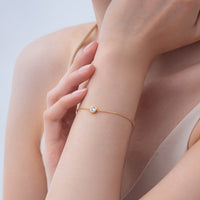
The piece they're describing → Gold Anklet for Women — 18K Gold Plated, Dainty Beach Ankle Bracelet
Personalize Yours


