


Amethyst is one of the most recognized gemstones in the world — and one of the most misunderstood. Crystal communities talk about its healing frequency. Historians trace it to Greek mythology and medieval bishops. Geologists describe iron-lattice color centers. Jewelers recommend it as a February birthstone with serious durability. All of them are partially right, and none of them gives you the full picture.
At AJLuxe, we set genuine gemstones in 925 sterling silver — every stone is inspected for consistent colour and natural character before it goes into a piece.
This guide covers the complete story: what amethyst has meant across 4,000 years of history, what modern crystal healing says and where science agrees, which chakras it connects to, which zodiac signs it suits best, how to choose quality amethyst by variety and origin, which crystals pair with it, and how to wear it without damaging it.
| Property | Value |
|---|---|
| Chemical formula | SiO₂ (silicon dioxide) with iron impurities |
| Hardness (Mohs scale) | 7.0 — harder than most common stones; suitable for daily wear |
| Crystal system | Trigonal (hexagonal family) |
| Color range | Pale lavender → medium violet → deep royal purple |
| Primary chakras | Crown (Sahasrara), Third Eye (Ajna) |
| Birthstone month | February |
| Associated zodiac | Pisces (primary), Aquarius (secondary) |
| Top producing origins | Brazil, Uruguay, Zambia, Bolivia (ametrine) |
| Crystal pairings | Rose quartz, citrine, clear quartz, black tourmaline, lepidolite |
Amethyst is one of the most comforting stones in our guide to crystals for grief.
What Amethyst Means — Name, Mythology and 4,000 Years of Symbolism
The name comes from the ancient Greek amethystos — "not drunk." The Greeks believed wearing amethyst prevented intoxication and clouded judgment. They drank from amethyst-encrusted goblets and carved drinking vessels from the stone itself. Whether it worked is a separate question. What it tells us is that the stone's primary ancient meaning was clarity, sobriety, and protection from excess.
The mythological origin story involves Bacchus (Dionysus), the god of wine. In a Renaissance poem by Remy Belleau (1576), Bacchus pursued a young woman named Amethyst who refused him. The goddess Diana turned her to white quartz to protect her. Bacchus, ashamed, poured wine over the stone — turning it purple. This is a 16th-century invention, not an ancient legend. Scholars at the International Gem Society have confirmed it has no classical Greek or Roman origin. The actual ancient association was simpler: the color purple resembled wine, and wearing it was thought to counter wine's effects.
By ancient Egypt (circa 2000 BCE), amethyst carried a broader meaning. Egyptians carved it into amulets inscribed with zodiac animals and wore them in burial jewelry. The stone meant protection from harm and safe passage — a different set of associations than the Greek sobriety angle, but rooted in the same idea: the stone guards against what disturbs the mind.
In medieval Europe, amethyst became deeply tied to Christianity. Bishops and cardinals wore amethyst rings — the "bishop's stone" — because purple symbolized royalty and spiritual authority. According to medieval tradition, St. Valentine wore an amethyst ring engraved with the image of Cupid. The stone came to mean celibacy, piety, and peace of mind.
The thread through all these traditions is consistent: amethyst means mental clarity and protection from whatever disturbs the mind. Whether that disturbance is wine, chaos, spiritual doubt, or emotional upheaval — the stone has been worn as a guard against it for 4,000 years.
Modern Symbolic Meanings of Amethyst
Today, amethyst carries five main symbolic associations. They're drawn from its historical meanings and have been reinforced across centuries of use:
Clarity and sobriety. Still the oldest and most consistent meaning. Many people in recovery from alcohol or substance use choose amethyst intentionally — the historical symbolism resonates. It's not supernatural; it's symbolic. Wearing a stone that has meant "clear-headed" for 2,500 years is a meaningful act regardless of one's beliefs.
Wisdom and calm. The bishop's stone tradition gave amethyst a strong association with composed thinking and spiritual authority. Leaders and scholars have worn it across cultures specifically for this connotation.
Protection. Egyptian amulets, Greek goblets, medieval rings — in every tradition, amethyst has been placed on the body as a barrier against harm. Modern crystal healing extends this to energetic protection from external negativity.
Intuition and spiritual awareness. The crown and third eye chakra connections have made amethyst a default choice for meditation, spiritual practice, and developing intuition. This meaning is strongest in the contemporary crystal community.
Love and devotion. The St. Valentine association, reinforced by centuries of gifting, gives amethyst a secondary romantic meaning — particularly for February birthdays and as a Valentine's Day gift.


Amethyst Healing Properties — What Crystal Healers Say and What the Evidence Shows
Crystal healing attributes significant physical and emotional benefits to amethyst. It's worth being clear about the evidence: no peer-reviewed clinical research supports specific healing claims for any gemstone. What exists is centuries of tradition, consistent anecdotal reports, and plausible mechanisms through color psychology and mindfulness practice. That doesn't make the tradition worthless — it makes it something worth understanding honestly.
Physical healing associations: Support for sleep quality, headache relief, immune function, and skin health. Amethyst is one of the most commonly recommended stones for insomnia and stress-related physical symptoms. Practitioners place it under the pillow, on the nightstand, or at the crown of the head during relaxation.
Emotional healing associations: Anxiety relief, emotional stabilization, reduction of overactive thinking, and support during grief or loss. The calm-clarity association maps closely to these uses. Many users report that handling or wearing amethyst during stress has a grounding effect — a response color psychology supports, since violet tones tend to have a calming, introspective effect on the nervous system.
Metaphysical associations: Enhancing intuition, increasing receptivity to meditation, clearing energetic blockages, and strengthening connection to higher awareness.
Where science lands: There are no double-blind studies confirming gemstone healing. What exists is evidence for the placebo response (which is real and measurable), color psychology (which shows genuine physiological effects of color exposure), and mindfulness practices (which have strong clinical evidence for anxiety and sleep). If wearing amethyst helps you meditate more consistently, sleep better, or feel calmer — those outcomes are real, even if the mechanism is psychological rather than energetic.
The honest position: amethyst's healing associations have value as symbol and intention, and the outcomes people experience are genuine, even when the mechanism is uncertain.
Amethyst and the Chakras — Crown and Third Eye
Amethyst is associated with two of the seven main chakras: the crown chakra (Sahasrara) and the third eye chakra (Ajna).
Crown chakra (Sahasrara). Located at the top of the head, the crown chakra governs connection to higher consciousness, spiritual awareness, and transcendence. Its color is violet or white. Amethyst is the most commonly recommended stone for this chakra — its deep violet aligns directly, and its traditional associations with clarity and spiritual authority reinforce the connection. Practitioners place it at the crown during meditation or wear it as a pendant to draw energy upward.
Third eye chakra (Ajna). Located between the eyebrows, the third eye governs intuition, inner vision, and clarity of perception. Its color is indigo or deep purple — a direct match to amethyst's palette. Using amethyst at the third eye during meditation is a standard practice for developing intuition and reducing mental noise.
The dual chakra connection makes amethyst unusually versatile. Most stones are associated with one chakra. Amethyst's purple-to-violet range bridges two, making it useful for anyone working with both awareness and perception in their practice.
Amethyst and the Zodiac — February Birthstone, Pisces and Aquarius
Amethyst is the official February birthstone, recognized by the American Gem Society and most major gemological authorities. It became the modern February stone in 1912, replacing sapphire in the standardized birthstone list. For anyone born in February, amethyst carries birthstone significance in addition to its symbolic meaning.
| Sign | Dates | Connection | How Amethyst Supports This Sign |
|---|---|---|---|
| Pisces ♓ | Feb 19 – Mar 20 | Primary birthstone | Grounds Pisces' emotional depth; sharpens intuition without overwhelm |
| Aquarius ♒ | Jan 20 – Feb 18 | Secondary / traditional | Supports Aquarius' innovative thinking; adds calm to high mental energy |
| Virgo ♍ | Aug 23 – Sep 22 | Vedic tradition | Aids Virgo's perfectionist mind; reduces overthinking |
| Sagittarius ♐ | Nov 22 – Dec 21 | Traditional | Tempers Sagittarius' impulsiveness; supports focus on one direction |
| Capricorn ♑ | Dec 22 – Jan 19 | Traditional | Softens Capricorn's rigidity; supports work-life balance and rest |
In Vedic astrology, amethyst is associated with Saturn and Jupiter — both planets of structure, wisdom, and long-term perspective. This aligns with the historical clarity-and-wisdom meanings and extends them astrologically.

Amethyst Varieties and Origin Quality Guide — Which to Choose and Why
Not all amethyst is the same. The color, quality, and spiritual associations vary significantly by variety and origin — a section no competitor covers properly.
| Variety | Appearance | Meaning / Use | Best For |
|---|---|---|---|
| Purple amethyst | Medium to deep violet; the classic form | Full spectrum of meanings; most versatile | Everyday jewelry, chakra work, gifts |
| Pink amethyst | Pale blush to rose; lighter, softer | Gentler energy; emotional healing, love, compassion | Rose quartz alternative; grief support; self-love work |
| Chevron amethyst | V-shaped purple and white quartz banding | Combines amethyst clarity with quartz amplification | Dream work, psychic development, deep meditation |
| Green amethyst (Prasiolite) | Pale to medium green; rare naturally | Connects heart and crown chakras; compassion + wisdom | Heart-centered spiritual work; unique jewelry |
| Ametrine | Half purple / half golden yellow; bicolor | Combines amethyst (clarity) + citrine (abundance) | Decision-making; balancing spiritual and material goals |
Origin quality guide: Where an amethyst comes from matters more than most buyers realize.
Zambian amethyst is widely considered the finest in the world. Deep violet to reddish-purple with excellent saturation and minimal color zoning. Stones tend to run smaller but more intense in color than Brazilian material. If you want the richest purple for a statement piece, Zambian is the benchmark.
Uruguayan amethyst offers the second tier of quality: deep to medium violet with good saturation and larger crystal formations. Uruguay produces commercially prized material because the color depth rivals Zambia but the stones grow larger — excellent for pendants and rings.
Brazilian amethyst is the most abundant. Most affordable jewelry-grade amethyst is Brazilian — pale to medium lavender, sometimes color-zoned (paler at the tips). High-quality material from Brazil's Rio Grande do Sul region can match Uruguayan quality. Budget-grade Brazilian material is much lighter and more variable.
Bolivian ametrine (the purple-gold bicolor variety) comes almost exclusively from the Anahi mine in Bolivia — the only major commercial source of natural ametrine in the world.
Note on treatment: A large proportion of commercial amethyst has been heat-treated to deepen or stabilize color, or to convert pale material to green (prasiolite). Heat treatment is standard and widely accepted in the gem industry. Ask your jeweler: "Is this natural color or heat-treated?" Natural deep-color Zambian or Uruguayan amethyst commands a premium. Heat-treated material isn't inferior in durability — only in rarity.
Crystal Pairings — What Works Well with Amethyst
Amethyst pairs well with several stones, each combination targeting a different intention:
Amethyst + Rose Quartz. The most popular pairing. Amethyst brings mental clarity; rose quartz brings emotional openness and self-compassion. Used for healing heartbreak, grief, and self-critical thinking. Wear them together or keep both on a nightstand.
Amethyst + Citrine. This is the ametrine pairing in crystal form — clarity meets abundance. Practitioners use this combination for manifestation work, creative projects, and decision-making under pressure. Citrine's uplifting, warm energy offsets any tendency toward amethyst-driven introspection. See our full guide to citrine meaning and properties.
Amethyst + Black Tourmaline. The protection pairing. Amethyst clears mental noise; black tourmaline grounds and shields. Used by anxious or highly sensitive people, energy workers, and anyone dealing with environmental stress or difficult relationships.
Amethyst + Clear Quartz. Clear quartz amplifies whatever it's paired with. Adding it to amethyst is thought to strengthen and extend amethyst's clarity and spiritual connection — a standard combination in crystal meditation grids.
Amethyst + Lepidolite. Lepidolite contains natural lithium and is used extensively in crystal healing for anxiety and sleep. Pairing it with amethyst is one of the most recommended combinations for insomnia, racing thoughts, and stress-related physical symptoms.
For detailed water safety and care advice, see our dedicated guide: Can Amethyst Go in Water?.
Amethyst Jewelry — Buying Guide, Metal Pairings and Care
Amethyst's Mohs hardness of 7 makes it durable enough for daily wear in rings, necklaces, bracelets, and earrings. It's harder than most organic gemstones (pearl is 2.5–4.5; turquoise is 5–6). But there are specific risks most buyers don't know about.
Buying guide: Color depth is the primary quality indicator. Deep, evenly saturated violet without visible color zoning indicates higher quality material. Pale lavender is fine for fashion jewelry; deep violet is what you want for a piece that holds its impact over years.
Metal pairing matters significantly. Yellow gold warms amethyst's cool violet — rich, historical, echoes medieval bishop jewelry. White gold and sterling silver amplify the cool clarity of the purple — more modern, cleaner. Rose gold creates a striking warm/cool contrast that works particularly well with lighter lavender amethyst.
The wearability truths most jewelers skip:
Sunlight fades amethyst. This is not a myth. Amethyst's color comes from iron impurities and radiation-induced color centers in its crystal lattice. Prolonged UV exposure — sitting in a sunny window, leaving on a car dashboard, extended outdoor wear for months — gradually lightens the color. The effect is irreversible. Store amethyst away from direct sunlight.
Water is generally safe; chemicals are not. Amethyst can go in water — brief contact with shower water, handwashing, and rain won't damage it. Chlorinated water (pools, hot tubs), saltwater, and harsh cleaning chemicals attack the surface finish and can infiltrate fractures. Take amethyst jewelry off before swimming.
Ultrasonic cleaners can damage amethyst. If your amethyst has inclusions or fractures, ultrasonic vibration can worsen them and strip surface treatments. Use a soft cloth and mild soapy water instead. Rinse thoroughly and dry immediately.
Heat treatment is common and harmless to wearability. Natural deep-color Zambian or Uruguayan amethyst commands higher value, but treated amethyst is not a lesser stone for wearing purposes — heat treatment is industry-standard and doesn't affect durability.
For amethyst birthstone necklaces and pendants in sterling silver, explore the AJLuxe birthstone necklace collection.
How to Identify Real Amethyst
With amethyst's popularity, fakes are common — ranging from dyed glass to synthetic corundum passed off as natural. Here's how to tell them apart with confidence.
Types of "Fake" Amethyst You'll Encounter
- Dyed quartz or glass: The most common fake. Glass feels warmer than quartz, shows no natural inclusions, and often has artificially uniform color distribution — real amethyst has uneven color zoning.
- Synthetic amethyst: Lab-created amethyst is real silicon dioxide (SiO₂) — chemically identical to natural amethyst — but grown in a controlled environment. It is NOT a fake; it's just not natural. Reputable sellers disclose this. Synthetic amethyst typically has fewer inclusions and more consistent color.
- Amethyst-colored glass: Purple glass has no crystalline structure, feels light and warm, and may show bubbles under magnification.
- Dyed howlite or quartz: Low-cost stones dyed purple to mimic amethyst. The color often concentrates in cracks and fades over time.
How to Test Your Amethyst at Home
| Test | Real Amethyst | Glass / Fake |
|---|---|---|
| Temperature | Feels cool to the touch, warms slowly | Warms up quickly to body temperature |
| Inclusions | Natural feather-like inclusions, color zoning under magnification | No inclusions (glass), or perfect uniformity (synthetic) |
| Color distribution | Uneven — deeper at tips and phantoms | Uniform throughout (too perfect) |
| Hardness | Mohs 7 — won't scratch with a steel file | Glass ~5.5 — scratches more easily |
| Weight | Slightly heavier than glass of same size | Lighter or same; lead glass can be heavier |
Bottom line: For jewelry, always buy from a seller who discloses whether the stone is natural, synthetic, or simulated. Synthetic amethyst is a legitimate, ethical choice — particularly for those who value consistent color or a lower price point. The GIA (Gemological Institute of America) recommends requesting a lab certificate for any high-value amethyst purchase.
Amethyst is one of the most beloved protective stones in our guide to crystals for protection — discover all 9 protective crystals and how to use them.
Frequently Asked Questions About Amethyst Meaning
See how amethyst fits into the bigger picture: our crystal necklace meaning guide covers every major gemstone — what it symbolises, which intention it aligns with, and how to choose the right stone for you.
What is the spiritual meaning of amethyst?
Amethyst spiritually represents clarity, sobriety, wisdom, and protection from mental disturbance. The ancient Greek meaning has evolved into a broader symbol of clear-headed calm. In modern spiritual practice, it primarily represents higher awareness, intuition, and connection to the crown and third eye chakras.
What chakra is amethyst associated with?
Amethyst connects to two chakras: the crown chakra (Sahasrara) and the third eye chakra (Ajna). Most stones are associated with one chakra — amethyst's dual connection makes it unusually versatile for meditation and spiritual practice.
Is amethyst the February birthstone?
Yes. Amethyst is the official February birthstone recognized by the American Gem Society. It became the modern February stone in 1912 and is associated with Aquarius and Pisces.
What are the healing properties of amethyst?
Crystal healing traditions attribute amethyst with support for sleep, anxiety, headaches, and emotional stabilization. No clinical research confirms gemstone healing. However, many people experience real outcomes through psychological mechanisms including the placebo response and color psychology. The tradition is worth taking seriously even if the mechanism isn't fully understood.
Does amethyst help with sleep and anxiety?
Many people use amethyst specifically for sleep and anxiety. Practitioners recommend placing it on the nightstand or under the pillow. Pairing amethyst with lepidolite is the most recommended crystal combination for insomnia and racing thoughts.
How do you tell if amethyst is real or fake?
Three tests: (1) Temperature — real amethyst stays cool; glass fakes warm quickly. (2) Hardness — Mohs 7 amethyst scratches glass without being scratched. (3) Color zoning — natural amethyst often shows slight color variation; uniformly perfect color at very low prices suggests glass or synthetic material.
Can amethyst go in water?
Brief contact with clean water is safe. Avoid chlorinated water, saltwater, and harsh cleaners — these damage the surface finish and penetrate fractures. Take amethyst jewelry off before swimming.
Can amethyst go in sunlight?
Not for extended periods. UV light gradually and irreversibly fades amethyst's color. Store it away from direct sunlight and avoid leaving jewelry in sunny windows or car dashboards.
What crystals pair well with amethyst?
The top five pairings: rose quartz (emotional healing), citrine (manifestation), black tourmaline (protection), clear quartz (amplification), lepidolite (anxiety and sleep).
Which amethyst origin has the best quality?
Zambian amethyst for maximum color intensity. Uruguayan for deep color in larger stones. Brazilian varies widely — high-grade material is excellent; budget-grade runs much paler.
Are there any negative effects of wearing amethyst?
Rare. Some sensitive people report unusually vivid dreams when wearing amethyst close to the head at night. Physically, amethyst has no toxicity or allergen properties when set in hypoallergenic metals.
What does it mean when amethyst breaks?
In crystal healing tradition, a stone breaking signals it has served its purpose. Physically, amethyst fractures when dropped on hard surfaces or subjected to ultrasonic cleaning when internal fractures are present. Whether it requires spiritual interpretation is personal.
If you're drawn to deep red gems with centuries of symbolic meaning, read our full guide to garnet meaning — symbolism, varieties, and January birthstone context.
If you love pink crystals with deep symbolic meaning, read our complete guide to rose quartz meaning — the stone of unconditional love, varieties, heart chakra guide, and how to tell real from fake.
Amethyst is the official birthstone for February. If you're shopping for a February birthday gift or want a deeper dive into amethyst as a birthstone — including color quality guide, gift occasion table, and care tips — see our complete February birthstone guide.
Shop at AJLuxe: Amethyst Pendant Necklace — genuine amethyst teardrop, 925 sterling silver ($39.99) · February Birthstone Necklace — amethyst infinity pendant ($42.99) · Amethyst Birthstone Studs — 4mm CZ in 925 silver ($26.99)
Aquarius spans both January and February, so its birthstones connect directly to two months. Explore the full zodiac guide: Aquarius Birthstone: Amethyst, Garnet & The Complete Zodiac Guide.
Amethyst pairs exceptionally well with moonstone — both enhance intuition and spiritual awareness, but from complementary directions: amethyst brings clarity and psychic shielding while moonstone opens the intuitive channel. Read our full moonstone meaning guide to understand this pairing in depth.
Shop AJLuxe Crystal Jewelry
Birthstone & gemstone necklaces · 925 sterling silver · from $22.99
Browse Crystal Jewelry →Final Thoughts
Amethyst has outlasted every civilization that first loved it. Greeks wore it to stay clear-headed. Egyptians carved it into protective amulets. Medieval bishops made it a symbol of spiritual authority. Crystal healers today use it for meditation, sleep, and anxiety. Every tradition found something different in the same purple stone — and the thread connecting all of them is the same: clarity, protection, and peace of mind.
Whether you're drawn to amethyst for its February birthstone significance, its chakra associations, its 4,000 years of symbolism, or simply because you love deep violet — you're participating in one of jewelry's oldest traditions. For deep-color amethyst in sterling silver settings, explore the AJLuxe birthstone necklace collection.
Amethyst is the #1 recommended stone in our crystals for anxiety guide — see all 8 calming stones and how to use them.
Written by Vaishakhi Ajmera — founder and jewelry specialist at AJLuxe.
Amethyst is one of our top picks in the guide to the best crystals for healing.
Last updated: June 2026.Amethyst is one of 7 focus crystals in our guide to crystals for focus — the complete guide to stones for concentration, studying, and productivity.
Amethyst is the #1 recommended crystal in our guide to crystals for sleep.
For a complete overview of crystals by intention, visit our Healing Crystals Guide — the full beginner's resource covering all 20 crystal intentions, chakras, cleansing methods, and how to use crystals daily.
See also: Amethyst vs Purple Sapphire: Full Comparison
Explore more: Crystal Jewelry: Meanings & Guides
For another calming blue crystal with throat and crown chakra energy, see our guide on angelite meaning and healing properties.
You Might Also Like
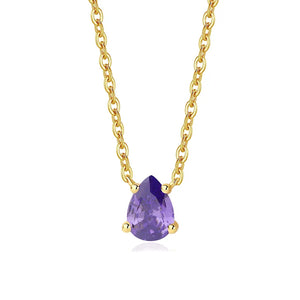
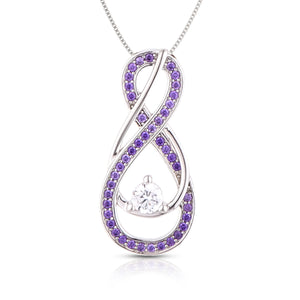
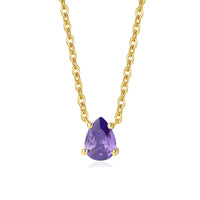
The piece they're describing → Amethyst Pendant Necklace for Women — Teardrop Amethyst Stone, 925 Sterling Silver
Personalize Yours

