

Citrine is one of the few crystals with almost universal positive associations. Where many stones carry warnings and nuances — this crystal for this chakra, not that sign — citrine is broadly welcoming. Its name comes from the French citron, meaning lemon, and its color does exactly what you'd expect a lemon-yellow stone to do: it brings energy, warmth, and light.
This guide covers the full picture: what citrine means across history and cultures, its varieties and how to tell them apart, the healing and chakra properties, which zodiac signs it works best for, what stones to pair it with, and how to choose and care for citrine jewelry.
The History of Citrine
Citrine has been used as a decorative stone for at least 6,000 years. The earliest known citrine jewelry was found in ancient Greece and Rome, where it was used as a protective talisman against evil thoughts and snake venom — the yellow color linked it to the protective power of the sun.
Ancient Rome. Roman nobles wore citrine rings and carved citrine intaglios as status symbols. The stone's warm color and relative hardness (Mohs 7 on the hardness scale) made it practical for both jewelry and carved seals.
Medieval Europe and the "merchant's stone." The association between citrine and wealth solidified during the medieval period. Merchants kept citrine in their cash boxes and wore it as a ring to attract prosperity — hence the enduring name "merchant's stone" or "money stone." This tradition persists in contemporary crystal practices and Feng Shui. Citrine remains one of the most-recommended crystals for money and wealth in modern practice.
Victorian Scotland and Queen Victoria. The Scots made citrine fashionable again in the 19th century, setting it into brooch pins, kilt pins, and sgian-dubh handles. Queen Victoria's love of Scottish jewelry — she wore Highland dress jewelry prominently throughout her reign — helped elevate citrine to a widely recognized gemstone in European fashion.
Modern use. GIA notes that most citrine sold today is heat-treated amethyst or smoky quartz that turns yellow-orange when heated. Natural citrine is comparatively rare and typically paler in color. The gemstone industry treats both as "citrine" — but knowing the difference matters when choosing for spiritual intention.
What Citrine Means: The Core Symbolism
Citrine's symbolic meanings cluster around a consistent theme: personal power, abundance, and optimism. Here's how that breaks down:
Abundance and prosperity ("the merchant's stone"). The oldest and most consistent association. Citrine is specifically connected to attracting financial abundance — not luck (that's the domain of green aventurine or pyrite), but the active, earned kind of wealth that comes from confidence, clear thinking, and decisive action. The merchant who keeps citrine in the cash register isn't wishing for luck; they're setting an intention for prosperity through their own work.
Confidence and self-worth. Citrine activates the solar plexus chakra (more on that below), which governs self-esteem, personal power, and willpower. Wearing citrine is associated with increasing self-assurance — the ability to act on your own judgment rather than seeking external validation. This is why citrine is often recommended for presentations, job interviews, and any situation that calls for visible personal authority.
Creativity and mental clarity. Citrine is strongly associated with the creative process. Its warming energy is said to stimulate imagination and dissolve mental blocks — particularly the kind of creative paralysis that comes from overthinking. Writers, artists, and entrepreneurs have historically favored it for this reason.
Joy and optimism. The color does the psychological work here — yellow is the color most strongly associated with optimism and happiness in color psychology. Citrine's warm yellow carries this association into the wearable realm. It's specifically recommended for people working through periods of depression or emotional heaviness — not as a replacement for professional support, but as an intentional reminder of warmth and forward movement.
Protection from negativity. Uniquely among crystals, citrine is said to not accumulate negative energy — it's one of the few stones that crystal practitioners say doesn't need regular cleansing (though most still recommend it). This makes it practical for environments with heavy emotional traffic.
Citrine Color Varieties: Lemon, Madeira, Golden, and Honey
This is the section most citrine articles skip — and it matters for both aesthetics and intention. Not all citrines are the same color, and the different hues carry subtly different associations and very different price points.
| Variety | Color | Source / Notes | Associated Meaning |
|---|---|---|---|
| Lemon Citrine | Pale yellow, bright and clear | Often natural; lighter hue typical of untreated citrine | Mental clarity, fresh starts, intellectual energy |
| Golden Citrine | Warm yellow to amber gold | Most common commercial variety; typically heat-treated | Abundance, confidence, solar plexus activation — the classic "merchant's stone" |
| Madeira Citrine | Deep orange-amber, like Madeira wine | Brazil; heat-treated from deep amethyst; most prized color for faceted gems | Bold confidence, ambition, decisive action; strongest prosperity energy |
| Honey Citrine | Warm golden-brown, honey-like depth | Mid-range heat treatment depth | Warmth, stability, grounded abundance; good for long-term financial goals |
| Palmeira Citrine | Orange-yellow, named for Brazilian town | Specific Brazilian origin; sometimes used as a trade name | Warmth and vitality; similar to golden citrine |
Which variety to choose? For everyday jewelry and general abundance intention, golden citrine is the practical standard. For maximum visual impact in a statement ring or pendant, Madeira orange is the most dramatic and valuable. For a subtle, wearable option that doesn't read as yellow, lemon citrine pairs well with white gold or silver settings and works well in minimalist designs.
Citrine Healing Properties
Crystal healing traditions associate citrine with a wide range of physical, emotional, and spiritual benefits. These are traditional associations — not medical claims.
Emotional healing. Citrine is specifically recommended for lifting heavy emotions — depression, anxiety, excessive self-criticism, and fear of failure. Its solar energy is thought to interrupt negative thought patterns by literally warming the emotional body. Crystal practitioners often recommend citrine for anyone going through a career transition, a creative block, or a period where confidence has been knocked. The specific emotion citrine targets: self-doubt. It doesn't address grief (that's moonstone or rose quartz) or anger (carnelian). It's the stone for when you know what you want but don't quite believe you deserve it.
Physical associations. Traditional crystal healing connects citrine to digestive health, thyroid function, and metabolism — all governed by the solar plexus region where citrine's energy is said to be most active. It's also associated with skin health and circulation. These are traditional associations, not medical diagnoses.
Spiritual properties. Citrine is one of the few stones connected to three chakras simultaneously: the solar plexus (primary), the sacral chakra (creativity, sensuality, emotional flow), and the crown chakra (higher consciousness, spiritual connection). Most yellow stones only activate the solar plexus — citrine's orange-toned varieties reach into the sacral, and its clarity at high-quality grades gives it access to crown energy.
Citrine and the Chakras
The solar plexus chakra (Manipura, located above the navel) is citrine's primary chakra. Its Sanskrit name means "lustrous gem," and its color is yellow — the same warm yellow as citrine. A balanced solar plexus chakra produces confidence, decisive action, and a healthy sense of personal identity. An imbalanced one produces either excessive control and aggression (overactive) or low self-esteem and passivity (underactive).
Citrine is specifically recommended for an underactive solar plexus — for people who struggle to take action on their own behalf, who defer excessively to others, or who feel stuck. Wearing citrine jewelry at the solar plexus level (pendant length) is the most direct physical placement.
Sacral chakra (Svadhisthana). The deeper orange varieties of citrine — Madeira and honey — carry enough orange energy to activate the sacral chakra as well. The sacral chakra governs creativity, sensuality, and emotional fluidity. Madeira citrine is sometimes recommended specifically for creative work and for anyone processing blocked emotions around pleasure and joy.
Crown chakra (Sahasrara). High-clarity, pale lemon citrine is connected to the crown chakra in some traditions — particularly those that associate the crown with solar light rather than the more common violet association. This connection is less universal but present in Vedic and some Western esoteric systems.
Citrine Zodiac Associations and the November Birthstone
Citrine is one of November's two birthstones (the other is topaz). As a November stone, it's strongly associated with Scorpio (October 23 – November 21) and Sagittarius (November 22 – December 21), though its abundance and confidence energy makes it valuable for any sign.
| Zodiac Sign | How Citrine Helps | Primary Benefit |
|---|---|---|
| Scorpio ♏ | Balances Scorpio's intensity with lightness; encourages releasing control | Emotional release, joy, lightening heavy energy |
| Sagittarius ♐ | Amplifies Sagittarius's optimism and adventurous energy; supports abundance | Manifesting goals, expanding vision, prosperity |
| Aries ♈ | Adds confidence and creative momentum to Aries's natural drive | Confidence boost, creative action |
| Leo ♌ | Amplifies Leo's solar energy and leadership qualities; good for performance | Stage presence, leadership, warmth |
| Gemini ♊ | Helps Gemini focus scattered mental energy; improves follow-through | Mental clarity, decisiveness, creative focus |
Crystal Pairings: What to Combine with Citrine
This is a gap no competitor covers — and it's a high-engagement topic for anyone already interested in crystals. Crystal combinations work by either amplifying similar energies or creating complementary balance.
Citrine + Clear Quartz — the amplifier pairing. Clear quartz is called the "master amplifier" — it intensifies the energy of whatever stone it's paired with. Citrine + clear quartz doubles down on abundance and clarity intention. Use this combination when you need maximum focus on a specific financial or creative goal.
Citrine + Amethyst — the balance pairing. Citrine and amethyst are actually the same mineral (quartz) — and when they grow together naturally, the result is called ametrine, a bicolor stone. Paired as separate stones, citrine's solar action energy balances amethyst's lunar intuitive energy. Good for anyone who needs both clarity of vision (amethyst) and confidence to execute (citrine). Recommended for creative professionals and entrepreneurs.
Citrine + Carnelian — the action pairing. Carnelian is the stone of motivation, courage, and taking action. Paired with citrine's abundance and confidence energy, this combination is specifically for people who know what they want but struggle with follow-through. Both are warm-toned, fire-energy stones — they amplify rather than balance each other.
Citrine + Green Aventurine — the prosperity pairing. Green aventurine is specifically associated with luck and opportunity — the "stone of opportunity." Combined with citrine's merchant energy, this is the classic prosperity combination. Keep both stones in a wallet or a home office for amplified abundance intention.
Citrine + Pyrite — the wealth pairing. Pyrite (iron sulfide, "fool's gold") is associated with material wealth, financial shielding, and professional success. Combined with citrine, this is the most commercially focused crystal pairing — oriented toward career advancement, business success, and financial growth rather than creative or emotional work.
Citrine + Sunstone — the joy pairing. Both are solar-energy stones associated with warmth, optimism, and confidence, but sunstone leans toward personal power and leadership while citrine leans toward abundance and creativity. Combined, this pairing is recommended for anyone stepping into a more visible role — a promotion, a public-facing project, or simply reclaiming joy after a difficult period.
Avoid pairing citrine with: stones with very different energy — particularly calming, cooling, or grief-processing stones like black obsidian, labradorite, or blue kyanite. The energies work against each other rather than complementing.
Citrine as a Gift: Occasions and Meaning
Citrine is one of the most gift-appropriate crystals because its energy is universally positive and the color is warm and accessible. Here's when a citrine gift lands with maximum meaning:
| Occasion | Why Citrine Works |
|---|---|
| November birthday | November birthstone — the symbolism is built in for Scorpios and Sagittarians |
| New job / promotion | "Merchant's stone" energy for abundance and success in a new role |
| Starting a business | Citrine in the workspace or worn during work hours invites prosperity and confidence |
| Recovery / fresh start | Citrine's joy and optimism energy is powerful for anyone stepping out of a difficult period |
| Graduation | Confidence and abundance for the next chapter — especially meaningful for anyone entering a competitive field |
| Self-gift | Wearing citrine as a personal intention-setter for confidence and creative work |
Citrine Jewelry: How to Wear It and Care for It
Where to wear citrine for maximum effect. For solar plexus activation, wear citrine as a pendant at mid-chest length (18–20 inches). For sacral chakra work, wear it lower — a long pendant or a ring on the left hand. For mental clarity and crown chakra connection, wear pale lemon citrine as earrings. There are no strict rules — intention matters more than placement. But the jewelry type and wear location can reinforce the specific energy you're working with. A raw citrine charm necklace keeps the stone at that mid-chest pendant length without a faceted cut standing between you and the crystal.
Natural vs. heat-treated citrine. Most commercial citrine is heat-treated amethyst. It's visually indistinguishable in finished jewelry. Natural citrine tends to be paler yellow and found in Brazil's Bahia and Rio Grande do Sul states — it has a slightly more muted appearance than the vivid orange-amber of heat-treated material. From an energy perspective, crystal practitioners disagree: some hold that heat-treated citrine carries less "authentic" energy; others argue that the mineral structure is identical and the transformation simply brought out what was already there. Choose what aligns with your intention.
Care instructions. Citrine is a quartz at Mohs 7 — hard enough for everyday jewelry wear. However:
- Avoid prolonged sunlight exposure. Heat-treated citrine can fade back toward the original amethyst color over time with sun exposure. Keep citrine jewelry out of direct sunlight when not wearing it. Natural citrine is more stable but should still be stored away from intense light.
- Avoid heat. Don't leave citrine in hot cars or near stovetops.
- Clean with mild soap and warm water. A soft brush and gentle soap is sufficient. Avoid ultrasonic cleaners if the stone has visible inclusions — the vibration can fracture existing internal fractures.
- Cleansing the energy. Most crystal traditions say citrine doesn't accumulate negative energy and doesn't need regular cleansing — but a monthly rinse under cool running water and a brief sunlight charge (morning sun, not extended exposure) is a common practice.
For full guidance on caring for jewelry with gemstones, read our how to clean jewelry at home guide.
Citrine vs. Yellow Topaz: How to Tell Them Apart
Both are November birthstones. Both are yellow to orange. Both are used in similar jewelry settings. Here's how to differentiate them:
| Citrine | Yellow Topaz | |
|---|---|---|
| Mohs hardness | 7 — good durability | 8 — harder, but has cleavage planes that make it brittle |
| Price | Lower — widely available, large sizes affordable | Higher — rarer, especially in imperial (orange-yellow) grade |
| Best color | Madeira orange is most valuable citrine color | Imperial topaz (orange-yellow with pink overtone) is most valuable |
| Spiritual meaning | Abundance, confidence, solar plexus — the "merchant's stone" | Truth, forgiveness, joy — different energy tradition |
| Confusion factor | Often sold as topaz (incorrectly); "Madeira topaz" and "Bahia topaz" are trade names for citrine | Genuine topaz is aluminum fluorosilicate; citrine is silicon dioxide (quartz) |
The names "Madeira topaz," "Bahia topaz," and "Spanish topaz" are all trade names for citrine — not actual topaz. This labeling practice is discouraged by Jewelers of America but still appears in some markets. If you're specifically buying topaz, verify the mineral name on the certificate.
Related reading: yellow gemstones compared — how citrine stacks up against yellow topaz, yellow sapphire, and amber on hardness and price.
Related reading: Citrine zodiac signs.
Related reading: Citrine vs yellow quartz.
Related reading: How to use citrine.
Related reading: Morganite meaning.
Related reading: Citrine vs yellow sapphire.
Related reading: Charoite meaning.
Related reading: Citrine jewelry rings: styles, settings & how to choose one.
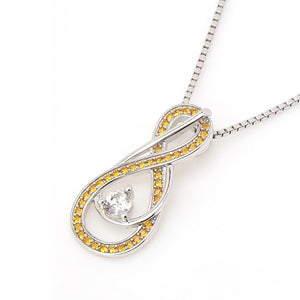
Shop the November Birthstone Necklace
925 sterling silver, left unplated, with a yellow-orange cubic zirconia infinity pendant — disclosed, not sold as genuine topaz or citrine. Nickel-free, $59.99.
Shop the November Necklace →Related reading: Apatite meaning.
Frequently Asked Questions
What is citrine good for?
Citrine is specifically good for building confidence, attracting abundance and financial success, stimulating creativity, and lifting low-energy emotional states like depression, self-doubt, and creative blocks. It activates the solar plexus chakra — the energy center for personal power and willpower. Wearing it is associated with increased self-assurance and a more optimistic mental state.
What does citrine crystal mean spiritually?
Spiritually, citrine represents the energy of the sun — warmth, life force, clarity, and personal power. It's known as the "merchant's stone" for its traditional association with prosperity and financial success. In chakra traditions, it activates the solar plexus (confidence and willpower), sacral (creativity and joy), and crown (higher consciousness) chakras. It's one of the few crystals said to hold positive energy without accumulating negative energy.
Who should wear citrine?
Citrine is most beneficial for people who struggle with self-confidence, creative blocks, financial anxiety, or low motivation. It's the birthstone for Scorpio and Sagittarius (November). Crystal traditions also recommend it for Aries, Leo, and Gemini. In Vedic astrology, citrine strengthens the Sun's influence and is recommended for those with a weak Sun in their birth chart.
Is most citrine actually heat-treated amethyst?
Yes. The majority of commercial citrine sold today is amethyst or smoky quartz that has been heated to produce the yellow-orange color. Natural citrine forms directly as yellow quartz and is comparatively rare. The two look nearly identical in finished jewelry. From a crystal healing perspective, practitioners are divided — some say heat-treated citrine carries different energy; others say the quartz structure is what matters, not the origin of the color.
What is Madeira citrine?
Madeira citrine is the deep orange-amber variety of citrine, named for its resemblance to Madeira wine. It's the most prized color for faceted citrine gems — deeper, richer, and more dramatic than standard yellow citrine. It's primarily heat-treated from deep Brazilian amethyst. In crystal traditions, Madeira citrine carries the strongest prosperity and confidence energy due to its combination of yellow (solar plexus) and orange (sacral chakra) frequencies.
What chakra is citrine for?
Citrine's primary chakra is the solar plexus (Manipura) — the energy center above the navel that governs self-esteem, personal power, and willpower. Deeper orange varieties also activate the sacral chakra (creativity, sensuality, joy). High-clarity pale citrine is connected to the crown chakra in some traditions. For solar plexus work, wear citrine as a mid-chest pendant at 18–20 inches.
Can citrine go in sunlight?
Brief morning sunlight is fine for charging citrine, but extended sun exposure will fade heat-treated citrine back toward its original amethyst color over time. This is especially true for Madeira and golden varieties. Natural citrine is more stable but should still be protected from prolonged direct sunlight. Store citrine jewelry in a drawer or jewelry box rather than on a windowsill.
What crystals pair well with citrine?
The strongest pairings: citrine + clear quartz (amplifies abundance energy), citrine + amethyst (balances solar action with lunar intuition — they're the same mineral, quartz, and grow together naturally as ametrine), citrine + carnelian (doubles motivation and follow-through), citrine + green aventurine (the classic prosperity combination), citrine + pyrite (wealth and career success focus). Avoid pairing citrine with grounding/cooling stones like obsidian or blue kyanite — the energies work against each other.
Citrine: The Stone That Works With You
Citrine's appeal is simple: it doesn't ask you to work against anything. It amplifies what's already there — the ambition you have but haven't fully expressed, the confidence that gets buried under overthinking, the creative energy that stalls at the starting line. It's the stone for people who know what they want.
If you're drawn to citrine for a November birthday, explore our birthstone necklace collection — citrine pairs beautifully with 18K gold plating in a pendant setting. For more on what stones mean and how they work together, read our moonstone meaning guide — another stone with strong celestial and emotional associations — or browse our evil eye bracelet meaning for protective stone symbolism. Shop AJLuxe necklaces — all hypoallergenic sterling silver with 18K gold plating.
Written by the AJLuxe team — specialists in personalized sterling silver jewelry. Last updated: May 2026.
All third-party trademarks, brand names and product names are the property of their respective owners. AJLuxe is not affiliated with, endorsed by, sponsored by, or otherwise connected to any third-party brand referenced in this article. Brand names are used solely for accurate comparative reference, and material descriptions reflect each brand's own published product specifications at the time of writing.
You Might Also Like
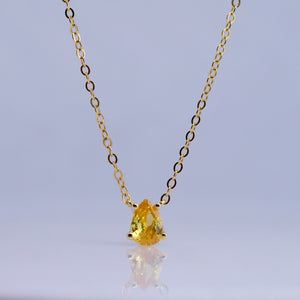
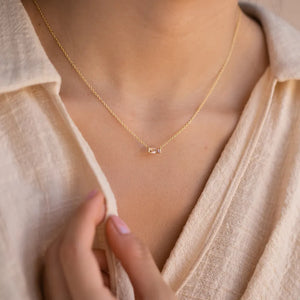

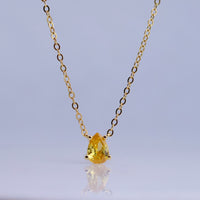
The piece they're describing → Citrine Pendant Necklace for Women — Yellow Citrine Teardrop, 925 Sterling Silver
Personalize Yours


