


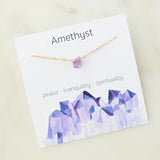
Angelite is one of the most visually peaceful crystals you'll find — a muted, powdery blue that looks almost like a slice of calm sky. But it's more than just a pretty stone. Since its discovery in Peru in 1987, angelite has become one of the most recommended crystals for communication, tranquility, and what practitioners call angelic connection.
In this guide you'll learn exactly what angelite means, what it's actually made of, which chakras it works with, and — critically — why you should never put it in water.
What Is Angelite?
Angelite is the trade name for blue anhydrite, a calcium sulfate mineral (CaSO₄) that forms when gypsum loses its water content over millions of years under heat and pressure. The name "anhydrite" comes from the Greek word anhydros, meaning "without water" — which tells you something important about how to care for it.
It was first discovered in Peru near Lake Titicaca in 1987, and Peru remains the primary source today. It also occurs in Germany, Mexico, Libya, and Egypt, but Peruvian angelite is considered the finest quality.
On the Mohs hardness scale, angelite rates 3–3.5 — about the same as a fingernail or a copper coin. That softness is why it chips easily and why water is especially damaging to it.
What Does Angelite Look Like?
Angelite is pale blue to periwinkle, often with white or grey veining and occasional brown or rust inclusions from iron deposits. No two pieces look identical. The surface has a waxy to pearly lustre when polished. Raw angelite has a more matte, chalky appearance.
Angelite Meaning and Symbolism
The name says it all: angelite is named for its association with angels and angelic communication. Crystal practitioners use it to open channels of communication — both with others and with higher spiritual guidance.
Its core meanings are:
- Peaceful communication — angelite is said to help you speak with compassion and clarity, especially in difficult conversations
- Angelic connection — believed to help attune you to higher frequencies and spiritual guides
- Tranquility — its energy is consistently described as calming, like a hand on the shoulder
- Forgiveness and compassion — angelite encourages letting go of anger and judgment, toward yourself and others
- Psychic awareness — at the third eye, it's used to enhance intuition and telepathic sensitivity
It's a stone for people who feel disconnected — from themselves, from others, or from something larger than both.
Angelite Healing Properties
| Type | Property | How Practitioners Use It |
|---|---|---|
| Emotional | Calms anxiety and overwhelm | Hold during meditation or stressful conversations |
| Emotional | Encourages forgiveness | Place over heart during reflection or journaling |
| Communication | Supports honest, compassionate speech | Wear near the throat (pendant) or hold before a difficult talk |
| Spiritual | Angelic and guide connection | Place on the crown during prayer or breathwork |
| Spiritual | Enhances psychic awareness and intuition | Use during third-eye meditation or tarot work |
| Physical | Linked to throat and thyroid balance | Place on throat area during relaxation |
| Physical | Inflammation and fluid regulation (traditional belief) | Carry in pocket; not a substitute for medical treatment |
| Energy | Transmutes fear into faith | Use when facing uncertainty or grief |
Crystal healing is a complementary practice. It is not a substitute for medical advice or treatment.
Angelite and the Chakras
Angelite works primarily with three upper chakras — the ones associated with expression, perception, and spiritual connection.
Throat Chakra (Vishuddha)
This is angelite's primary chakra. The throat chakra governs how you communicate — how honestly you speak, how clearly you listen, and whether your words match what you actually feel. When this chakra is blocked, people tend to struggle with self-expression, talk over others, or stay silent when they should speak. Angelite is used to gently open and balance this centre.
Third Eye Chakra (Ajna)
At the third eye, angelite is used to enhance intuition and inner knowing. It's a stone for people who want to trust their instincts more and doubt themselves less. Practitioners use it during meditation to quiet the analytical mind and access deeper perception.
Crown Chakra (Sahasrara)
The crown connects you to spiritual guidance and universal consciousness. Angelite at the crown is used for prayer, connecting with guides, or any practice where you're reaching beyond the immediate and personal. Its gentle energy makes it less overwhelming than stronger crown stones like amethyst or clear quartz.
Angelite vs Celestite — What's the Difference?
These two crystals are constantly confused. Both are pale blue, both work with upper chakras, and both carry gentle, high-vibration energy. But they're different minerals with different properties.
| Feature | Angelite | Celestite |
|---|---|---|
| Mineral | Anhydrite (calcium sulfate) | Celestine (strontium sulfate) |
| Colour | Periwinkle blue, opaque | Pale blue to clear, often translucent |
| Hardness | 3–3.5 Mohs | 3–3.5 Mohs |
| Water safe? | No — dissolves with prolonged water contact | No — also water sensitive |
| Primary chakra | Throat, third eye, crown | Crown, third eye |
| Energy focus | Communication, angelic connection, forgiveness | Angelic connection, divine peace, dream work |
| Texture | Smooth, waxy when polished | Often found in raw cluster formations |
| Best for | Speaking your truth, difficult conversations, throat chakra work | Meditation, dream journals, quiet spiritual practice |
If you want a stone specifically for communication and self-expression, choose angelite. If your focus is deeper meditation, dreamwork, or a purely elevated spiritual frequency, celestite is the better fit. Many practitioners use both together.
How to Use Angelite
Angelite's energy is gentle — it works well in everyday settings, not just formal meditation. Here are the most effective ways to work with it.
Wear It as a Necklace
Wearing angelite close to the throat is the most direct way to activate its communication properties. A birthstone necklace keeps the stone near the throat chakra throughout the day, supporting honest expression in conversations before you even think about it consciously. Choose a sterling silver setting — angelite's pale blue reads beautifully against cool-toned metals.
Meditate With It
Hold angelite in both hands or place it on your throat or third eye during seated meditation. Focus on releasing any tightness around communication — unspoken words, things you wish you'd said, difficult conversations you're avoiding. Many practitioners find angelite helps them sit with discomfort rather than react to it.
Place It in Your Space
A tumbled angelite on your desk softens the energy in rooms where conversations happen — meetings, shared workspaces, therapy rooms. It's used to encourage honesty and lower defensiveness in group settings.
Sleep With It Nearby
Angelite is used to support dream recall and access to guidance during sleep. Place it on your nightstand or under your pillow. It's considered one of the gentler stones for the bedroom — not as activating as selenite or moldavite.
Can Angelite Go in Water? (The Answer Is No — Here's Why)
This is the most important practical question about angelite, and most sources don't explain the reason. Here it is: angelite is anhydrite, and the word "anhydrite" literally means "without water." Anhydrite is calcium sulfate that formed by losing its water content. When it reabsorbs water, it can physically transform back into gypsum — a different mineral. That process changes the stone's structure permanently.
Even brief water contact won't destroy angelite on the spot, but repeated exposure causes it to lose its polished surface, develop white patches, and eventually crumble or crack. Don't submerge it, don't make a crystal water elixir with it, and don't charge it in rain.
For cleansing angelite, use these safe methods instead:
- Moonlight — leave it on a windowsill on a full moon night (safest method)
- Sound — singing bowls, bells, or tuning forks reset the energy without any contact
- Smoke — briefly pass through sage or palo santo smoke
- Selenite — place angelite on a selenite plate or slab overnight
- Sunlight — brief sunlight exposure is fine, but extended sun can fade the pale blue colour
Angelite and Zodiac Signs
Angelite is most closely associated with Aquarius (January 20 – February 18). Aquarius is the sign of communication, innovation, and humanitarianism — all qualities angelite supports directly. Aquarians sometimes struggle with emotional expression, saying what they feel rather than what they think. Angelite bridges that gap.
It's also commonly used by Pisces (February 19 – March 20). Pisces is the most spiritually sensitive sign of the zodiac, and angelite's connection to higher guidance resonates strongly with Piscean intuition. It helps Pisces communicate their inner world more clearly to others.
Other signs can benefit from angelite too — especially during periods when communication feels blocked, relationships feel strained, or spiritual connection feels distant.
Crystals That Pair Well With Angelite
Angelite works with most stones without conflict, but certain combinations amplify its effects.
- Lapis lazuli — both work with the throat and third eye; this pairing deepens truth-telling and wisdom
- Amethyst — amethyst grounds spiritual insight while angelite opens the channel; strong combination for meditation and dream work
- Aquamarine — both are calming, throat-activating blue stones; together they ease fear-based communication blocks
- Rose quartz — angelite opens the throat, rose quartz opens the heart; use together when working through emotional conversations
- Selenite — selenite clears energy and amplifies angelite's connection to higher guidance; excellent for spiritual practice
How to Tell If Angelite Is Real
Genuine angelite has a few consistent characteristics:
- Colour: Always pale blue — never vivid or saturated. If the blue is intense or neon, it's likely dyed howlite or magnesite.
- Inclusions: Authentic angelite often has white or grey veining and occasional rust-brown spots. Perfectly uniform blue with no variation is suspicious.
- Temperature: Real angelite feels cool to the touch and warms slowly — consistent with genuine stone rather than plastic.
- Weight: Angelite is denser than it looks. A palm stone should feel substantial, not hollow.
- Water test: Genuine angelite will develop a slightly chalky surface if you dampen a small spot with a fingertip — a reaction true anhydrite is known for. (Don't submerge it to test this.)
Frequently Asked Questions About Angelite
What is angelite used for?
Angelite is used primarily for three purposes: calming anxiety and promoting inner peace, supporting clearer and more compassionate communication, and connecting to spiritual guidance. It's one of the most commonly recommended stones for throat chakra work and for people who find it hard to speak their truth without fear or aggression.
Is angelite a real crystal?
Yes. Angelite is the trade name for blue anhydrite, a calcium sulfate mineral with the chemical formula CaSO₄. It's a naturally occurring stone found primarily in Peru. "Crystal" in the crystal healing world refers loosely to any mineral specimen — anhydrite forms in a monoclinic crystal system, so it qualifies by any definition.
Is angelite the same as celestite?
No. They're different minerals that happen to share a similar blue colour and spiritual association. Angelite is calcium sulfate (anhydrite); celestite is strontium sulfate. Celestite is often found in transparent to translucent clusters, while angelite is typically opaque. Both work with the upper chakras, but angelite focuses more on communication and celestite more on divine peace and dreamwork.
Can angelite go in water?
No — angelite should never be submerged in water. Because it's anhydrite (literally "without water"), it can absorb moisture and begin converting back into gypsum, which permanently damages the stone. Even prolonged exposure to humid air can dull the surface over time. Cleanse it with moonlight, sound, smoke, or by placing it on selenite instead.
Can angelite go in the sun?
Brief sunlight is fine for charging, but don't leave angelite in direct sun for extended periods. Like most pale blue stones, it can fade with prolonged UV exposure. An hour or two of morning sun is safe; leaving it on a sunny windowsill all day is not.
What chakra is angelite for?
Angelite primarily activates the throat chakra, which governs communication and self-expression. It also resonates with the third eye chakra (intuition and inner vision) and the crown chakra (spiritual connection and higher guidance). If you have a specific intention, placing it on the relevant chakra point during meditation focuses the work.
What zodiac sign is angelite for?
Angelite is most strongly associated with Aquarius, whose themes of communication, independence, and humanitarian thinking align closely with the stone's energy. It's also recommended for Pisces, particularly to help them express their rich inner world more clearly. That said, any zodiac sign can benefit from angelite when they're navigating communication challenges or seeking more peace.
How do you cleanse angelite?
The safest methods are moonlight (leave it on a windowsill overnight on or around a full moon), sound cleansing (singing bowls or bells), brief smoke cleansing (sage or palo santo), or placing it on a selenite slab overnight. Avoid water, saltwater, and extended direct sunlight, all of which can damage the stone's surface or colour.
What does angelite feel like energetically?
Most people describe angelite as quietly expansive — like a deep breath. It doesn't hit hard or fast the way moldavite or black tourmaline might. Instead it tends to soften edges: a sense of tension releasing in the chest, a feeling of being held rather than pushed. Many find it particularly helpful when they're overwhelmed, grieving, or in conflict with someone they care about.
Where is angelite found?
The most significant source is Peru, near Lake Titicaca, where angelite was first identified in 1987 during the Harmonic Convergence. It also occurs in Germany, Mexico, Libya, and Egypt. Peruvian angelite is generally considered the highest quality, with the most consistent colour and structural integrity.
Can you sleep with angelite?
Yes — angelite is one of the more bedroom-friendly crystals. Its gentle, high-vibration energy is not activating or disruptive to sleep. Many practitioners place it on their nightstand or under their pillow to support dream recall and access to guidance during rest. If you find any crystal makes sleep harder, simply move it further from the bed.
Final Thoughts
Angelite earns its name. It's a stone that does exactly what it's said to do — quiets the noise, opens the throat, and creates a kind of spaciousness around communication that most of us could use more of. It's not dramatic or intense. That's the point.
If you're drawn to healing crystal jewellery, a birthstone necklace is one of the most wearable ways to keep angelite's energy with you. Near the throat, where it can actually do its work, every single day.
How to Cleanse and Charge Angelite (Without Water)
Because angelite is anhydrite — literally "without water" — it's one of the few crystals where the standard cleansing advice (rinse under running water) will actively damage the stone. Even brief contact can leave it dull, pitted, or start dissolving the surface, and prolonged soaking can break it down entirely. If you wear angelite jewelry daily, knowing the safe alternatives matters more than it does for quartz or amethyst.
- Sound cleansing — hold the piece near a singing bowl, bell, or tuning fork for 30–60 seconds. Vibration is considered effective for clearing accumulated energy without any physical risk to soft stones.
- Selenite charging plate — resting angelite jewelry on a selenite slab overnight is the most common method practitioners recommend, since selenite is believed to cleanse other crystals on contact and is equally water-sensitive, so the pairing is low-risk.
- Moonlight, not sunlight — leave the piece on a windowsill during a full moon. Direct sunlight over time can fade angelite's periwinkle color, so moonlight is the safer choice for both cleansing and re-charging.
- Smoke cleansing — passing the piece through palo santo or sage smoke is a dry alternative many practitioners prefer specifically because it involves zero moisture.
For day-to-day care, remove angelite rings and pendants before washing hands, showering, or swimming, and store them separately from harder stones that could scratch its soft (3–3.5 Mohs) surface. A soft cloth wipe is all it needs between cleansings.
Zodiac pairing: Angelite is most closely associated with Aquarius and Pisces. For Aquarius, it's said to support the sign's natural gift for communication and humanitarian thinking; for Pisces, it complements an already-strong intuitive and empathic nature, reinforcing the third-eye and crown chakra work described above.
All third-party trademarks, brand names and product names are the property of their respective owners. AJLuxe is not affiliated with, endorsed by, sponsored by, or otherwise connected to any third-party brand referenced in this article. Brand names are used solely for accurate comparative reference, and material descriptions reflect each brand's own published product specifications at the time of writing.
You Might Also Like
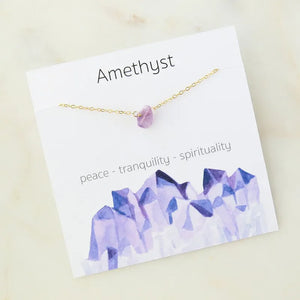
The piece they're describing → Stone Charm Necklace for Women — Raw Natural Gemstone Pendant
Personalize Yours


