


Most people picture a dark red stone when they hear "garnet." That's the birthstone image — January, deep crimson, Victorian lockets and grandmother's rings. It's accurate, but it's about 15% of the story.
Garnet is a family of related minerals that comes in almost every colour except blue: blood red, vivid orange, rose-violet, forest green, golden yellow, even colour-changing stones that shift from teal to purple in different light. Each variety has its own name, its own geographic origin, and — in crystal tradition — its own unique energy.
The word "garnet" comes from the Latin granatum, meaning pomegranate, because the deep red crystals resemble pomegranate seeds clustered inside their skin. That image has influenced garnet's symbolism ever since: seeds of life, passion, the fire within.
The Many Colors of Garnet: Beyond the Red Stone
Before diving into meaning, it's worth understanding what garnet actually is — because the colour you choose carries its own symbolic weight.
Garnet is not one mineral. It's a group of silicate minerals that share the same crystal structure but differ in chemical composition. Geologists recognise six main species: pyrope, almandine, spessartine, grossular, andradite, and uvarovite. Within these species are over 20 named varieties, many of which are rarer and more valuable than the familiar red.
The common thread is that garnets form under intense heat and pressure in metamorphic rocks — born from geological stress. This origin is not incidental to their symbolic meaning. Stones formed under pressure carry an energy associated with transformation, endurance, and the emergence of something precious from difficult conditions.

Garnet Variety Guide: Meaning, Colour & Origin
This is the section that no garnet article has. Every variety has its own meaning — both mineralogically and symbolically. The table below maps the eight major garnet varieties to their key properties and what each is best worn for.
| Variety | Colour | Primary Origin | Symbolic Meaning | Best Worn For |
|---|---|---|---|---|
| Pyrope | Deep crimson red | Czech Republic, India, South Africa | Passion, life force, deep devotion | January birthstone, romantic gifts, anniversaries |
| Almandine | Dark wine to brownish red | India, Sri Lanka, Brazil, USA | Protection, grounding, strength | Everyday wear, protection, root chakra |
| Rhodolite | Rose-violet to raspberry | Tanzania, Zimbabwe, India | Love, compassion, emotional healing | Romantic gifts, heart chakra, healing jewellery |
| Spessartine | Orange to orange-red | Namibia, Nigeria, Brazil | Creativity, confidence, bold energy | Creative projects, confidence, solar plexus |
| Tsavorite | Vivid forest green | Kenya, Tanzania | Abundance, growth, vitality | New beginnings, career intentions, heart chakra |
| Demantoid | Rich green (rare) | Russia (Ural Mountains), Namibia | Transformation, rare gifts, creative fire | Investment pieces, collectors, uniqueness |
| Grossular | Yellow, orange, or green | Mali, Tanzania, Russia | Prosperity, nourishment, warmth | Abundance intentions, solar plexus energy |
| Hessonite | Honey to cinnamon orange | Sri Lanka, India | Courage, self-awareness, new paths | Transitions, starting over, courage |
Most garnet jewellery uses pyrope or almandine — the familiar deep reds. But if you're choosing a garnet stone for its meaning, the variety matters as much as the stone itself.
Garnet Meaning & Symbolism
Across different traditions and time periods, garnet has carried a remarkably consistent set of meanings. That consistency is either a product of genuine energetic influence (the crystal tradition view) or of a very long shared cultural pattern (the historical view). Either way, the meanings are real in the sense that they shape how people relate to the stone.
Passion and Devotion
The deep red varieties of garnet — especially pyrope — have been associated with passionate love and lasting devotion for thousands of years. Ancient Romans gave garnet as a gift between lovers parting on long journeys, symbolising the fire that would keep the connection alive across distance. The pomegranate etymology reinforces this: a pomegranate is full of seeds, each representing potential, abundance, and the fertility of deep feeling.
In the modern context, garnet is one of the most meaningful stones to give in a romantic relationship — particularly as a second anniversary stone (see below). It says: this isn't the beginning of our fire, it's the deepening of it.
Protection and Strength
Across Egyptian, Roman, and medieval European traditions, garnet was a protective stone. Egyptian pharaohs were buried with garnet amulets. Roman soldiers carried garnet intaglios, believing the stone would protect them in battle. Medieval travellers wore garnet to ensure safe passage through uncertain terrain.
The protective meaning connects directly to the root chakra association (see below): garnet's energy is fundamentally about being grounded, secure, and anchored in the physical world. Strength follows from that groundedness. You can't protect what you can't stand on solidly.
Vitality and Life Force
The deep red colour of classic garnet has always been associated with blood — with life force, physical energy, and vitality. This isn't superstition; it's metaphor that cultures repeatedly arrived at independently. If you wear a stone the colour of your own life force, you might feel more attuned to it. The visual reminder has value regardless of what you believe about crystal energy.
Transformation
Less discussed but important: garnet is a stone born from transformation. It forms in metamorphic rock — rock that was changed fundamentally by heat and pressure into something entirely new. The stone's geological origin is a transformation story. Many crystal traditions acknowledge this, particularly with the rarer green varieties (demantoid, tsavorite) that are associated with growth, change, and the emergence of something extraordinary.

Garnet and the Root Chakra
In energy body traditions, garnet is primarily associated with the root chakra (Muladhara) — the energy centre at the base of the spine, associated with groundedness, safety, physical health, and connection to the earth.
A balanced root chakra means you feel safe in your body, secure in your circumstances, and anchored in your physical life. An imbalanced one manifests as chronic anxiety, insecurity, disconnection from the body, or financial stress.
Red and black stones — the colours of earth and blood — are traditionally used to support the root chakra. Garnet (especially almandine and pyrope, the darkest reds) is one of the primary root chakra stones.
What science says: There's no scientific evidence that crystals directly affect the body's energy systems. What there is evidence for is that intention-setting practices — the deliberate act of choosing a stone for its meaning and wearing it as a reminder of that intention — can support mindfulness, focus, and emotional regulation. Wearing garnet as a grounding practice is valid whether you frame it as crystal energy or as intentional symbolism.
Rhodolite garnet (the rose-violet variety) also has associations with the heart chakra — emotional healing, compassion, and love. If you're drawn to the softer, more rose-toned garnets, this pairing may resonate more than the root chakra framing.
Garnet Through History: From Egyptian Warriors to Victorian Lockets
Garnet's documented use as a meaningful stone spans at least 5,000 years — from the Bronze Age through to the present day.
Ancient Egypt: Garnet was one of the most prized gemstones of ancient Egypt. Pharaohs wore garnet necklaces and amulets as protection in life and in death. Garnet was placed in tombs to protect the soul's passage. It was associated with the goddess Sekhmet — the lion-headed deity of fire, war, and healing — whose dual nature (destroyer and healer) maps directly onto garnet's energy.
Ancient Rome: Roman soldiers and traders carried garnet intaglios (carved seals) as protective talismans. Signet rings set with garnet were used to seal documents and letters — the stone's hardness (Mohs 6.5–7.5) made it ideal for engraving sharp impressions into wax.
Medieval Europe: Garnet was one of the twelve stones traditionally associated with the twelve apostles, giving it strong religious significance throughout the medieval period. Crusaders wore garnet to ensure safe return. Clergy wore garnet in ecclesiastical jewelry to symbolise Christ's sacrifice.
Victorian era: The Victorian period (1837–1901) saw garnet at the height of its fashion popularity, particularly in England and Bohemia (now Czech Republic). Small pyrope garnets were cut in flat-topped "carbuncle" style and clustered in elaborate brooches, rings, and earrings. The deep red colour suited the Victorian aesthetic of rich, meaningful jewelry. Garnet represented passionate, enduring love — appropriate for a culture that took the language of jewellery very seriously.
20th century and today: Garnet never entirely fell out of fashion, but it peaked and mellowed. Today it occupies a quieter but more intentional space — chosen for its meaning, its colour range, and its relative accessibility compared to ruby or sapphire.
Garnet as January's Birthstone — and the Second Anniversary Stone
Garnet is the birthstone for January — one of the oldest and most consistent birthstone assignments. Its symbolism is particularly apt for the first month of a new year: passion, protection, strength, and the fire to begin again after the cold.
Less widely known: garnet is also the traditional gemstone for the second wedding anniversary. The second anniversary is considered a milestone — you've passed the first year, navigated the early realities of shared life, and the relationship is deepening rather than still in its earliest fire. Garnet, with its meaning of passionate devotion and enduring commitment, is the stone that marks that deepening.
A garnet bracelet, necklace, or ring given on a second anniversary carries this full weight — both the birthstone tradition and the anniversary meaning.
Garnet and the Zodiac
Garnet is most strongly associated with Capricorn and Aquarius (the two signs whose birthdays fall in January) and with Aries. The associations vary by tradition:
- Capricorn (Dec 22–Jan 19): Garnet's grounding, disciplined energy aligns with Capricorn's earthy practicality and drive. Red garnet supports ambition and physical stamina. Read our full Capricorn birthstone guide for more.
- Aquarius (Jan 20–Feb 18): January's second sign also claims garnet as a birthstone. Garnet's protective quality can ground Aquarius's more detached, idealistic energy.
- Aries (Mar 21–Apr 19): The fire sign resonance is strong — garnet's passion and vitality energy aligns with Aries' boldness and drive.
- Leo (Jul 23–Aug 22): Leo's solar, creative energy finds a sympathetic match in spessartine garnet (orange) and the fire element associations.
How to Choose Garnet Jewellery
The red garnets (pyrope and almandine) are the most accessible and affordable. A deeply saturated, clear red garnet necklace or bracelet in gold-plated sterling silver sits in the £20–£60 range without sacrificing beauty. For a less formal, raw-stone version of that same red, our garnet charm necklace uses a single uncut garnet chip on a silver-tone chain. The rarer varieties — demantoid, tsavorite, alexandrite-like colour-change garnets — are priced accordingly.
Colour is the most important factor. For red garnets, look for deep, saturated colour without strong brown or grey undertones. The best red garnets have a pure red to slightly purplish hue. Brownish reds are less valuable. For the non-red varieties, saturation matters enormously — a vivid orange spessartine beats a pale one of larger size.
Metal pairing by variety:
- Deep red pyrope/almandine: yellow gold is the classic pairing — warm against warm. Rose gold works beautifully. White gold creates a more dramatic contrast.
- Rhodolite (rose-violet): rose gold or yellow gold for warmth; white gold for modern contrast.
- Spessartine (orange): yellow gold is the natural pairing — both warm tones complement each other.
- Tsavorite/demantoid (green): white gold or platinum makes the green pop; yellow gold adds richness.
Garnet Care: Everyday Durability and Cleaning
Garnet has a Mohs hardness of 6.5–7.5 depending on the variety — harder than most common materials but softer than sapphire and diamond. It's suitable for daily wear in rings, necklaces, earrings, and bracelets with reasonable care.
Related reading: red gemstones compared — how garnet stacks up against ruby, red spinel, red jasper, and carnelian on hardness, price, and meaning.
What's safe: Warm water, mild dish soap, and a soft brush or cloth. Rinse thoroughly and dry completely before storing.
What to avoid: Ultrasonic cleaners (safe for some garnets but risky for others, particularly demantoid and hessonite which can be fractured internally). Steam cleaners. Harsh chemical cleaners, bleach, or acetone. Prolonged exposure to direct sunlight (can fade some varieties over years, particularly lighter grossular garnets).
Storage: Store garnets separately from harder stones (diamonds, sapphires, rubies) that can scratch them. A soft pouch or compartmented jewellery box is ideal.
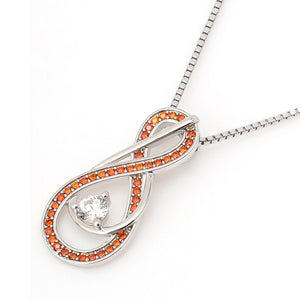
Shop at AJLuxe: Garnet Pendant Necklace — genuine garnet teardrop, 925 sterling silver ($42.99) · January Birthstone Necklace — garnet infinity pendant ($42.99)
Browse our crystal jewelry collection — sterling silver pendants set with real gemstones, each chosen for meaning and quality.
Shop Garnet Jewelry at AJLuxe
Our garnet water drop pendant necklace in 925 sterling silver keeps this stone close every day. Ready to shop? Browse all garnet necklaces and birthstone jewelry — every piece hypoallergenic, gift-ready, and backed by our 30-day returns.
Related reading: Red garnet vs red spinel.
Related reading: Red garnet astrology.
Related reading: Red garnet vs red agate.
Related reading: Garnet or emerald.
Related reading: Red garnet vs carnelian.
Related reading: Garnet or amethyst.
Related reading: Garnet vs hessonite.
Related reading: Red garnet buying guide.
Related reading: Red garnet healing properties.
Frequently Asked Questions
What does garnet symbolize?
Garnet symbolises passion, protection, strength, devotion, and vitality. The deep red varieties are most strongly associated with passionate love and physical life force. The protective meaning connects to garnet's long history as a warrior's stone in Egyptian, Roman, and medieval European tradition. Garnet's root chakra association adds a layer of grounding and earthy security to its symbolic profile. The specific meaning shifts slightly by variety — rhodolite leans into emotional healing and love, spessartine into creative confidence, tsavorite into growth and abundance.
What is the spiritual meaning of garnet?
Spiritually, garnet is primarily associated with the root chakra — the base energy centre linked to grounding, physical safety, and connection to the earth. In ancient Egyptian tradition, garnet was sacred to Sekhmet, the goddess of fire, war, and healing. Medieval Christian tradition associated garnet with Christ's blood and sacrifice. Modern crystal traditions use garnet for grounding practices, protection work, and energising the physical body. The spiritual meaning is consistent across many traditions: garnet is a stone of power in the physical world — passionate, protective, and anchored.
What chakra is garnet associated with?
Garnet is primarily associated with the root chakra (Muladhara) at the base of the spine — the energy centre of groundedness, safety, physical health, and connection to the earth. Red garnets (pyrope, almandine) are most used for root chakra work. Rhodolite garnet, with its rose-violet colour, is also associated with the heart chakra. Spessartine and orange-toned garnets are sometimes used for the sacral chakra (creativity, sensuality, emotional energy).
What is garnet good for?
In crystal tradition, garnet is used for grounding and anchoring scattered energy, protection from negativity, boosting physical vitality and stamina, deepening commitment in romantic relationships, and stimulating confidence and courage. In a secular context, wearing garnet as a deliberate intention-setting piece — choosing it for its meaning of strength, protection, or passion — is a valid mindfulness practice regardless of one's beliefs about crystal energy.
Who should wear garnet?
Garnet is particularly associated with January birthdays (January birthstone) and second anniversaries (traditional gemstone). In astrology, it's most recommended for Capricorn, Aquarius, and Aries. Beyond astrological framing, garnet is a strong choice for anyone in a period of transformation, anyone seeking to ground and stabilise their energy, or anyone wanting a meaningful stone to mark a milestone in a relationship. There are no hard restrictions on who should wear garnet — the "who should not" question (sometimes raised about Vedic astrology) applies specifically to Jyotish practice, where garnet's association with Mars means it's avoided for specific ascendants. If you don't follow Vedic astrology, this is not a concern.
What is the rarest type of garnet?
Demantoid garnet is widely considered the rarest and most valuable garnet variety. Russian demantoid from the Ural Mountains — particularly stones with the characteristic "horsetail" inclusions that are ironically desirable as proof of Russian origin — can exceed the price of fine rubies or sapphires per carat. Colour-changing garnets (which shift from green in daylight to red-purple in incandescent light) are also extremely rare and command significant premiums.
Can garnet be green?
Yes — several garnet varieties are green. Tsavorite (a grossular garnet from Kenya and Tanzania) is a vivid, saturated forest green comparable in appearance to fine emerald. Demantoid (an andradite garnet) is also green, with exceptional brilliance due to a high refractive index. Uvarovite is an emerald-green garnet that typically forms in small crystal clusters rather than facetable single stones. Green garnets are generally rarer and more expensive than the red varieties.
What does garnet mean as a January birthstone?
As January's birthstone, garnet carries the meaning of a new year's fire — passion, protection, and the vital energy to begin again. January begins in winter across the Northern Hemisphere, and garnet's deep red warmth has always been associated with inner fire during cold times. The birthstone also carries garnet's historical protective meaning — something to carry into the year ahead with strength and intention. For January birthdays, garnet is one of the most meaningful birthstones precisely because its symbolism is so fully aligned with its birth month.
Is garnet a good gift for a second anniversary?
Yes — garnet is the traditional gemstone for the second wedding anniversary. The second anniversary marks a point where the early intensity of a relationship has deepened into something more rooted and real. Garnet's meaning of passionate devotion and enduring commitment makes it ideal for this milestone. A garnet necklace, bracelet, or earrings in gold or rose gold is a meaningful choice that connects to both the birthstone tradition and the anniversary symbolism.
What is the difference between garnet and rhodolite?
Rhodolite is a specific variety of garnet — a mixture of pyrope and almandine species — known for its distinctive rose-violet to raspberry colour. Standard "garnet" jewellery typically refers to pyrope or almandine garnets, which are deep wine red to brownish red. Rhodolite is significantly more pink or violet in hue and is often considered more feminine and romantic in aesthetic. Both are real garnets; they're just different chemical mixtures within the same mineral family.
Is garnet safe to wear every day?
Yes — garnet has a Mohs hardness of 6.5–7.5, which is adequate for daily wear in necklaces, earrings, and bracelets. It's slightly more vulnerable to scratching in rings (which take the most impact) but still suitable for moderate daily use. Remove garnet jewellery before swimming, heavy exercise, or using chemical cleaners. Clean with warm water and mild soap. Store separately from harder stones like diamonds that can scratch the surface.
What colour garnet should I choose?
Choose by the meaning that resonates most. Deep red pyrope or almandine for passion, protection, and the classic garnet energy. Rhodolite (rose-violet) for emotional love and heart-centered intention. Spessartine (orange) for creativity and confidence. Tsavorite (green) for abundance and new growth. If you're choosing purely aesthetically, deep red garnets are the most versatile for gold and rose gold settings; rhodolite is particularly striking in rose gold; tsavorite makes a strong statement in white gold. When in doubt, deep red garnet is the classic choice for a reason.
How do I cleanse a garnet stone?
To physically clean garnet jewellery, use warm (not hot) water, a drop of mild dish soap, and a soft brush. Rinse thoroughly and dry completely with a soft cloth. In crystal practice, energetic cleansing of garnet is commonly done by leaving it in moonlight overnight, placing it briefly in sunlight (avoid extended sunlight for lighter-coloured varieties), or burying it in dry salt for 24 hours then rinsing. Running water is also used. There's no scientific evidence that energetic cleansing affects the stone physically, but as a mindfulness ritual for resetting your intention, it can have personal value.
Who should not wear garnet?
There's no traditional restriction on who can wear garnet in either gemology or crystal folklore — it isn't considered an unlucky or clashing stone for any zodiac sign or life stage. The one practical caution is physical rather than symbolic: people with very active jobs or hobbies (manual labor, contact sports) should choose a low-set or bezel setting, since garnet sits at 6.5-7.5 on the Mohs scale and can chip on a hard impact. In crystal tradition it's occasionally described as an intense stone better suited to intentional, purpose-driven wear than casual everyday wear for people newer to crystal work — but that's a stylistic preference, not a rule.
What does garnet mean in the Bible?
Garnet is commonly identified by biblical scholars as one of the twelve stones on the High Priest's breastplate described in Exodus, though translations differ on which Hebrew stone name corresponds to which modern gemstone — garnet is a leading candidate for the stone rendered as "carbuncle" or "nophek" in older English translations. It also appears in some rabbinic and folk traditions as the stone believed to have lit Noah's Ark through the flood, a symbol of guidance through darkness. These are historical and symbolic associations, not doctrinal claims.
If you love pink crystals with deep symbolic meaning, read our complete guide to rose quartz meaning — the stone of unconditional love, varieties, heart chakra guide, and how to tell real from fake.
For the full symbolism, varieties, and history of aquamarine, read our complete guide to aquamarine meaning — the March birthstone, throat chakra stone, and symbol of calm clarity.
Shop Garnet Jewelry at AJLuxe
All pieces are 18K gold plated over 925 sterling silver — hypoallergenic and gift-ready with free US shipping.
- Personalized jewelry — birthstone necklaces and custom gemstone pieces
- Gemstone necklaces — garnet and crystal pendants
- Gemstone earrings — everyday crystal earrings
- Gifts for mom — meaningful gemstone gifts
Free US shipping · 30-day returns · Gift-ready packaging included
Garnet is the January birthstone — and the birthstone that starts the entire year. For a full breakdown of the garnet family's six species (including tsavorite, demantoid, and mandarin spessartite), buying tips, and gift ideas by occasion, see our complete January birthstone guide.
Written by the AJLuxe team. Last updated: July 2026.
Aquarius spans both January and February, so its birthstones connect directly to two months. Explore the full zodiac guide: Aquarius Birthstone: Amethyst, Garnet & The Complete Zodiac Guide.
See also: Garnet vs Ruby: Full Comparison
All third-party trademarks, brand names and product names are the property of their respective owners. AJLuxe is not affiliated with, endorsed by, sponsored by, or otherwise connected to any third-party brand referenced in this article. Brand names are used solely for accurate comparative reference, and material descriptions reflect each brand's own published product specifications at the time of writing.
You Might Also Like
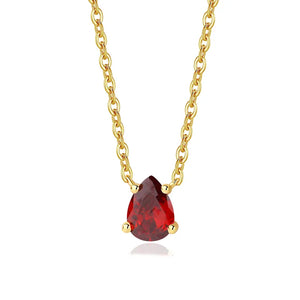

The piece they're describing → Garnet Pendant Necklace for Women — Red Garnet Teardrop, 925 Sterling Silver
Personalize Yours


