


| Crystal | Meaning in one word |
|---|---|
| Rose Quartz | Love |
| Amethyst | Calm |
| Clear Quartz | Clarity |
| Citrine | Abundance |
| Black Tourmaline | Protection |
| Moonstone | New beginnings |
| Green Aventurine | Opportunity |
Full breakdown of every stone, chakras, and how to choose by intention below.
Crystal necklaces are everywhere — but most buyers pick one based on colour or aesthetic and never dig into what the stone actually represents. That's a missed opportunity. The symbolism behind crystals is one of the oldest jewellery traditions in human history, and understanding it transforms a piece from decorative accessory to something with genuine personal meaning.
This guide covers every major crystal used in necklaces — the meaning behind each one, which intention it's traditionally associated with, and how to choose the right stone for you. You'll also find guidance on layering crystals, care tips, and what to look for when buying.
What Does a Crystal Necklace Mean?
A crystal necklace's meaning comes from two things: the stone itself and the intention of the person wearing it. In crystal traditions stretching back to ancient Egypt, Mesopotamia, and Greece, gemstones were believed to carry specific energetic properties based on their colour, mineral structure, and geological origins.
From a contemporary standpoint, the evidence for literal healing energy from stones is anecdotal rather than scientific. What's real and well-documented is the psychological effect of intentional objects — wearing something meaningful that reminds you daily of a quality you want to cultivate. A rose quartz pendant you wear as a reminder to practise self-compassion works not because the stone emits healing energy, but because you've made it a meaningful symbol.
Wearing a crystal necklace close to the skin — especially near the heart and throat — is considered significant in crystal traditions because these areas correspond to the Heart and Throat Chakras.
Crystal Necklace Meanings: Every Major Stone Explained
| Crystal | Primary Meaning | Associated With | Best For |
|---|---|---|---|
| Amethyst (purple) | Calm, clarity, protection | Crown & Third Eye Chakra | Stress relief, better sleep, intuition |
| Rose Quartz (pale pink) | Love, compassion, self-worth | Heart Chakra | Self-love, emotional healing, relationships |
| Citrine (yellow-orange) | Confidence, abundance, energy | Solar Plexus Chakra | Motivation, creativity, career goals |
| Black Tourmaline (black) | Protection, grounding, boundaries | Root Chakra | Anxiety relief, EMF protection, negativity shield |
| Clear Quartz (colourless) | Clarity, amplification, healing | All Chakras | Manifestation, focus, amplifying other crystals |
| Moonstone (white/iridescent) | Intuition, new beginnings, femininity | Crown Chakra | Major life changes, hormonal balance, creativity |
| Pink Tourmaline (vivid pink) | Emotional healing, joy, self-love | Heart Chakra | Overcoming trauma, deepening love, inner child healing |
| Aquamarine (blue-green) | Courage, communication, calm | Throat Chakra | Public speaking, travel protection, clarity of expression |
| Garnet (deep red) | Passion, vitality, commitment | Root & Heart Chakra | Relationships, energy, strength under pressure |
| Citrine (yellow) | Optimism, abundance, clarity | Solar Plexus Chakra | Financial goals, self-confidence, joy |
| Opal (multicolour play) | Creativity, spontaneity, hope | Crown Chakra | Artistic expression, amplifying emotions, optimism |
| Peridot (lime green) | Growth, renewal, positivity | Heart Chakra | New beginnings, releasing past, fresh starts |
| Sapphire (deep blue) | Wisdom, truth, loyalty | Third Eye & Throat Chakra | Decision-making, speaking truth, mental clarity |
| Ruby (vivid red) | Passion, prosperity, courage | Heart & Root Chakra | Confidence, romantic love, vitality |
| Emerald (rich green) | Abundance, growth, loyalty | Heart Chakra | Relationships, prosperity, healing |
How to Choose a Crystal Necklace Based on Your Intention
Rather than picking a stone by colour alone, start with the quality you want to cultivate. Here are the most common intentions and which crystals align with each (see our best crystal necklaces guide for top picks by intention):
If you want to reduce anxiety or stress
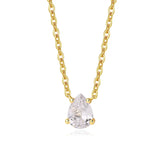
Choose amethyst or black tourmaline. Amethyst is the most widely recommended crystal for calming an overactive mind — its purple colour is associated with the Crown Chakra and has been used in meditation practices for centuries. AJLuxe's amethyst teardrop pendant necklace is a simple way to wear that intention daily. See our full teardrop necklace guide for the same pear-cut shape across all 12 birthstone colors. Black tourmaline grounds anxious energy and creates a sense of stability when you feel scattered.
If you want to attract love or deepen relationships
Choose rose quartz or pink tourmaline. Rose quartz is the classic choice — it represents the soft, open quality of love, both for yourself and others. Pink tourmaline carries a more intense, emotionally deep energy, associated with healing past wounds and opening the heart to deeper connection.
If you want more confidence or career momentum
Choose citrine or garnet. Citrine is called the "merchant's stone" in many traditions — it's associated with abundance, confidence, and productive energy. Garnet provides the vitality and drive to sustain effort over time.
If you want clarity and focus
Choose clear quartz or sapphire. Clear quartz is the most versatile crystal — it amplifies whatever energy you bring to it and supports mental clarity. Sapphire is associated with wisdom and truth, historically linked to scholars and decision-makers.
If you're going through a major life change
Choose moonstone or peridot. Moonstone is the stone of new beginnings — worn during transitions, moves, new relationships, or any moment that feels like standing at the edge of something different. Peridot represents renewal and releasing what no longer serves you.
If you want protection
Choose black tourmaline or obsidian. Black tourmaline is the most recommended protective crystal — it absorbs and deflects negative energy and is said to create an energetic boundary around the wearer. Many people wear it alongside other stones as a "shield" layer in their jewellery stack.
Crystal Necklace Meaning by Colour
When you don't know the specific stone, colour is a reliable guide to general meaning. Here's how crystal colour traditions translate into necklace choices:
| Colour | General Meaning | Representative Stones |
|---|---|---|
| Pink | Love, compassion, gentleness | Rose quartz, pink tourmaline, morganite |
| Purple / Violet | Calm, intuition, spiritual awareness | Amethyst, charoite, sugilite |
| Blue | Communication, truth, peace | Aquamarine, sapphire, blue topaz, sodalite |
| Green | Growth, abundance, healing | Emerald, peridot, green aventurine |
| Yellow / Orange | Confidence, energy, creativity | Citrine, amber, tiger's eye, carnelian |
| Red | Passion, vitality, action | Ruby, garnet, red jasper |
| Clear / White | Clarity, purity, amplification | Clear quartz, moonstone, diamond, white topaz |
| Black | Protection, grounding, boundaries | Black tourmaline, obsidian, onyx |
How to Layer Crystal Necklaces
Layering multiple crystal necklaces is both a styling choice and, in crystal traditions, a way to combine complementary energies. Here's how to do both well:
Styling rules for layering crystals
- Vary the chain lengths: Use 14–16", 18–20", and 22–24" necklaces. Each pendant sits at a different point on your chest, creating visual depth without tangling.
- One statement pendant, two dainty layers: Choose one crystal pendant as the focal point and frame it with simpler chains or smaller pendants.
- Match metals: All gold, all silver, or a deliberate mix. Mixing haphazardly looks cluttered; intentional mixed-metal layering can look editorial.
Crystal combinations that work together
- Rose quartz + amethyst: Love and calm — complementary pink and purple palette, both are heart-centred stones
- Clear quartz + any stone: Clear quartz amplifies the energy of whatever you pair it with — it's the universal companion
- Citrine + garnet: Confidence and vitality — yellow and deep red create a bold colour combination
- Moonstone + aquamarine: Intuition and calm communication — white iridescence and blue-green create an ethereal combination
- Black tourmaline + pink tourmaline: Protection with emotional openness — grounding below, heart above
Avoid combining too many protection stones (multiple black stones), as this can feel energetically heavy rather than balanced. Pair one protective stone with one opening or uplifting stone.
Best Necklace Length for Crystal Pendants
Chain length affects both how the crystal sits and which chakra it aligns with if that matters to you:
| Chain Length | Pendant Placement | Best For |
|---|---|---|
| 14–16 inch | Throat / collarbone | Throat Chakra stones (aquamarine, sapphire, sodalite); choker-style crystal pendants |
| 18 inch | Just below collarbone | The most versatile length — suits all stone types; closest to the Heart Chakra |
| 20 inch | Mid-chest / heart area | Heart Chakra stones (rose quartz, pink tourmaline, emerald) — sits directly over the heart |
| 22–24 inch | Sternum to solar plexus | Solar Plexus Chakra stones (citrine, amber); longer layering pieces |
How to Care for Crystal Necklaces
Crystal pendants need slightly different care depending on the stone, but these rules apply to all of them:
- Cleaning: Wipe with a soft, slightly damp cloth after wearing. For most crystals, avoid harsh chemicals and ultrasonic cleaners. Rose quartz, amethyst, and citrine can be gently cleaned with mild soap and water. Moonstone, opal, and pearls are more delicate — use a dry cloth only.
- Sunlight: Many crystals fade with prolonged UV exposure. Amethyst loses colour fastest (turns yellow-brown). Citrine, rose quartz, and aquamarine also fade over time. Keep crystal necklaces away from windowsills. Ironically, black tourmaline and garnet are among the most UV-stable.
- Water: Hard crystals like quartz family (rose quartz, amethyst, citrine, clear quartz) tolerate brief water contact. Softer or porous stones (opal, turquoise, malachite) should never be submerged. The metal setting is always the limiting factor — repeated water exposure corrodes plating.
- Storage: Store each crystal piece separately to prevent scratching. A pouch or small compartment jewellery box is ideal. Don't pile crystal pendants together — the harder stones will scratch the softer ones.
How to cleanse and charge a crystal necklace
In crystal traditions, stones are periodically "cleansed" — cleared of accumulated energy — and "charged" — replenished with fresh energy. The most common methods:
- Moonlight: Place your crystal necklace on a windowsill on a full moon night. Non-invasive and works for all stone types.
- Selenite or clear quartz plate: Place your crystal on a selenite charging plate for several hours. Safe for all stones.
- Sound: Use a singing bowl or tuning fork near the crystal. Gentle vibration is safe for all stones.
- Earth burial: Bury the stone in soil for 24 hours. Effective but only for robust stones — not for soft, porous, or treated stones.
Avoid water cleansing for most crystal necklaces — the metal setting is usually more vulnerable than the stone itself.
How to Tell Real Crystal Jewellery from Fake
Crystal necklaces range from natural gemstones to synthetic lab-created versions to dyed glass. Here's how to tell them apart:
| Type | How to Identify | Value |
|---|---|---|
| Natural crystal | Slightly irregular colour, feels cold, heavier than glass, may have natural inclusions | Highest — this is what you want |
| Lab-created (synthetic) | Perfectly uniform colour, no inclusions, sometimes too vivid — still genuine mineral composition | Medium — real mineral, factory-grown |
| Dyed glass | Too perfect and vivid, may have tiny round bubbles inside, warm to touch quickly, very lightweight | Lowest — not a real crystal |
| Resin / acrylic | Scratches easily, very lightweight, often has an overly glossy surface, warm immediately | Lowest — decorative only |
The simplest real test: natural crystals feel noticeably colder than glass or plastic when you first pick them up. They're denser than glass of the same size. And they have natural irregularities in colour and inclusion patterns rather than machine-perfect consistency.
Crystal Necklaces as Gifts
A crystal necklace is one of the most universally appropriate jewellery gifts because the meaning is built in — you're not just giving a pendant, you're giving a symbol. The key is matching the stone to the recipient's life stage or personality.
- For someone going through a difficult time: Rose quartz (healing) or amethyst (calm)
- For someone starting a new chapter: Moonstone (new beginnings) or peridot (fresh starts)
- For someone building confidence: Citrine (abundance, belief in oneself)
- For someone who feels anxious: Black tourmaline (grounding) or aquamarine (calm)
- For a romantic partner: Rose quartz, pink tourmaline, or garnet
- For a mother: Moonstone (nurturing) or rose quartz (unconditional love)
Browse our range of gemstone pendant necklaces — each set in 925 sterling silver with natural teardrop stones including amethyst, citrine, aquamarine, garnet, pink tourmaline, emerald, and more. Also see our natural gemstone charms necklace if you want multiple stones in one piece.
Related reading: November Birthstone: Citrine or Topaz — Which One Is Actually Yours?.
Related reading: Gemstone for July: Ruby, Sardonyx, and How to Choose (2026).
Related reading: Promise Band for Her: What It Means and How to Choose One (2026).
Related reading: Nameplate Necklaces: What They Are and How to Choose Yours (2026).
Frequently Asked Questions
What does wearing a crystal necklace do?
Wearing a crystal necklace keeps a meaningful symbol close to your body throughout the day. In crystal traditions, different stones are believed to carry specific energetic properties — amethyst for calm, rose quartz for love, citrine for confidence. From a practical standpoint, wearing an intentional object serves as a daily reminder of a quality you want to cultivate, similar to a meaningful piece of writing you keep on your desk.
Is it good to wear a crystal necklace every day?
Yes, for most stones. Quartz-family crystals (amethyst, citrine, rose quartz, clear quartz) have a Mohs hardness of 7 and are durable for daily wear. Harder stones like garnet (6.5–7.5) and sapphire (9) are equally robust. More delicate stones like moonstone (6–6.5) and opal (5.5–6.5) should be worn more carefully — remove them before activities with impact risk. The metal setting also matters: sterling silver and gold-plated sterling silver are the most durable everyday bases.
What crystal should I wear around my neck?
Start with your current intention. For calm and stress relief: amethyst. For love and self-worth: rose quartz. For confidence and motivation: citrine. For protection and grounding: black tourmaline. For clarity: clear quartz. If you're unsure, rose quartz and amethyst are the most universally appropriate starting points — their intentions translate broadly and both are gentle energies.
What does it mean when someone gives you a crystal necklace?
The meaning depends on the stone. A rose quartz necklace is a gesture of love or compassion. An amethyst necklace often means the giver wanted to offer calm or healing. A citrine necklace is encouragement and belief in the recipient's success. If there's no note explaining the choice, the most universal interpretation is that the giver wanted to give you something meaningful — a symbol, not just an accessory.
Can you wear multiple crystal necklaces at once?
Yes. Layering crystal necklaces is a well-established styling practice. The main rules: use different chain lengths (14", 18", 22") so they don't tangle or compete visually, and think about whether the stones' intentions complement each other. Rose quartz and amethyst work well together. Clear quartz pairs with anything. Avoid stacking five or more pendants — three is usually the maximum for a clean layered look.
Do crystal necklaces actually work?
There's no peer-reviewed scientific evidence that gemstones emit healing energy or directly change mood, health, or circumstances. What does have evidence behind it is the psychology of intentional objects: wearing something meaningful that you've connected to a specific intention can reinforce that intention in your mind. The "work" is done by you — the stone is the symbol, not the mechanism.
What is the spiritual meaning of wearing crystal jewellery?
In crystal and chakra traditions, wearing a stone close to the skin is believed to create a continuous energetic connection between the stone and the wearer's energy field. The placement matters too: heart chakra stones (rose quartz, pink tourmaline, emerald) are worn near the chest; throat chakra stones (aquamarine, sodalite) near the throat. In many spiritual traditions, the crystal acts as an anchor — a physical reminder of an intention held in the mind.
Can men wear crystal necklaces?
Absolutely. Crystal necklaces are not gender-specific. Black tourmaline, obsidian, tiger's eye, and clear quartz pendants are particularly popular for men — they tend toward bolder, darker aesthetic choices. Minimalist pendant designs in a simple bezel or wire-wrap setting suit a masculine style. The intention behind the stone is universal.
How do I activate or set an intention on a crystal necklace?
Hold the stone in both hands. Take a few slow breaths and focus on the specific quality or intention you want to cultivate — not a vague wish, but a specific quality like "I choose to respond to stress with calm" or "I am building confidence in my work." Repeat this silently or aloud. In crystal traditions, this is called "programming" or "setting" the stone. You're essentially anchoring a specific intention to the physical object, so that every time you wear it, you carry that intention with you.
What crystal necklace is best for anxiety?
Amethyst is the most widely recommended crystal for anxiety — its association with the Crown Chakra and its calming purple colour make it the default choice in crystal traditions. Black tourmaline is second, particularly for anxiety with a fear or vulnerability component — it creates a sense of grounded protection. Aquamarine is good for anxiety specifically around communication or conflict. Any of these in a comfortable, lightweight pendant you can wear daily is a reasonable starting point.
Should crystal necklaces touch the skin?
In crystal traditions, direct skin contact is considered important — the stone's energy is believed to interact with your body's energy field more directly. Practically speaking, wearing a pendant directly against skin rather than over clothing keeps it more visible and secure. For sensitive skin, verify the metal setting is hypoallergenic (925 sterling silver or surgical steel) before wearing next to bare skin.
The Right Crystal Starts with the Right Intention
The most meaningful crystal necklace isn't necessarily the most expensive or the most visually striking — it's the one you chose for a reason. Whether that reason is the stone's traditional symbolism, its colour, or simply that it resonates with where you are right now, that intention is what transforms a pendant into something worth wearing every day.
Start with one stone. Wear it for a month. Notice whether carrying that symbol with you changes how you approach the day. That's the real measure of whether a crystal necklace "works" for you.
Browse our collection of natural gemstone pendants — amethyst, citrine, aquamarine, garnet, pink tourmaline, emerald, peridot, ruby, sapphire, and more — each set in 925 sterling silver with hypoallergenic settings: shop gemstone necklaces at AJLuxe.
Written by the AJLuxe Editorial Team — specialists in sterling silver and gemstone jewellery. Last updated: May 2026.
All third-party trademarks, brand names and product names are the property of their respective owners. AJLuxe is not affiliated with, endorsed by, sponsored by, or otherwise connected to any third-party brand referenced in this article. Brand names are used solely for accurate comparative reference, and material descriptions reflect each brand's own published product specifications at the time of writing.
You Might Also Like
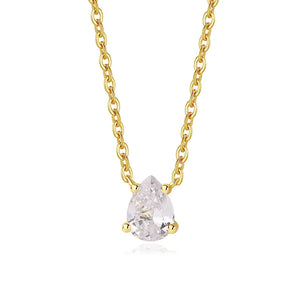
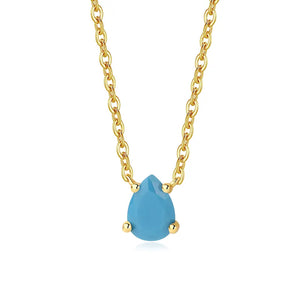
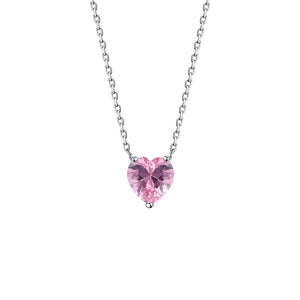
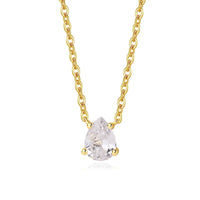
The piece they're describing → Crystal Teardrop Pendant Necklace for Women — CZ Diamond Drop, 925 Sterling Silver
Personalize Yours


