


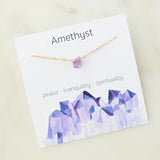
You've probably seen rose quartz everywhere — in jewellery, on bedside tables, tucked into wellness routines. Of all the gemstones in the crystal tradition, rose quartz has the clearest, most consistent meaning: love. Not the Valentine's Day version, but love in its fullest sense — the kind that starts with how you treat yourself and radiates outward to every relationship you hold.
What's less often discussed is that rose quartz has a genuinely surprising geological origin story. The pink colour is not caused by pigment or trace metals the way most coloured gemstones work. It comes from billions of microscopic nanofibers of a mineral called dumortierite — so fine they can't be seen individually, but collectively they scatter light to create that distinctive soft pink glow. The stone's colour is literally made of light diffused through glass-thin fibers. Whether that matters to you symbolically or not, it's a remarkable fact about something you might already be wearing.
This guide covers everything: what rose quartz is (geologically and symbolically), all four varieties and how they differ, the complete meaning picture, crystal pairings, zodiac and birthstone associations, how to tell real rose quartz from fake, and a buying and care guide.
What Is Rose Quartz?
Rose quartz is a variety of quartz (silicon dioxide) with a pale to medium pink colour ranging from barely-there blush to deeper rose. It's found primarily in massive form — large, irregular rock formations rather than individual crystals — which is unusual for quartz. Transparent single crystals of rose quartz are rare and significantly more valuable than tumbled or faceted stones from massive deposits.
The colour secret: unlike most coloured gemstones that get their hue from trace metal impurities (chromium for ruby, iron for amethyst), rose quartz gets its pink from sub-microscopic fibers of dumortierite and similar borosilicate minerals. These nanofibers make up less than 0.1% of the stone's weight, but they're highly reflective — scattering light to produce the characteristic pink translucency. This also explains why rose quartz is typically cloudy or milky rather than transparent: the fibers interrupt the clean transmission of light.
Key properties:
- Hardness: Mohs 7 — durable enough for daily wear in necklaces, earrings, and bracelets. Rings take more impact; treat with moderate care.
- Density: 2.65 g/cm³ — feels slightly heavier than glass, which is one authenticity test
- Primary sources: Brazil (largest supply), Madagascar, India, South Africa, USA (South Dakota)
- Treatment: Most rose quartz is untreated; some lower-quality stones are dyed, which is detectable (see authentication guide below)

Rose Quartz Varieties: Not All Pink Quartz Is the Same
Most articles treat rose quartz as a single stone. It isn't. There are four distinct varieties, each with slightly different visual character and symbolic associations. And there's a fifth thing often called "rose quartz" that is actually a completely different mineral.
| Variety | Appearance | What Makes It Distinct | Symbolic Emphasis | Best For |
|---|---|---|---|---|
| Standard Rose Quartz | Pale to medium pink, milky/translucent | The most common variety — massive formation, nanofiber colour | Unconditional love, heart chakra, general emotional healing | Everyday jewellery, heart chakra work, gifting |
| Star Rose Quartz | Pale pink with a 6-rayed star (asterism) visible in cabochon cut | Star effect caused by oriented nanofiber inclusions reflecting light as a star pattern | Guidance, protection, love under divine direction | Collectors, meaningful gifts, cabochon rings and pendants |
| Girasol Rose Quartz | Near-transparent pale pink with a floating blue-white glow (adularescence) | More transparent than standard rose quartz; glowing optical effect from different inclusion structure | Gentleness, clarity of emotion, soft emotional healing | Delicate jewellery, emotional clarity intentions |
| Lavender Rose Quartz | Pink with a distinct violet or lavender hue | Natural colour variation; the violet tone shifts the energy profile toward spiritual awareness | Love + intuition; bridges heart and crown chakra | Those drawn to both heart and spiritual/intuitive work |
| Pink Quartz (NOT rose quartz) | Pale to vivid pink, more transparent and glassy | Completely different mineralogy: colour from Al+P ions (not nanofibers). Rare. Found as small single crystals, not massive form | Not traditionally used the same way as rose quartz | Collectors — fine specimens cost hundreds per carat |
Most jewellery sold as "rose quartz" uses standard or girasol rose quartz. If a seller describes their stone as "transparent pink quartz," it may be pink quartz (the rarer mineral) or it may be glass. More on that in the authentication section.
Rose Quartz Meaning & Symbolism
Rose quartz has been called the stone of unconditional love across cultures for at least 3,000 years. That's a long time for one meaning to hold — which suggests it resonates at a fundamental level, whether you interpret it through crystal energy or through the simple human response to a soft, warm-toned stone associated with the colour of hearts and flesh.
There are five distinct dimensions to what rose quartz means:
Self-Love and Self-Worth
This is the meaning most underemphasised in older traditions but most foregrounded in contemporary crystal use. Rose quartz is the stone you reach for not when you're looking for love from someone else, but when you're working on your relationship with yourself. The heart chakra governs how we give and receive love — and the most foundational giving and receiving happens internally. Rose quartz worn as a daily reminder of self-worth has genuine utility as a mindfulness anchor, whatever you believe about crystal energy.
Romantic Love and Deep Partnership
In ancient Rome, rose quartz was exchanged between lovers as a symbol of enduring commitment. In the Greek mythological tradition, the stone's origin is tied to Aphrodite — the goddess of love — whose blood stained clear quartz pink when she cut herself trying to save her lover Adonis. The stone became sacred to her, symbolising love that persists even through pain. The romantic meaning is the most visually obvious: pink → warmth → love. But the mythological layer adds depth — this is the love that doesn't flinch from difficulty.
Emotional Healing and Grief
Rose quartz is one of the primary stones recommended for grief, heartbreak, and emotional recovery. The crystal tradition frames this as the stone's energy gently clearing emotional wounds and replacing them with gentleness and acceptance. The secular version: wearing a stone you've deliberately chosen for its association with healing, and returning your attention to it when you need grounding, is a form of embodied mindfulness. The pink colour itself is physiologically calming — research into colour psychology confirms that soft pink environments reduce aggression and have a measurable calming effect.
Compassion and Forgiveness
Rose quartz is the stone of compassion — both toward others and toward yourself. Compassion requires a kind of openness that can feel risky when you've been hurt. Rose quartz's energy is described as the antidote to the hardening that follows hurt: it keeps the heart open while healing it. In practical terms, rose quartz is recommended during periods of relational difficulty — when you need to move toward understanding rather than withdrawal.
Peace and Gentleness
Beyond love specifically, rose quartz carries the quality of gentleness — toward life, toward circumstances, toward whatever is difficult. This makes it useful not just in relationship contexts but in any situation where tension and anxiety are the dominant energies. The stone's soft pink is visually the opposite of emergency and alarm. Intentional use of rose quartz as a calming anchor is consistent with what we know about object-based mindfulness practices.

Rose Quartz and the Heart Chakra
Rose quartz is the primary gemstone of the heart chakra (Anahata) — the fourth energy centre, located at the sternum, associated with love, compassion, empathy, forgiveness, and connection. In chakra theory, the heart chakra is the bridge between the lower three chakras (survival, pleasure, power) and the upper three (communication, intuition, spiritual connection). A balanced heart chakra means you can give and receive love freely, set healthy boundaries, and act from genuine compassion rather than fear or need.
Rose quartz is used in heart chakra work precisely because its energy is understood as the purest possible expression of heart-centred energy: open, soft, non-possessive, and healing. Wearing rose quartz over the heart (as a pendant that sits on the sternum) is the most direct application in this tradition.
The scientific framing: There's no peer-reviewed evidence that rose quartz affects the heart chakra as an energy system. What's supported is that intentional object-based practices — wearing a stone as a deliberate reminder of an emotional intention, returning to that awareness regularly — function similarly to other mindfulness anchoring practices. The value is in the intention and the attention, not the mineralogy.
Rose Quartz Healing Properties
Rose quartz has been used in healing traditions for thousands of years. The following is based on long-standing cultural belief and traditional crystal work — not medical claims. That said, object-based intention practices are well-established as mindfulness anchors, and the emotional benefits many people report are consistent with what we know about intentional self-care rituals.
Physical Healing Properties (Traditional)
In traditional crystal healing, rose quartz is associated with the heart and circulatory system — not surprising given its connection to the heart chakra. Practitioners historically used it to support:
- Heart and circulatory health — used near the chest to support cardiac energy
- Skin and complexion — rose quartz rollers and gua sha tools are among the most popular modern applications; the cool stone reduces puffiness and supports lymphatic drainage mechanically
- Fertility and reproductive health — a traditional association rooted in rose quartz's link to feminine energy and the goddess traditions
- Chest and lung area — placed over the sternum during meditation or Reiki for energetic support
Scientific note: There is no peer-reviewed evidence supporting direct physical healing from crystal use. The benefits attributed to rose quartz facial tools are partly mechanical (cold stone + massage) and partly placebo/mindfulness effects — both legitimate in their own right.
Emotional Healing Properties
This is where rose quartz shines most clearly, even from a secular perspective. The stone is consistently used for:
- Grief processing — rose quartz is one of the most commonly recommended stones for bereavement and heartbreak. Holding a tangible object as part of a ritual can anchor the intention to move through grief
- Self-worth and self-compassion — wearing it as a daily reminder to treat yourself with kindness functions similarly to affirmation-based practices
- Releasing resentment and anger — the soft, gentle energy of rose quartz is traditionally said to dissolve emotional walls and soften hardened feelings toward others
- Anxiety and stress — holding cool, smooth stone during anxious moments is a grounding technique used in somatic therapy; rose quartz is a popular choice for this
- Emotional recovery after relationship endings — arguably the stone's most widespread modern use; see "rose quartz for heartbreak" across every crystal community
Mental and Spiritual Healing Properties
At the spiritual level, rose quartz is linked to:
- Opening to receive love — many people find it easier to give love than receive it; rose quartz work is often directed at softening that barrier
- Deepening empathy — practitioners use it to strengthen compassionate awareness, both toward others and toward the self
- Trust and faith — rose quartz is used in practices designed to rebuild trust after betrayal, whether in relationships or within oneself
- Clarity in matters of the heart — distinguishing genuine love from fear-based attachment, codependency, or projection
- Integration of the divine feminine — across multiple traditions, rose quartz is associated with goddess energy, receptivity, and the yin principle
Rose Quartz vs Other Pink Heart Stones
If you are drawn to pink, heart-centred crystals, it helps to understand how rose quartz compares to the other leading options. Each has a distinct energy emphasis and practical profile:
| Stone | Hardness | Chakra | Primary Energy | Best For | Price Tier |
|---|---|---|---|---|---|
| Rose Quartz | 7 | Heart (Anahata) | Unconditional love, self-love, gentle emotional healing | Grief, self-worth, everyday heart work | Very affordable (most accessible pink stone) |
| Morganite | 7.5–8 | Heart + Higher Heart | Divine love, compassion, angelic connection | Deepening romantic love, heart-mind integration, trauma healing | Mid-range (beryl family — more expensive than RQ) |
| Rhodonite | 5.5–6.5 | Heart (+ Root grounding) | Forgiveness, healing emotional wounds, grounded heart energy | Processing betrayal, resentment clearing, practical love work | Affordable to mid-range |
| Pink Tourmaline | 7–7.5 | Heart + Root | Compassion, emotional protection, sensitivity without overwhelm | Empaths, sensitive people, emotional boundary setting | Mid to premium (October birthstone) |
| Rhodochrosite | 3.5–4 | Heart + Solar Plexus | Self-love through joy, inner child healing | Childhood wound healing, self-compassion from a place of joy | Mid-range (softer, rarer patterns) |
The bottom line: Rose quartz is the universal starting point for heart healing — gentle, accessible, and broadly applicable. Rhodonite is the choice when forgiveness work is the focus. Morganite elevates the energy toward divine love. Pink tourmaline is ideal for empaths who need emotional protection alongside heart opening. Rhodochrosite works best for deep self-love and inner child healing.
Rose Quartz Through History
Rose quartz has one of the longest documented histories of any gemstone. The earliest known rose quartz beads date to approximately 7000 BC, found in what is now Iraq. That's not a recording error — rose quartz jewellery precedes recorded history by millennia.
Ancient Egypt: Rose quartz was used in Egyptian facial masks discovered in tombs — the Egyptians believed the stone's energy promoted beauty, youth, and complexion. The association with Cleopatra — herself a famous advocate for beauty rituals — is frequently cited but not confirmed by primary sources. What is confirmed is that the stone appeared regularly in Egyptian cosmetic and burial contexts.
Ancient Greece and Rome: The Greeks called it the stone of Aphrodite (Venus in Roman mythology). The mythological origin story — Aphrodite bleeding on clear quartz while saving Adonis — was widely known across both cultures. Rose quartz was exchanged as a love token and placed on altars dedicated to Aphrodite and Eros. In Roman culture, it was used in seals and signet rings as a symbol of love agreements.
Native American traditions: Several tribes, including peoples of the Northeast and Great Plains, used rose quartz as a reconciliation and anger-calming stone. It appeared in peace-making ceremonies and was sometimes called "the stone of the heart" in translation.
Medieval period: Rose quartz doesn't feature as prominently in medieval European gem lore as emerald or ruby, but it appeared in apothecary traditions as a stone associated with love, balance, and the heart organ (physicians understood the heart as the seat of emotion).
20th century and today: Rose quartz is consistently one of the three most widely sold crystals globally — alongside amethyst and clear quartz. Its accessibility (abundant, affordable, non-controversial symbolism) and visual appeal (universally flattering pink) have made it the gateway stone for most people entering the crystal tradition.
Rose Quartz Crystal Pairings
In crystal traditions, certain stones amplify or complement each other's energies when worn or used together. Rose quartz pairs well with several specific crystals depending on what you're working with:
| Crystal Pairing | Combined Energy | Best For | How to Wear |
|---|---|---|---|
| Rose Quartz + Amethyst | Healing from a past relationship, making aligned decisions about love | Layered necklaces or bracelet stack | |
| Rose Quartz + Clear Quartz | Love amplified — clear quartz is the master amplifier of any stone's energy | Deepening the rose quartz intention; manifestation work around love | Any format — clear quartz enhances whatever is paired with it |
| Rose Quartz + Moonstone | Love + intuition — emotionally open and intuitively guided | Navigating complex emotional situations, feminine energy work, cycle awareness | Necklace or ring pairing; evening/lunar wear |
| Rose Quartz + Green Aventurine | Love + prosperity — heart-centred abundance; generosity that returns | Opening to new relationships, abundance in relationships, spring energy | Bracelet stack, both on left wrist (receiving hand) |
| Rose Quartz + Rhodonite | Love + forgiveness — two heart stones that together address both healing and release | Post-breakup healing, forgiveness work, releasing resentment | Carry both in a pocket or wear as a paired bracelet during intentional work |
| Rose Quartz + Unakite | Love + emotional pattern release — rose quartz opens the heart while unakite helps identify and dissolve old emotional wounds | Long-term emotional healing, pregnancy and fertility support, releasing past trauma while inviting new love | Layered necklaces or wear as a pendant stack near the heart chakra |
Rose Quartz and the Zodiac
Rose quartz has the strongest associations with the two Venus-ruled signs — the planet Venus governs love, beauty, and relationships, and the stone of love naturally aligns with Venus's influence.
| Sign | Association | Why It Works |
|---|---|---|
| Taurus (Apr 20–May 20) | Primary — Venus-ruled, earthy, sensual | Taurus rules physical love, loyalty, and devotion. Rose quartz amplifies Taurus's capacity for deep, lasting love while softening their tendency toward possessiveness |
| Libra (Sep 23–Oct 22) | Primary — Venus-ruled, relationship-centred | Libra governs partnership and balance. Rose quartz supports Libra's natural desire for harmony in relationships and helps with their tendency to avoid necessary conflict |
| Cancer (Jun 21–Jul 22) | Secondary — emotionally sensitive, nurturing | Cancer feels deeply and protects its heart. Rose quartz gently supports Cancer's emotional healing capacity and helps them remain open after being hurt |
| Scorpio (Oct 23–Nov 21) | Secondary — transformative love energy | Scorpio loves intensely but guards its heart. Rose quartz's energy of openness and forgiveness balances Scorpio's tendency to hold wounds and supports post-transformation heart opening |
There are no astrological restrictions on who can wear rose quartz — unlike some Vedic gemstone traditions that advise caution based on planetary relationships. Rose quartz is considered safe and beneficial for all signs.
Rose Quartz as a Birthstone
Rose quartz is not on the modern official birthstone list (published by the American Gem Society and Jewelers of America). It doesn't correspond to any specific calendar month in the traditional or updated lists.
However, it has significant associations through two pathways:
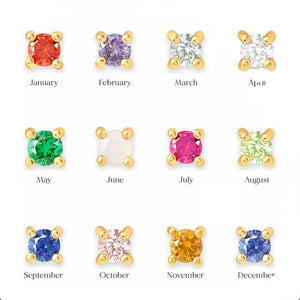
- Zodiac birthstone: Rose quartz is the primary zodiac stone for Taurus (April–May) and Libra (September–October). If you use zodiac-based birthstones rather than calendar month birthstones, rose quartz is appropriate for these signs.
- Anniversary stone: Rose quartz is sometimes listed as an alternative gift for the 5th wedding anniversary (alongside sapphire in traditional lists), though this varies by tradition.
For January birthdays, garnet is the traditional birthstone. For October, opal or tourmaline are the official choices. But rose quartz is a meaningful alternative for any October or Libra birthday given the Venus-ruled connection.
Is Your Rose Quartz Real? How to Tell
Rose quartz is one of the most commonly imitated crystals. Glass dyed pink is the most frequent substitute — it's inexpensive to produce and visually similar to low-quality rose quartz. Here's how to authenticate what you have:
1. Temperature test: Real rose quartz stays cool to the touch even in warm conditions. Hold it in your palm for 30 seconds. Glass warms quickly to body temperature; real quartz stays noticeably cooler. This is the easiest quick test.
2. Colour distribution: Genuine rose quartz has uneven, naturally distributed colour — slightly more concentrated in some areas, fading toward the edges. Dyed glass has uniform colour throughout, including to the edges and base. If the pink is perfectly consistent everywhere, be sceptical.
3. Bubble check: Under a loupe or magnifying glass, glass imitations often show perfectly spherical air bubbles — a signature of poured glass. Real rose quartz will have natural inclusions (nanofibers, cracks, mineral deposits) but never perfectly round bubbles.
4. Clarity: Real rose quartz is almost always milky, translucent, or cloudy — never glassy-clear. The nanofibers that cause its colour also cause its translucency. A perfectly transparent, deep-pink "rose quartz" is almost certainly glass or dyed synthetic quartz.
5. Weight: Rose quartz (density 2.65 g/cm³) is denser than most glass imitations. If a piece feels surprisingly light for its size, that's a warning sign.
6. The rose quartz vs pink quartz distinction: Genuine pink quartz (the rare mineral variety described in the varieties table above) is transparent, found only as small individual crystals, and costs significantly more than rose quartz. If someone is selling "transparent pink quartz" at rose quartz prices, it's glass.
How to Choose Rose Quartz Jewellery
Rose quartz is one of the most accessible gemstones — abundant supply keeps prices reasonable, and even high-quality stones don't command the premiums of rarer gems. Here's what matters when choosing:
Colour: The most desirable rose quartz has a clear, medium pink colour — neither washed-out nor artificially vivid. A soft rosy blush is more valuable than pale or brownish-pink. Avoid stones with grey or brown undertones.
Metal pairings:
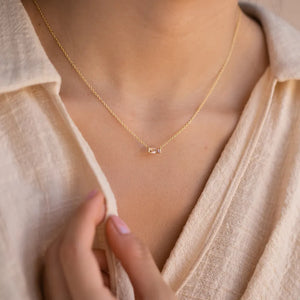
- Rose gold is the natural pairing — warm pink against warm rose gold creates a harmonious, feminine aesthetic. It's the most popular combination for a reason. Our own rose quartz charm necklace follows that pairing — a raw rose quartz chip on a gold-tone chain.
- Yellow gold creates warmth and depth — particularly good for deeper pink rose quartz.
- Sterling silver provides cool contrast — makes the pink pop and suits a more modern, minimalist look.
- White gold creates the sharpest contrast — best for higher-quality rose quartz with vivid, even colour.
Setting styles: Rose quartz's softness and translucency make it ideal for bezel settings (which protect the edges and complement the stone's soft character) and simple prong settings that let light through. Cabochon cuts (rounded, polished, no facets) are traditional and show the stone's natural glow best. Faceted rose quartz scatters more light but loses some of the stone's characteristic soft translucency.
Rose Quartz as a Gift: When and for Whom
| Occasion | Why Rose Quartz Works | Best Format |
|---|---|---|
| Valentine's Day | The stone of love — the most obvious and correct choice for the day | Heart pendant necklace, rose gold bracelet |
| Mother's Day | Unconditional love and compassion — exactly what the day celebrates | Pendant necklace, birthstone piece if May (Taurus) |
| Birthday (Taurus or Libra) | Zodiac birthstone — personally meaningful, correctly matched | Any format they'd wear daily |
| Heartbreak / Divorce | The healing stone — sends the message that love for themselves comes first now | Subtle pendant or bracelet; something they'll wear daily |
| New Baby / New Parent | Unconditional love in its most profound form — the stone fits the moment | Delicate necklace; something easy to wear through new parent life |
| Self-gift | The self-love stone — specifically powerful when you choose it for yourself as an intention-setting act | Whatever speaks to you — the choice IS the practice |
For a complete guide on water safety, see our dedicated article: Can Rose Quartz Go in Water?. For crystals that are truly water-unsafe, see: Can Selenite Go in Water? and Can Malachite Go in Water? — the danger cases.
Rose Quartz Care Guide
Rose quartz is reasonably durable (Mohs 7) but has a few specific vulnerabilities worth knowing:
Sunlight sensitivity: This is the most important care note. Prolonged direct sunlight fades rose quartz. The nanofibers that create the colour can be degraded by UV over months and years of direct exposure. Don't leave rose quartz on a sunny windowsill or wear it to beach days. Indirect light is fine.
Cleaning: Warm water, mild dish soap, and a soft brush. Rinse thoroughly. Dry with a soft cloth. Safe for ultrasonic cleaners, unlike some more fragile stones — but the mild soap method is sufficient and gentler long-term.
What to avoid: Harsh chemical cleaners, bleach, acetone, salt water (can damage the surface over time), and steam cleaners (thermal shock risk for stones with natural inclusions).
Storage: Store separately from harder stones (diamonds, sapphires, topazes) that can scratch the surface. A soft jewellery pouch or compartmented box is ideal.
Energetic cleansing (crystal tradition): Moonlight is the most recommended method — leave rose quartz under a full moon or on a windowsill in moonlight overnight. Avoid sunlight cleansing (which physically fades the stone over time). Burying briefly in dry salt or placing on a selenite charging plate are alternative practices.
How to Program Rose Quartz with Intention
Programming a crystal means setting a specific intention into it — directing its energy toward a particular purpose rather than leaving it to work in a general way. Rose quartz responds especially well to intentional programming because of its already-strong heart-centred energy.
Step 1: Cleanse the stone first. Before programming, clear any energy the stone may have absorbed in transit or storage. Hold it under cool running water for 30 seconds, or place it on a selenite plate overnight. Moonlight cleansing (leaving it on a windowsill overnight during a full moon) is the most popular method for rose quartz specifically because of the Moon's traditional association with feminine energy and emotional healing.
Step 2: Hold the stone in both hands. Sit quietly, close your eyes, and breathe slowly until you feel settled. Hold the rose quartz in your cupped palms or between your hands at heart level. Feel its weight and temperature. The physical connection is important — it bridges your energy with the stone's.
Step 3: Set a clear, specific intention. Vague intentions produce vague results. Instead of "I want more love," try "I am open to giving and receiving love with ease and without fear." Instead of "help me heal," try "I am releasing the grief from [specific experience] and replacing it with self-compassion." Speak the intention aloud or hold it clearly in your mind as a complete, present-tense statement.
Step 4: Visualise the intention taking root. Imagine a soft pink or rose-golden light moving from your hands into the stone, carrying the intention with it. Some people hold this for 30 seconds; others prefer to stay with it for several minutes. There is no correct duration — trust what feels complete.
Step 5: Carry or place the stone consciously. A programmed rose quartz worn against the skin (as a necklace pendant close to the heart) keeps the intention in your energy field throughout the day. Placing it on your bedside table sets the intention to work during sleep. Either placement is effective — the key is consistency. Re-set the intention monthly, or whenever you cleanse the stone.
Programming doesn't change the stone's fundamental properties — it focuses them. A programmed rose quartz is still a heart-chakra stone with all its general properties; the programming simply channels those properties toward your specific situation.
For guidance on what makes an engagement ring stand the test of time — beyond trends — our guide to choosing a timeless engagement ring covers classic settings, proportions, and metal choices that won't feel dated in 20 years.
Choosing a ring setting is one of the most important decisions in engagement ring shopping. Our engagement ring settings guide covers every major setting type — prong, bezel, pavé, cathedral, tension — with the pros and cons of each for stone security, light performance, and daily wearability.
Thinking about a vintage-style engagement ring? Our guide to vintage engagement rings covers the five reasons couples choose antique and estate-style designs over modern cuts — including uniqueness, craftsmanship details, and the sustainability angle.
Shop AJLuxe Crystal Jewelry
Birthstone & gemstone necklaces · 925 sterling silver · from $22.99
Browse Crystal Jewelry →Related reading: Smoky quartz meaning.
Related reading: Citrine vs yellow quartz.
Related reading: Smoky quartz buying guide.
Related reading: Rose quartz vs pink opal.
Related reading: Smoky quartz healing properties.
Related reading: Sugilite meaning.
Frequently Asked Questions
What does rose quartz mean?
Rose quartz means unconditional love in its fullest sense — not just romantic love, but self-love, compassion, emotional healing, forgiveness, and peace. It's called the stone of unconditional love or the heart stone across nearly every crystal tradition. The five dimensions of its meaning are: self-love and self-worth, romantic love and deep partnership, emotional healing and grief support, compassion and forgiveness, and a general quality of gentleness and openness. The meaning is consistent across Egyptian, Greek, Roman, Native American, and contemporary crystal traditions.
What is rose quartz good for?
In crystal tradition, rose quartz is used for emotional healing (especially after heartbreak or loss), developing self-love and self-compassion, deepening romantic relationships, working with the heart chakra, calming anxiety, and practicing compassion and forgiveness toward others. In a secular mindfulness context, wearing rose quartz as a deliberate intention anchor — choosing it for its association with love and returning your attention to that intention — is a form of embodied mindfulness practice with genuine value regardless of beliefs about crystal energy.
Who should wear rose quartz?
Anyone can wear rose quartz — there are no astrological or traditional restrictions. It has the strongest zodiac associations with Taurus and Libra (the two Venus-ruled signs). Beyond astrology, rose quartz is particularly recommended for anyone going through grief or heartbreak, anyone working on self-love and self-acceptance, anyone in a long-term relationship who wants to bring more gentleness and compassion to it, or anyone who simply resonates with the stone's meaning and appearance. Rose quartz has no known contraindications.
Is rose quartz a birthstone?
Rose quartz is not on the official modern birthstone list (American Gem Society / Jewelers of America). However, it is the traditional zodiac birthstone for Taurus (April 20–May 20) and Libra (September 23–October 22) — both Venus-ruled signs. If you prefer zodiac-based birthstone gifting over calendar-month birthstones, rose quartz is correct and meaningful for those born under either sign. It's also occasionally listed as an alternative 5th anniversary stone.
What chakra is rose quartz associated with?
Rose quartz is the primary stone of the heart chakra (Anahata in Sanskrit) — the fourth chakra, located at the sternum. The heart chakra governs love, compassion, empathy, forgiveness, and connection. It is the bridge between the lower physical chakras and the upper spiritual chakras. Rose quartz is used to open, balance, and heal the heart chakra — particularly after emotional wounds that cause the heart to close or harden. Lavender rose quartz also has associations with the higher chakras (throat, third eye) due to its violet undertone.
Can I wear rose quartz every day?
Yes. Rose quartz has Mohs hardness 7 — adequate for daily wear in necklaces, earrings, and bracelets. For rings, it's suitable for moderate daily wear but takes more impact than harder stones like diamond or sapphire; remove before heavy physical work. Avoid prolonged direct sunlight (UV fades the colour over time). Clean gently with warm water and mild soap as needed. Rose quartz is one of the most wearable gemstones for daily use.
What is the difference between rose quartz and pink quartz?
They are two completely different minerals, despite similar names. Rose quartz is a massive variety of quartz coloured by microscopic dumortierite nanofibers — cloudy, common, and affordable. Pink quartz is a rare crystalline variety of quartz coloured by aluminium-phosphorus ion substitution — transparent, found only as small crystals, and significantly more expensive. Most jewellery sold as "rose quartz" is standard rose quartz. If you see "transparent pink quartz" being sold cheaply, it's almost certainly glass, not genuine pink quartz (which costs hundreds per carat for fine specimens).
How do I know if my rose quartz is real?
Five tests: (1) Temperature — real rose quartz stays noticeably cool in your hand; glass warms to body temperature quickly. (2) Colour — real rose quartz has uneven, natural colour distribution; fakes are uniformly pink throughout. (3) Bubbles — look through it: glass imitations show spherical air bubbles; real quartz doesn't. (4) Clarity — genuine rose quartz is milky or translucent, never glassy-clear; a perfectly transparent deep-pink stone is almost certainly glass. (5) Weight — rose quartz is denser than most glass; if it feels surprisingly light, be cautious. The most reliable test is buying from reputable jewellers who source ethically and can certify their stones.
What does rose quartz do for relationships?
In crystal tradition, rose quartz brings the quality of unconditional love to relationships — it's associated with deepening intimacy, rebuilding trust after difficulty, softening communication patterns, and creating a more compassionate relational dynamic. For couples, wearing rose quartz together (matching necklaces or bracelets) is a common intentional practice. The secular framing: choosing an object associated with the qualities you want to bring to a relationship — openness, gentleness, commitment — and wearing it as a daily reminder is a form of intentional mindfulness with real value.
Where should I wear rose quartz?
Traditionally, rose quartz worn over the heart as a pendant (sitting at the sternum or just below) has the most direct heart chakra association. On the left wrist as a bracelet is also traditional — the left side is considered the receiving side in crystal practice, associated with what you're drawing into your life. In Feng Shui, rose quartz placed in the bedroom or "love corner" (far right corner from your bedroom door) is a common intentional placement for relationship intentions. In practical terms: wear it in whatever format you'll actually wear daily — that's where the value of any intention practice lives.
Can rose quartz fade?
Yes — prolonged exposure to direct sunlight fades rose quartz. The dumortierite nanofibers responsible for the colour can be degraded by UV radiation over months and years. This doesn't happen from occasional outdoor wear, but regularly leaving rose quartz on a sunny windowsill or wearing it to extended outdoor activities in strong sunlight can cause noticeable fading over time. Store out of direct sunlight. For energetic cleansing, use moonlight rather than sunlight — moonlight cleanses without the UV exposure risk.
What is the rarest type of rose quartz?
Star rose quartz — which displays a six-rayed star (asterism) when cut as a cabochon and illuminated from above — is the rarest and most valuable variety of rose quartz. The star effect is caused by oriented parallel nanofiber inclusions that reflect light as a star pattern. Fine star rose quartz stones with a well-defined, centred star and good base colour command significant premiums over standard rose quartz. True pink quartz (the separate mineral described above) is technically rarer but exists in a different category — it's a different stone with a different collector market.
How do I cleanse rose quartz?
Physical cleaning: warm water, mild soap, soft brush or cloth. Rinse thoroughly. Dry completely. In crystal practice, the recommended energetic cleansing methods for rose quartz are moonlight (safest — leave it on a windowsill in moonlight overnight, particularly at full moon), a selenite charging plate (place rose quartz on the selenite for several hours), or sound cleansing (singing bowl or tuning fork near the stone). Avoid extended sunlight cleansing — UV exposure fades the colour over time. Salt burial works but rinse well afterward, as salt can damage the stone's surface if left too long.
For the full symbolism, varieties, and history of aquamarine, read our complete guide to aquamarine meaning — the March birthstone, throat chakra stone, and symbol of calm clarity.
Shop Rose Quartz Jewelry at AJLuxe
All pieces are 18K gold plated over 925 sterling silver — hypoallergenic and gift-ready with free US shipping.
- Personalized jewelry — birthstone necklaces and custom gemstone pieces
- Gemstone necklaces — rose quartz and crystal pendants
- Gemstone earrings — everyday crystal earrings
- Gifts for mom — meaningful gemstone gifts
Free US shipping · 30-day returns · Gift-ready packaging included
Written by the AJLuxe team.
Rose quartz is one of our top picks in the guide to the best crystals for healing.
Last updated: May 2026.Looking to buy? Read our Rose Quartz Necklace Guide — it covers styles, quality grades, best metals, price ranges, and how to spot fake rose quartz before you buy.
For a complete guide to using rose quartz and other crystals for love energy, see our best crystals for love guide.
For another deeply calming purple stone, our amethyst meaning guide covers the full history, chakra connections, and jewelry buying advice.
Rose quartz is the #1 crystal in our guide to best crystals for self-love — with 6 other healing stones for self-w
Rose quartz makes a beautiful 15th anniversary crystal gift — it's the love stone for a reason.<
Rose quartz is one of our top recommendations for crystals for friendship — it's the stone of all forms of love.
/p> orth.Explore more: Crystal Jewelry: Meanings & Guides
Related reading: see labradorite's healing and chakra properties.
All third-party trademarks, brand names and product names are the property of their respective owners. AJLuxe is not affiliated with, endorsed by, sponsored by, or otherwise connected to any third-party brand referenced in this article. Brand names are used solely for accurate comparative reference, and material descriptions reflect each brand's own published product specifications at the time of writing.
You Might Also Like

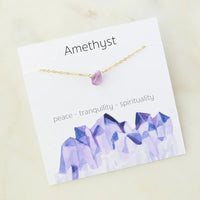
The piece they're describing → Stone Charm Necklace for Women — Raw Natural Gemstone Pendant
Personalize Yours


