


💛 Browse AJLuxe Necklaces — Initial, Heart & Pearl
Dainty 18K gold plated styles in 925 sterling silver. Hypoallergenic, gift-ready, from $24.99.
Walk into any jewelry store and the necklace section is overwhelming. There are thin chains and thick chains, short styles and long drapes, pendants and plain links, gold and silver and rose gold. Without a framework, "finding the right necklace" feels like guesswork.
This guide gives you the framework. It breaks down every meaningful type of necklace — by length, chain style, and overall design category — explains when each works best, and helps you choose or gift with confidence.
Necklace Lengths — The Foundation
Length is the first decision in any necklace choice. The same pendant on a 16-inch chain sits at the collarbone; on a 24-inch chain it sits mid-chest. Same pendant, different effect. Get the length wrong and even a beautiful necklace can look off.
| Name | Length | Where It Sits | Best For |
|---|---|---|---|
| Collar | 12–13 inches | Tight against the throat | Statement looks, high necklines, formal styling. Works on open necklines only — disappears under a shirt collar. |
| Choker | 14–16 inches | Just below the throat / high neck | Casual and trendy looks, layering as the shortest piece, V-necks, strapless tops. Elongates the neck slightly. |
| Princess | 17–19 inches | At or just below the collarbone | The most versatile everyday length. Works with almost any neckline. The default "standard" necklace length for pendants. |
| Matinee | 20–24 inches | Between collarbone and bust | Business casual and professional wear, crew-necks, turtlenecks. Adds elegance without being too formal. Popular for larger pendants. |
| Opera | 28–36 inches | At bust or below | Formal events, layering (can be doubled at the neck), statement casual looks. Classic choice for pearl and station necklaces. |
| Rope | 37 inches+ | Below bust — can be styled multiple ways | Versatile long styling — wear single, doubled, knotted, or layered. Works well with open necklines and casual pieces. |
Layering tip: When stacking multiple necklaces, choose lengths that differ by at least 2 inches so each chain sits at a clearly distinct level. A choker (16") + princess (18") + matinee (22") creates a clean three-layer stack without tangling.
Types of Necklace Chains — The Complete Guide
The chain is the structure that holds everything together and contributes as much to the look as the pendant does. Chain type affects weight, drape, durability, and whether the necklace reads as delicate or bold.
| Chain Type | Description | Best For | Durability |
|---|---|---|---|
| Cable Chain | Classic oval or round interlocked links — each link the same size | Pendants of all sizes, everyday wear, layering. The most versatile chain. | ✅ Very strong |
| Box Chain | Square links connected at right angles — smooth, geometric | Heavier pendants, minimalist style, alone as a statement | ✅ Very strong |
| Rope Chain | Multiple strands twisted together like rope — substantial and textured | Wearing alone (no pendant), formal occasions, bold looks | ✅✅ Extremely strong |
| Figaro Chain | Pattern of 2–3 small round links + 1 elongated oval link, repeating | Italian-style aesthetics, worn alone or with pendants, men's jewelry | ✅ Strong |
| Snake Chain | Small flat rings tightly interlocked — smooth, fluid, ribbon-like movement | Delicate pendants, close-fitting elegant looks, minimal jewelry | ⚠️ Less flexible — kinks easily |
| Curb Chain | Flat oval links twisted to lie flat against each other — bold and modern | Statement chains worn alone, chunky layering, streetwear-adjacent looks | ✅✅ Very strong |
| Paperclip Chain | Large elongated rectangular links — modern, graphic, fashion-forward | Trending statement chains, layering, charms or pendants | ✅ Strong |
| Singapore Chain | Woven, twisted oval links that catch and scatter light — sparkles | Delicate everyday wear, catching light, layering thin chains | ✅ Moderate |
| Wheat (Spiga) Chain | Four strands of oval links woven in a spiral — looks like braided wheat | Stronger delicate chains, pendants, durable everyday styles | ✅✅ Very strong |
| Herringbone Chain | Flat, ribbon-like surface with diagonal-pattern links — lies flat against skin | Modern minimalist style, wearing alone (no pendant), fashion-forward | ⚠️ Kinks easily if bent |
| Rolo Chain | Circular symmetrical links — simple, classic, uniform | Charm necklaces, children's jewelry, simple pendant chains | ✅ Strong |
| Bead Chain | Small metal beads connected on wire or chain — simple and lightweight | Delicate pendants, ball-and-socket adjustable chains, casual wear | ⚠️ Less durable |
Which chain works with which pendant size? Light, delicate pendants (under 10g) pair best with thin cable, Singapore, or snake chains (0.8–1.2mm gauge). Medium pendants (10–20g) need a box or cable chain with more substance (1.2–2mm). Heavy pendants (20g+) require a box, rope, or wheat chain at 2mm+ to prevent the chain from stretching or breaking at the clasp.

Types of Necklace Styles — From Pendant to Statement
Beyond chain type and length, necklaces have distinct design categories that describe how they function and how they look.
Pendant Necklace
A single decorative element — a charm, shape, stone, or initial — hanging from a chain. The most common necklace style. The pendant is the visual focus; the chain is the vehicle. Pendants can be swapped on some chains, making the chain a long-term investment and the pendant the seasonal element.
Locket
A pendant that opens to hold a photo, note, or keepsake inside. The most sentimental necklace type. Traditional lockets are oval or heart-shaped. Modern lockets include geometric and minimalist designs. The defining feature is always the hinged opening.
Choker
A short necklace (14–16 inches) worn tightly at the base of the neck. Chokers can be plain chains, velvet ribbon, beaded, or pendant chokers. The tight fit is the defining style element — it draws attention to the neck and collarbone. Chokers have been in and out of fashion cyclically since the 1800s and remain consistently popular.
Bib Necklace
A wide, multi-strand necklace that covers the upper chest like a bib. Typically ornate — with multiple layers of chains, stones, or beads fanning outward from a central point. Worn as a statement piece with simple clothing. Requires an open neckline (strapless, V-neck, or wide scoop) to show properly.
Statement Necklace
Any necklace intended to be the focal point of the outfit rather than a subtle accent. This is a functional category rather than a design type — a statement necklace can be a large pendant, a chunky chain, a bib, or a multi-strand piece. The defining quality is that it commands attention.
Y-Necklace (Lariat)
A necklace that forms a Y-shape, with the chain splitting at the center to hang a drop or pendant in a lower V. Creates a slimming, elongating effect at the neckline. Works especially well with V-neck tops because the pendant follows the neckline angle. Also called a lariat necklace.
Station Necklace
A chain with evenly spaced individual elements (stones, beads, or charms) at regular intervals along its length. The elements appear to "float" on the chain. Delicate and elegant — particularly popular as diamond or gemstone station necklaces for formal occasions.
Multi-Strand Necklace
Two or more chains or strands worn together as a single piece — attached at the clasp or at connector points along the length. Creates visual depth and layering without the management of separate pieces. Shorter multi-strand pieces read as formal; longer styles read as bohemian or casual.
Layered Necklace Set
Multiple separate necklaces of different lengths worn simultaneously, creating the layered effect. Can be purchased as a pre-designed set (all pieces coordinated) or built individually over time. The key to layering without tangling: vary the lengths by 2+ inches and choose chains of different weights.
Collar Necklace
A wide, structured necklace that sits high on the neck — essentially a decorative version of a shirt collar. Often rigid or semi-rigid. Worn as a bold fashion statement or formal piece. Requires a completely bare neckline to show properly.
Tennis Necklace
A single continuous strand of uniformly-sized gemstones (traditionally diamonds) set in individually-linked settings. Flexible and lies flat against the chest. Named after a 1987 US Open incident involving Chris Evert's diamond bracelet — the necklace version uses the same construction. Classic, formal, and timeless.
Types of Pendants — What Goes on the Chain
The pendant is often the real choice — the chain is secondary. Here are the main pendant categories:
| Pendant Type | Description | Best Occasion / Recipient |
|---|---|---|
| Initial / Letter | A single letter — scripted, block, or Gothic style | Birthdays, Mother's Day, personalized gifting for anyone |
| Heart | Heart shape — solid, open, or pavé stone set | Romantic gifts, Valentine's Day, Mother's Day |
| Birthstone | Gemstone representing a birth month — solitaire or cluster | Birthday gifts, Mother's Day (children's birthstones), milestone gifts |
| Cross | Religious cross — plain, pavé, or engraved | First communion, baptism, confirmation, faith expression |
| Evil Eye | Blue glass or enamel eye motif — protective symbol | Protection, spiritual meaning, trend-driven everyday wear |
| Moon / Star | Celestial motifs — crescent moon, star, sun, or constellation | Dreamy and spiritual aesthetics, layering with other celestial pieces |
| Name / Word | Full name or meaningful word in cursive or block script | Highly personal gifting — names, meaningful words, dates |
| Solitaire Gemstone | Single stone in a prong or bezel setting — classic and elegant | Formal wear, fine jewelry styling, milestone gifts |
| Infinity | Sideways figure-8 — symbolizes forever and boundless love | Romantic gifts, friendship, anniversary, meaningful relationships |
| Abstract / Geometric | Minimalist shapes — bars, triangles, circles, arches | Modern and minimal aesthetics, style-conscious wearers |
For a complete guide to choosing, personalizing, and gifting initial necklaces specifically: The Complete Guide to Initial Necklaces.
For heart pendants and all the heart jewelry styles in detail: The Complete Guide to Heart Jewelry.
Choosing a Necklace by Neckline
The neckline of your top or dress is the most important styling factor when choosing a necklace. A mismatch between necklace type and neckline is the most common jewelry styling mistake.
| Neckline | Works Best With | Avoid |
|---|---|---|
| V-Neck | Y-necklace / lariat (follows the V), princess-length pendant, station necklace | Choker (competes with the neckline) |
| Scoop / Round Neck | Princess-length pendant (sits in the scoop), matinee, layered chains | Collar (hides in fabric) |
| Crew Neck | Matinee or opera (hangs below the neckline), layered long chains | Short choker or collar (disappears under fabric) |
| Turtleneck | Long matinee or opera hanging below the collar, statement long pendant | Any short necklace (covered by the fabric) |
| Off-Shoulder / Strapless | Choker, collar, bib necklace — the bare neckline is the canvas | Long pendants (draw eye down rather than to the neckline) |
| Square Neck | Princess pendant inside the square, tennis necklace following the neckline | Y-necklace (directional conflict with square shape) |
| Halter | Choker sitting above the halter tie, long pendant hanging below | Anything that competes with the halter strap at the neck |

How to Layer Necklaces
Layered necklaces create a collected, intentional look that reads as stylish rather than busy — when done right. Three principles make layering work:
1. Vary the lengths by 2+ inches. Each necklace needs its own visual lane. Choker at 16" + princess at 18" + matinee at 22" gives each piece a clearly distinct position on the chest. If two chains sit at the same length they tangle constantly and look messy rather than intentional.
2. Mix chain widths and textures. A thin cable chain layered with a medium box chain layered with a rope chain creates visual interest through contrast. All three at the same width reads as accidental rather than curated.
3. Connect through a theme. Metal (all gold, or a deliberate gold/silver mix), style (all minimal or all statement), or mood (all meaningful — initial + birthstone + heart). Random mixing without a thread makes the look feel disjointed.
For a deep dive into layering technique, combinations that work, and what to avoid: How to Layer Gold Necklaces and Dainty Necklace Style Guide.
Necklace Metals Guide
The metal determines the color, durability, price, and whether the necklace is safe for sensitive skin. Most necklaces at mid-range price points fall into one of these categories:
| Metal | Color | Skin-Safe? | Durability | Price Tier |
|---|---|---|---|---|
| 18K Gold Plated Sterling Silver | Rich warm yellow gold | ✅ Yes — 925 silver base | 2–4 years with care | $ |
| Sterling Silver (925) | Cool bright silver | ✅ Yes — safe for most | Indefinite with care | $ |
| Gold Vermeil | Rich warm yellow gold (thicker layer) | ✅ Yes — sterling base | 3–5 years with care | $$ |
| Rose Gold Plated Sterling Silver | Warm pink-gold | ✅ Yes — 925 silver base | 2–3 years with care | $ |
| Solid 14K Gold | Yellow, white, or rose gold | ✅ Yes — no base metal | Lifetime | $$$$ |
| Stainless Steel | Cool silver (or gold-tone if plated) | ✅ Mostly — check for nickel-free | Very durable, tarnish-resistant | $ |
For sensitive skin specifically — the metal that matters most for necklaces is whatever sits against your skin (the chain and clasp). A 925 sterling silver chain is hypoallergenic for most people. Avoid base metal and brass chains if you react to nickel. For full guidance: Hypoallergenic Jewelry Guide.
Frequently Asked Questions About Necklace Types
What are the different types of necklaces?
The main types by style are: pendant necklaces, locket necklaces, chokers, bib necklaces, statement necklaces, Y-necklaces (lariats), station necklaces, multi-strand necklaces, collar necklaces, and tennis necklaces. Within these, they can be further categorized by chain type (cable, box, rope, Figaro, snake, paperclip, and more) and by length (collar, choker, princess, matinee, opera, rope).
What is the most popular type of necklace?
The pendant necklace at princess length (17–19 inches) is the most popular necklace type globally. It's the default "necklace" most people picture — a single charm or stone hanging from a simple chain at the collarbone. Within that category, initial and birthstone pendants are consistently top sellers for gifting.
What is the difference between a pendant and a necklace?
A pendant is the decorative element — the charm, shape, or stone — that hangs from the chain. A necklace is the complete piece (chain + pendant). A chain without a pendant is simply a chain necklace. In everyday use, "pendant necklace" and "necklace" are often used interchangeably.
What is the most durable type of necklace chain?
Rope chains and wheat (Spiga) chains are among the most durable — their interlocked multi-strand construction resists breakage and distributes stress well. Box chains and curb chains are also very strong. Snake chains and herringbone chains are the most fragile — they kink easily and can break if bent sharply.
What length necklace is most versatile?
Princess length (17–19 inches) is the most versatile. It sits at or just below the collarbone and works with almost any neckline — V-necks, scoops, crew necks, and boat necks. It's the default length for most pendant necklaces and the best starting point if you're building a jewelry collection or buying a gift.
What necklace to wear with a V-neck?
A Y-necklace (lariat) is ideal because the pendant follows the V-shape of the neckline, creating a harmonious line. A princess-length pendant also works well. Avoid chokers and collars with V-necks — they compete with the neckline rather than complementing it.
What is a locket necklace?
A locket is a pendant that opens via a hinge to reveal a small compartment inside — traditionally used to hold a small photograph, lock of hair, or note. Lockets are among the most sentimental necklace types because they carry a personal keepsake close to the body. Heart and oval shapes are the most common locket forms.
How do you layer necklaces without tangling?
Three rules: choose lengths that differ by at least 2 inches (so each necklace sits at a distinct level), vary chain widths (thin + medium + thick), and when you take them off, unhook them separately and store individually. A layering clasp — a small connector that links multiple chains to a single clasp — also prevents tangling significantly.
What is a tennis necklace?
A tennis necklace is a single flexible strand of uniformly-sized gemstones (originally diamonds) set in individually-linked prong or bezel settings. Each stone has its own link so the necklace moves freely. They sit flat against the chest, look elegant from every angle, and are a formal jewelry staple. The name comes from Chris Evert, who lost her diamond bracelet (same construction) at the 1987 US Open — the court stopped while it was found, and the style became known as a "tennis bracelet" (and later, necklace).
What is a choker necklace?
A choker is a short necklace (14–16 inches) worn tightly at the base of the neck. Chokers can be thin delicate chains, velvet ribbon, beaded strands, or pendant chokers. They draw attention to the neck and collarbone and work best with open necklines. Chokers have cycled in and out of fashion since the Victorian era and remain one of the most recognizable necklace styles.
Need help choosing the right chain length? Our dedicated necklace length guide covers every size from 14 to 36 inches, with neckline-specific recommendations, height guidance, and direct comparisons of 16 vs. 18 vs. 20 vs. 22 inches.
Not sure which necklace to pair with your outfit? Our guide on jewelry for different necklines covers exactly which chain length and earring style works with V-necks, scoop necks, turtlenecks, and more — including the 2:1:1 rule that makes any jewelry combination work.
For the rest of your jewelry wardrobe, see our guide to all 20 types of bracelets — with sizing, clasps, and how to stack them.
Explore what a pearl necklace means and which pearl color fits the occasion: Pearl Necklace Meaning: Symbolism, Colors & When to Give One.
For the complete necklace reference — types, chain lengths, layering rules, neckline pairings, and meaningful stones — read The Complete Necklace Guide.
Finding Your Necklace
The "right" necklace is always a combination of length + chain type + pendant + occasion. Use the framework above to start from what you know — the neckline you're wearing, the person you're gifting, or the occasion you're dressing for — and build outward from there.
For personalized necklaces — initial necklaces, name necklaces, and layered personalized sets — see The Complete Guide to Initial Necklaces.
For heart jewelry in all forms — pendants, lockets, initial hearts, and gifting guides — see The Complete Guide to Heart Jewelry.
Browse the full AJLuxe necklace collection — all pieces in 18K gold-plated 925 sterling silver with hypoallergenic bases.
Written by Vaishakhi Ajmera — founder and jewelry specialist at AJLuxe. Last updated: May 2026.
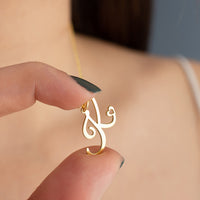
The piece they're describing → Heart Initial Necklace for Women — 18K Gold Plated, Personalized Letter + Heart Pendant
Personalize Yours

