


- Same mineral: rubellite is a variety of pink tourmaline, not a different stone.
- Color standard: rubellite must show a saturated red-pink that holds its hue under warm incandescent light.
- Price: rubellite sells at a clear premium over standard pink tourmaline, and the gap depends on size and color quality.
- Bottom line: all rubellite is pink tourmaline, but most pink tourmaline is not rubellite.
Rubellite is a variety of pink tourmaline, not a different mineral. The difference is color grade: rubellite must show saturated red-pink or hot pink that does not shift brownish under incandescent light. All rubellite is pink tourmaline, but most pink tourmaline is not rubellite. Think of it like "champagne" vs "sparkling wine": same base, much stricter rules.
Last updated: October 2026
What Is Rubellite?
Rubellite is elbaite tourmaline, the same mineral species as pink tourmaline, set apart by color intensity and stability. The name comes from the Latin rubellus (reddish), and it has been used in the gem trade for a long time to describe the richest red-pink tourmalines.
The coloring agent is manganese. Higher manganese concentrations push tourmaline's color from pale pink into hot pink, then raspberry, and finally vivid red-pink. That is rubellite territory.
The critical test is the incandescent light test. True rubellite holds its red-pink hue under both daylight and warm incandescent light. Many pink tourmalines shift toward brownish or dull tones under warm indoor lighting. If a stone turns brownish under a regular light bulb, it does not qualify as rubellite, however pink it looks in daylight.
Rubellite's color range is saturated hot pink, raspberry, magenta and vivid red-pink. It is not pale, pastel or baby pink. A stone that looks like a faded pink tourmaline is just pink tourmaline.
Rubellite vs Pink Tourmaline: Side-by-Side
The two share a mineral and differ on color range, light stability and price. This table compares them directly.
| Feature | Rubellite | Pink Tourmaline |
|---|---|---|
| Mineral identity | Elbaite tourmaline (a variety) | Elbaite tourmaline (broader color range) |
| Color range | Saturated hot pink, raspberry, vivid red-pink | All pinks: pale blush to hot pink to magenta |
| Color under incandescent light | Holds red-pink, does not shift brownish | May shift under different lighting |
| Price per carat | Higher, often several times standard pink tourmaline for comparable size | Lower, varies widely by color and clarity |
| Inclusion tolerance | Trade accepts inclusions for exceptional color | Eye-clean preferred at lower price points |
| Primary sources | Mozambique, Nigeria, Brazil, Afghanistan | Brazil, Afghanistan, Mozambique, Maine (USA) |
| Best for | Statement pieces, heirlooms, collectors | Everyday jewelry, gifts, pendants, stacking |

The Color Test: How Rubellite Is Graded
A stone is rubellite only if it is both saturated and stable: vivid red-pink color that stays vivid under warm light. To run the incandescent test, take the stone into a room with warm incandescent bulbs, or hold it near a lamp. True rubellite looks as red-pink there as it does in daylight, while a standard pink tourmaline often loses its life or shifts brownish.
This matters because most indoor environments use warm light. A gem that looks gorgeous in a store's daylight display but turns muddy on your nightstand is not what rubellite buyers are paying for. Rubellite's value rests on that color consistency.
The color also has to be strong: vivid and saturated, not washed out. A pale stone does not earn the rubellite name even if it passes the incandescent test.
Price Difference: Is the Premium Worth It?
Rubellite costs noticeably more than standard pink tourmaline, and the premium is entirely about color grade. Because the strict color standard means most of a mine's tourmaline output does not qualify, the stones that do are genuinely rarer. Exact prices swing widely with size, saturation and clarity, so compare quotes for stones of the same size rather than relying on a rule of thumb.
Red flag: if a "rubellite" is offered at a price close to ordinary pink tourmaline, it may be low-grade material being mislabeled, a heavily treated stone or outright misrepresentation. When in doubt, ask for a certificate from an independent gemological lab that specifically states "rubellite," not just "tourmaline."
For a statement ring or an heirloom pendant, the premium is justified by the color depth of a true rubellite. For everyday wear or a budget gift, a quality pink tourmaline gives beautiful color at a much lower price.
Is Rubellite the Same as Red Tourmaline?
Almost: rubellite and red tourmaline overlap at the vivid end of the spectrum. The tourmaline trade uses variety names based on color: rubellite covers red-to-pink, indicolite covers blue-to-green, verdelite covers green, and so on. A deeply saturated red tourmaline is rubellite, while a red tourmaline that shifts brownish under incandescent light is just "red tourmaline."
Some rubellites are vivid enough to pass for ruby at first glance, and large red stones in historic jewelry have turned out to be rubellite. That color intensity is exactly what makes top rubellite so prized. All true rubellite is red tourmaline, but not all red tourmaline meets rubellite's saturation and stability standard.
Which Should You Buy?
Pink tourmaline suits most budgets and everyday wear, and rubellite suits buyers who want maximum color and will pay for it.
- Budget buyer: pink tourmaline. You get a beautiful pink gem for far less. See the pink tourmaline meaning guide for what to look for.
- Wants maximum color saturation: rubellite. Few pink gems match a vivid rubellite for color intensity, and it easily outshines morganite and rose quartz.
- Engagement ring: either works. Both sit at about 7 to 7.5 on the hardness scale and hold up for daily wear in a protective setting. Rubellite adds a "this is something special" factor.
- Everyday pendant or gift: pink tourmaline is the practical choice, with similar beauty at a softer price and easier replacement if something happens.
- Collector or heirloom piece: rubellite, for its rarity and color.
If you are comparing with other pink gems, see our pink tourmaline vs rose quartz and pink tourmaline vs morganite breakdowns.
Shopping for Pink Tourmaline Color at AJLuxe
AJLuxe does not sell rubellite or natural pink tourmaline. Our Pink Tourmaline Infinity Necklace ($59.99) is 925 sterling silver set with pink cubic zirconia pave, a simulated stone colored to represent October's pink tourmaline, not a mined gem. If you want the pink color at a gift-friendly price, that is the nearest real piece.
See the Pink Tourmaline Infinity Necklace or browse the pink tourmaline jewelry collection.
Frequently Asked Questions
Is rubellite the same as pink tourmaline?
Rubellite is a variety of pink tourmaline: same mineral, higher color standard. All rubellite is pink tourmaline, but most pink tourmaline does not meet the color saturation and light-stability requirements to be called rubellite.
What makes a tourmaline a rubellite?
Two things: saturated red-pink color (not pale or pastel) and color stability under incandescent light. The stone must hold its vivid hue under both daylight and warm indoor lighting. If it shifts brownish under a lamp, it is just pink tourmaline.
Is rubellite more expensive than pink tourmaline?
Yes, noticeably. The premium comes from the stricter color grading, since only a small share of tourmaline qualifies. The exact gap depends on size, color and clarity.
How can I tell if a stone is rubellite or pink tourmaline?
The simplest check is the incandescent light test. Hold the stone under a warm light bulb: true rubellite stays vivid red-pink, while pink tourmaline may shift brownish or dull. For a purchase decision, ask for a lab certificate that specifically identifies the stone as "rubellite."
Is rubellite the same as red tourmaline?
They overlap. Rubellite covers the saturated red-to-pink end of tourmaline, so a vivid red tourmaline that passes the incandescent test is rubellite. "Red tourmaline" is a looser term that also includes stones that do not meet rubellite's color standard.
What color is rubellite exactly?
Rubellite ranges from saturated hot pink to raspberry to vivid red-pink, such as magenta, cranberry and deep rose-red. It is never pale, pastel or baby pink. The key word is "saturated."
Where does rubellite come from?
Mozambique is a leading source of fine rubellite today, and other significant sources include Nigeria, Brazil (historically very important) and Afghanistan. Mozambican rubellite is known for strong color saturation.
Is rubellite good for jewelry?
Yes. Rubellite is about 7 to 7.5 on the hardness scale, which suits necklaces, earrings and rings worn with reasonable care. The trade accepts some inclusions because the color is so prized, and use a protective setting such as a bezel or halo for rings.
What is the most valuable color of tourmaline?
Neon blue-green copper-bearing tourmaline is generally the most valuable tourmaline overall. Among pink-to-red stones, saturated rubellite with no color shift commands the highest prices.
Does rubellite have healing properties?
In crystal healing traditions, rubellite is associated with the heart chakra, emotional healing and strengthening relationships, much like pink tourmaline's meaning. These are traditional beliefs, not scientific claims. As a jewelry stone, rubellite's real value is its color.
- Pink Tourmaline vs Every Gemstone: the complete comparison guide
- Morganite vs Rose Quartz: Color, Hardness, Price and Which to Choose
- Pink Tourmaline vs Pink Topaz: Color, Price and Which to Choose
- Pink Tourmaline vs Pink Spinel: Color, Price and Which to Choose
- Pink Tourmaline vs Ruby: Color, Price and Which to Choose
- Pink Tourmaline vs Opal: Color, Price and Which to Choose
- Pink Tourmaline vs Watermelon Tourmaline: Color, Rarity and Which to Choose
All third-party trademarks, brand names and product names are the property of their respective owners. AJLuxe is not affiliated with, endorsed by, sponsored by, or otherwise connected to any third-party brand referenced in this article. Brand names are used solely for accurate comparative reference, and material descriptions reflect each brand's own published product specifications at the time of writing.
You Might Also Like

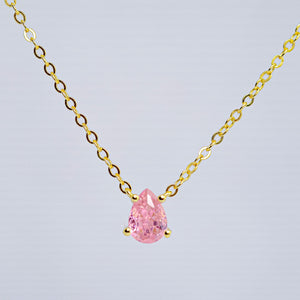

The piece they're describing → Pink Tourmaline Infinity Necklace for Women — 925 Sterling Silver, Pink CZ Pave
Personalize Yours


