


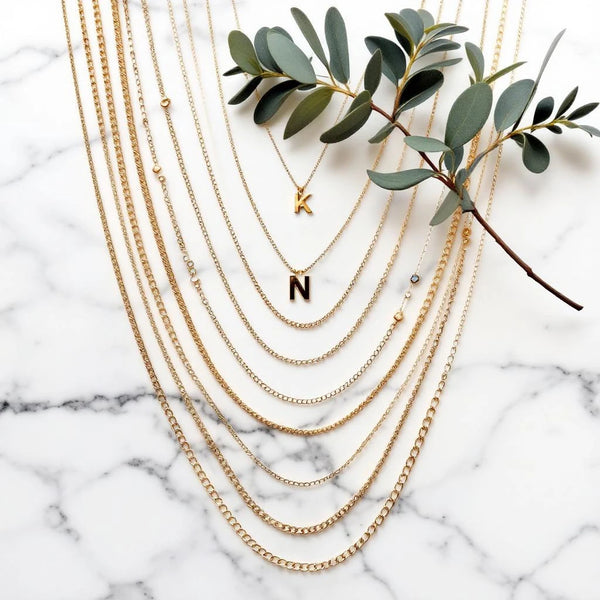
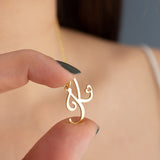
- Initial necklaces come in 6 main styles — block, script, diamond-set, birthstone, name, and station — and each one pairs differently with different chain types.
- The chain you choose affects how the pendant hangs, how long the plating lasts, and how well the necklace layers — the 12 types of chains for necklaces each have distinct trade-offs.
- Length matters more with pendants than with plain chains — 18" is the most universally flattering starting point, but your height and neckline change the right answer.
- Layering works on a 2cm spacing rule: keep at least 2cm of visible chain between necklaces, put your initial on the shortest strand, and use a layering clasp to prevent tangling at the back.
Picking an initial necklace sounds simple until you're looking at a dozen chain options, three metal colors, and six possible lengths — and you haven't even chosen the letter style yet. The chain alone can change how the pendant sits, how long the piece lasts, and whether it can be layered at all. This is your practical reference for the types of chains for necklaces, how length affects the whole look, and how to stack multiple pieces without ending up with a knotted mess.
At AJLuxe, our necklaces are handcrafted in 925 sterling silver — the 925 stamp is on every clasp, so you always know exactly what you're wearing.
By the end of this guide, you'll know which chain works with which pendant weight, the exact length to order for your height and neckline, how to build a layered look that actually stays in place, and how to choose a metal that's safe for sensitive skin. Let's start with the style — because everything else follows from that decision.
Initial Necklace Styles — Which Type Is Right for You?
The style of the letter determines the visual weight of the pendant, which then drives every other decision down the chain. Here are the six main types.
1. Block/print initial
Block letters are clean, geometric, and gender-neutral. Our full block vs script initial necklace comparison breaks down exactly when each style works best. The thick, even strokes keep the letter readable at small sizes — a 10mm block initial reads clearly at arm's length where a 10mm script letter might not. This style works well for minimal dressers and for anyone who wants the initial to feel understated rather than decorative. A sideways initial necklace takes the same block letterform and rotates it 90° so it lies horizontally across the chain instead of hanging from it — an even more understated variant of the same idea.
2. Script/cursive initial
Script initials have flowing lines and variable stroke widths, which creates more visual interest than block but also more physical mass. A script "K" looks elegant and romantic on a fine chain. The looping ends mean script initials are slightly more prone to catching on fabric, so pairing them with a smoother cable or box chain reduces snagging.
3. Diamond-set initial
These use pavé-set cubic zirconia or genuine diamonds to outline the letter shape. The stone setting adds sparkle and physical weight — a diamond-set initial typically runs 3–6 grams, heavier than plain metal letters. That weight requires a sturdier chain to hang flat. These are the right choice when budget allows and the recipient values visual impact over everyday wearability.
4. Gemstone birthstone initial
Instead of a pavé outline, birthstone initials feature the recipient's birthstone — usually a single stone set into or alongside the letter. This combines two personalization signals in one piece: the initial and the birth month. It's a more meaningful gift than a plain initial because it requires knowing both the letter and the birthstone, which signals effort.
5. Name necklace vs. single initial
A full name necklace — like a nameplate reading "Emma" — is a bolder, louder statement piece. A single initial is more versatile: it's smaller, lighter, layers more easily, and stays relevant across more outfits. For everyday wear or layering, a single initial almost always outperforms a full name necklace. The name necklace earns its place as a standalone statement piece rather than one component of a stack.
6. Station/side initial
A station initial sits as a small charm positioned to one side of the chain rather than hanging as a center pendant. If you're stacking two or more letters, read our guide to multiple initial necklaces — it covers how to arrange 2, 3, or 4 initials without cluttering the look. It creates a subtler look — the initial appears almost as a detail on the chain rather than the focal point. Station necklaces work well for people who want personalization without a prominent pendant, and they layer cleanly because there's no large hanging element to tangle.
Once you've chosen a style, the chain type you pair it with changes everything.

Pendant Size Guide — How Big Should Your Initial Be?
Pendant size is the decision right after style — get it wrong and even the right chain and style choice won't save the look. Too small and the letter disappears against your outfit; too large and it overwhelms a delicate chain.
| Pendant Size | Best For | Visual Weight | Layering Potential |
|---|---|---|---|
| Small (10–12mm) | Petite frames, minimalist style, delicate everyday wear | Light — subtle and understated | Excellent — layers without competing |
| Medium (14–16mm) | Most frame sizes, balanced look, versatile use | Balanced — visible without being bold | Good — pairs well as a mid-layer |
| Large (18–20mm) | Taller or fuller frames, statement wear, bold style | Heavy — commands attention | Limited — works best as the anchor piece |
A general sizing rule from jewelry stylists: the pendant should be roughly proportional to the width of your collarbone. If you have a narrower frame, a 10–12mm pendant reads perfectly scaled — an 18–20mm pendant on a fine chain and petite frame can look top-heavy. Medium (14–16mm) is the safest choice for gifts when you don't know the recipient's exact build.
The 12 Best Chain Types for Initial Necklaces
The chain isn't just a string to hang your letter on. Width, link construction, and movement all affect how the initial sits and how long the plating lasts. A chain that's too thin for a heavy pendant will tilt and spin. A chain that's too rigid for a delicate script initial looks clunky. Here's how every major chain type performs with initial pendants.
| Chain Type | Width | Durability | Pendant Suitability | Layers Well With | Best For |
|---|---|---|---|---|---|
| Cable | 1–3mm | High | ✅ All pendant sizes | Rope, box | Everyday wear, first stack |
| Box | 1–2mm | Very high | ✅ Heavier pendants | Cable, figaro | Chunky pendants, active wear |
| Rope | 2–5mm | High | ✅ Heavier pendants | Cable, box | Statement looks, layering base |
| Figaro | 2–5mm | High | ✅ Medium–heavy pendants | Cable | Classic styling, men's |
| Snake | 1–3mm | Medium (kinks if bent sharply) | ⚠️ Light pendants only | Paperclip, cable | Delicate looks, flat silhouette |
| Herringbone | 3–8mm | Low (kinks easily) | ❌ Better worn alone | — | Solo statement, no pendant |
| Curb/Cuban | 3–10mm | Very high | ✅ Heavy pendants | Box | Bold/chunky layering |
| Singapore | 1–2mm | Medium | ✅ Light–medium pendants | Cable, rope | Sparkle, delicate layering |
| Paperclip | 3–6mm | High | ✅ All sizes | Snake, cable | Trend-forward layering |
| Ball/bead | 1–3mm | Medium | ✅ Light–medium pendants | Cable, figaro | Casual, minimalist |
| Wheat/Spiga | 1–2mm | High | ✅ Light–medium pendants | Cable, box | Soft, feminine layering |
| Rolo/Belcher | 2–4mm | High | ✅ All pendant sizes | Cable, paperclip | Chunky + delicate contrast |
The pendant weight rule. A light script initial — usually 1–3 grams — sits best on a 1–2mm cable, box, or wheat chain. The chain is fine enough that it doesn't compete with the delicate letter shape, but strong enough to support it. A heavier block initial or diamond-set letter — typically 3–8 grams — needs at least a 2mm box or rope chain to hang flat and stay centered. If your pendant spins or tilts to the side, the chain is too thin for that weight. The fix is a wider chain, not a different clasp.
Necklace Length Guide: What Works for Initial Pendants
Length affects where the pendant sits on your chest, how it interacts with your neckline, and whether it reads as delicate or bold. The right length changes based on your height, your neckline, and whether you're wearing the piece solo or as part of a stack. This is the only necklace length guide you need for initial pendant sizing.
| Length | Sits At | Best Initial Style | Best With |
|---|---|---|---|
| 14" | Tight collar | Block initial (small) | Open necklines, delicate layering base |
| 16" | Base of throat | Block or script | Crew neck, boat neck, V-neck |
| 18" | Collarbone (most popular) | Any style | Almost every neckline — the universal length |
| 20" | 2" below collarbone | Larger script or diamond-set | V-neck, scoop neck, open button-down |
| 22"–24" | Mid-chest | Statement initial, name necklace | Low-cut tops, casual wear |
| 30"–36" | Navel-level | Bold, oversized initial | Layering longest strand, boho/casual |
The 18" rule for gifts. If you're buying an initial necklace as a gift and don't know the recipient's preference, 18" is the right call. It's the most universally flattering length for pendants — it sits at or near the collarbone on most people, which is where a pendant reads clearest and most flattering. You can't go wrong with 18".
The half-inch pendant adjustment. Add half an inch to your preferred chain length for pendants over 2cm tall. The pendant's own height moves the visual center point down from where the chain sits. So if you want the pendant to appear at the collarbone (where an 18" chain sits), and your initial is 2.5cm tall, order an 18" chain — the pendant will land right where the collarbone is rather than an inch below it. For very large initials (3cm+), add a full inch.
Height adjustment. If you're under 5'4", a 16" chain tends to sit at the collarbone where an 18" sits on a taller person. If you're over 5'8", 18" often reads shorter than you'd expect — try 20" as your starting point for collarbone-length placement.

How to Layer Initial Necklaces
Initial necklaces layer better than most pendant styles because the flat face of the letter doesn't tangle the way charms or drops do. A flat letter pendant lies against the chest and stays there; a 3D charm bounces around and catches on neighboring chains. That said, layering still requires a system. Here's the one that works.
The 2cm spacing rule. Keep at least 2cm — roughly ¾ inch — of visible chain between each necklace. Less than that and the layers clump together and read as a single messy piece. More than 4cm between layers and they stop reading as a styled set and start looking like separate necklaces you happened to both put on. The 2cm minimum is the floor; 2–3cm is the sweet spot.
Length combinations that work:
- 2-layer (subtle, professional): 16" + 18" — the 2" gap gives just enough separation for both chains to show clearly
- 2-layer (clear separation, casual): 16" + 20" — 4" of separation, both pieces read distinctly
- 3-layer (full stack): 14" + 17" + 20" — tight but distinct, works best with fine chains
- 3-layer (relaxed proportions): 16" + 18" + 22" — more breathing room between layers, works with thicker chains
Which chain types layer well together — and this is the part nobody explains. Layering isn't just about lengths. The chain types have to work together too.
- Cable + rope: Different textures, similar weight, both lie flat. This is the most reliable combination in the types of chains for necklaces when layering is the goal.
- Snake + paperclip: Both have flat profiles, so they slide against each other rather than hooking. Minimal tangling.
- Cable + Singapore: The Singapore's twisted links catch the light differently from the cable's clean ovals. Good visual contrast without competing for attention.
- Avoid: two herringbone chains together. Herringbone kinks when bent, and two of them together will kink against each other throughout the day.
- Avoid: very different weights in the same layer. A 1mm cable will get visually buried next to a 6mm curb chain. The thinner chain disappears.
Metal mixing. Yellow gold and rose gold together create a warm, tonal contrast that works well. Yellow and white/silver create a sharper, classic contrast. All one metal looks clean and deliberate. The rule: pick a metal direction and commit. Two yellow gold chains and one rose gold reads intentional. One of each — yellow, white, rose — reads like you couldn't decide.
Tangle prevention. Use a necklace layering clasp — a small connector that slides all your chains onto a single back clasp. For a step-by-step walkthrough, see our guide to how to layer initial necklaces. This eliminates the tangle point entirely. Store necklaces flat on a tray or hang each one on its own hook; never coil multiple chains together in a pile. When layering with an initial pendant, always put the initial on the shortest chain so it sits above the other layers and stays visible rather than disappearing behind them.
Layering by Occasion
The same three necklaces that look right for a weekend can look overdone at the office. Occasion-based layering is about knowing when to add a piece and when to edit one out.
| Occasion | Layers | Length Combo | Chain Style | Notes |
|---|---|---|---|---|
| Work/office | 2 max | 16" + 18" | Cable or box, same metal | Simple, polished — nothing that clinks when you lean forward |
| Casual/weekend | 2–3 | 16" + 18" + 22" | Mix textures freely | The initial necklace works well as one of three here |
| Date night | 2 | 16" + 20" | Delicate chain + initial pendant | Less is more — one standout piece does more work than three competing ones |
| Formal/event | 1–2 | 18" solo or 16" + 18" | Fine chain, diamond-set initial if applicable | A clean silhouette reads most dressed-up at formal events |
| Gift-giving | 1 | 18" (universal) | Cable or box | 18" is the safest single gift length — works on nearly everyone |
The office rule is simple: if the necklaces would make noise when you lean forward, that's one too many. Date night is the one occasion where a single well-chosen initial necklace outperforms a full stack. A fine 16" chain with a script initial pendant in yellow gold over 925 sterling silver has more presence on a date than three overlapping chains that compete for attention. For a full breakdown, see our gold vs silver initial necklace guide.
Metal Guide — Gold, Silver & Hypoallergenic Options
The metal you choose affects how the necklace looks, how long it lasts, and whether it's safe for your skin. Here's what actually matters for initial necklaces specifically.
18K gold-plated over 925 sterling silver is the sweet spot for initial necklaces at this price range. See our sterling silver initial necklace guide for top-rated styles under $40. The 925 sterling silver base matters enormously for sensitive skin: sterling silver is biocompatible, so even when the gold plating wears thin at high-contact points — the clasp, the pendant bail — the base metal beneath it won't irritate skin. That's not true for brass-based gold-plated pieces, where worn plating exposes a base metal that causes contact dermatitis in many people. The 18K gold plating itself gives a richer, warmer tone than 14K plating, which can look slightly pale or greenish-yellow by comparison. All AJLuxe initial necklaces use 18K gold plating over a 925 sterling silver base for exactly this reason.
Solid gold versus gold-plated. Solid 14K or 18K gold costs 10–30× more than a well-plated sterling silver piece with no visible difference at arm's length. For an initial necklace worn daily, good-quality plating over sterling silver will outlast the price premium — especially when you rotate pieces and follow basic care. The one situation where solid gold makes sense: a piece that's worn constantly, never removed, and expected to last 20+ years without any replating. For most wearers, well-plated sterling silver is the more practical choice.
Yellow vs. white vs. rose gold. Yellow gold flatters warm skin undertones — golden, olive, or brown skin tones. White gold and silver flatter cool undertones — skin with pink or bluish undertones, visible blue veins. Rose gold is the most versatile of the three; it has enough warmth to complement warm skin tones and enough pink to work with cool ones. For initial necklaces specifically, yellow gold is the most popular choice because the warm tone photographs clearly, reads legibly against skin, and sits well against most outfit colors.
Sensitive skin and metal safety. Sterling silver (925) is the safest base metal for people with metal sensitivities. The most common trigger is nickel, which appears as an alloy component in many lower-quality gold-plated pieces made on brass or zinc alloy bases. If you've experienced redness, itching, or irritation from other jewelry, the base metal beneath the plating is almost always the cause — not the plating itself. The American Academy of Dermatology (aad.org) identifies nickel as the most common cause of contact dermatitis from jewelry; sterling silver contains no nickel. When shopping for personalized jewelry with sensitive skin, always confirm the base metal is 925 sterling silver — not brass, zinc alloy, or copper.
Whose Initial Do You Choose?
This is one of the most searched questions in the category — and there's no single right answer. Initial necklaces are worn for several different reasons:
Your own initial — the most common choice. Wearing your own initial is a form of self-expression and identity — a quiet, personal statement of who you are. It's neither narcissistic nor unusual; it's one of the oldest jewelry traditions.
A partner's initial — wearing your partner's first initial is a romantic tradition dating back centuries. It keeps a loved one close without being as overt as an engraving or matching set. Particularly meaningful during long-distance periods or for new relationships where a promise ring would feel like too much.
A child's initial — one of the most popular choices for mothers. Each child's initial represents a deeply personal connection. Many mothers build a small collection over time — one initial necklace per child, worn together as a layered stack.
Combined initials — two letters on one pendant, or two separate necklaces worn together. Common for couples or parent/child pairs, and works well as a layered look.
A memorial initial — wearing the initial of someone who has passed is a meaningful way to carry them with you. This is more common than most people realize, and a deeply personal reason many people choose their initial necklace.
If you're buying as a gift, the default answer is the recipient's own initial unless you have a specific reason to give yours, as in a romantic relationship.
Initial Necklace Gift Guide
An initial necklace is one of the most personal gifts in jewelry. Getting the details right — the letter, the length, the style — is how it goes from "nice gift" to something the recipient keeps for years. Buying for a best friend specifically? See our personalized necklaces for best friend guide for that exact use case.
For a girlfriend. An initial necklace for a girlfriend is personal without requiring you to know her ring size or nail her exact taste in jewelry. Our guide to initial necklaces for girlfriends covers every style decision — initial choice, metal, and length. The convention has always been to wear your partner's initial, but self-initial necklaces are equally common now — many women prefer wearing their own initial because it's unambiguous and wearable without context. The safest choice is her own initial. Go 18" for the length, sterling silver base for hypoallergenic wear, and script style for the most romantic look. Browse our full letter necklaces collection for the complete range. For more on what initial necklaces mean and whose initial you wear, we cover that question in depth separately.
For a mom. Initial necklaces for mothers most often feature their children's initials. See our dedicated guide to initial necklaces for moms for multi-initial station ideas and engraving options. — one letter per child, either worn together as a set or as a station necklace with multiple initials spaced along a single chain. A 20" length gives enough room for 2–3 initial stations to sit without crowding. If she has more than 3 children, a full name necklace or a custom piece with all names becomes more practical than fitting too many stations onto one chain.
For a daughter. Her own initial is the classic choice. We cover age-appropriate styles and sizing in our guide to initial necklaces for daughters. A 14"–16" length works for girls under 14, whose shorter neck means a standard 18" chain will sit lower than intended. For teenagers and adults, 18" is the standard starting point. Script styles tend to photograph best for milestone occasions — birthdays, graduations — because the flowing letter reads as elegant rather than juvenile in photos.
All AJLuxe initial necklaces arrive in gift-ready packaging — no extra wrapping needed. Browse the letter necklaces collection to find the right letter, style, and length. For occasion-by-occasion gift ideas and budget tiers, see our complete initial necklace gift guide.
How to Care for Your Initial Necklace
Gold plating over sterling silver is durable — but it's not indestructible. The single biggest cause of premature wear is moisture sitting at the pendant-chain junction, where the plating is thinnest and the metal flexes most. These habits add years to the piece.
For the complete maintenance checklist, see our initial necklace care guide — it covers cleaning methods, storage, and replating timing in detail.
- Wipe dry after every wear. Use a soft, dry cloth. This takes 10 seconds and removes the sweat, skin oils, and product residue that break down plating over time.
- Remove before water exposure. Chlorine in pools and salt in ocean water are the two fastest ways to accelerate tarnish and strip plating. Shower water alone degrades the plating at the bail and clasp over weeks of daily exposure.
- Remove before exercise. Sweat is mildly acidic and attacks gold plating at friction points — the bail, the clasp, where the pendant rests on skin.
- Store flat or hang separately. The pendant can scratch a fine chain if they're coiled together in a pile. A flat jewelry tray or individual hooks keeps both safe.
- Clean weekly with a soft dry cloth; monthly with a slightly damp cloth followed by immediate drying. Never use abrasive polishing cloths on gold-plated pieces — they remove plating.
- Replate every 2–3 years for daily-wear pieces. Most jewelers charge $20–$60 for replating. It restores the piece to new condition. The Jewelers of America (jewelers.org) provides guidance on finding a qualified jeweler for repair and replating services.
For a curated roundup of styles to choose from, see our guide to the best initial necklaces for women.
For a deeper look at the symbolism behind two-letter pieces, read our guide to double initial necklace meaning — it covers every relationship combination, whose initial goes first, and when to give one.
Related Initial Necklace Guides
Related reading: Fathers day jewelry gifts for him.
Related reading: Initial vs name necklace.
Related reading: Types of necklace chains.
Related reading: Mob wife aesthetic jewelry guide.
Related reading: Ring With an Initial: Styles, Sizing & How to Choose One.
For every kind of personalization, see our guide to a personalized necklace for women.
Frequently Asked Questions
What is the best chain for an initial necklace?
A cable chain is the best all-around choice for initial necklaces. It's available in widths from 1–3mm, works with any pendant weight, layers well with rope and box chains, and holds plating reliably because the links don't flex against each other the way rope or Singapore links do. For heavier block or diamond-set initials over 4 grams, a 2mm box chain is the better pick — the square links distribute the pendant's weight more evenly and prevent tilting.
What does wearing an initial necklace mean?
An initial necklace can represent your own identity, a loved one's name, or a relationship. Wearing your own initial is a form of self-expression and identity jewelry — it's the most common choice today. Wearing a partner's or loved one's initial is a tradition that signals connection without the commitment of an engraved ring. There's no universal rule on whose initial you wear. For a full exploration of the meaning and conventions, read our article on what initial necklaces mean and the traditions behind them.
What length should an initial necklace be?
18" is the most popular and most versatile length for initial necklaces — it sits at or near the collarbone on most people and works with nearly every neckline. If you're under 5'4", consider 16", which sits at the collarbone where 18" would on a taller person. If you're buying as a gift and don't know the recipient's preference, 18" is the safest choice. For pendants over 2cm tall, the pendant's own height moves the visual center down, so 18" will read as slightly lower than expected.
Can I wear my own initial?
Yes — wearing your own initial is the most common choice today. The older tradition of wearing a partner's or parent's initial still exists, but self-initial necklaces have become equally common and are completely accepted. Your own initial is also the safest gift-giving choice because it's never ambiguous — the recipient can wear it without needing to explain whose initial it is or what it means.
What chain is best for a heavy pendant?
For heavy pendants — anything over 4 grams, including large block initials and diamond-set letters — a box chain or rope chain at 2mm or wider is the right choice. Box chains have square-link construction that distributes weight evenly and prevents the pendant from tilting sideways. Rope chains are strong and add visual weight that balances a substantial pendant. Avoid cable chains under 1.5mm and snake chains for anything heavier than 3 grams — the chain won't keep the pendant centered.
How do I layer an initial necklace without it tangling?
Three things prevent tangling: a layering clasp, the right chain types, and putting the initial on the shortest strand. A layering clasp slides all your chains onto one back clasp, which eliminates the tangle point entirely — the chains can't cross at the back when they share one clasp. For chain pairings, flat profiles like snake and paperclip slide against each other rather than hooking. Putting the initial necklace on the shortest layer keeps the pendant at the front and visible rather than sliding behind longer chains.
Is 18K gold-plated safe for sensitive skin?
18K gold-plated jewelry over a 925 sterling silver base is safe for sensitive skin. The key is the base metal: 925 sterling silver contains no nickel — the most common cause of jewelry contact dermatitis, according to the American Academy of Dermatology. When the gold plating wears thin, the sterling silver beneath it is biocompatible and won't trigger a reaction. The problem with cheaper gold-plated pieces is the brass or zinc alloy base — those do contain nickel, and worn plating exposes it. Always confirm the base metal is 925 sterling silver before buying if you have metal sensitivities.
What is the most popular initial necklace style?
Script/cursive initials are the most popular style overall, followed closely by block initials. Script initials have a romantic, personal quality that makes them the top choice for gift purchases — especially for girlfriends, wives, and daughters. Block initials outsell script for buyers who want a cleaner, more minimal aesthetic or for pieces intended for everyday wear where legibility at small sizes matters. Diamond-set initials are the most popular in the higher price tier and for special occasion gifts.
How long does an initial necklace last?
A well-plated 18K gold over 925 sterling silver initial necklace lasts 2–5 years with daily wear before replating, and significantly longer with occasional wear or good care habits. The plating wears fastest at high-friction points: the bail, the clasp, and where the pendant rests on skin. Removing the necklace before swimming, showering, and exercise extends the plating lifespan substantially. After wear, a quick dry with a soft cloth removes the moisture and oils that accelerate plating breakdown. When the plating does wear, replating costs $20–$60 at most jewelers and restores the piece fully.
What's the difference between a letter necklace and a name necklace?
A letter necklace features a single initial letter — typically one character, 10–20mm in size — as the pendant. A name necklace spells out a full first name in connected script or individual block letters, usually 3–7 characters long. Letter necklaces are smaller, lighter, more versatile, and easier to layer. Name necklaces make a bolder statement and work best as standalone pieces. The choice comes down to visibility versus subtlety: a name necklace announces itself clearly, while a single initial invites closer attention.
For a full overview of every necklace type, chain style, and length — see Types of Necklaces: Every Style, Chain & Length Explained.
Wondering which length is right for your body and neckline? Read our complete necklace length guide — it covers all eight standard lengths, the 2-inch layering rule, and how to match pendant size to chain length.
Personalized gift pick: If you want the exact style described here, the Heart Initial Necklace combines a gold heart pendant with your chosen letter A-Z, a 925 sterling silver base, 18K gold plating, an adjustable 16-18 inch chain, and gift-ready packaging. For the symbolism behind the heart + initial combination, see our heart initial necklace meaning guide.
Browse more options in initial necklaces, personalized jewelry, and heart necklaces.
Related reading: how an engraved word or phrase pendant compares to a locket or a personal initial.
For the deeper symbolism behind the letter you choose — what it means to wear your own initial vs. someone else's, and the emotional history behind initial jewelry — read our guide to initial necklace meaning.
Final Thoughts
Every initial necklace decision builds on the one before it. Start with the style — block for minimal, script for romantic, diamond-set for elevated occasions. That choice tells you the pendant's weight, which tells you the chain width you need. The chain type then determines which layering combinations will work and which won't. Get the length right for your height and neckline, and you have a piece that sits exactly where it should.
The details that separate a necklace you wear for years from one you stop reaching for are all practical: the right chain for the pendant weight, the right length for your proportions, and the right metal base for your skin. Sterling silver underneath the gold plating isn't a fine-print detail — for anyone with sensitive skin, it's the difference between a piece you wear daily and one you can't.
Browse the full letter necklaces collection to find the style, length, and chain that fits what you're looking for. All pieces ship in gift-ready packaging — no extra wrapping needed.
Written by the AJLuxe team. Last updated: May 2026.
All third-party trademarks, brand names and product names are the property of their respective owners. AJLuxe is not affiliated with, endorsed by, sponsored by, or otherwise connected to any third-party brand referenced in this article. Brand names are used solely for accurate comparative reference, and material descriptions reflect each brand's own published product specifications at the time of writing.
You Might Also Like

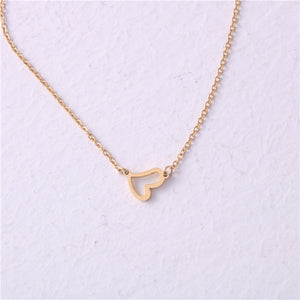
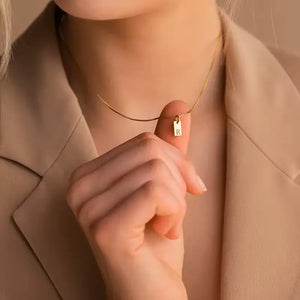

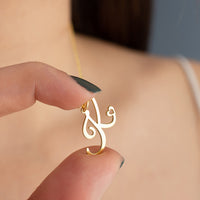
The piece they're describing → Heart Initial Necklace for Women — 18K Gold Plated, Personalized Letter + Heart Pendant
Personalize Yours


