


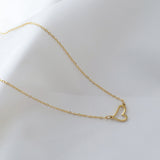
The pearl necklace is one of the oldest symbols in human history. Long before diamonds became the default for fine jewelry, pearls were the gem of queens, emperors, and brides. If you've ever wondered what a pearl necklace really means — as a gift, as a symbol, or as a personal statement — this guide covers everything from ancient mythology to what it signals when you give one today.
The Ancient History of Pearl Symbolism
Pearls predate almost every other gemstone in recorded history. Ancient Egyptians buried pearls with their dead, believing they carried souls safely into the afterlife. Cleopatra reportedly dissolved a pearl in wine and drank it — a gesture meant to prove her wealth was beyond comprehension.
In Ancient Rome, pearls became so coveted that Julius Caesar passed laws in 55 BCE restricting pearl jewelry to the ruling class. Wearing pearls without the right social standing was actually illegal. That's how powerful the symbolism was.
In China, pearls symbolized wisdom and were believed to protect the wearer from fire. Dragons were thought to carry pearls between their teeth as symbols of enlightenment. The Chinese emperors treated pearls as objects of divine power — not just luxury.
Japan and Polynesia developed their own traditions. In Japan, pearls became associated with tears of joy and the moon's reflection on water — a symbol of purity and the sacred. The tradition of gifting pearls at weddings in Japan grew directly from this belief: they represented hope for a harmonious marriage.
What a Pearl Necklace Symbolizes
Pearl necklace meaning isn't fixed to one idea. It layers several qualities that have built up across cultures over millennia. Here's what pearls most consistently represent:
| Symbol | Cultural Origin | Modern Meaning |
|---|---|---|
| Purity | Ancient Greece, Rome, Christianity | New beginnings, bridal wear, innocence |
| Wisdom | Ancient China, India | Emotional intelligence, life experience |
| Wealth & Status | Rome, Renaissance Europe | Refinement, elevated taste |
| Protection | Persia, China | Spiritual grounding, calm energy |
| Femininity & Grace | Japan, Victorian England | Elegance, confidence, sophistication |
| Love & Devotion | Greek mythology (Aphrodite) | Romantic milestones, anniversary gifts |
| Transformation | Universal | Growth through adversity, resilience |
The transformation symbol is arguably the most meaningful. A pearl forms when a mussel responds to an irritant — a grain of sand, a parasite — by coating it in nacre, layer by layer, until something beautiful emerges. That process mirrors what humans do with difficulty. Many people give or receive pearl necklaces specifically because they represent turning hardship into beauty.

Pearl Necklace Meaning Across Cultures
The same jewel carries different weight depending on where you are in the world. Understanding these cultural meanings helps you choose a pearl necklace with real intention.
China: Pearls represent wisdom, wealth, and protection. They're closely associated with dragons — the highest symbol of power and good fortune in Chinese tradition. Gifting pearls to someone in China carries the wish that they'll accumulate wisdom and live well.
India: In Hindu tradition, pearls are connected to the moon and Venus. They symbolize purity, and the Vedas describe pearls as one of the sacred gems. Gifting pearls at weddings or auspicious events carries deep spiritual weight.
Middle East: The Persian Gulf was once the world's primary source of natural pearls. In Persian mythology, pearls were formed from dewdrops that fell into the sea and were swallowed by oysters — symbols of perfection and divine beauty.

What It Means to Give Someone a Pearl Necklace
A pearl necklace is one of the most intentional gifts in jewelry. Unlike rings or bracelets, a necklace sits close to the heart. When you give one, you're communicating something specific.
Given to a bride: You're wishing her purity, grace, and a harmonious marriage. Pearls are the traditional June birthstone and among the oldest bridal symbols in the world. Many brides wear pearl necklaces as their "something old" or "something borrowed."
Given to a mother: Pearls symbolize the strength and patience of a woman who has built something beautiful from difficulty. They're one of the most meaningful Mother's Day gifts precisely because the symbolism mirrors what mothers do.
Given on an anniversary: The 30th wedding anniversary is traditionally the pearl anniversary. But pearls also work for first, third, and fifth anniversaries — any milestone where you want to mark growth and endurance.
Given to a graduate: Wisdom and a new chapter. Pearl necklaces appear at graduations because they signal the acquisition of knowledge and the start of something new.
Given as a coming-of-age gift: In many families, a first pearl necklace is passed down at 16 or 21 — a symbol of entering adulthood with grace.
According to the Jewelers of America, pearl jewelry consistently ranks among the top five gifted fine jewelry categories, particularly for milestone occasions like anniversaries, birthdays, and graduations.
The Spiritual Meaning of Pearls
Across spiritual traditions, the pearl necklace carries energy that goes beyond aesthetics. In crystal healing and metaphysical practice, pearls are said to promote calmness, sincerity, and emotional balance. They're linked to the moon and to water — both symbols of intuition, cycles, and depth.
In Christianity, the "pearl of great price" in Matthew 13:45–46 is used as a metaphor for the Kingdom of Heaven — something so precious that a person would sell everything to obtain it. The metaphor elevated pearls to a symbol of ultimate spiritual worth in Western religious culture.
In Buddhism, a flawless pearl is one of the Eight Treasures and represents purity of mind. It sits alongside symbols of good fortune and the Buddha's teachings.
In Hinduism, Vishnu is said to have pulled the first pearl from the depths of the sea to present to his daughter on her wedding day. This origin story cemented pearls as symbols of divine love in Hindu tradition.
What Different Pearl Colors Mean
Pearl color carries its own layer of meaning. While white is the most recognizable, freshwater pearls occur naturally in several colors — each with distinct symbolism and cultural significance:
| Pearl Color | Primary Symbolism | Best Gifting Occasion |
|---|---|---|
| White / Bright White | Purity, new beginnings, innocence | Weddings, christenings, graduations |
| Cream / Ivory | Warmth, timeless elegance, tradition | Anniversaries, Mother's Day |
| Pink / Rose | Love, femininity, tenderness | Romantic occasions, birthdays |
| Peach / Gold | Success, prosperity, vitality | Career milestones, auspicious occasions |
| Lavender | Intuition, spirituality, creativity | Birthdays, creative personalities |
| Black (Tahitian) | Mystery, strength, independence | Modern milestones, non-traditional style |
In Chinese tradition, golden and peach-toned pearls are especially auspicious — symbols of prosperity and good fortune. Black pearls carry Polynesian legend: Oro, the god of peace and fertility, was said to descend on a rainbow and offer a black pearl as a divine gift, making them symbols of rare beauty and grace.
In astrological tradition, pearls are most closely linked to the moon and the zodiac sign Cancer (June 21–July 22) — which also makes June the pearl birthstone month. Pearl necklaces gifted to Cancers carry extra resonance: they're believed in Vedic and Western astrology to strengthen intuition and emotional balance. Water signs more broadly — Pisces and Scorpio — also have a traditional affinity with pearl symbolism due to their lunar and oceanic connections.
What Pearl Necklaces Mean Today
Modern pearl necklace meaning has evolved without losing its roots. Today's wearers aren't confined to the single-strand classic. Pearl pendants on fine chains, freshwater baroque styles, and pearl chokers each carry the core symbolism — purity, wisdom, transformation — while fitting modern aesthetics.
Younger generations have rediscovered pearls as a reaction against fast fashion and disposable jewelry. A pearl necklace signals intention. It says: I chose something real, something that lasts, something with meaning.
Celebrities like Rihanna, Harry Styles, and Zendaya have all worn pearl jewelry in recent years — not as an homage to tradition but as a statement of individuality. The pearl necklace today crosses gender, age, and occasion boundaries in a way it never has before.
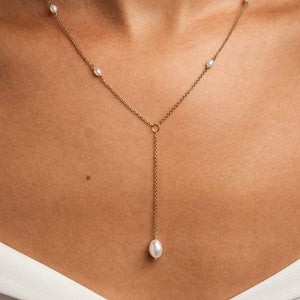
At AJLuxe, our Freshwater Pearl Necklace uses a genuine natural pearl pendant on a dainty chain — the kind of piece that carries all this symbolism at a price that makes the gift feel generous without being inaccessible. You can explore our full necklaces collection for more options.
Why Pearls Carry Meaning Other Gems Don't
Diamonds, rubies, and sapphires are mined from the earth. Their beauty is geological — created by heat, pressure, and time inside rock. A pearl is different. It's created by a living creature, in response to adversity, layer by layer over months or years.
That biological origin is why pearl symbolism centers on transformation, patience, and resilience. No other gemstone has this story. When you wear a pearl, you're wearing something that literally grew from difficulty into beauty.
The GIA (Gemological Institute of America) notes that nacre quality — the thickness and luster of the layers — is the single most important quality factor in a pearl. A pearl with thick, high-quality nacre develops from a mussel that was given time and proper conditions. That patience shows. You can see it in the depth of the glow.
How to Tell Real Pearls from Imitation
This is the practical question most symbolism guides don't answer — and it matters if you're buying or receiving a pearl necklace.
The tooth test. Rub the pearl lightly against the edge of your front tooth. A real pearl — whether natural or cultured — feels slightly gritty or rough, like fine sandpaper. This is the nacre's crystalline surface at a micro level. An imitation pearl (glass or plastic coated in pearlescent paint) feels completely smooth. This test works every time and leaves no mark on the pearl.
Surface texture under light. Real pearls have a depth of luster — the light seems to come from within the pearl, not just bounce off the surface. Imitation pearls look like coated balls — the shine sits on top rather than emanating from inside.
Weight. Real pearls are heavier than most imitation pearls. A strand of real Akoya pearls has a satisfying weight; plastic imitations are noticeably lighter.
Price reality check. A genuine Akoya strand (7–8mm, 18 inches) from a reputable seller costs $150–$600+ depending on quality. If a "pearl necklace" is $20 online without explanation, it's almost certainly imitation.
Styling and Layering Pearl Necklaces
Solo classic: A single-strand Akoya at 18 inches (standard princess length) sits just below the collarbone — the never-fail option that pairs with anything from a collared shirt to a dress.
Layered with gold chains: The biggest contemporary trend. Stack a pearl strand with 1–2 delicate gold chains at different lengths — the pearl strand usually shortest or mid-length, gold chains extending below.
Asymmetric and modern: A single large Baroque pearl pendant on a thin chain — one statement piece, nothing else. Works especially well in black Tahitian or golden South Sea.
Shop at AJLuxe: Freshwater Pearl Necklace — genuine freshwater pearl, 14K gold chain ($28.99).
Related reading: Types of pearls guide.
Related reading: Freshwater vs saltwater pearls.
Related reading: Akoya vs freshwater pearls.
Related reading: Coquette jewelry guide.
Related reading: Pearl jewelry.
Frequently Asked Questions
How can I tell if a pearl necklace is real?
Rub a pearl lightly against your tooth edge. Real pearls feel slightly gritty (crystalline nacre surface). Imitation pearls feel completely smooth (coated glass or plastic). Also look at the luster: real pearls have depth — light seems to come from within. Imitation pearls look like coated balls with surface-only shine. Real Akoya strands typically cost $150–$600+ for good quality.
What is the difference between Akoya, South Sea, and Tahitian pearl necklaces?
Akoya pearls are the classic round white pearl from Japan — sharpest luster, 6–9mm size, the standard formal choice. South Sea pearls (Australia, Philippines) are the largest (10–15mm), with cream and golden colors and a warm deep luster — the most expensive category. Tahitian pearls (French Polynesia) are naturally dark — the only black pearl — with dramatic dark greens, grays, and peacock overtones, 9–14mm.
What does a pearl necklace symbolize as a gift?
A pearl necklace symbolizes purity, wisdom, love, and transformation when given as a gift. The specific meaning depends on the occasion: bridal gifts emphasize purity and new beginnings, while gifts to mothers symbolize strength and patience. For milestones like graduations or anniversaries, pearls represent the wisdom earned through experience. The gift always carries the sense that the recipient is worth something lasting and meaningful.
What does it mean when someone gives you a pearl necklace?
When someone gives you a pearl necklace, they're typically expressing deep affection, respect, or a wish for your well-being. Pearl necklaces are rarely impulse gifts — they require intention. A pearl necklace given by a partner at a milestone anniversary signals devotion. Given by a parent, it often marks a rite of passage. Given by a friend, it expresses sincere admiration and care.
What is the spiritual meaning of wearing a pearl necklace?
Spiritually, a pearl necklace is associated with calmness, sincerity, and emotional balance. In metaphysical traditions, pearls carry lunar energy — connected to intuition, cycles, and depth. In Christianity, they symbolize divine perfection. In Buddhism, they represent purity of mind. In Hinduism, they're linked to divine love and auspicious beginnings. Wearing pearls is believed by many to promote inner peace and clear thinking.
Are pearls good luck or bad luck?
In most cultures, pearls are considered good luck — symbols of wisdom, protection, and prosperity. The "pearls bring tears" superstition appears primarily in some European folklore, but it's a minority tradition. Ancient Egyptian, Chinese, Japanese, Indian, and Persian cultures all viewed pearls as profoundly auspicious. Modern brides around the world wear pearl necklaces specifically because they're seen as lucky symbols for a new beginning.
What does a pearl necklace mean in Western culture?
In Western culture, a pearl necklace primarily signals sophistication, refinement, and timeless elegance. Today it carries associations with polish and understated luxury. In bridal culture, pearls represent purity and grace. Gifted between romantic partners, they express devotion. As a self-purchase, they're a statement of personal confidence.
What do pearl necklaces mean in Asian cultures?
In Chinese culture, pearls represent wisdom, good fortune, and protection — linked to the divine power of dragons. In Japanese tradition, pearls symbolize purity, sincerity, and the moon's sacred light, making them a wedding staple. In Indian culture, pearls are sacred gemstones associated with the moon and Venus, appearing at weddings and auspicious ceremonies. In Polynesian tradition, Oro the god of peace and fertility was said to travel on a rainbow and offer a pearl to find a human wife.
Is a pearl necklace an appropriate birthday gift?
Yes — pearl necklaces make excellent birthday gifts, particularly for significant birthdays (21, 30, 40, 50). June babies benefit most directly since pearl is the June birthstone. But pearls are universally appropriate because their meaning (wisdom, purity, growth) transcends birth month. A pearl necklace says you see the recipient as someone who embodies grace and strength — which suits almost anyone worth celebrating.
What is the difference between natural and cultured pearl necklaces?
Natural pearls form entirely without human help inside wild oysters or mussels — they're extremely rare and expensive, often found only in antique jewelry. Cultured pearls are grown on pearl farms where a technician inserts a nucleus into a mussel and then harvests the pearl after it forms. Cultured pearls carry identical symbolism and material quality to natural pearls; the GIA recognizes cultured pearls as genuine pearls. Almost all pearl necklaces sold today (over 98%) are cultured.
What is the pearl anniversary, and what does it symbolize?
The pearl anniversary is the 30th wedding anniversary. Pearl is the traditional gift because pearls take roughly 1–3 years to form — and a 30-year marriage represents patience, resilience, and beauty built through time. The symbolism is that, like a pearl, a long marriage grows more lustrous with each passing year. Pearl anniversary gifts include necklaces, earrings, bracelets, or a set of cultured pearls for a partner who doesn't yet own them.
Can anyone wear a pearl necklace, or is it only for certain occasions?
Anyone can wear a pearl necklace for any occasion — the idea that pearls are only for formal events is outdated. Modern pearl necklaces range from baroque pendants on thin chains (perfect for daily wear) to classic multi-strand pieces for formal occasions. Freshwater pearl pendants like those at AJLuxe work beautifully for work, date nights, casual outings, and special events. The key is choosing the right style and length for the outfit and setting.
What do different pearl colors symbolize?
Pearl color adds a layer of meaning beyond the standard symbolism. White pearls represent purity and new beginnings, making them the classic choice for weddings and graduations. Pink or rose pearls symbolize love and tenderness — ideal romantic gifts. Peach and gold pearls carry associations with prosperity and vitality, especially in Chinese tradition. Lavender pearls suggest spirituality and intuition. Black Tahitian pearls, steeped in Polynesian legend, represent mystery, strength, and independence. When choosing a pearl necklace as a gift, color lets you tailor the meaning to the recipient.
Can men wear pearl necklaces?
Yes — men wearing pearl necklaces has deep historical roots and a strong modern revival. In Renaissance and Baroque Europe, male royalty and aristocrats routinely wore elaborate pearl ropes as markers of power and wealth. Today, figures like Harry Styles, A$AP Rocky, and Bad Bunny have brought pearl necklaces back into mainstream male fashion. The symbolism is identical regardless of who wears it: wisdom, transformation, and refined taste. A single freshwater pearl pendant on a fine chain is among the most wearable options for men who want a subtle, meaningful piece.
Final Thoughts
A pearl necklace is never just jewelry. Across every culture that ever encountered a pearl, the same themes emerge: beauty born from adversity, purity of intention, the wisdom that comes from patience. That's a remarkable amount of meaning packed into a small sphere of nacre.
When you give a pearl necklace, you're giving all of that history. When you wear one, you carry it.
If you're looking for a pearl necklace to give or to keep, explore the best pearl necklace guide from AJLuxe — or browse our full necklaces collection for styles from $15 to $65, all with 925 sterling silver components and gift-ready packaging.
Written by the AJLuxe team, specialists in personalized sterling silver jewelry. Last updated: July 2026.
Planning a gift for a Gemini birthday? Our Gemini birthstone guide explains why pearl, alexandrite, and emerald all connect to the Twins sign — and which stone fits each Gemini personality type best.
All third-party trademarks, brand names and product names are the property of their respective owners. AJLuxe is not affiliated with, endorsed by, sponsored by, or otherwise connected to any third-party brand referenced in this article. Brand names are used solely for accurate comparative reference, and material descriptions reflect each brand's own published product specifications at the time of writing.
You Might Also Like

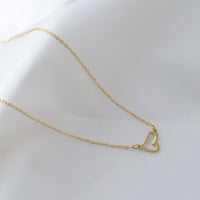
The piece they're describing → Dainty Heart Necklace for Women — 18K Gold Plated, Minimalist Gold Heart Pendant
Personalize Yours


