


Related reading: the bolo bracelet format specifically -- how the slide mechanism works and whether it stays on.
Related reading: what makes a curb chain bracelet one of the sturdier everyday chain-link styles.
Related reading: why a wheat chain is considered one of the strongest common bracelet constructions.
Related reading: the flat, ribbon-like herringbone weave, explained in bracelet form.
Bracelets are one of the most diverse jewelry categories: a 2mm gold chain bracelet and a wide hammered cuff are both bracelets, but they serve completely different purposes, require different sizing, and pair with different outfits. This guide covers every bracelet type, how to size them, how to stack them, and which clasps to look for.
The 20 Types of Bracelets

1. Bangle Bracelet
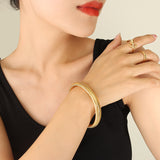
A bangle is a rigid, solid ring with no clasp that slides over the hand onto the wrist. Bangles can be plain, textured, hammered, engraved, or set with stones. They come in round, oval, and square cross-sections, and in thin stacking widths (2–4mm) or wider statement widths (8mm+). Bangles are typically worn in sets of three to seven — the clink of metal against metal is part of the appeal. Best for: everyday wear, stacking, bold-wrist looks. Material note: measure your hand circumference (thumb pressed to fingers) to ensure it slides on. See our full guide on how to wear a bangle for sizing, stacking, and styling.
2. Cuff Bracelet
A cuff is a wide, rigid bracelet with an opening (a gap) that allows it to slip over the wrist without a clasp. Cuffs range from narrow (10–15mm) to wide statement pieces (25mm+). They're usually worn alone as a focal point rather than stacked. The open-back design makes sizing forgiving — you can gently bend most cuffs to adjust the fit. Best for: making a statement, minimalist editorial looks, dressy occasions. Avoid: high-impact activities where they could bend out of shape.
3. Chain Bracelet
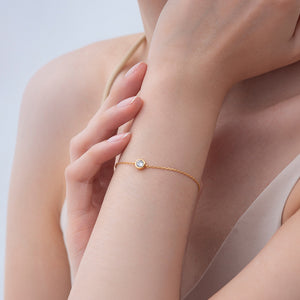
A chain bracelet is a flexible bracelet made of metal links in any of the standard chain patterns — cable, curb, box, figaro, rope, or snake. Chain bracelets usually have a lobster or box clasp. See our snake chain bracelet guide for that construction specifically, including an honest note on AJLuxe’s closest current match. Width ranges from 1mm (barely-there) to 8mm (bold Cuban link). A plain gold chain bracelet is one of the most versatile pieces you can own — it pairs with everything and stacks easily. Best for: everyday wear, stacking, gifting. Pro tip: a cable or box chain in 1.5–2mm width is the most universally flattering everyday bracelet width. Our box chain bracelet guide covers the construction and sizing in more depth.
4. Tennis Bracelet
A tennis bracelet features a continuous line of individually set diamonds or gemstones — typically round cuts in prong, bezel, or channel settings — along a flexible metal chain. The name comes from tennis player Chris Evert, who lost hers at the 1987 US Open and famously paused the match to recover it. Tennis bracelets are fine jewelry staples worn at formal and semi-formal occasions, though modern versions in cubic zirconia and gold-plated silver make them everyday-accessible. Best for: dressy occasions, wedding jewelry, stacking with thinner chains. Sizing: worn with 0.5 inch of ease, just loose enough to lay flat against the wrist.
5. Charm Bracelet
6. Beaded Bracelet
Beaded bracelets are made from individual beads — natural stones, crystals, glass, wood, or metal — strung on elastic cord or wire. Natural stone beaded bracelets have surged in popularity as a wellness accessory (amethyst, lapis lazuli, onyx, tiger's eye). See our guide to the best crystal bracelets by intention. They stack easily with chain bracelets and bangles. Most are stretch/elastic, so sizing is forgiving. Best for: casual wear, stacking, self-gifting. Care note: elastic cord breaks down over time — restring when it shows signs of stretching.
7. Pearl Bracelet
Pearl bracelets feature cultured freshwater or saltwater pearls on a string or wire. Classic styles have a single strand of matching round pearls with a box clasp. Modern versions mix pearl sizes, shapes (baroque, keshi, coin pearls), and combine with gold chain links. Pearl bracelets are traditionally formal but contemporary pearl-chain hybrids have made them everyday-appropriate. Best for: formal occasions, bridal jewelry, classic styling. Care: store pearls flat, clean with a damp cloth only, and restring annually if worn regularly.
8. Wrap Bracelet
A wrap bracelet is designed to wrap multiple times around the wrist. Most are made from leather cord, suede, waxed cord, or beaded strands that wind 2–5 times to create a layered look with a single piece. They usually fasten with a button, lobster clasp, or knot. Wrap bracelets have a boho, casual aesthetic and work well as a single statement piece. Best for: casual and festival wear, beach days, summer styling. Avoid with: formal looks — too casual for most dressed-up occasions.
9. Leather Bracelet
Leather bracelets range from minimalist single-strap bands to braided multi-cord wraps, often featuring metal hardware (buckles, clasps, stud detailing). They're predominantly worn by men but unisex styles with simple stitching and metal accents cross easily into women's styling. Best for: casual and edgy looks, men's jewelry, adding texture to a stack. Care: condition leather periodically and keep it away from water to prevent cracking.
10. Birthstone Bracelet
A birthstone bracelet features one or more of the 12 birthstones — typically in a beaded, charm, or tennis-bracelet format. They're among the most popular gifted jewelry styles for birthdays and Mother's Day. Birthstone chain bracelets with a single stone charm are the most elegant version; beaded birthstone bracelets are the most casual. Best for: gifting, personal meaning, personalized jewelry collections. Pairs naturally with a birthstone necklace for a coordinated look.
11. Bar Bracelet
A bar bracelet has a rectangular or cylindrical horizontal bar (or multiple bars) as its focal element, connected by fine chain links. Bars can be engraved with names, dates, coordinates, or left plain for a minimalist look. This is one of the most popular personalized jewelry styles because the flat surface is ideal for engraving — it's also the format most medical alert bracelets use, since a flat bar holds an engraved condition or emergency contact clearly. Best for: personalized gifts, minimalist everyday wear, layering as a dainty piece. Sizing: wear with 0.5 inch of ease so the bar sits centered on the wrist.
12. Friendship Bracelet
Friendship bracelets are traditionally hand-woven or knotted from embroidery floss in bright patterns — stripes, chevrons, diamonds. Modern versions include dainty gold chain friendship bracelets with minimal charms, worn with sentimental meaning. Both styles are typically given (and received) in pairs — the woven string style in particular carries its own layered symbolism, covered in our string bracelet meaning guide. Best for: gifting to a close friend or child, casual wear, sentimental jewelry. The handmade textile version is specifically casual; gold chain versions are more versatile.
13. Slider Bracelet
A slider bracelet has an adjustable clasp mechanism that allows the size to be changed by sliding the clasp along the chain — making it one-size-fits-most. The slider adjuster is usually a small decorative element (sphere, heart, bar) that sits on the chain. Best for: gifting (no sizing required), those between sizes, layered wrists. Slider mechanisms vary in quality — look for secure-locking sliders that don't loosen with wear.
14. Hand Chain Bracelet
A hand chain (also called a slave bracelet or belly ring alternative) connects a bracelet to a ring via a delicate chain, worn over the back of the hand. It creates a decorative web effect between wrist and finger. Hand chains are a statement accessory for events, weddings, and editorial looks. Best for: special occasions, bridal accessories, fashion-forward styling. Not practical for everyday wear — the chain catches on everything.
15. Multi-Strand Bracelet
A multi-strand bracelet has two or more parallel strands of chain, cord, or beads held together at a single clasp — creating the look of a stack in one piece. They're available in 2-strand (subtle) to 5-strand (statement) designs in chain, pearl, or bead variations. Best for: achieving a stacked look without managing multiple pieces, gifts, formal events.
16. Braided Bracelet
Braided bracelets use leather, cord, fabric, or metal wire woven into a braid pattern. They have a textural, artisanal feel. Metal braided bracelets (woven gold or silver wire) have a fine jewelry version; cord braided bracelets are the casual, beach-ready version. Best for: adding texture to a metal stack, casual-to-beach styling, men's and unisex looks.
17. Initial / Name Bracelet
Initial and name bracelets feature one or more letter charms, a nameplate, or an engraved bar spelling out a name, initial, or word. They're one of the top-selling personalized jewelry categories — especially for Mother's Day and birthday gifting. Chain-link name bracelets are the most elegant; beaded initial bracelets are the most casual. Best for: personalized gifting, Mother's Day, children's jewelry. See our necklace guide for the same trend in pendant form.
18. Evil Eye Bracelet
Evil eye bracelets feature the nazar amulet — a blue-and-white eye symbol used in Mediterranean, Middle Eastern, and South Asian cultures as protection against negative energy. Modern versions range from a simple blue glass bead on a cord to 18K gold evil eye charm bracelets with sapphire enamel. They've crossed from cultural talisman to mainstream fashion accessory. Best for: symbolic/spiritual wear, gifting with meaning, casual stacking.
19. Anklet (Ankle Bracelet)
Technically a bracelet worn around the ankle rather than the wrist. Anklets come in chain, beaded, charm, and adjustable styles. They're worn casually in warm weather with sandals or bare feet. Sizing is different from wrist bracelets — most anklets are 9–11 inches (23–28cm). For a full guide on how to wear, size, and stack anklets, see our complete anklet styling guide.
20. Statement / Cocktail Bracelet
A statement bracelet is any wide, bold, or heavily embellished piece designed to be the centerpiece of a wrist look. This includes wide pavé-set crystal cuffs, chunky gemstone bangles, and bold geometric designs. Statement bracelets are worn alone — not stacked — and command the full visual focus. Best for: formal events, galas, red carpet looks, dressing up a simple outfit.
Types of Bracelet Clasps
The clasp is what keeps your bracelet on your wrist. Here are the six most common types and what each is best suited for:
| Clasp Type | How It Works | Security | Best For |
|---|---|---|---|
| Lobster clasp | Spring-loaded lever opens a hook | ✅ High | Chain bracelets, everyday wear |
| Box clasp | Tab clicks into a box housing | ✅ High | Tennis bracelets, pearl bracelets |
| Toggle clasp | T-bar threads through a ring | ⚠️ Medium | Decorative wear, loose-fit styling |
| Magnetic clasp | Two magnetic ends snap together | ⚠️ Low–medium | Arthritis / limited dexterity, casual wear |
| Fold-over clasp | Hinged panel folds and locks | ✅ High | Bangles, wide chain bracelets |
| Spring ring | Small circular spring-loaded hook | ⚠️ Medium | Lightweight fashion bracelets |
The most secure clasps for fine jewelry are the lobster clasp and box clasp. If you're investing in a tennis bracelet or pearl bracelet, make sure it has one of these two closure types.
Bracelet Sizing Guide
Bracelet fit affects both comfort and appearance. A too-tight bracelet restricts movement; a too-loose bracelet slides to the elbow and looks sloppy.
How to Measure Your Wrist
- Wrap a flexible measuring tape or a strip of paper around the narrowest part of your wrist, just below the wrist bone.
- Note the measurement. The average women's wrist is 6–6.5 inches (15–16.5 cm).
- Add 0.5 inches (1.25 cm) for a snug-but-comfortable fit. Add 0.75–1 inch for a looser, stackable fit.
| Wrist Size | Snug Fit Bracelet | Standard Fit | Stackable Fit |
|---|---|---|---|
| 5.5 in / 14 cm | 6 in / 15.2 cm | 6.25 in / 15.9 cm | 6.5 in / 16.5 cm |
| 6 in / 15.2 cm | 6.5 in / 16.5 cm | 6.75 in / 17.1 cm | 7 in / 17.8 cm |
| 6.5 in / 16.5 cm | 7 in / 17.8 cm | 7.25 in / 18.4 cm | 7.5 in / 19 cm |
| 7 in / 17.8 cm | 7.5 in / 19 cm | 7.75 in / 19.7 cm | 8 in / 20.3 cm |
Sizing by Bracelet Type
- Chain bracelet: Standard + 0.5 inch ease. Should lay flat against the wrist without sliding up the forearm.
- Bangle: Measure your hand with thumb pressed to fingers — this is the widest point it must slide over. The bangle should be at least 0.5 inch larger than this measurement.
- Tennis bracelet: Snug fit + 0.5 inch. It should lay flat with minimal movement — loose tennis bracelets twist and the stones face the wrong way.
- Cuff: Most are adjustable. Aim for a bracelet circumference about 0.5 inch larger than your wrist. The open back provides adjustment room.
- Beaded stretch: Should slide over the hand with slight resistance and sit snugly without cutting off circulation.
How to Stack Bracelets

Bracelet stacking is one of the best ways to personalize a wrist look. The principles mirror those of stacking rings — vary proportions, mix textures, use odd numbers.
The 3-5-7 Rule
Stack bracelets in odd numbers — 3, 5, or 7. Odd numbers feel balanced without being symmetrical. Three is the easiest starting point: one thin chain, one medium bangle, one beaded or charm piece.
Mixing Metals and Textures
Vary width, texture, and weight across your stack. A stack of three identical thin chains reads flat. Instead: one thin chain (1–2mm), one medium textured cuff (10–12mm), one beaded or bar bracelet. This creates visual rhythm. For metals, two-thirds of one metal and one-third of another works: three gold-toned pieces with one silver — intentional mixing rather than accidental matching.
Stacking by Occasion
| Occasion | Recommended Stack |
|---|---|
| Everyday / work | 2–3 thin gold chains or one thin chain + one slim bangle |
| Date night / dinner | Tennis bracelet + 1–2 thin chains, or wide cuff alone |
| Wedding / formal | Tennis bracelet alone, or pearl bracelet with one delicate chain |
| Casual / weekend | 3–5 mixed: beaded + wrap + thin chain + bangle |
| Beach / festival | 5–7 stacked anklets or wrist mix of cord, beaded, and thread bracelets |
Bracelet Metals Guide
The metal your bracelet is made from affects its durability, appearance, and how it responds to daily wear.
| Metal | Durability | Tarnishes? | Best For |
|---|---|---|---|
| Solid gold (14K–18K) | Excellent | No | Heirloom, daily wear, investment pieces |
| Gold vermeil (18K over silver) | Good (2–4 yrs with care) | Minimal | Fine jewelry look at lower price |
| Gold-plated (over brass/silver) | Fair (6–24 months) | Yes (with wear) | Fashion jewelry, trend pieces |
| Sterling silver (925) | Good | Yes (polishes off) | Hypoallergenic daily wear, classic pieces |
| Rose gold (gold + copper alloy) | Good | Minimal (solid) / yes (plated) | Warm skin tones, romantic styling |
Related reading: Small Wrist Bracelet Size.
Related reading: 30 Cute Bracelet Ideas to Stack, Wear & Gift in 2026.
Shopping specifically for mom? See our full guide to the best bracelets for mom — classic, sentimental, birthstone, and personalized styles, with sizing and budget advice.
Frequently Asked Questions
What is the most popular type of bracelet?
Tennis bracelets lead in fine jewelry. Beaded and charm bracelets dominate the fashion and gifting market. For everyday minimalist wear, thin gold chain bracelets and slim bangles are the most widely purchased. The stacked thin bangle trend has made multiple-bangle sets one of the top-selling bracelet formats in 2026.
What is the difference between a bangle and a bracelet?
A bracelet is any wrist jewelry — the broad category. A bangle is a specific type: a rigid, solid ring with no clasp that slides over the hand. The defining characteristic is that a bangle is inflexible and has no opening or fastening mechanism. Other bracelets have clasps, stretch, or links that make them adjustable.
What type of bracelet is best for everyday wear?
A thin gold chain bracelet (1.5–2mm width) or a slim bangle is the most practical for everyday wear. Both are durable, don't catch on fabrics, and work with any outfit from casual to professional. Sterling silver is the most budget-friendly everyday option; gold vermeil over 925 silver is the best balance of quality and price for daily wear.
What is a tennis bracelet?
A tennis bracelet features a continuous row of individually set diamonds or gemstones on a flexible metal chain. Named after tennis player Chris Evert, who lost hers at the 1987 US Open, they're considered a fine jewelry staple for formal and semi-formal occasions. Modern versions use cubic zirconia for everyday-accessible pricing.
How do I measure my wrist for a bracelet?
Wrap a flexible tape or strip of paper around the narrowest part of your wrist just below the wrist bone. Add 0.5 inches for standard fit, 0.75–1 inch for a looser stackable fit. For bangles, measure your hand at its widest point (thumb pressed to fingers) — the bangle must slide over this point and needs to be at least 0.5 inch larger than this measurement.
Can you stack bracelets?
Yes — use the 3-5-7 rule (odd numbers), vary width and texture across pieces, and mix one element of contrast into your metal family (two gold pieces + one silver, or vice versa). Start with the thinnest piece closest to the wrist bone and build outward with increasing width. See our guide on how to stack rings for the same principles applied to fingers, or our full bracelet stacking guide for wrist-specific sizing and watch pairing.
What bracelet clasps are most secure?
Lobster clasps and box clasps are the most secure for daily wear. Toggle clasps are decorative but can open with loose fit. Magnetic clasps are convenient but not ideal for high-value or active-wear bracelets. For tennis bracelets and pearl bracelets specifically, a box clasp with a figure-eight safety latch is the gold standard.
What bracelets are in style in 2026?
Stacked fine chain bracelets in yellow gold (1–2 chains layered), beaded natural stone bracelets worn in stacks of 3–5, tennis bracelets for evening wear, hand chain bracelets for event dressing, and initial/name bar bracelets for personalization. Mixed-metal stacking — gold and silver together — is now widely accepted and widely worn.
Shopping for a grandmother specifically? See our bracelet for grandma buying guide for clasp-ease and style picks.
Buying a bracelet for a wife specifically? Our bracelet for wife guide matches the style to her wrist and habits, with real sizing and metal facts.
Final Thoughts
Bracelets are the most stackable and most versatile jewelry category. Whether you're building a minimal gold-chain wrist or a full curated stack of seven pieces, the key is mixing proportion and texture — never all the same weight and style at once.
For more on the broader jewelry landscape, see our guides on types of earrings, types of necklaces, and types of rings for women — or build your complete jewelry wardrobe with our ring collection and earring collection. For meanings, sizing, stacking, and metal care across every bracelet type, see our complete bracelet meanings and care guide.
Want a style that connects the wrist to a ring? See our guide to hand chains — the finger-to-wrist bracelet style.
Written by the AJLuxe team — specialists in personalized sterling silver jewelry. Last updated: July 2026.
All third-party trademarks, brand names and product names are the property of their respective owners. AJLuxe is not affiliated with, endorsed by, sponsored by, or otherwise connected to any third-party brand referenced in this article. Brand names are used solely for accurate comparative reference, and material descriptions reflect each brand's own published product specifications at the time of writing.
You Might Also Like

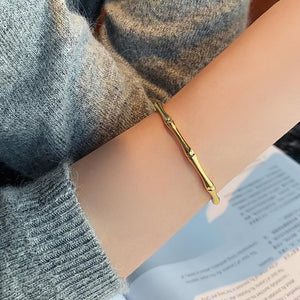
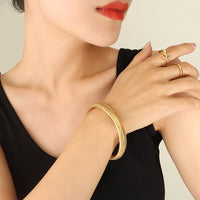
The piece they're describing → Gold Elastic Bangle Bracelet for Women — 18K Gold Plated, Stretch Fit, Stackable
Personalize Yours


