


- Gold, silver, platinum, copper, titanium and most brass do not visibly stick to a hand magnet. Iron, steel, nickel and cobalt do.
- A magnetic result means there is a magnetic metal somewhere: the body, a plated core, or just a clasp or spring.
- A non-magnetic result proves very little. Brass, zinc alloys, many stainless steels and plain silver plate are non-magnetic too.
- Test with a strong magnet, check the whole piece, and try the slide test on a flat surface.
- Pair the magnet with a hallmark check and an acid or professional test before you decide anything about value.
People reach for a magnet because it is cheap and takes ten seconds. It works for one narrow job: spotting a magnetic metal. This page is the chart for every common jewelry metal, plus how to run the test properly. If you want the deep dive on one metal, we have separate guides on whether gold is magnetic, whether stainless steel jewelry is magnetic and whether brass or copper jewelry is magnetic.
What a magnet test can and cannot show
A magnet test can only detect metals that are strongly attracted to magnets, mainly iron, nickel, cobalt and alloys built on them. Gold, silver, copper, platinum and titanium respond so weakly (or in some cases push back very slightly) that a hand magnet cannot show it, so the real question is what else is in the piece.
That gives the test two honest uses. If a "gold" or "silver" ring jumps to the magnet, something in it is not pure gold or silver, so you have learned something useful. If nothing happens, you have only ruled out the magnetic metals. The test says nothing about karat, purity or whether a piece is plated. For those, use a stamp check and the tests in our guides on telling if jewelry is real gold and telling if silver is real.
Magnet reaction by metal: the chart
The table below shows what to expect from a hand magnet. Alloys vary, so treat each row as likely, not guaranteed.
| Metal | Sticks to a hand magnet? | What to know |
|---|---|---|
| Gold (10K, 14K, 18K, 24K) | No | Alloy metals are normally non-magnetic. A stick usually points to a clasp, spring or a plated core. |
| Sterling silver (925) | No | Silver and copper do not stick. A magnetic clasp spring is common. |
| Platinum | No (usually) | Pure platinum is very weakly attracted at most. Some platinum alloys that include cobalt can show a slight pull, so a faint reaction does not mean fake. |
| Titanium | No | Very weakly paramagnetic in physics terms, which is not noticeable by hand. |
| Tungsten carbide | Sometimes | Pure tungsten is not magnetic. Jewelry tungsten is usually tungsten carbide held together by a cobalt or nickel binder, which can make a ring weakly to clearly magnetic. |
| Stainless steel | Depends on grade | Austenitic grades such as 316L are generally non-magnetic or only weakly magnetic. Cold working can add a little pull. Other families stick firmly. |
| Copper | No | Not attracted. Used a lot as an alloy partner in gold and silver. |
| Brass | Usually no | Copper plus zinc is non-magnetic, but iron or nickel contamination can give a faint pull. |
| Nickel | Yes | One of the few common magnetic metals. Some nickel alloys used for plating or cores are non-magnetic or only weakly so, depending on composition. |
| Iron and carbon steel | Yes, strongly | If a "gold" or "silver" piece sticks hard, this is often why. |
Details on individual metals live in our guides to platinum jewelry, titanium jewelry and tungsten versus titanium.
How to do the magnet test properly
Use the strongest magnet you can safely handle, test every part of the piece, and then run a slide test. A fridge magnet is too weak to show a faint pull, so a small rare earth magnet is a much better tool. Keep it away from phones, cards and anyone with a pacemaker, and do not pinch fingers between the magnet and a steel surface.
- Remove the piece from anything else. Test it on its own, away from steel tables, tools or metal trays.
- Touch the magnet to the main body. Then touch it to the clasp, jump rings, springs, hinges and any back or post separately. Note exactly which part reacts.
- Do the slide test. Lay the piece flat on a non-metal surface and slowly bring the magnet near it. A faint drag or shuffle toward the magnet is a weak attraction. No movement at all is the usual result for gold, silver and platinum.
- Try the angle test on a flat piece. Hold the magnet at a shallow angle on a thick flat item, and slide it down a smooth non-metal slope against the piece. Highly conductive, non-magnetic metals such as copper, silver and gold can slow a strong magnet slightly as it passes. This is a physics effect, it is subtle, and it is not proof of purity.
False positives and false negatives
Most confusing results come from parts, not the main metal. A solid sterling bracelet can stick to a magnet at the clasp because the tension spring inside is steel. A gold ring can seem magnetic if a steel resizing insert or a plated core is hiding under the surface.
- Clasps, springs and findings: lobster clasps, spring rings, pin backs and earring stoppers often contain steel springs. A magnetic clasp on its own says nothing about the chain.
- Plated cores: a thin gold or silver layer over steel will stick. A thin layer over brass or zinc usually will not, which is why the test misses a lot of plated jewelry.
- Cold working and welding: some stainless steels pick up a little magnetism where they were bent, drawn into wire or welded.
- Weak magnets: a magnet that cannot even lift a paperclip well can miss weak attraction entirely.
- Fakes that pass: brass, zinc alloys, copper and many non-magnetic steels all pass the test while being worth far less than gold or silver.
Our guide on whether a magnet sticks to sterling silver covers the silver cases in more depth, and the hallmarks guide explains the stamps you should check next.
What to do with the result: a decision guide
| What happened | Most likely meaning | Next step |
|---|---|---|
| Only the clasp sticks | Steel spring or finding | Test the chain or body alone. Usually fine. |
| Whole piece sticks firmly | Iron, carbon steel or a plated steel core | Not solid gold or silver. Check any stamp and the seller's description. |
| Whole piece sticks weakly | Stainless steel, cobalt or nickel in an alloy, or a tungsten carbide binder | Identify the material from the listing or stamp. |
| Nothing sticks | Could be gold, silver, platinum, titanium, brass, copper or a zinc alloy | Check stamps, then use a scratch, acid or professional test. |
Before you rely on any home test for money decisions, get a written opinion from a jeweler. If you plan to sell, get more than one quote. This page is general information, not valuation advice.
Does a magnetic result matter for your skin?
A magnetic result can hint at a metal such as nickel or steel, but it cannot tell you whether a piece will irritate you. Reactions depend on what touches your skin, and nickel is a common trigger for some people. For a plain-English look at how metals and sensitivity relate, see what makes jewelry hypoallergenic and the honest answer on stainless steel. This is general information; ask a doctor about a diagnosed allergy.
An honest note on what we do
We sell 925 sterling silver and 18K gold plated jewelry, set with cubic zirconia (never diamond). Some gold plated pieces are plated over 925 sterling silver and some over 316L stainless steel. We do not sell solid gold, platinum, titanium, tungsten, brass or copper jewelry. Plating wears gradually with wear and care, and gold plating is not the same as solid gold; see gold plated versus solid gold.
On a magnet, sterling silver and plated 316L pieces are generally not strongly magnetic, but clasps, springs and other small parts can contain steel, and we cannot promise a result for any single piece. 316L is considered hypoallergenic for most wearers, but it is not nickel free. Related comparisons: sterling silver versus stainless steel, gold plated versus stainless steel, copper versus brass and brass versus gold plated.
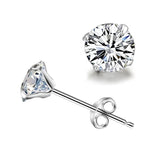
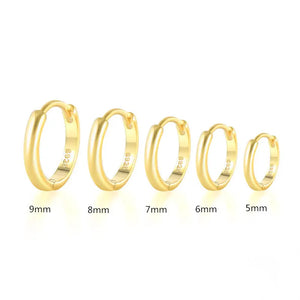
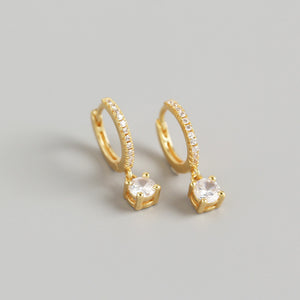
If you prefer sterling silver, look at our CZ stud earrings in 925 sterling silver or the minimalist huggie earrings in 18K gold plating over 925 sterling silver. For a plated stainless option, the drop huggie hoops use a 316L stainless steel base with 18K gold plating. You can also browse hypoallergenic earrings and gold plated jewelry. US orders ship free, and returns are free for 30 days.
More in this guide
Related reading: how to tell if silver is real, how to tell if jewelry is real gold, platinum jewelry guide, tungsten vs titanium jewelry and will a magnet stick to sterling silver.
Frequently Asked Questions
Does real gold stick to a magnet?
No. Gold and its usual alloy metals are not attracted to a hand magnet. If a gold-colored piece sticks, look for a steel clasp, a plated core or a base metal. Details are in our gold magnet guide.
Is silver slightly magnetic?
Silver is not attracted to a hand magnet in any way you can feel. Sterling silver is mostly silver with copper, so it behaves the same way. A pull usually comes from a steel clasp spring.
Does a magnet stick to platinum?
Not normally. Pure platinum is at most extremely weakly attracted, and some platinum alloys that contain cobalt may show a faint pull. Sources differ on exact behavior, so use a stamp and a professional test to confirm platinum.
Is titanium magnetic?
Titanium is not magnetic in everyday terms. It is very slightly paramagnetic, which a hand magnet cannot show.
Is tungsten magnetic?
Pure tungsten is not, but most tungsten rings are tungsten carbide with a cobalt or nickel binder, and those can be weakly or clearly magnetic. A magnetic tungsten ring is not necessarily fake.
Why is my stainless steel jewelry magnetic?
Many stainless steels are partly or fully magnetic. Even 316L, which is generally non-magnetic, can show a faint pull after bending or drawing. See our stainless steel magnet guide.
Does brass or copper stick to a magnet?
Copper does not, and brass usually does not, unless it contains iron or nickel. More in our brass and copper guide.
How accurate is a magnet test for gold?
It is accurate at ruling out magnetic metals but unreliable for confirming gold, because many non-magnetic metals pass. Combine it with stamps and a professional test.
Written by AJLuxe Team. Last updated: October 2026
All third-party trademarks, brand names and product names are the property of their respective owners. AJLuxe is not affiliated with, endorsed by, sponsored by, or otherwise connected to any third-party brand referenced in this article. Brand names are used solely for accurate comparative reference, and material descriptions reflect each brand's own published product specifications at the time of writing.
You Might Also Like
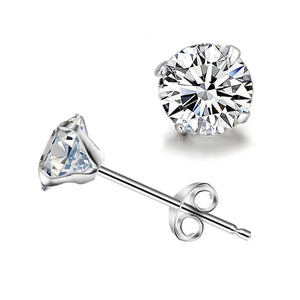
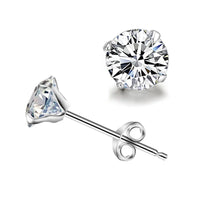
The piece they're describing → CZ Stud Earrings for Women — 925 Sterling Silver, Cubic Zirconia, Hypoallergenic
Personalize Yours


