


- Gold itself (10K, 14K, 18K, 24K) does not stick to a hand magnet. Yellow and rose gold alloys normally do not either.
- If a "gold" chain or ring clings to a magnet, check the clasp, spring ring and any hidden core first.
- White gold is the one gold family where a weak pull is occasionally possible, depending on the alloy.
- Gold plated jewelry follows its base metal: sterling silver is not noticeably magnetic, some steels are.
- A magnet can expose some fakes but can never prove gold. Many fake metals are also non magnetic.
People usually ask this after a magnet test on a chain goes strangely: it does nothing, it twitches, or it sticks. This guide explains what each result means for gold, white gold, rose gold and plated pieces. For the full set of at home checks, see our guide on how to tell if jewelry is real gold, and for the karat basics see 10K vs 14K vs 18K gold.
Why gold is not magnetic
Gold is classed by physicists as diamagnetic, which means it is very weakly pushed away from a magnetic field rather than pulled toward one. The effect is so tiny that it only shows up with sensitive lab equipment, so for any practical purpose a magnet and a gold bar simply ignore each other. Gold is not ferromagnetic like iron, nickel and cobalt, the three common metals that do stick.
That is why a magnet test is a popular first filter. If a piece sold as solid gold jumps to a magnet, something other than gold is doing the sticking. The catch, covered below, is that the test only works in one direction.
Are 10K, 14K and 18K gold magnetic?
No, in normal cases 10K, 14K and 18K gold are not noticeably magnetic, because the added metals are usually copper, silver and zinc, none of which stick to a hand magnet. Karat only tells you how much of the piece is gold: 10K is 41.7 percent, 14K is 58.3 percent and 18K is 75 percent. The rest is alloy. The full numbers are in our gold purity numbers guide.
Lower karat does not automatically mean more magnetic. What matters is which metals fill the remaining share. A 10K piece made with copper and silver will not stick. A cheaply made alloy with an iron or nickel rich mix can, in principle, show some pull, which is why a "slightly magnetic" 14K or 18K chain is worth a closer look at the clasp first. The hallmarks guide explains how to read the stamp, though a stamp on its own is not proof either.
Gold types and magnets at a glance
| Type | Usually alloyed with | Hand magnet result |
|---|---|---|
| 24K (pure) gold | Nothing | No attraction |
| Yellow gold, 10K to 18K | Silver, copper, zinc | Normally none |
| Rose gold | More copper | Normally none |
| White gold | Palladium, silver or nickel, often with a rhodium coat | Usually none; a faint pull is possible in some alloys |
| Gold plated over silver | Thin gold layer on sterling silver | Normally none |
| Gold plated over steel | Thin gold layer on a steel base | Depends on the steel grade |
| Gold plated over iron or a nickel base | Thin gold layer on a magnetic metal | Often sticks |
Sources disagree somewhat on white gold, which is why the table hedges. Treat any single result as a clue, not a verdict.
Is white gold magnetic?
Usually no, but it is the one gold family where a weak pull is occasionally possible. White gold is yellow gold whitened with metals such as palladium, silver or nickel, then often coated with a thin layer of rhodium. Nickel is ferromagnetic as a pure metal, so a nickel heavy mix is the most common reason a white gold piece reacts. Palladium is only very weakly magnetic and rarely noticeable. Because nickel is also a common skin allergen, the alloy matters for comfort as well, and our guide on why white gold turns yellow covers the rhodium layer.
Is rose gold magnetic?
No, rose gold is normally not magnetic, since its pink color comes from extra copper, which does not stick to a magnet. If a rose colored piece does stick, suspect a plated base metal, a steel clasp or a rose gold plated item rather than solid rose gold. We explain the make up in is rose gold real gold.
Why does my gold chain stick to a magnet?
The most common reason a gold chain is slightly magnetic is a clasp, spring ring, jump ring or tiny internal part made of steel, not the gold links. Run through this list before you assume the worst:
- Test the links alone. Slide a magnet along the chain and keep it away from the clasp. Links that do nothing and a clasp that clings means the chain is probably fine.
- Look at the spring. Lobster clasps and spring rings contain a small spring, which is often steel even on gold pieces.
- Check for a core. Some hollow or filled pieces have an internal support. A strong pull across the whole piece points to a magnetic core or base.
- Check for plating. Worn spots, a different color at edges or a stamp such as "GP" or "plated" suggest a layer over another metal. See gold plated vs solid gold.
- Consider the alloy. A weak, uniform pull on a white gold piece can simply be the alloy.
Is gold plated jewelry magnetic?
It depends entirely on the metal under the gold layer, because plating is only a thin skin. Over sterling silver, copper or most brass, a magnet does nothing. Over iron or nickel, it sticks. Over stainless steel, the grade decides: the austenitic grades usually used in jewelry, which include 316L, are generally non magnetic or only weakly magnetic, though cold working such as bending or stamping can add a faint pull, and some other stainless families are clearly magnetic. Our pages on stainless steel and magnets, brass and copper and magnets and sterling silver and magnets go metal by metal, and brass vs gold plated shows what can hide under a gold color.
What a magnet test does and does not prove
A magnet test can rule a piece out but it cannot rule it in. Strong attraction across the whole piece means it is not solid gold. No attraction means only that the piece has no magnetic metal in the tested spot, and plenty of imitations pass that way: brass, copper, bronze, aluminium, zinc alloys, sterling silver and non magnetic stainless steel all ignore a magnet.
| Result | What it may mean | Next step |
|---|---|---|
| Whole piece sticks firmly | Magnetic base metal, not solid gold | Look for plating marks and stamps |
| Only the clasp sticks | Steel spring or clasp | Test the links separately |
| Faint, even pull on white gold | Possibly the alloy | Ask a jeweler about the alloy |
| Nothing happens | Consistent with gold, but also with many fakes | Use other checks, or a professional test |
For a better check, our at home gold testing guide combines several methods, and you can compare metals side by side on the magnet test chart by metal. If money depends on the answer (selling, insuring, valuing), ask a qualified jeweler or appraiser and get more than one opinion. This is general information, not financial advice.
Decision guide: what to do with your result
- It sticks only at the clasp: normal. Replace the clasp if you want the whole piece to be non magnetic.
- It sticks everywhere: treat it as gold colored, not solid gold, and look at the stamp and wear spots.
- It does not stick: good sign, not proof. Check the stamp and have it tested if value matters.
- It is white gold and tugs faintly: likely alloy. Fine to wear unless you react to nickel.
An honest note on what we do
AJLuxe does not sell solid gold. Our gold toned pieces are 18K gold plated over either 925 sterling silver or 316L stainless steel, with CZ stones where stones appear, and we do not sell platinum, titanium, brass or copper jewelry. We also do not appraise, test, buy back or repair jewelry. A magnet may stick to a clasp or spring on some pieces, and we cannot promise how any specific item will react, so do not use a magnet to judge our jewelry or anyone else's. If you want gold toned pieces at everyday prices, browse our gold plated jewelry. Plating wears gradually with use, which our guide on how long gold plated jewelry lasts explains. In stock favorites include the Heart Initial Necklace (18K gold plated over a 316L stainless steel base, $34.99), the Initial Tag Necklace (18K gold over 925 sterling silver, $24.99) and the Dainty Stacking Rings (18K gold plated sterling silver, $37.99). US orders ship free and returns are free for 30 days.
More in this guide
Related reading: how to tell if jewelry is real gold, gold purity numbers guide, 10k vs 14k vs 18k gold, gold plated vs solid gold and jewelry hallmarks guide.
Frequently Asked Questions
Does gold stick to a magnet?
No. Gold is not attracted to a magnet. If a gold colored item sticks, the cause is a steel part, a magnetic alloy or a plated base metal.
Is 14K gold magnetic?
Normally not. 14K gold is 58.3 percent gold with the rest typically copper, silver and zinc, none of which stick. A reaction usually comes from the clasp or an unusual alloy.
Is 18K gold magnetic?
Not in the usual case. At 75 percent gold it is even less likely to react than lower karats, so a clear pull suggests a steel part or that the piece is not 18K solid gold.
Is white gold magnetic?
Usually not, though a faint pull is possible when the alloy contains enough nickel. Palladium white gold is generally not noticeably magnetic.
Why is my gold chain slightly magnetic?
Most often the clasp or spring ring is steel. Test the links separately. If the links themselves are pulled, the chain may be plated over a magnetic metal or made from an unusual alloy.
Is gold plated jewelry magnetic?
It depends on the base. Plating over sterling silver, copper or most brass is not noticeably magnetic, while plating over iron, nickel or some steels can be.
Can fake gold pass the magnet test?
Yes. Brass, copper, aluminium and sterling silver are all non magnetic, so passing the test does not confirm gold. Use it only as a first filter.
Is slightly magnetic gold safe to wear?
A weak pull alone is not a health signal. If you have a known metal sensitivity, ask a doctor or allergist; this is general information only. Our guides on what makes jewelry hypoallergenic and whether gold plated jewelry is hypoallergenic cover the basics.
Written by AJLuxe Team. Last updated: October 2026
All third-party trademarks, brand names and product names are the property of their respective owners. AJLuxe is not affiliated with, endorsed by, sponsored by, or otherwise connected to any third-party brand referenced in this article. Brand names are used solely for accurate comparative reference, and material descriptions reflect each brand's own published product specifications at the time of writing.
You Might Also Like
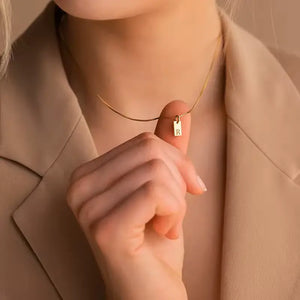

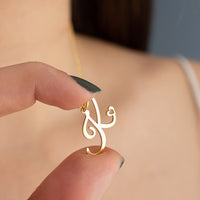
The piece they're describing → Heart Initial Necklace for Women — 18K Gold Plated, Personalized Letter + Heart Pendant
Personalize Yours


