


- Stainless steel is a family of alloys, not one metal, and only some members are magnetic.
- 316L and 304 (austenitic) are generally non-magnetic when annealed, but cold working such as bending, drawing wire or stamping can make them weakly magnetic.
- 430 (ferritic) and 410/420 (martensitic) are clearly magnetic, and are common in cheaper jewelry, cutlery-style clasps and watch parts.
- A magnet cannot tell you grade, quality or skin safety on its own, and "does not stick" does not prove a piece is gold, silver or even steel.
- If a magnet test matters to you, test the body of the piece away from the clasp, and read the product's stated material.
Anyone who has held a fridge magnet to a necklace knows the confusion: one steel chain does nothing, the next clings to it. This guide explains why, what the result does and does not mean, and how to read it. For other metals, see our magnet test chart by metal, and for silver specifically, will a magnet stick to sterling silver.
Why does a magnet stick to some stainless steel and not others?
It comes down to crystal structure, which is set by the recipe of the alloy. Stainless steel is iron with at least about 10.5% chromium, and what else is added changes the internal structure.
Austenitic grades, which include 304 and 316L, add a lot of nickel (and sometimes nitrogen or manganese). That keeps the iron in a face-centred structure that is not ferromagnetic, so a hand magnet barely notices it. Ferritic grades such as 430 have little or no nickel and keep the body-centred structure of plain iron, so they are magnetic. Martensitic grades (410, 420 and similar) are also strongly magnetic. Duplex grades are a mix and are magnetic too.
Technical references on stainless steel agree on this broad picture, with one caveat that matters for jewelry: austenitic does not mean permanently non-magnetic.
Which stainless steel grades are used in jewelry, and which are magnetic?
Most stainless jewelry is 316L, 304 or 430, and only 430 is clearly magnetic.
| Grade or family | Type | Hand magnet result | Where you see it |
|---|---|---|---|
| 316L | Austenitic | None to very weak | Better jewelry and body jewelry |
| 304 | Austenitic | None, or weak after bending or forming | General jewelry, watch cases, kitchenware |
| 430 | Ferritic | Clearly sticks | Low-cost fashion pieces, appliance trim |
| 410 / 420 | Martensitic | Sticks strongly | Blades, springs, some clasp parts |
Magnet pull on ferritic steel is typically a little weaker than on plain carbon steel, but it is still obvious. If a plain stainless chain grabs a magnet firmly, a ferritic or martensitic grade is the likely reason.
Is 316L stainless steel magnetic?
In its normal annealed state, 316L is not magnetic to a hand magnet, and it is the least likely of the common jewelry grades to show any pull. Its higher nickel content and added molybdenum make the austenitic structure especially stable. You can read more about why this grade is chosen in is stainless steel good for jewelry.
Weak attraction can still appear in finished pieces. Sources on the subject note that heavy cold work, poor heat treatment and some welds can turn a little of the austenite into a magnetic structure. In a necklace this tends to show up at tight bends, crimped ends, drawn wire and soldered or welded joints, rather than across a smooth plate.
Why can a non-magnetic grade become slightly magnetic?
Cold working (bending, stamping, drawing or hammering at room temperature) can convert part of the austenite into a magnetic structure. The effect is smaller in alloys with more nickel, which is one reason 316L usually behaves better than 304. Jewelry makers cannot always anneal every part afterwards, since reheating can distort fine or plated work.
This means a faint tug on a bent link or stamped charm is not a red flag. It is a known property of the steel, not a sign of a counterfeit metal.
Why does the clasp stick when the chain does not?
Clasps, springs and cores are often made from a different, harder alloy than the chain. A spring ring has a tiny internal spring, a lobster clasp has a spring and a lever, and earring backs and hinge pins are often formed from stiff wire. Those parts are frequently steel that can be magnetic, even on a piece sold as non-magnetic overall, and inexpensive pieces may use a plated iron or ferritic part. Read about the parts in types of necklace clasps.
For a meaningful test, hold the magnet to the chain or the main body of the piece, not to the clasp or the hinge.
What does a magnetic result actually tell you?
Very little about quality, and nothing definitive about skin safety. A magnet detects one property, magnetism, which depends on structure. It does not measure how much chromium, nickel or molybdenum is in the piece, how well it resists corrosion, or what finish sits on top.
- Sticks firmly: likely a ferritic or martensitic grade, or a steel or iron part. Not automatically bad, but you cannot assume it is 316L.
- Faint pull at a bend or clasp: normal for cold-worked austenitic steel or a steel spring.
- No pull at all: consistent with austenitic steel, but also with silver, gold, brass, copper, aluminium and zinc alloy. A magnet cannot prove a piece is steel, let alone 316L.
On skin: reactions to jewelry are usually linked to nickel release, not to magnetism. Stainless steel holds nickel inside the alloy, and 316L is considered hypoallergenic for most wearers, but it is not nickel free, and a magnet cannot show nickel release either way. This is general information, not medical advice, so ask a doctor if you have a known nickel allergy. Our guides on whether stainless steel is hypoallergenic, what makes jewelry hypoallergenic and nickel free jewelry go deeper.
Does plating change the magnet test?
Thin plating does not block a magnet, so a gold or rhodium plated stainless piece reacts the way the steel underneath does. The same plated item can still disappoint, because plating over a ferritic or iron base looks identical until it wears. See gold plated vs stainless steel and does gold plated jewelry turn skin green for how base metal shows through over time.
How to run a fair magnet test on stainless steel jewelry
- Use a strong small magnet, such as a rare earth magnet, rather than a weak fridge magnet. Weak ones can miss faint effects.
- Remove the piece from any packaging and from other jewelry.
- Hold the magnet to the middle of a smooth section, never the clasp, spring, hinge or end cap.
- Try the slide test: hang the piece or rest it on a table and drag the magnet along. A steady drag suggests magnetic material; a slight tug at one point suggests a part.
- Test several spots and compare. Consistent strong pull points to a ferritic or martensitic metal.
- Check the listing or hallmark for the stated grade. See jewelry hallmarks for what stamps do and do not prove.
Decision guide: what should you do with your result?
| What you see | Most likely meaning | Next step |
|---|---|---|
| No pull on chain or body | Austenitic steel or a non-ferrous metal | Check the stated material and, if relevant, our gold guide |
| Pull only at clasp or spring | Steel hardware | Normal, no action |
| Faint pull at bends | Cold-worked austenitic steel | Normal, no action |
| Strong pull everywhere | Ferritic, martensitic or iron base | Do not assume 316L; ask the seller for the grade |
| Item sold as silver or gold sticks | Not that metal, or steel hardware | See how to tell if silver is real or real gold |
An honest note on what we do
AJLuxe sells 925 sterling silver and 18K gold plated pieces (over 925 or over 316L stainless steel), plus rhodium plated 316L, with cubic zirconia stones. We do not sell solid gold, titanium, platinum, brass or copper jewelry. Plated 316L and sterling are generally not strongly magnetic, but clasps and springs may be, and we cannot promise a magnet result for any particular piece. 316L is considered hypoallergenic for most wearers, not nickel free, and plating wears gradually with use. For comparison, see sterling silver vs stainless steel and does stainless steel jewelry tarnish.
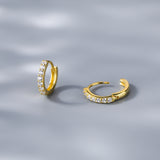
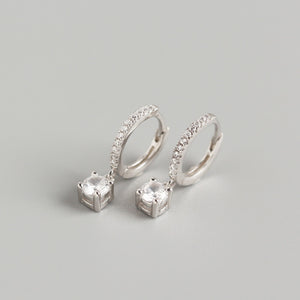
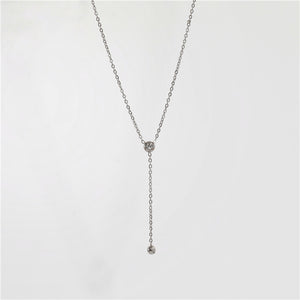
If you want 316L pieces, these are in stock: the Micro Pave Huggie Hoop Earrings ($28.99, 18K gold plated over 316L with CZ), the Silver Drop Huggie Hoop Earrings ($28.99, rhodium plated over 316L) and the CZ Y Necklace ($28.99, rhodium plated over 316L, a few left). Browse more in hypoallergenic earrings. US orders ship free and returns are free for 30 days.
More in this guide
Related reading: sterling silver vs stainless steel, gold plated vs stainless steel, does stainless steel jewelry tarnish, is stainless steel jewelry hypoallergenic the honest answer and types of necklace clasps.
Frequently Asked Questions
Is all stainless steel magnetic?
No. Ferritic and martensitic grades are magnetic, while austenitic grades such as 304 and 316L are generally non-magnetic when annealed, though they can become weakly magnetic after cold working.
Is 304 and 316 stainless steel magnetic?
Both are austenitic and mostly non-magnetic. 304 is a little more prone to weak magnetism after bending or forming, and 316 is usually the more stable of the two.
Does a magnet sticking mean stainless steel jewelry is fake?
No. It may be a different, still genuine stainless grade like 430, or steel hardware such as a clasp. It only means the metal is magnetic, not that the piece is counterfeit.
If a magnet does not stick, is it real gold or silver?
No. Many metals are non-magnetic, including brass, copper, aluminium and zinc alloys, so passing a magnet test proves nothing about purity. See our magnet chart by metal.
Is magnetic stainless steel rust proof?
Not necessarily. Some magnetic grades resist corrosion well and some do not, and magnetism itself does not measure rust resistance. Chromium content and finish matter more.
Can stainless steel jewelry be magnetized?
Austenitic grades are poor at holding magnetism. Ferritic and martensitic pieces can pick up some residual magnetism after contact with a strong magnet, which is usually minor.
Is magnetic stainless steel jewelry safe for sensitive skin?
Magnetism is not the issue; nickel release and surface finish are. This is general information, not medical advice, so ask a doctor if you react to metals.
How can I tell what grade my stainless steel jewelry is?
A magnet alone cannot. Look for a stated grade in the listing or a stamp, and read jewelry hallmarks for what marks do and do not confirm.
Written by AJLuxe Team. Last updated: October 2026
All third-party trademarks, brand names and product names are the property of their respective owners. AJLuxe is not affiliated with, endorsed by, sponsored by, or otherwise connected to any third-party brand referenced in this article. Brand names are used solely for accurate comparative reference, and material descriptions reflect each brand's own published product specifications at the time of writing.
You Might Also Like
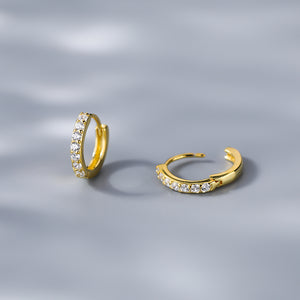
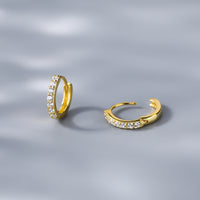
The piece they're describing → Micro Pave Huggie Hoop Earrings for Women — 316L Stainless Steel, 18K Gold Plated, CZ
Personalize Yours


