


Nickel is the most common contact allergen in the world. The American Academy of Dermatology estimates roughly 18% of people in North America have a nickel allergy, with women affected at almost six times the rate of men. For anyone with sensitized skin, an unmarked pair of earrings or a watch back can mean weeks of itching, oozing, and pigment change at the contact site.
The frustrating part: "nickel-free" is not a legal term in the United States. There is no federal standard, no certification, no testing requirement. Any brand can print "nickel-free" on a hangtag while the alloy underneath releases enough nickel to trigger a full reaction. This guide breaks down which metals are actually nickel-free under the strict EU standard, how to verify a piece you already own, and what to look for when shopping so a sensitivity never decides what you can wear.
Why Nickel Allergy Is So Common — and Growing
Nickel allergy is a type IV delayed hypersensitivity reaction. The first exposure doesn't cause symptoms — instead, your immune system slowly builds a memory of nickel ions as a threat. After a sensitization window (which can be months or years), every subsequent contact triggers itching, blistering, and allergic contact dermatitis wherever the metal touched skin.
Three factors have made nickel allergy more prevalent than ever:
- Earlier ear piercing. Studies cited by the AAD show people pierced before age 10 develop nickel allergy at roughly double the rate of those pierced later. Many starter studs sold in malls are nickel-containing alloys plated with gold or rhodium — the moment plating wears, sensitization begins.
- Cheap fast-fashion jewelry. Imported costume jewelry is often unregulated for nickel content. A single weekend wearing a $4 pair of earrings can be enough to sensitize a previously tolerant person.
- Wearable tech. Smartwatch backs, phone cases, fitness tracker buckles, eyeglass frames, and laptop palm rests all routinely contain nickel-bearing stainless. Continuous skin contact with sweat accelerates ion release.
Once you are sensitized, the allergy is generally permanent. There is no cure — only avoidance. That is why getting nickel out of your jewelry box matters more than treating individual flare-ups.
What "Nickel-Free" Actually Means (the Two Different Standards)
There are two competing definitions of "nickel-free," and they produce very different jewelry:
| Standard | What it allows | What it means in practice |
|---|---|---|
| EU Nickel Directive (94/27/EC, REACH Annex XVII Entry 27) | Nickel release ≤ 0.5 µg/cm² per week from any item in prolonged skin contact; ≤ 0.2 µg/cm²/week for piercing posts during healing. | A legally enforceable release rate, tested with the EN 1811 reference method. This is the world's only meaningful "nickel-safe" standard. |
| US "nickel-free" marketing label | No federal standard. No testing required. Any brand can use the phrase. | Often means only the visible plating contains no nickel — base metal may still be a nickel alloy. Once plating wears through, you are exposed. |
When you buy from a brand selling internationally, look for language like "complies with EU Nickel Directive" or "tested to EN 1811." That is the only label backed by an enforceable number. Anything else — including the word "hypoallergenic" — is marketing.
The Truly Nickel-Free Metals (Ranked)
| Metal | Nickel content | Safe for new piercings? | Notes |
|---|---|---|---|
| Niobium | Zero | Yes — preferred by piercers | Pure element. Anodizes to color without coatings, so color never wears away. The single safest metal for piercings. |
| Implant-grade titanium (ASTM F136, Ti-6Al-4V ELI) | Zero | Yes — APP-recommended | Same alloy used in orthopedic implants. Demand "ASTM F136" specifically — commercial-grade titanium is not the same standard. |
| Platinum (950) | Zero | Yes | Inert. Allergy is essentially unheard of. Price typically reserves it for fine bridal jewelry. |
| 925 sterling silver (genuine) | Zero in compliant pieces | Healed piercings only | 92.5% silver + 7.5% copper. EU-compliant when stamped 925. Avoid pieces sold as "silver" with no purity stamp — they may be nickel silver, which contains zero silver and high nickel. |
| 18K solid yellow gold | Zero (typical recipe: gold + silver + copper) | Yes | At 75% gold, only enough alloy room for silver and copper. Yellow gold ≥ 18K is reliably nickel-free. |
| 18K gold over 925 sterling silver (vermeil / heavy plate) | Zero at every wear stage | Healed piercings only | Even if gold plating thins, the base is sterling silver — also nickel-free. This is why it's the workhorse of nickel-safe everyday jewelry. |
| Palladium 950 | Zero | Yes | Naturally white, no rhodium plating needed. Used as a true nickel-free white-gold alternative. |
| 14K yellow gold (US recipe) | Usually zero — verify with maker | Usually safe — verify | Standard US 14K yellow alloy is gold + copper + silver + zinc. Most are nickel-free, but some manufacturers add nickel to whiten — always ask for the alloy datasheet. |
| 316L surgical stainless steel | Contains nickel, but bound in the alloy | Healed piercings only, most wearers | 316L does contain nickel (~10-14%), but low-grade chromium-oxide passivation keeps ion release below the EU threshold for most people. Not the same as generic "stainless steel" — demand the 316L or ASTM F138 spec specifically. |
Metals to Avoid If You Are Nickel-Sensitive
- White gold under 18K — Nickel is the cheapest whitening alloy. Unless the piece is explicitly stamped "palladium white gold" or "nickel-free white gold," assume it contains nickel.
- Generic "stainless steel" — Hardware-grade stainless contains up to 12% nickel. Even when bound in the alloy, it releases enough ions during sweating to fail the EU directive.
- "Surgical steel" without a 316L or 316LVM grade — The phrase "surgical steel" alone is meaningless. 316L is the minimum useful spec; ASTM F138 is the true implant grade.
- Nickel silver / German silver / alpaca — These contain zero silver. The name is a historical misnomer. Heavy nickel content.
- Silver-plated brass or copper — Once the silver layer wears (often within months), the brass base releases nickel and copper directly to skin.
- Costume / fashion jewelry with no metal disclosure — Default assumption should be that nickel is present.

Why 925 Sterling and 18K Gold-on-Sterling Are the Best Everyday Choice
Niobium and titanium are unbeatable for new piercings — but they are limited in style, generally cool-toned, and rarely available as delicate chains or pendant necklaces. For everyday jewelry that has to look elegant, layer well, and survive shower steam, two materials dominate:
- 925 sterling silver — copper is the only common alloy at 7.5%, and it carries no nickel risk. Tarnish can be polished away in 30 seconds with a microfiber cloth.
- 18K gold electroplated over 925 sterling silver — the gold layer gives warmth and shine; the sterling base means the piece stays nickel-free even after years of wear, when plating naturally thins on high-friction spots.
This is the construction philosophy behind AJLuxe's hypoallergenic jewelry collection and the sterling silver jewelry collection — every piece starts from a 925 sterling silver core, so there is no nickel-bearing brass hiding underneath the finish.
How to Test Jewelry You Already Own for Nickel (the DMG Test)
You do not need a lab to find out whether a ring, watch back, or pair of earrings contains releasable nickel. A dimethylglyoxime (DMG) test kit — sold online for around $10 — gives a reliable yes/no answer in under a minute. It is the same chemistry dermatologists use in office.
How to run it:
- Add 1–2 drops of the DMG reagent and 1–2 drops of ammonia solution to a clean cotton swab.
- Rub the swab firmly against the metal surface for 30 seconds — focus on areas that contact skin (inside of ring band, earring post, watch case back).
- If the swab turns pink or red, the piece is releasing nickel at a level that can cause an allergic reaction. A negative result (swab stays white) means the surface is nickel-safe at this moment.
Important: A negative DMG test only proves the surface you tested is nickel-free. On plated jewelry, retest after the plating shows wear — the base metal may test positive even when the new finish did not.

Nickel-Free Buying Guide by Scenario
For a New Piercing (Healing 6–12 Weeks)
Use implant-grade titanium (ASTM F136) or niobium only. These are the two metals recommended by the Association of Professional Piercers. Avoid plated jewelry of any kind during healing — even nickel-free plating can flake into the wound channel.
For Everyday Earrings on Healed Piercings
925 sterling silver or 18K gold over sterling are both excellent. If reactions persist even with these, switch to solid 18K yellow gold or back to titanium.
For Rings (Daily Wear)
Rings face the highest mechanical wear of any jewelry — sleeves rub them, soap erodes plating, dishes scratch them. Choose:
- Solid 18K+ gold (yellow or palladium white)
- Platinum
- 925 sterling silver (replating not needed since it is solid)
- Heavy gold-vermeil over sterling (2.5+ microns) when budget matters
Avoid thin gold-plated brass rings — these typically fail within 3–6 months at the inner band where finger oils break down the finish fastest.
For Necklaces and Bracelets
Chain pieces wear longer than rings because the metal slides rather than rubs continuously. Sterling silver chains and 18K-gold-over-sterling chains both perform well for years. Pay special attention to the clasp and findings — many otherwise-nickel-free necklaces use cheap nickel-bearing clasps. Reputable brands disclose findings as part of the same metal specification.
For Watch Bands, Glasses, and Wearables
This is where most adult nickel reactions originate today. Switch to titanium or ceramic watch bands; use a silicone bumper between a metal smartwatch back and your wrist; and ask your optician for "monel-free" eyeglass frames (monel is a high-nickel alloy used in most budget frames).
Care: Keeping Nickel-Free Jewelry Nickel-Free
- Wipe after wear. A 10-second wipe with a microfiber cloth removes salt and skin oils that accelerate plating wear and silver tarnish.
- Take jewelry off for chlorine, salt water, and hot tubs. Chlorine attacks the copper in sterling silver and can lift plating from gold-vermeil pieces.
- Apply skincare first. Lotions, sunscreen, and perfume thin gold plating quickly. Put them on, let them dry, then put jewelry on.
- Polish, do not scrub. Sterling silver tarnish lifts with a soft cloth in seconds. Abrasive polishes can erode plating on gold-vermeil pieces — never use baking soda paste on plated jewelry.
- Store separately. A felt-lined jewelry box or individual zip pouches prevents pieces from scratching each other; scratches in plating expose the base layer faster.
For a deeper care routine, see the complete sterling silver cleaning guide and the guide to extending gold-plated jewelry life.
Frequently Asked Questions
Is sterling silver 100% nickel-free?
Genuine 925 sterling silver is nickel-free. The alloy is 92.5% pure silver and 7.5% copper, with no nickel in the standard recipe. Pieces stamped "925" or ".925" from reputable brands meet the EU Nickel Directive limit. Be cautious of pieces marketed only as "silver" with no purity stamp — they may be nickel silver, an entirely different alloy that contains no silver and a substantial amount of nickel.
What kind of jewelry has no nickel?
The reliably nickel-free options are niobium, implant-grade titanium (ASTM F136), platinum, 925 sterling silver, 18K solid yellow gold, 18K gold electroplated over 925 sterling silver, and palladium 950. Avoid white gold under 18K, generic "stainless steel," silver-plated brass, and unmarked costume jewelry.
Is gold-plated jewelry nickel-free?
It depends entirely on the base metal. Gold plating itself is nickel-free, but if the base is brass or generic alloy, your skin will contact nickel the moment the plating thins on any wear point. Gold electroplated over 925 sterling silver is nickel-free at every wear stage because both the plating and the base metal contain no nickel.
Can I be allergic to sterling silver?
True sterling silver allergy is rare, but it does happen — typically a copper sensitivity rather than a silver one, since the 7.5% alloy in 925 is copper. If you test positive to DMG on a sterling silver piece, the piece may have been a low-grade silver alloy. If you react to verified 925 silver, you may have a copper sensitivity; in that case, switch to solid 18K yellow gold, platinum, or niobium.
Why do I suddenly react to jewelry I've worn for years?
Two reasons. First, nickel allergy can develop at any age — wearing nickel-containing jewelry for a decade actually builds sensitization until your immune system finally flips. Second, if the piece is plated, the plating may have just worn through on the inside of the ring band or behind the earring backing, exposing the nickel-containing base for the first time. Run a DMG test to confirm which case applies.
Is 14K gold nickel-free?
14K yellow gold is usually nickel-free — the standard US alloy is gold + copper + silver + zinc. 14K white gold often contains nickel as the whitening element. The safest practice is to ask the manufacturer for the specific alloy recipe or look for "nickel-free white gold" or "palladium white gold" labels. If purity matters most to you, 18K solid yellow gold is reliably nickel-free across all reputable makers.
What is the difference between "nickel-free" and "hypoallergenic"?
"Hypoallergenic" is a general marketing term meaning "less likely to cause an allergic reaction" — it has no legal definition in the US and does not guarantee any specific metal content. "Nickel-free" is a more specific claim, but in the US it is also unregulated; only the EU Nickel Directive (with its 0.5 µg/cm²/week release limit) gives the phrase real weight. Look for "complies with EU Nickel Directive" or a verified metal specification rather than relying on either label alone.
How do I test if my jewelry has nickel at home?
Buy a dimethylglyoxime (DMG) test kit online for about $10. Apply 1–2 drops of DMG reagent and 1–2 drops of ammonia to a cotton swab, then rub the swab firmly on the metal for 30 seconds. If the swab turns pink or red, the piece is releasing nickel. A white swab means the tested surface is currently nickel-safe.
Is stainless steel jewelry safe for nickel allergy?
Generic "stainless steel" jewelry is not safe — most contains 8–12% nickel and releases enough during sweating to trigger reactions. 316L surgical steel is the minimum useful grade and is tolerated by many but not all nickel-sensitive people. ASTM F138 implant-grade steel is stricter and rarely causes problems. If you are highly sensitive, skip steel entirely and use titanium or niobium.
Are children's jewelry pieces nickel-free?
In the US, the CPSC regulates lead and cadmium in children's jewelry but does not regulate nickel content. For pierced ears on a child under 12, only implant-grade titanium or niobium studs should be used. Most "starter studs" sold at mall piercing kiosks are nickel-containing alloys with a thin plating that fails quickly — these are a leading cause of childhood nickel sensitization.
Does nickel allergy ever go away?
No. Nickel allergy is a permanent immune memory once your body has formed it. There is no desensitization protocol that reliably reverses it. The only management is strict avoidance — which is why moving entirely to nickel-free metals (sterling silver, titanium, 18K+ gold, niobium) is the long-term solution.
Can I wear nickel-free jewelry in the shower or pool?
You can shower briefly in solid sterling silver and solid 18K gold without harm — neither will release nickel after water contact. Avoid prolonged exposure to chlorine (pools, hot tubs) and salt water, which corrode the copper in sterling silver and lift gold plating from vermeil pieces, eventually exposing whatever base metal lies underneath. For details by piece type, see can you wear sterling silver in the shower.
Wondering whether a piece that's tarnishing is actually nickel-free? See our guide: Does Nickel-Free Jewelry Tarnish?
Written by the AJLuxe team. Last updated: July 2026.
For gold plated options, see our guide: Is Gold Plated Jewelry Hypoallergenic? The Real Answer.
Choosing a metal that won't irritate your skin? See our Best Metals for Sensitive Skin guide — every common jewelry metal ranked from safest to most reactive.
Related reading: Custom Jewelry for Women (2026): Real Types, Best Metals, and Honest Price Ranges.
Related reading: Nickel free white gold jewelry.
For earrings specifically, see our best hypoallergenic earrings guide — nickel-free picks ranked by metal and price.
Related reading: Earrings That Are Nickel-Free: What to Look For (2026).
Related reading: Allergic Reaction to Earrings: Symptoms, Causes & Safe Metals (2026).
All third-party trademarks, brand names and product names are the property of their respective owners. AJLuxe is not affiliated with, endorsed by, sponsored by, or otherwise connected to any third-party brand referenced in this article. Brand names are used solely for accurate comparative reference, and material descriptions reflect each brand's own published product specifications at the time of writing.
You Might Also Like

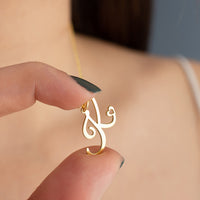
The piece they're describing → Heart Initial Necklace for Women — 18K Gold Plated, Personalized Letter + Heart Pendant
Personalize Yours


