


Can silver rust? No. Rust is iron oxide, so it only forms on iron and steel, and silver contains no iron. Sterling silver (92.5% silver, usually alloyed with copper) can still tarnish into a grey or black film, and the copper in the alloy can corrode into green or brown marks if the piece stays damp. Orange-brown flakes on a "silver" piece usually mean it has a steel or other base metal under a thin silver-colored finish.
If you have spotted something that looks like rust on a silver ring or chain, the useful question is not "can silver rust" but "what is this mark, and is the piece actually sterling?" This guide answers both: what silver does instead of rusting, how to read the color of a spot, what to do about it today, and how to stop it coming back.
Why can silver not rust?
Silver cannot rust because rust is the name for iron oxide, and iron is the only common jewelry metal that forms it. Silver, copper, gold and platinum can discolor or corrode in their own ways, but none of those reactions produce rust.
Sterling silver is defined as at least 92.5% silver (stamped 925), with the rest usually copper for hardness. Neither metal is iron. So a genuine sterling piece will never grow true rust, however old it is or however much water it meets.
What it does instead is a slower, milder set of surface reactions. The next sections sort them out, because they look different and need different fixes.
What is the spot on my silver? A color-by-color guide
The color of the mark tells you more than its location, so match what you see to the table below before you reach for any cleaner. This is general information and the colors can overlap, so treat it as a first guess.
| What you see | Most likely cause | Is it rust? | What to do |
|---|---|---|---|
| Grey, dull or black film on a smooth surface | Tarnish (silver sulfide) from sulfur in air, skin oils or household products | No | Polish gently with a soft silver cloth. See how to clean sterling silver |
| Green or blue-green crust, often in crevices | Copper in the alloy reacting with moisture, salts or lotions | No | Wash with mild soap, brush the crevices lightly, dry fully |
| Orange or red-brown flakes, bleeding stains, pitting | Iron or steel somewhere in the piece, usually a base metal under silver-colored plating | Yes, but not from silver | Check the stamp. The piece is probably not solid sterling. See silver plated vs sterling silver |
| Brownish or yellowish haze | Early tarnish, or residue from lotion, perfume or hairspray | No | Soap and water, then dry |
| Chalky white or purple-grey patches after pools or sea water | Chlorine or salt reacting with the surface | No | Rinse in fresh water, wash gently, dry, and skip pools next time |
If the marks are red-brown on a gold-colored piece instead, that is a different topic, covered in does gold rust.
How is rust different from tarnish?
Rust eats into iron and steel and weakens them, while tarnish is a thin surface film on silver that polishes off without damaging the metal beneath. The comparison below shows why the two should never be treated the same way.
| Factor | Rust | Tarnish on sterling silver |
|---|---|---|
| Metal involved | Iron or steel | Silver and the copper in the alloy |
| Color | Orange, red-brown | Yellow-brown, grey, black |
| Texture | Flaky, rough, pitted | Smooth film |
| Spreads into the metal? | Yes, it keeps going | Mostly stays at the surface |
| Can you reverse it? | Not without removing metal | Yes, usually with gentle polishing |
For the full chemistry of the dark film, read does sterling silver tarnish, and if the piece is turning black quickly, why sterling silver turns black lists the common triggers.
Can sterling silver corrode, even if it cannot rust?
Yes, sterling silver can corrode in a mild way, although the word usually means tarnish plus occasional copper staining rather than anything structural. Over time, a piece that stays damp or meets chlorine, salt, bleach or sulfur-rich products can develop pits or crusty deposits, especially in the copper-rich alloy.
- Sulfur: from air, rubber bands, wool, some foods and some cosmetics. This is the usual cause of black tarnish.
- Chlorine and bleach: pool water and cleaning sprays can dull or pit the surface. Our guide on wearing sterling silver in the shower covers everyday water exposure.
- Salt and sweat: trapped under a ring or in a clasp, they keep the copper damp and can leave green or brown marks.
- Skin chemistry: the same ring may tarnish faster on one person than another. If your skin turns green, does sterling silver turn green explains why.
None of this is the same as rust, and most of it is avoidable with dry storage and a quick wipe after wearing.
Is my "silver" jewelry actually sterling? How to check
The quickest check is the stamp: genuine sterling is marked 925 (or "sterling"), usually near the clasp or inside the band. A missing stamp, a very low price for a heavy piece, or orange-brown stains are reasons to look closer.
- Find the stamp. Use a bright light and a magnifier on the clasp, the inside of a ring or the back of a pendant. A stamp alone is not proof, but its absence is a flag.
- Try a magnet. Silver and copper are not magnetic. If a strong magnet grabs the piece, there is likely iron or nickel inside. Because some clasps and springs are steel, test the main body, and remember a result of "not magnetic" does not prove it is sterling (many non-magnetic metals exist).
- Look at worn edges. A yellow, copper or grey layer showing at the corners suggests a plated base metal rather than solid silver.
- Ask a jeweler. A local jeweler can test the metal quickly if you need certainty.
Silver plated pieces are a thin layer of silver or another bright finish over a base metal, and the base can corrode once the layer wears through. We compare the two in silver plated vs sterling silver. For the difference between purity levels, see 925 silver vs 999 silver.
What should you do if your silver has red, green or black spots?
Start with the gentlest step and only escalate if it does not work. This is general care advice, not a guarantee for every piece.
- Wash. Use lukewarm water and a drop of mild soap. Rub gently with a soft cloth or a very soft brush, rinse and pat dry.
- Polish. For grey or black tarnish, a soft silver polishing cloth is usually enough. Work in short strokes and avoid scrubbing hard on thin plating or soft stones.
- Treat green crust carefully. After washing, remove loose deposits with a soft brush. If it returns quickly, the piece may be a high-copper alloy or plated.
- Stop if it is orange-brown and flaking. Cleaning will not fix a rusting base metal. Retire the piece from skin contact and consider it not solid sterling.
- Dry completely. Moisture left in links, clasps and settings brings the problem back.
Full method comparison is in how to clean sterling silver jewelry. If you also own gold plated pieces, use the gentler routine in how to clean gold plated jewelry instead, since polishing cloths can wear thin plating.
How do you stop silver from tarnishing or corroding?
Keep it dry, keep it sealed away from air and sulfur, and wipe it after wearing. A short routine does most of the work.
- Remove rings and bracelets before washing hands, swimming, cleaning or applying lotion and perfume.
- Wipe with a soft dry cloth after each wear.
- Store each piece separately in a small zip bag or lined box, ideally with an anti-tarnish strip.
- Keep jewelry away from the bathroom, where steam and humidity are highest.
- Do not store silver next to rubber, wool or newspaper.
For a longer list of habits, see how to prevent jewelry tarnish and our basic jewelry care rules.
What about stainless steel and "silver colored" metals?
Stainless steel resists rust far better than plain steel, but it is not a silver and it is not rust-proof under every condition, so it is best described as rust resistant. Heavy chlorine, salt left to dry on it, or damaged surfaces can still cause spots on cheaper grades.
Which one suits you depends on how much care you want to give. Compare them in sterling silver vs stainless steel, and for the quality question, is 925 sterling silver good quality.
Shop the AJLuxe Silver Huggie Earrings
925 sterling silver, minimalist huggie hoops, described on the product page as hypoallergenic. Wipe dry after wearing and store separately to keep them bright. US orders ship free. Limited stock right now.
Frequently Asked Questions
Does silver rust?
No, silver does not rust, because rust is iron oxide and silver has no iron in it. Silver can tarnish into a grey or black film, which is a different, surface-level reaction.
Can sterling silver rust over time?
No, genuine sterling silver cannot rust however long it ages, since the alloy is silver and copper. Over years it can tarnish or develop copper staining, and any orange-brown rust means iron is present somewhere in the piece.
Will silver rust in water?
No, water alone will not rust silver, but it can speed up tarnish and let the copper in sterling stain, especially with chlorine, salt or soap left behind. Rinse and dry thoroughly after any water contact.
Why does my silver ring have rust-colored spots?
Rust-colored spots usually mean the ring is not solid sterling, but a plated or silver-colored base metal containing iron or steel. Check for a 925 stamp and look for worn edges, or ask a jeweler to test it.
Is sterling silver rust proof?
Sterling silver is rust proof in the sense that rust needs iron, but it is not tarnish proof or corrosion proof. It needs dry storage and occasional polishing to stay bright.
Does silver plated jewelry rust?
It can, if the base metal under the plating contains iron or steel and the plating wears through. Solid sterling cannot rust, but plated pieces depend on what is underneath, so read the product details before assuming.
Does 925 sterling silver rust or corrode?
925 sterling silver does not rust, but it can tarnish and, in damp or chlorinated conditions, show mild copper corrosion such as green spots. The stamp means 92.5% silver, not that the piece is immune to discoloration.
Does pure silver rust?
No, pure silver does not rust either, though it can still tarnish slowly. It is very soft, which is why jewelry is usually made from sterling or another stronger alloy.
How do I remove tarnish from silver safely?
Wash with lukewarm water and mild soap, then polish gently with a soft silver cloth and dry fully. Avoid harsh scrubbing, and if the problem is orange-brown flaking, cleaning will not solve it because that is not tarnish.
All third-party trademarks, brand names and product names are the property of their respective owners. AJLuxe is not affiliated with, endorsed by, sponsored by, or otherwise connected to any third-party brand referenced in this article. Brand names are used solely for accurate comparative reference, and material descriptions reflect each brand's own published product specifications at the time of writing.
You Might Also Like
Black FridayLast day Starts soon: up to 40% off 20% off any piece, 30% off 2, 40% off 3+. Applied automatically at checkout. Ends in 7d 2h 34m
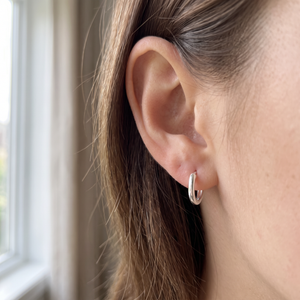
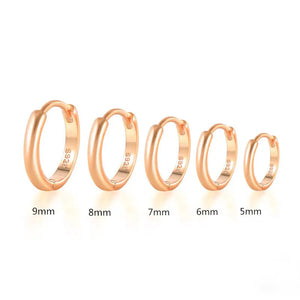
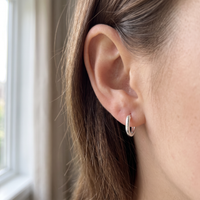
The piece they're describing → Silver Huggie Earrings for Women — 925 Sterling Silver, Hypoallergenic, Minimalist
Personalize Yours


