


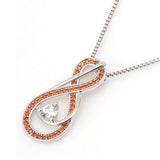

- 925 silver = 92.5% pure silver + 7.5% alloy metals (usually copper). This is sterling silver, the jewelry-industry standard.
- 999 silver = 99.9% pure silver. Also called fine silver. Softer and more prone to bending, scratching, and losing detail.
- 925 is harder and more durable; 999 is purer but too soft to hold fine settings or thin bands long-term.
- Both tarnish (pure silver actually tarnishes too, just more slowly than the alloy), but 925 is easier to polish back to shine because it holds its surface better.
- Legit pieces are stamped "925" or "999" — always check for a hallmark before buying.
- AJLuxe uses genuine, nickel-free 925 sterling silver across the catalog because it's the standard that actually survives daily wear.
If you've been comparing 925 silver vs 999 silver, the short version is this: they're both "real" silver, but they're built for different jobs. 925 silver — what most people mean when they say "sterling silver" — is an alloy of 92.5% pure silver and 7.5% other metals, almost always copper. 999 silver, or fine silver, is 99.9% pure with barely any alloy at all. That extra 0.1% of purity sounds like an upgrade, but for jewelry it's actually a downgrade, because pure silver is soft enough to dent with a fingernail. This guide breaks down the purity math, the durability difference, how each metal tarnishes, how to read the hallmark stamped on a piece, and why the jewelry industry — AJLuxe included — builds around 925 rather than 999.
What "925" and "999" Actually Mean
Both numbers describe silver purity out of 1,000 parts, a system called millesimal fineness. A piece stamped 925 contains 925 parts pure silver out of 1,000 — 92.5%. The remaining 75 parts (7.5%) are other metals, typically copper, added specifically to increase hardness. A piece stamped 999 contains 999 parts pure silver out of 1,000 — 99.9% — with only a trace of other elements, not enough to meaningfully change how the metal behaves. For more detail, see our guide to 925 sterling silver price per gram.
Pure, unalloyed silver would be stamped 999 or 1000 (nobody hits a perfect 100% in practice; refining always leaves trace impurities). There's also a middle tier, 958 "Britannia silver," but it's rare outside antique English silverware and isn't something you'll encounter shopping for modern jewelry.
925 vs 999 Silver: Purity, Durability, and Use Comparison
| Property | 925 Silver (Sterling) | 999 Silver (Fine) |
|---|---|---|
| Purity | 92.5% pure silver | 99.9% pure silver |
| Alloy metal | 7.5% copper (usually) | Trace only, under 0.1% |
| Hardness (Vickers) | Roughly 90-95 HV — holds a shape | Roughly 25-30 HV — dents with light pressure |
| Durability for daily wear | High — resists bending, scratching, and stone-setting fatigue | Low — bends, scratches, and loses fine detail quickly |
| Tarnish resistance | Tarnishes faster (copper reacts with sulfur in air), but polishes back easily | Tarnishes more slowly, but any surface damage is harder to buff out cleanly |
| Common uses | Rings, earrings, bracelets, chains — nearly all fine jewelry | Bullion coins, silver bars, investment rounds, some ceremonial pieces |
| Typical hallmark stamp | "925," "S925," or "Sterling" | "999," "9999," or "Fine Silver" |
Why 999 Silver Is Too Soft for Everyday Jewelry
Pure silver is one of the softest precious metals used commercially — softer than gold, and dramatically softer than sterling. On the Mohs scale it sits around 2.5-3, roughly the hardness of a fingernail. That's fine for a coin that sits in a drawer or a safe-deposit box, but it's a problem for a ring you're putting on and taking off, brushing against countertops, or catching on a car door handle every day.
In practice, 999 silver jewelry:
- Bends out of round — rings lose their shape faster, especially thin bands and stacking rings.
- Scratches easily — the surface picks up fine marks from ordinary contact, dulling the finish over time.
- Doesn't hold prong-set stones well — the metal that grips a gemstone needs to stay rigid; soft prongs work loose faster and can drop a stone.
- Loses fine engraving and detail — crisp edges on filigree or engraved pieces round off with wear.
That's the core reason fine-silver jewelry is rare outside of thick, chunky designs (like some artisan cuffs) that are less sensitive to soft metal. Anything with a delicate setting, a thin band, or moving parts (clasps, hinges) is almost always made in 925, not 999.
Why 925 Sterling Silver Became the Jewelry-Industry Standard
Sterling silver's 92.5/7.5 ratio isn't arbitrary — it's the historical sweet spot jewelers and silversmiths converged on centuries ago (the standard dates to at least 12th-century England) because it solves the softness problem without diluting the silver so much that the metal stops looking or acting like silver. Adding copper increases hardness dramatically while barely changing the color, weight, or shine compared to pure silver.
That's why, according to jewelry-industry standards bodies, sterling silver (925) is the baseline purity used across nearly all modern silver jewelry manufacturing — from mass-market pieces to fine jewelry houses. When a listing just says "silver" with no other qualifier, it's a safe assumption the maker means 925 unless it's explicitly marketed as fine silver or silver-plated base metal.
The other reason 925 dominates: it's practical to work with. Pure silver's softness makes it hard to solder cleanly, hard to polish to a crisp edge, and hard to cast into detailed molds without warping. Sterling behaves more predictably through every stage of jewelry manufacturing, which keeps production consistent and defect rates low.
Does 925 or 999 Silver Tarnish More?
Both tarnish — that's a property of silver metal itself reacting with trace sulfur compounds in air, not a flaw unique to one purity. But they tarnish differently:
- 925 silver tarnishes somewhat faster because the copper in the alloy is more reactive to sulfur than silver is. This shows up as a yellow-to-gray-to-black surface film over weeks or months, depending on humidity and skin chemistry.
- 999 silver tarnishes more slowly since there's almost no reactive alloy metal present, but when it does tarnish or scratch, the softer surface is harder to restore to a clean, even finish without removing more metal than you would with sterling.
In both cases, tarnish is cosmetic and reversible with a polishing cloth or a gentle silver-cleaning solution — it isn't rust, and it isn't permanent damage. Storing either metal in an airtight bag or a lined jewelry box between wears slows tarnish considerably.
How to Read Silver Hallmarks
The fastest way to confirm what you're actually buying is the hallmark, a small stamp usually found on the inside of a ring band, the back of a pendant, or near the clasp of a bracelet or necklace. Look for:
- "925" or "S925" — sterling silver, 92.5% pure.
- "Sterling" or "Ster" — same standard, spelled out instead of numbered.
- "999" or "9999" — fine silver, 99.9% (or higher) pure.
- "SP" or "Silver Plated" — a base metal core with a thin silver coating, not solid silver at all. This is a different category entirely and wears through with use.
- No stamp at all — a red flag. Legitimate solid-silver pieces almost always carry a purity stamp; an unstamped piece marketed as "silver" deserves extra scrutiny.
If a hallmark is present but you want a second check, a magnet test helps rule out base-metal fakes (genuine silver is non-magnetic), though it won't distinguish 925 from 999 on its own — for that, the stamp and the seller's documentation are your best signal.
Why AJLuxe Builds With 925 Sterling Silver
Every piece in AJLuxe's silver collection is genuine, nickel-free 925 sterling silver — not silver-plated, not fine silver, and not a mixed-metal blend. That choice comes directly from the durability comparison above: jewelry gets worn, bumped, stacked, and lived in, and 999 silver simply isn't built for that. Sterling holds its shape through daily wear, keeps prong-set stones secure, and takes a polish well when it does tarnish, which makes it the more practical choice for pieces meant to be worn regularly rather than stored in a drawer.
Choosing nickel-free 925 also matters for sensitive skin — the copper alloy in AJLuxe's sterling pieces is paired with a nickel-free formulation, so you get the strength benefit of the alloy without the most common cause of metal-related skin irritation.
Which Should You Buy?
If you're shopping for jewelry you'll actually wear — rings, earrings, bracelets, chains, anything that touches your skin daily — 925 sterling silver is the right call almost every time. It's durable, holds detail, keeps set stones secure, and is what nearly the entire jewelry industry builds around.
If you're buying for investment or bullion purposes — coins, bars, rounds you plan to store rather than wear — 999 fine silver is the better fit, since purity (and therefore resale value tied to spot silver price) matters more than wearability there.

Does Purity Affect Price and Resale Value?
Silver jewelry pricing is tied to weight and purity only in part — labor, design complexity, and brand account for a large share of what you pay at retail. That said, purity does affect the raw material cost underneath the price tag:
- Melt value. A gram of 999 silver contains slightly more actual silver than a gram of 925 silver, so its scrap or melt value (tied to the daily spot price of silver) runs a little higher gram for gram.
- Retail price. Finished jewelry price rarely tracks melt value closely. A detailed, well-made 925 ring can cost far more than a plain 999 bar of the same weight because you're paying for craftsmanship, not just metal content.
- Resale reality. Most people selling silver jewelry secondhand get offers based on scrap weight rather than design, which is one more reason 999 tends to live in bullion form (coins, bars) where investors are buying purity directly, not paying for a design that won't factor into resale.
If resale-as-bullion is your goal, 999 silver is more transparently priced. If you want a piece that looks and performs like jewelry for years, 925 is worth the small purity trade-off.
Common Myths About Silver Purity
A few misconceptions come up constantly when people compare these two purities:
- "Higher purity always means better quality." Not for jewelry. Purity and durability trade off against each other — 999's higher purity actually makes it a worse fit for pieces meant to be worn and handled daily.
- "925 silver is fake or diluted silver." It isn't. 925 is a defined, internationally recognized purity standard, not a lesser or counterfeit version of silver — it's the standard the jewelry industry deliberately settled on.
- "Sterling silver always has nickel in it." Not necessarily. The 7.5% alloy portion is most commonly copper, and reputable makers formulate nickel-free sterling specifically to avoid the most common metal allergen, so "925" alone doesn't tell you whether nickel is present — check the product description.
- "999 silver never tarnishes." It tarnishes too, just more slowly than 925, because tarnish comes from the silver itself reacting with sulfur compounds in the air, not only from the alloy metal.

Keep Reading
- Sterling Silver vs 925 Silver: What's the Real Difference?
- Does Sterling Silver Rust? (No — Here's the Real Chemistry)
- How to Tell If Silver Is Real
- Gold vs Silver Chain Necklace: Which Should You Choose?
- Can You Wear Gold and Silver Together? The 2:1:1 Rule Explained
Shop This Guide
Shop genuine, nickel-free 925 sterling silver at AJLuxe
See also: Surgical Steel vs Sterling Silver: Which Is Actually Hypoallergenic?.
Shop Our 925 Sterling Silver Hoop EarringsRelated reading: Is 925 silver real silver.
If you want to see the look in a real piece, AJLuxe's Moissanite Hoop Earrings for Women — 925 Sterling Silver, CZ, Hypoallergenic is a genuine example in 925 sterling silver with 18K gold plating.
Frequently Asked Questions
Is 925 silver real silver?
Yes. 925 silver is genuine silver — it's 92.5% pure silver alloyed with 7.5% other metal, almost always copper, to add strength. It's real silver in the same way 14K gold is real gold: not 100% pure, but a legitimate, industry-standard alloy, not a fake or a coating.
Is 999 silver worth more than 925 silver?
Per gram, yes — 999 silver contains more actual silver, so its melt value is slightly higher than 925 for the same weight. But for finished jewelry, price is driven mostly by craftsmanship, design, and brand, not purity alone, so a 925 piece can easily cost more than a plain 999 piece depending on the work that went into it.
Can 999 silver be used for rings?
It can, but it's not ideal. Because fine silver is so soft, 999 rings bend out of round faster, scratch more easily, and don't hold prong-set stones as securely as sterling silver rings do. You'll mostly see 999 used for thick, simple bands or investment rounds rather than everyday ring designs.
Does 925 silver turn your skin green?
Genuine 925 sterling silver very rarely causes green skin discoloration. That reaction usually comes from lower-quality alloys, silver-plated base metal, or acidic skin chemistry combined with lotion or sweat, not from properly made sterling silver itself. Nickel-free formulations, like the ones AJLuxe uses, further reduce the chance of any skin reaction.
How can I tell if my silver is 925 or 999?
Check the hallmark stamp, usually on the inside of a ring band, the back of a pendant, or near a clasp. It should read "925," "S925," or "Sterling" for sterling silver, or "999" or "9999" for fine silver. If there's no stamp, that's a reason to ask the seller directly or have the piece tested before assuming its purity.
Is sterling silver the same as 925 silver?
Yes, they're the exact same alloy. "Sterling silver" and "925 silver" are two names for the same 92.5% pure silver standard — jewelers use them interchangeably.
Why is copper added to silver instead of another metal?
Copper is the traditional choice because it blends closely enough with silver's color and weight that the finished alloy still looks and feels like silver, while significantly increasing hardness. Other metals (like germanium in some modern sterling alloys) are sometimes substituted or blended in to reduce tarnishing, but copper remains the standard base alloy worldwide.
Does 999 silver tarnish less than 925 silver?
Generally yes — fine silver tarnishes more slowly than sterling because it has far less reactive alloy metal in it. However, 925 silver is easier to polish back to a clean, even shine when it does tarnish, since the harder surface holds up better to buffing.
What's the difference between 925 silver and germanium-modified silver?
Germanium-modified silver is a modern variation of sterling silver that swaps some of the copper for germanium, which improves tarnish resistance while keeping hardness similar to standard 925. It's still roughly 92.5% to 93.5% pure silver — a refinement of sterling, not a separate purity tier like 999.
Is it safe to shower or swim in 925 sterling silver?
Brief exposure to water is generally fine for 925 sterling silver, but chlorine and saltwater can accelerate tarnish and, over time, weaken the metal's surface. It's best to remove sterling silver jewelry before swimming in a pool or the ocean, and to dry it promptly if it gets wet in the shower.
How do I clean tarnished 925 or 999 silver at home?
A soft polishing cloth designed for silver is the simplest fix for light tarnish on either purity. For heavier tarnish, a gentle silver-cleaning solution or a mild baking-soda paste, applied carefully and rinsed thoroughly, can restore shine. Avoid abrasive scrubbing on 999 silver especially, since the soft metal marks more easily than sterling.
Final Thoughts
925 silver and 999 silver are both genuine silver, but they're built for different lives. 999's extra purity is real, but it comes at the cost of hardness — softer metal that bends, scratches, and doesn't hold a setting the way jewelry needs to. 925 sterling silver trades a small amount of purity for a huge gain in durability, which is exactly why it's been the jewelry-industry standard for centuries and why AJLuxe builds its entire silver line around genuine, nickel-free 925. If you're buying something to wear, 925 is the practical choice. If you're buying something to store, 999 has its place. Either way, check the hallmark before you buy, and now you know exactly what it means.
All third-party trademarks, brand names and product names are the property of their respective owners. AJLuxe is not affiliated with, endorsed by, sponsored by, or otherwise connected to any third-party brand referenced in this article. Brand names are used solely for accurate comparative reference, and material descriptions reflect each brand's own published product specifications at the time of writing.
You Might Also Like
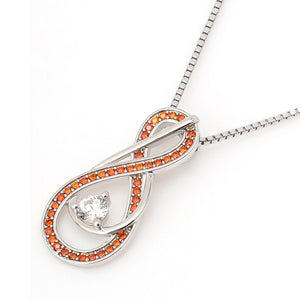
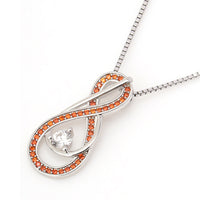
The piece they're describing → January Birthstone Necklace for Women — Garnet Red Infinity Pendant, 925 Sterling Silver
Personalize Yours


